

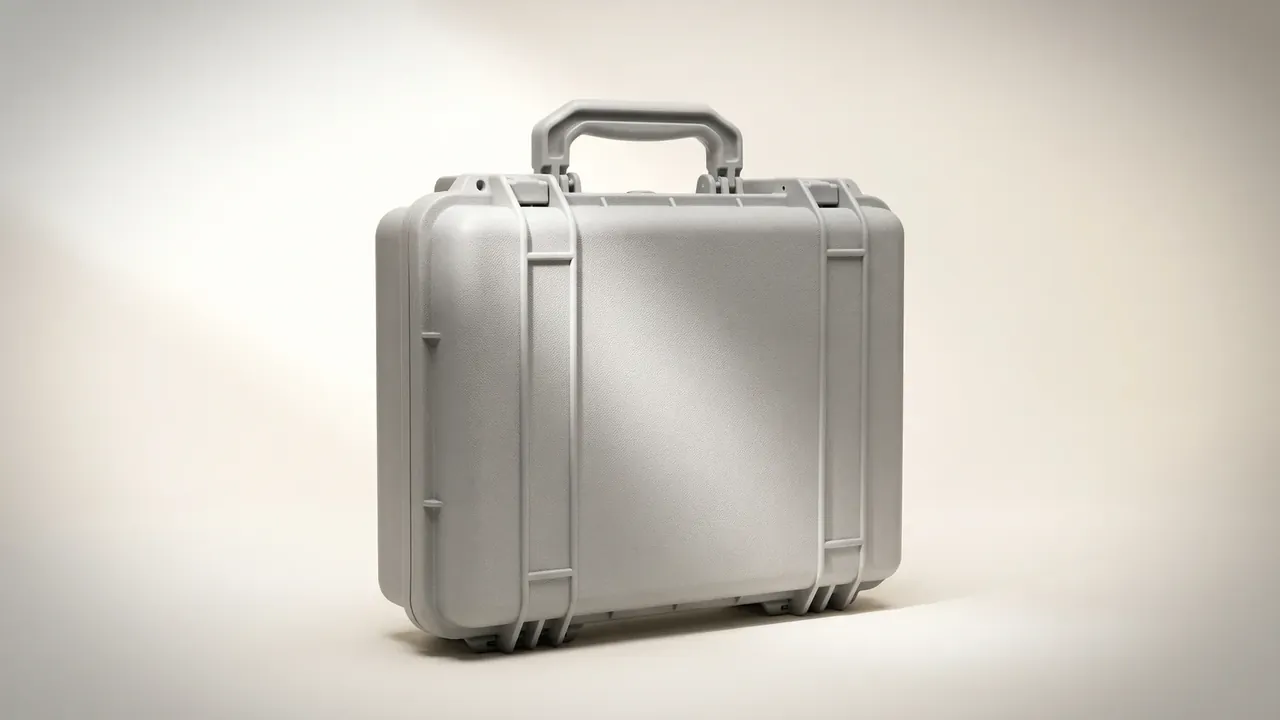
Quick answer: Judge a Plastic Case from its closing face, not its outline: usable volume, wall with corner radii, the load path through handle and hinge, latch count against holding force, and the sealing grade with pressure relief. The first four settle on one sample; the last decides whether it can travel in rain.
Table of contents
- Five Criteria for Plastic Case Selection
- Closing Face and Usable Volume
- Handle and Hinge Load Paths
- Latch Count and Holding Force
- Sealing Grade and Pressure Relief
- FAQ
1. Five Criteria for Plastic Case Selection
A Plastic Case differs from an open tote at the closing face, where lid, lip and gasket decide both water resistance and how the case opens. Compare outlines first and the rework lands on the latches.
Order matters: usable volume first, because the lip steals depth; then wall and radii, which decide where a drop splits; then the handle and hinge path, then latch clamping, and sealing last.
| Criterion | Measure | Line to hold | Usual mistake |
|---|---|---|---|
| Closing face | Cavity and lip depth | Lip under 12 mm | Outline read as cavity |
| Wall and corners | Wall and radii | 2.8 mm, R12 | Thickest point only |
| Handle and hinge | Root and pin size | 30 kg static | Judging by feel |
| Latches | Count, holding force | 220 N | One latch on a long case |
| Seal and relief | Gasket and valve | IP67 with valve | Valve missing |
2. Closing Face and Usable Volume
A cavity quoted at 420 x 300 x 180 mm loses 12 mm to the lip, leaving 168 mm of height, and a 2.8 mm wall shaves the plan to 414 x 294 mm.
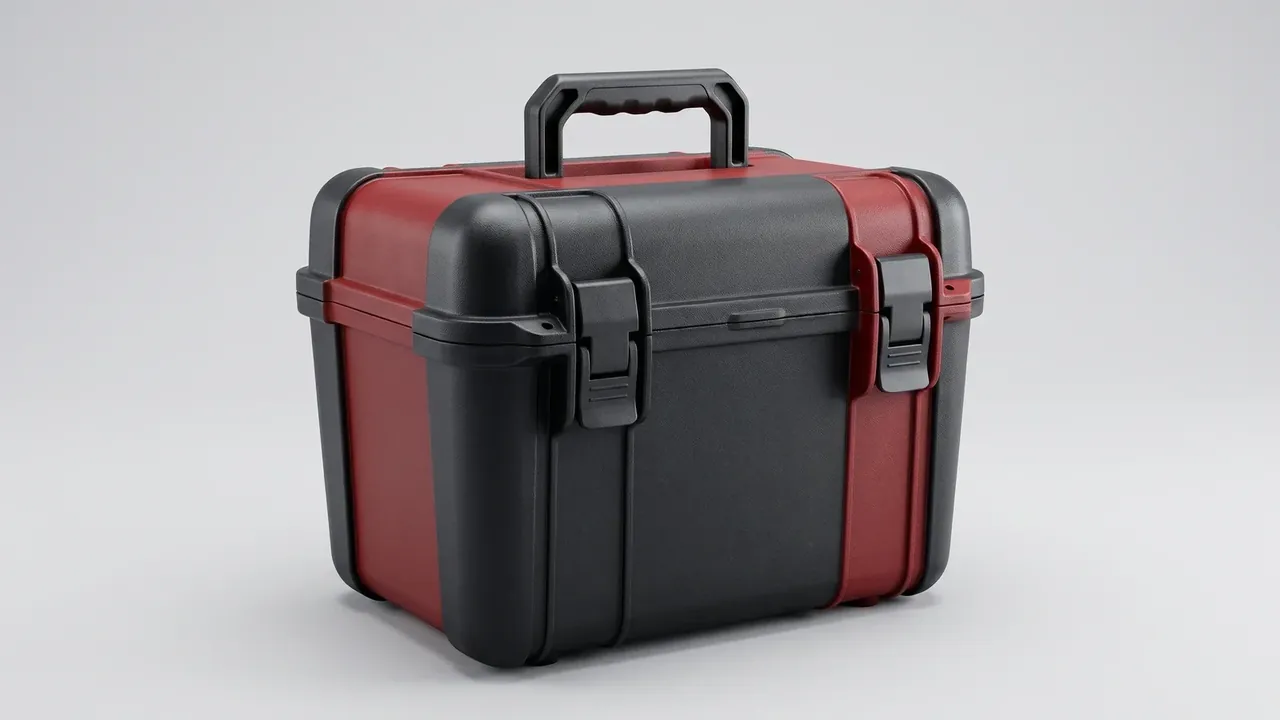
A tongue-and-groove Plastic Case lip uses a 3 mm tongue, holds a 0.5 mm fit and resists twisting. R12 outside with R6 inside is the tightest radius that fills at 2.8 mm; below R5 the corners whiten and split in a drop.
3. Handle and Hinge Load Paths
The handle carries the whole Plastic Case. A moulded-in handle 6 mm thick and 40 mm wide holds 30 kg static; a bolt-on handle on two M4 screws slips its threads at 18 kg.
A 4 mm stainless hinge pin rated at 50,000 cycles needs 0.15 mm of clearance per side; more and the lid rocks. A 3 mm triangular rib from handle root into the wall spreads the pull, or the crack appears in the lid beside it.
4. Latch Count and Holding Force
Latch count on a Plastic Case follows the perimeter: two on 1400 mm spaced no more than 500 mm apart, and three past 1600 mm, or the lip gapes mid-span and the gasket gives way first.
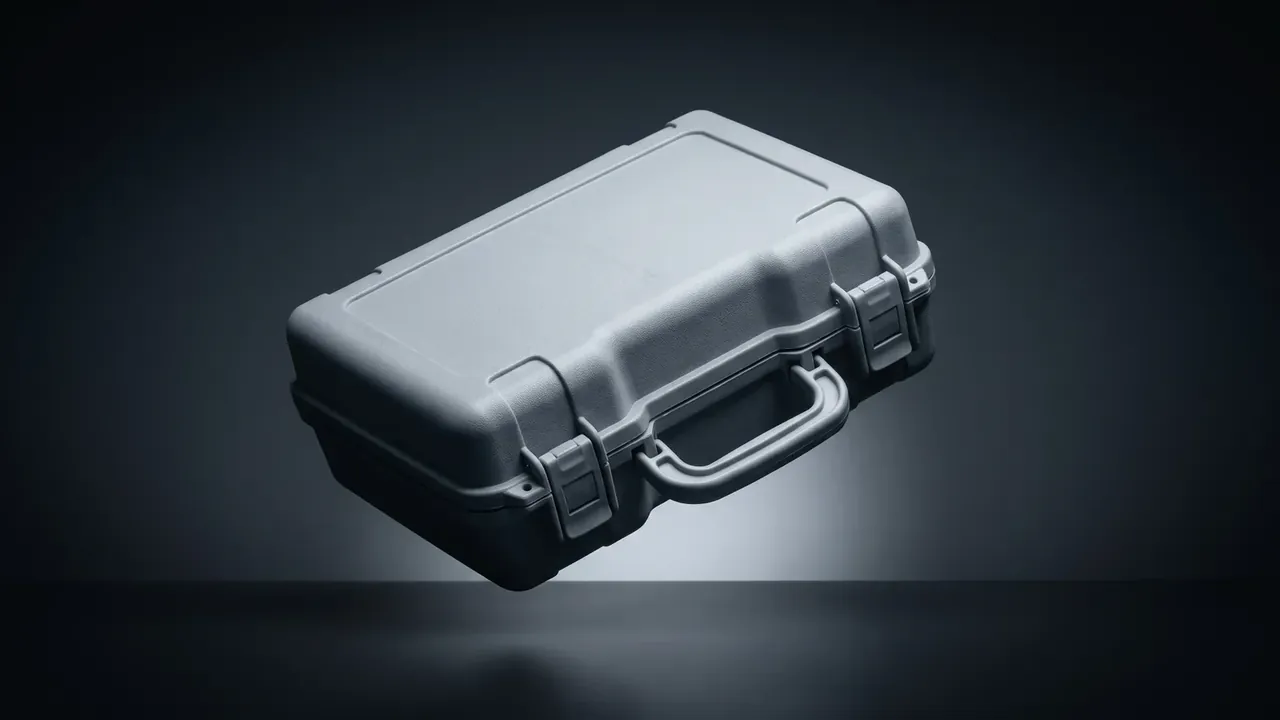
Hold 220 N and open at 30 N for one-handed use. The seat fails before the latch body: 3.5 mm with an R2 root survives 50,000 cycles, while 2.5 mm cracks on the third cold drop.
5. Sealing Grade and Pressure Relief
IP67 puts the case in a metre of water for 30 minutes, which needs a 50 Shore A O-ring at 25 percent compression; past 40 percent the rubber takes a set and leaks on the second closing.
A relief valve is the part most often deleted: at 0.35 bar an unvented Plastic Case is hard to open after a high-altitude leg. Pins and springs take 72 hours of salt spray, and one rusted pin wears a 0.15 mm bore out to 0.4 mm.
| Grade | Build | Suitable transfer |
|---|---|---|
| IP54 | Flat lip, no gasket | Indoor, inside a vehicle |
| IP65 | Tongue-and-groove, one gasket | Short open-yard runs |
| IP67 | Two gaskets, relief valve | Rain, sea freight, air |
| IP67 locked | Two gaskets, padlock eyes | Long routes, handovers |
Conclusion
The five criteria form a chain: closing face sets volume, radii set the drop result, handle and hinge set life, latches set closure, sealing sets the transport boundary. Loosen one link and the sample still passes on a bench, then fails in rain or at altitude. Write the five figures into the drawing and the inspection sheet. Choosing a Plastic Case means fixing those numbers on the closing face first.
This article discusses only the container (case body) side of specifications and design intent, and does not cover any handling, loading or use of the contents.
Related Reading
- PP case grades and shrinkage
- Choosing a small hard case
- Reading a case size range
- Matching dividers to a case
Related Products
- 8 Series — Gun Cases; Military Equipment Cases; Camera Equipment Cases; Drone Cases; Watch Cases; Knife Cases; First Aid Cases; Electronics Equipment Cases
- WL8-2812 PP Gun Case — model WL8-2812
- All protective cases and toolboxes: 7 series, 158 models