

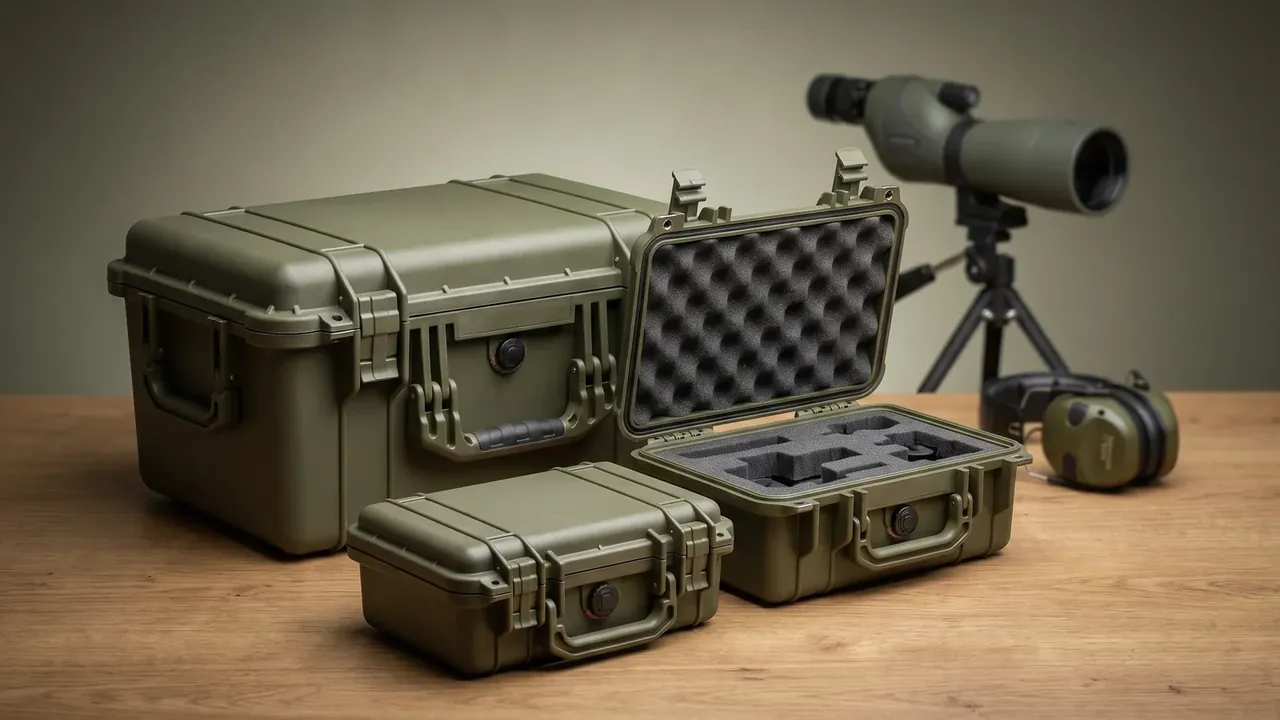
Quick answer: On a plastic hard shell zip case the waterproof ceiling is set by the zip, not the shell. Check the seam against IPX7 at 1 metre for 30 minutes, then measure 6.5 mm tooth pitch, 8 stitches per 30 mm and an R30 corner.
Table of contents
- The Zip Is the Weak Point, Not the Shell
- Tooth Pitch, Stitch Count and Corner Radius
- What MIL-STD-810H 501.7, 502.7 and 516.8 Test
- Scoring Three Samples Side by Side
- FAQ
1. The Zip Is the Weak Point, Not the Shell
A plastic hard shell zip case is moulded in one shot, so the shell keeps its shape; the seam around the rim takes the abuse. A latch case squeezes that seam shut with a gasket and four draw latches. With no latches, water resistance rests on interlocking teeth, a compressed slider and coated tape.
Turn the lid inside out. Stitching outside the coating is fine; stitching down the middle of it leaves one leak point per needle.
IEC 60529 splits IPX4 and IPX7 by a wide margin: 5 minutes of splashing against 30 minutes at 1 metre. Most catalogues that say waterproof stop at IPX4. Reaching IPX7 needs coated teeth on both faces, a sealing slider and a TPU lip at the rim.
| Target | Test | Zip build | Check |
|---|---|---|---|
| IPX4 | 5 min splash | Size 5, plain tape | Slider lip |
| IPX6 | 12.5 mm jet, 3 min | Size 8, one-side coat | Tape back gloss |
| IPX7 | 1 m, 30 min | Size 10, double coat | Stitch inside |
Unrated cases, with size 3 teeth on thin tape, seldom survive one splash.
2. Tooth Pitch, Stitch Count and Corner Radius
Three measurements, one caliper, no lab.
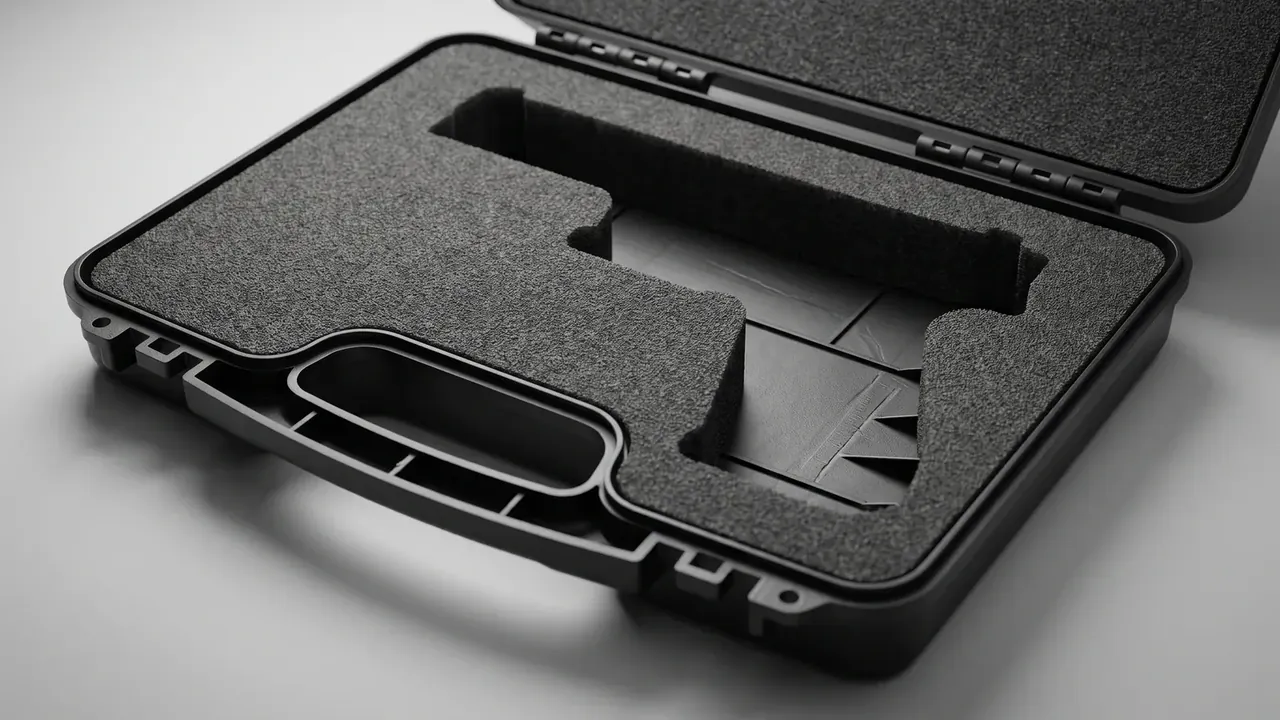
Tooth pitch is centre to centre: size 8 nylon runs 6.5 mm, size 10 about 7.5 mm. Larger teeth spread a sideways pull. Past 520 mm of case length, size 8 is too fine for the curves.
Count stitches over 30 mm; 8 is standard. Below 6 the seam parts under a 7 kg load, above 12 the needle holes outnumber the gain.
| Case length | Zip | Pitch | Radius | Slider hold |
|---|---|---|---|---|
| 380 mm | Size 8 | 6.5 mm | R30 | 300 N |
| 450 mm | Size 8 | 6.5 mm | R35 | 350 N |
| 520 mm | Size 10 | 7.5 mm | R40 | 420 N |
| 600 mm | Size 10 twin | 7.5 mm | R45 | 480 N |
Corners carry the stress. When the lid closes, the zip bends into an arc at each radius, the gaps compress inside the curve and open outside, and all of it lands in a few centimetres. Below a 30 mm radius the slider drags, the teeth grind the tape, and a pale wear line shows before 200 cycles. At 40 mm and above the arc is gentle and tape life roughly doubles. Open the lid fully and run a finger along the inside: a felt kink means an undersized radius. Pull the slider three times, and two catches rule the case out. A reinforcement patch at each corner bonds the tape between two layers so it cannot rub through.
Sliders are the hardest part to judge by feel: stamped bodies widen until the zip opens itself.
3. What MIL-STD-810H 501.7, 502.7 and 516.8 Test
MIL-STD-810H was written for equipment, not luggage, but its clauses are specific: Method 501.7 at 55 °C, Method 502.7 at minus 25 °C, Method 516.8 at 1.2 m. Metal parts also face ASTM B117 salt fog at 240 hours.
- Heat: 24 hours at 55 °C, then zip at once; hardened tape fails
- Cold: 4 hours at minus 25 °C, then drop the lid 300 mm onto concrete
- Drop: ballast to 12 kg, 1.2 m, bottom, corner, edge and face, 26 times
- Salt fog: 240 hours on hardware; red rust fails
Cold is skipped most. At minus 25 °C the PP shell is still sound; the coating is not, and a pull tears it along the needle holes at the temperature of a northern loading dock.
4. Scoring Three Samples Side by Side
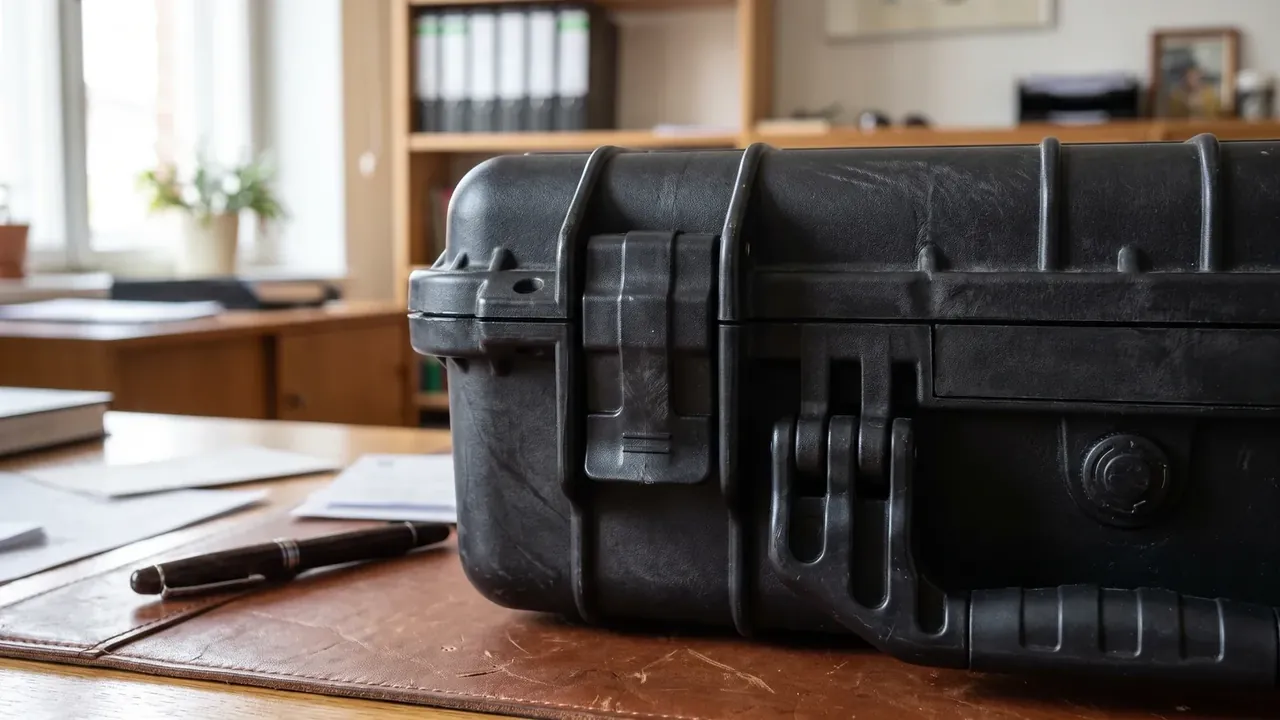
| Item | Weight | Pass line | Action |
|---|---|---|---|
| Zip sealing | 30 | Full IPX7 build | Stitch inside |
| Pitch, stitch | 25 | 6.5 mm, 8 per 30 mm | Three sections |
| Corner, slider | 25 | R30, die-cast | Feel, pull thrice |
| Shell, foam | 20 | 2.2 mm wall, firm cut | Press lid centre |
Score in the order things break: seam, teeth, corners, lid. A leaking seam scraps the whole case.
About 80 percent of the gap between two plastic hard shell zip cases sits in that zip; 40 yuan means size 8 became size 5.
Conclusion
A plastic hard shell zip case gives up its secrets on the bench: stitch inside the coating or not, pitch at 6.5 or 5 mm, corner at R30 or square, slider die-cast or stamped. The clauses only fix experience into repeatable conditions; IPX7 at 1 metre for 30 minutes asks what a 1.2 m drop asks, whether the seam still holds when conditions turn hostile. Answer that in the sample room and the plastic hard shell zip case you buy will be right.
This article discusses only the container (case body) side of specifications and design intent, and does not cover any handling, loading or use of the contents.
Related Reading
- Comparing three shell materials for hard cases
- Hard gun case selection criteria
- What to inspect on a showroom visit
Related Products
- 8 Series — Gun Cases; Military Equipment Cases; Camera Equipment Cases; Drone Cases; Watch Cases; Knife Cases; First Aid Cases; Electronics Equipment Cases
- WL8-2812 PP Gun Case — model WL8-2812
- All protective cases and toolboxes: 7 series, 158 models