

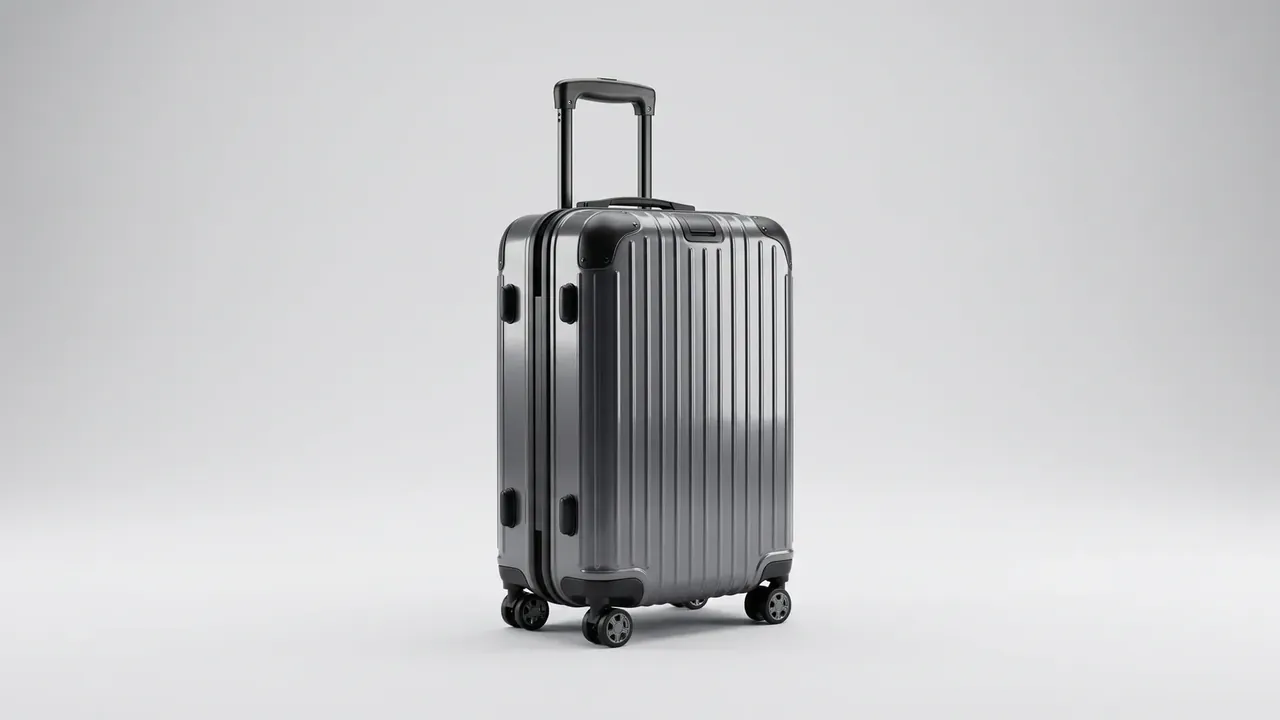
Quick answer: The three materials divide by forming route and failure temperature, not hardness. PC trades weight for toughness, ABS toughness for cost, PP surface for impact. City travel suits PC or a blend; cold regions and budget carriers suit PP.
Table of contents
- Forming sets the ceiling
- PC: best rebound, poor scratch resistance
- ABS: stiff, brittle when cold
- PP: toughest, hardest to finish
- Cost and life
- FAQ
1. Forming sets the ceiling
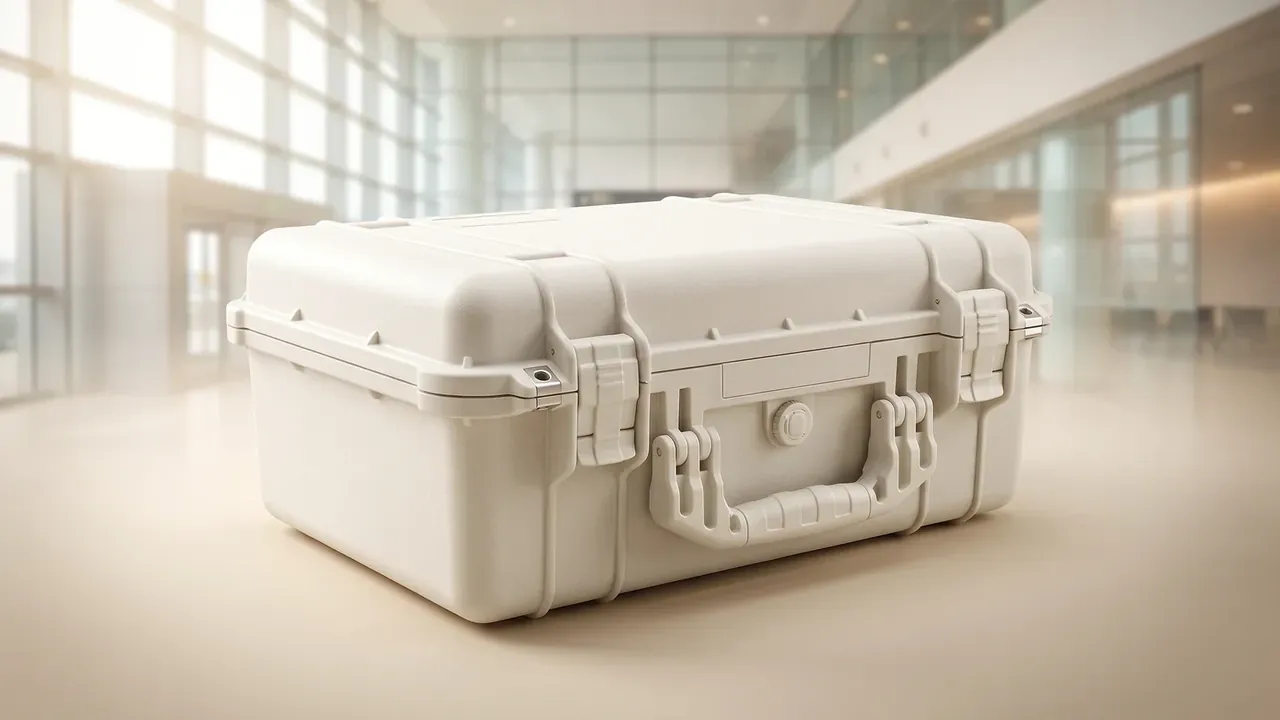
Start with the process: it decides what shape the material can take. Hard shell suitcases follow three routes: PC sheet thermoforming, ABS injection moulding, PP thermoforming.
Thermoforming gives even walls from the sheet, but ribs can only be pre-formed and stay shallow. Moulding builds ribs, wheel mounts and lock pockets in one shot, yet flow length thins the corners: a 2.5 mm nominal wall often measures 1.8 mm where it bends.
| Material | Forming | Wall | Thinnest corner |
|---|---|---|---|
| PC | sheet thermoforming | 1.5–2.0 mm | near nominal |
| ABS | injection moulding | 2.2–3.0 mm | 20–30% thinner |
| PP | thermoforming | 2.0–3.0 mm | near nominal |
2. PC: best rebound, poor scratch resistance
PC reaches 600–900 J/m notched impact and 60 MPa tensile, with a Vicat point near 145 °C: a dent springs back and cold does not crack it.
Scratch resistance is poor: PC yields instead of fracturing, and the flowed surface changes refractive index, leaving a white line. Sunscreen esters, petrol and alkali craze it.
Pale PC needs a UV coating or it yellows within eighteen months; most cases die of appearance, not fracture.
3. ABS: stiff, brittle when cold
ABS sits near 40 MPa and 150–300 J/m notched at a density of 1.05. It moulds flat and glossy without paint, and reproduces grain and metallic flake.
Cold is the weakness: below about minus ten the butadiene phase stops toughening and impact strength falls to a third. A winter drop splits the corner where the wheel mount meets the shell.
Weathering is the second cost: chalking within two or three years. PC/ABS blends at 6:4 or 7:3 land at 400–500 J/m.
| Property | PC | ABS | PP |
|---|---|---|---|
| Density | 1.20 | 1.05 | 0.90 |
| Tensile | 60 MPa | 40 MPa | 30 MPa |
| Notched impact | 600–900 J/m | 150–300 J/m | 40–60 J/m |
| Cold | good | poor | good |
| Surface | whitens | moulds glossy | needs film |
4. PP: toughest, hardest to finish
PP is lightest at 0.90. Notched impact is only 40–60 J/m, yet unnotched impact is high, because the part deforms as a whole: a PP case can be stood on and recover, then split from a knife point.
Surface is the limit. At 31 mN/m ink barely holds, so printing peels and the shell needs a BOPP film or corona treatment, which fades. PP shells carry the fewest graphics.
Shrinkage of 1.5–2.0%, unequal along and across the shell, misaligns lid and base.
5. Cost and life
PC costs 1.8–2.2 times ABS per kilo; PP is cheapest. Resin is not the whole case: an injection tool runs 150,000–400,000 yuan against 30,000–80,000 for thermoforming.
Below 3,000 pieces the cheaper tool outweighs the resin gap; above 20,000, moulding amortises.
Life follows use: PC gives five or six years with scratches and coating going first, ABS two or three in cold, PP four or five with film lift as the usual end.
| Item | PC | ABS | PP |
|---|---|---|---|
| Resin index | 100 | 50 | 45 |
| Tool cost | 30–80k | 150–400k | 30–80k |
| Economic batch | under 3,000 | over 20,000 | 3,000–10,000 |
| Main failure | scratches | cold cracks | film lift |
Conclusion
Hard shell suitcase material reduces to three questions: the lowest temperature in use, the surface requirement, and the batch size. Temperature separates PC from ABS, surface decides whether PP is viable, batch decides between thermoforming and moulding. Then the hard shell suitcase has one material left.
This article covers container-side specifications and design implications only, not the handling, loading or use of the contents.
Related Reading
- PP, ABS and PC case differences
- Polycarbonate case material properties
- ABS versus PP protective cases
- Balancing case weight and strength
Related Products
- 8 Series — Gun Cases; Military Equipment Cases; Camera Equipment Cases; Drone Cases; Watch Cases; Knife Cases; First Aid Cases; Electronics Equipment Cases
- WL8-2812 PP Gun Case — model WL8-2812
- All protective cases and toolboxes: 7 series, 158 models