

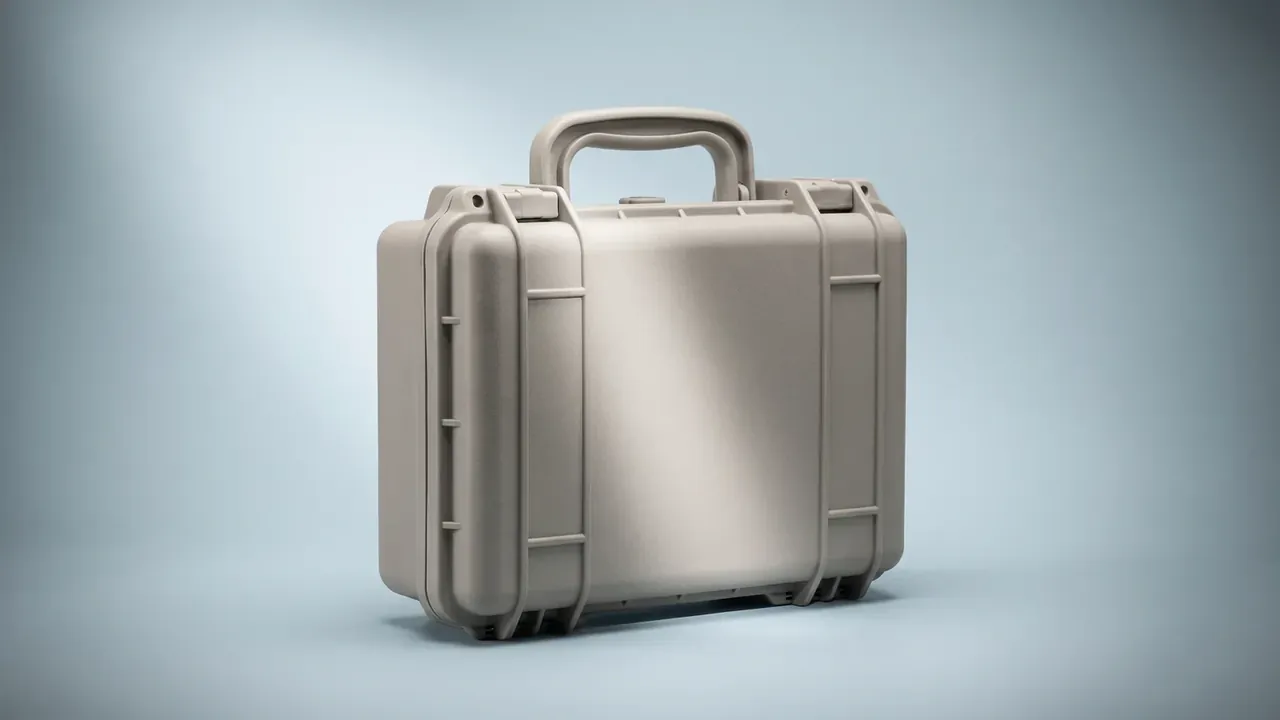
Quick answer: A plastic storage case with foam is decided by three numbers: a pocket edge 10 mm wider than the hand, a depth under 80 mm, and foam that still pushes back at a quarter of its thickness. Measure those and the layers and the grid settle without samples.
Table of contents
- Measure Three Things Before Cutting a Plastic Storage Case with Foam
- Three Foams at the Same Compression
- Layer Count Follows the Pick Path
- Pocket Size, Wall Thickness and Kerf
- FAQ
1. Measure Three Things Before Cutting a Plastic Storage Case with Foam
Most projects with a plastic storage case with foam fail at the cutting table, not the mould. A pocket 5 mm too narrow turns a pick into a two-finger dig; one 20 mm too deep hides the part.
Start with the largest outline of one item, caliper-measured three ways. Then the hand: palm at its widest with a thin glove reads 95 mm, so the edge needs 10 mm more. Then weigh the heaviest item in a pocket, and never average a mixed one.
An item of 160 by 90 by 45 mm, a 95 mm hand and a 1.8 kg part on one line settle most arguments.
| What to measure | Limit | How to check on site |
|---|---|---|
| Largest outline | Edge = outline + 6 to 15 mm | Caliper three ways, bosses apart |
| Hand width | Edge not under 95 mm | Palm widest, thin glove on |
| Heaviest item | No floor contact at 3 mm press | Kitchen scale, heaviest only |
Clear height is easy to miss. Lid foam eats 15 to 25 mm of usable depth, so a grid cut to full depth presses on the tallest item.
2. Three Foams at the Same Compression
Density is not a number a buyer can verify: a rig costs five figures, and three readings on one board differ by 5 percent. Compare what repeats: press the sheet to three quarters of its thickness and read the force.
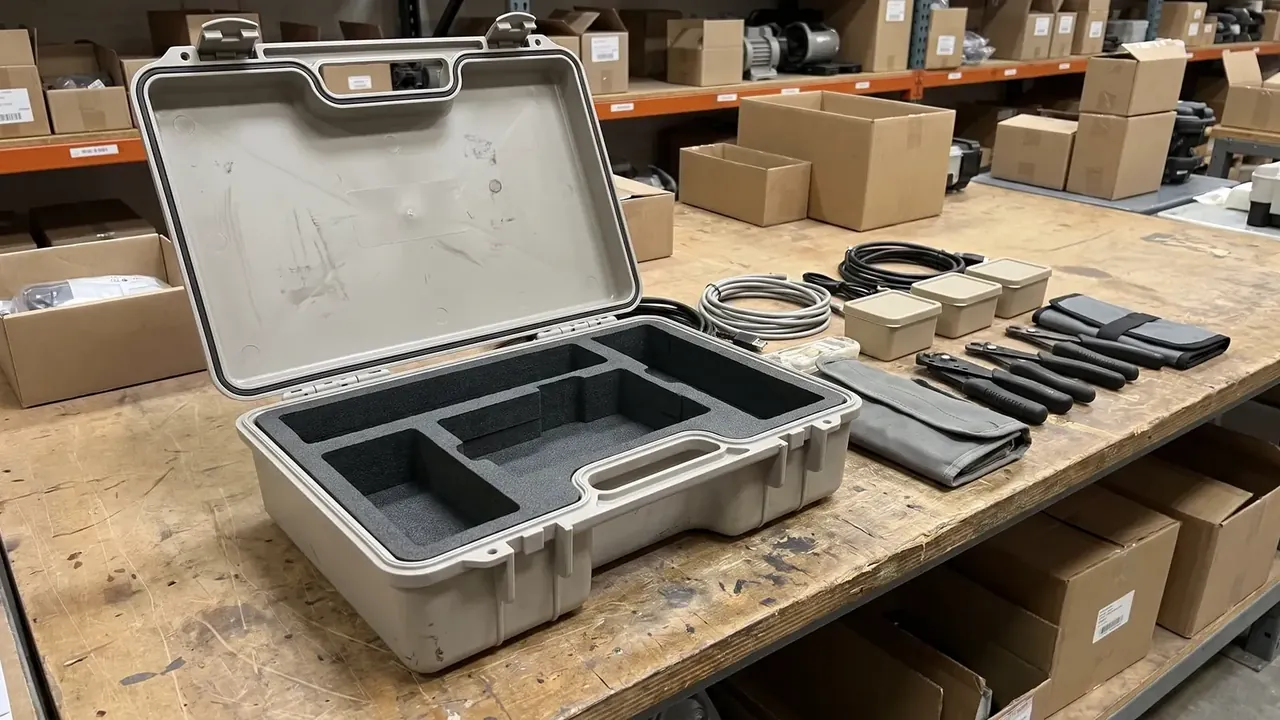
A 100 by 100 mm platen and a 50 kg scale do it: press 25 mm, divide by the platen area. One sample ranks three suppliers without a lab report.
| Foam | Stress at quarter compression | Recovery to 95% | Where it belongs |
|---|---|---|---|
| EPE foam | about 45 kPa | 5 seconds | Low-frequency pockets |
| EVA foam | about 110 kPa | 0.5 second | Daily picks, small parts |
| PU foam | about 32 kPa | 2 seconds | Lid pressure, curves |
Daily pockets want EVA. On a plastic storage case with foam, half-second recovery keeps walls from slumping through a shift. Pockets opened twice a year want EPE, cheaper and still firm enough.
PU belongs on the lid: open cell foam damps well and carries nothing, and in walls it deforms within three months.
Check the cut edge on the spot. A sheet that furs under a finger will mark parts black within 200 picks.
3. Layer Count Follows the Pick Path
Each layer adds a bearing face and one more gate. Draw the path first: open the case, follow eye, hand, part, and count the turns.
- One layer: all items level, no bosses, depth 90 mm or more.
- Two layers: a step of 5 to 30 mm, working items on top.
- Three layers: long items in a through slot, short ones in squares.
- Clamshell pair: tall items held by lid foam.
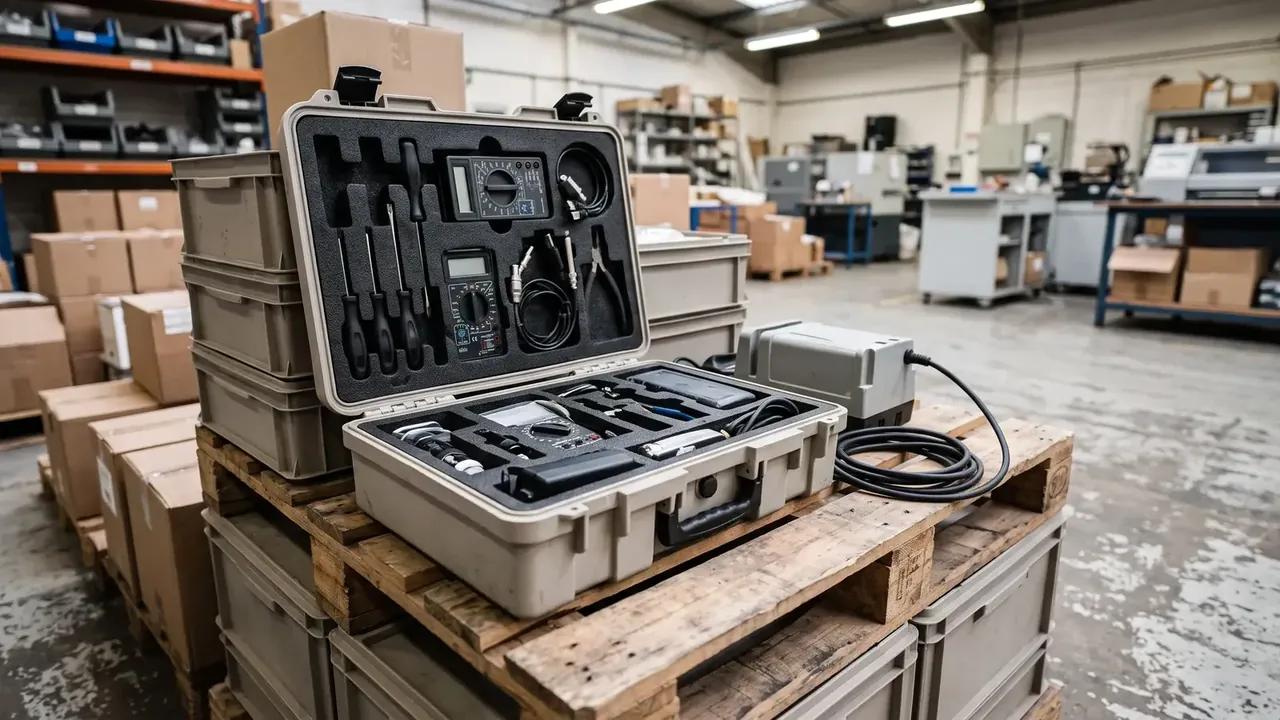
Keep the stack under 55 percent of internal depth. Past half, the bottom layer is a slit reached by fingertip, and the cost climbs with frequency: a pocket opened twenty times a day that spends 4 seconds searching and 5 reseating burns dozens of hours a month. Working pockets go to the top layer on the handle side, visible without shifting the case. Spares sink to the bottom, coded by colour. Never mix two part numbers in one pocket, because a mixed pocket is disordered by the third pick. Once the layer count is fixed, a plastic storage case with foam has stable borders.
Three layers is a working ceiling; above it, pick time grows faster than capacity.
4. Pocket Size, Wall Thickness and Kerf
Pocket edge is largest outline plus clearance, and clearance tracks weight and grip, not case size.
| Largest outline | Clearance | Wall thickness | Pick action |
|---|---|---|---|
| Under 40 mm | add 6 mm | 8 mm | Two-finger pinch |
| 40 to 90 mm | add 10 mm | 10 mm | Full-hand grab |
| 90 to 150 mm | add 15 mm | 12 mm | Two-hand lift |
Walls follow pocket size: 8 mm around small dense parts, 12 mm where a hand enters daily, gradual between. Leave a 3 mm kerf on the wall so the knife never nicks an edge.
Step the floor by 3 mm, shallow side outward. Round corners at R3, because a square one cracks first after 300 picks. The label slot rides the top edge, 12 mm wide.
Cut the grid in card first; one pass with the real parts settles the layout.
Conclusion
Three measurements set the borders, foam stress the grip, layers the path. The step most often skipped is the pick path, and it decides daily use. Put these numbers on the enquiry sheet and the plastic storage case with foam is cut right the first time.
This article discusses only the container (case body) side of specifications and design intent, and does not cover any handling, loading or use of the contents.
Related Reading
- Density bands and upright storage for foam stock
- Capacity and vehicle fit for camping storage boxes
- Lock points and pry resistance on lockable storage boxes
Related Products
- 8 Series — Gun Cases; Military Equipment Cases; Camera Equipment Cases; Drone Cases; Watch Cases; Knife Cases; First Aid Cases; Electronics Equipment Cases
- WL8-2812 PP Gun Case — model WL8-2812
- All protective cases and toolboxes: 7 series, 158 models