

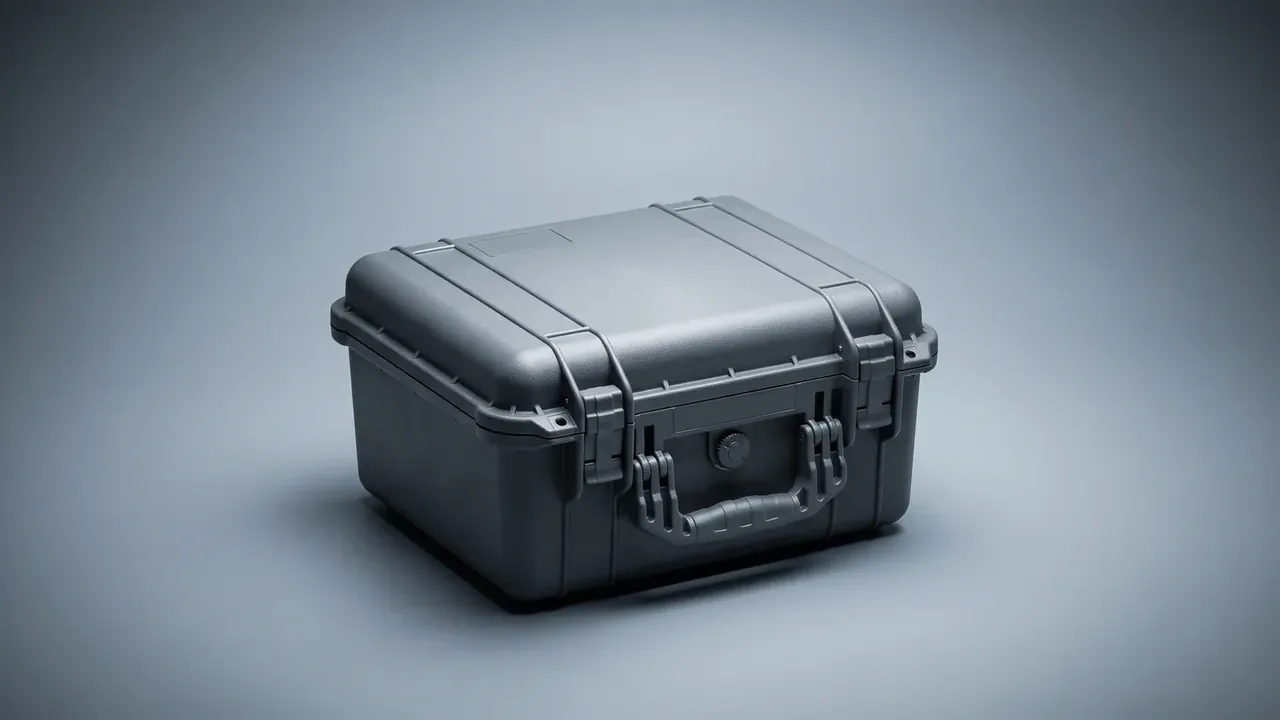
Quick answer: A lockable storage box is chosen on three layers: enough lock points, a lock that matches how keys are managed, and structure that resists prying. Lid length sets the count, management sets the lock type, hinges and wall thickness set the resistance.
Table of contents
- Lock points: count and position follow lid length
- Locks: hasp, combination dial and key cylinder
- Pry resistance: three structures beyond the lock
- Lock and seal: clamp pressure is one system
- Acceptance: five actions on site
- FAQ
1. Lock points: count and position follow lid length
A lockable storage box gains security from points matched to lid length. Under 400 mm one point and two latches suffice; 400 to 600 mm takes two; over 600 mm takes three, because a long lid lifts in the middle under a pry.
Keep each point within 80 mm of a corner and 300 mm from its neighbour, or the lid edge deforms while the lock never moves.
| Lid length | Lock points | Draw latches |
|---|---|---|
| under 400 mm | 1 | 2 |
| 400–600 mm | 2 | 2–3 |
| over 600 mm | 3 | 4 |
A hasp takes tension, a latch compression: latches without eyes cannot lock, eyes without latches cannot seal.
2. Locks: hasp, combination dial and key cylinder
Three locks match three ways of managing access: a hasp takes any padlock, a dial needs no keys, a cylinder lets one key open a batch.
Bore and shackle must match: a 6 to 8 mm bore takes a 4 to 6 mm shackle with under 1 mm play, or the padlock swings and lengthens the lever during a pry.
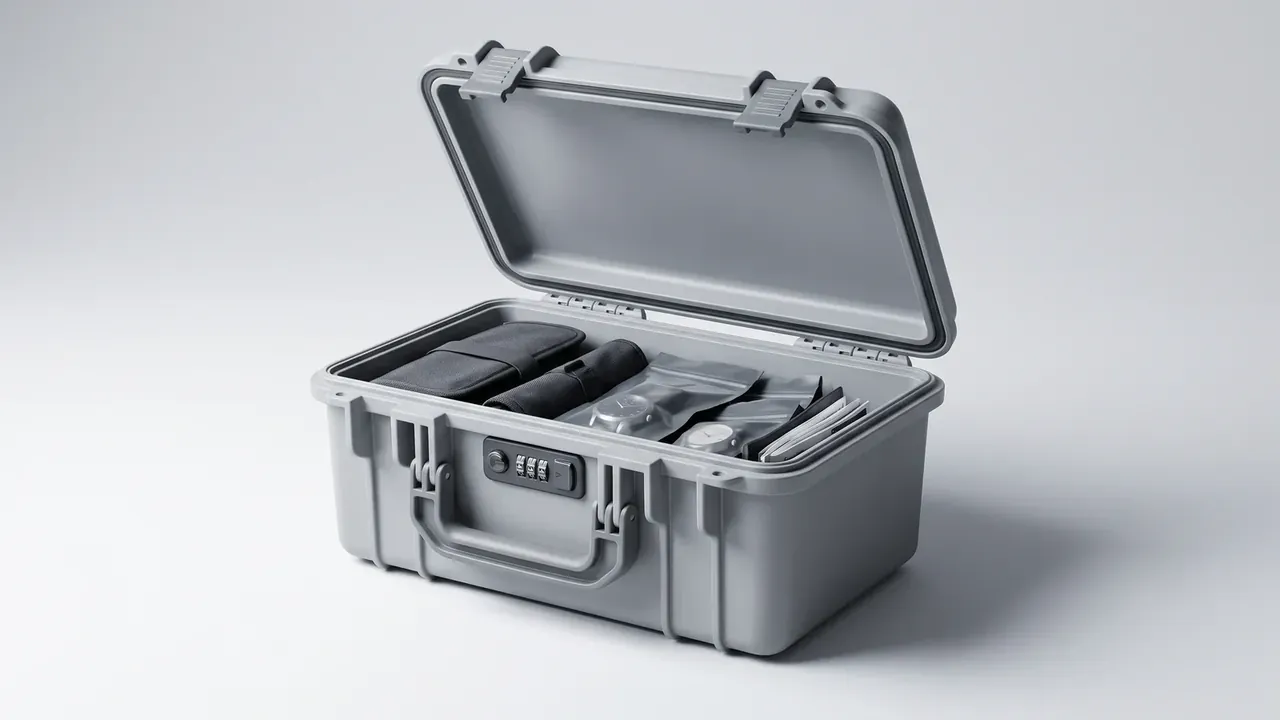
A three-digit dial gives a thousand combinations, so it suits manned sites. A cylinder should be brass; zinc alloy snaps in cold.
3. Pry resistance: three structures beyond the lock
Nine in ten forced openings happen beside the lock. A hasp plate fixed with self-tapping screws into thin wall tears out with the wall.
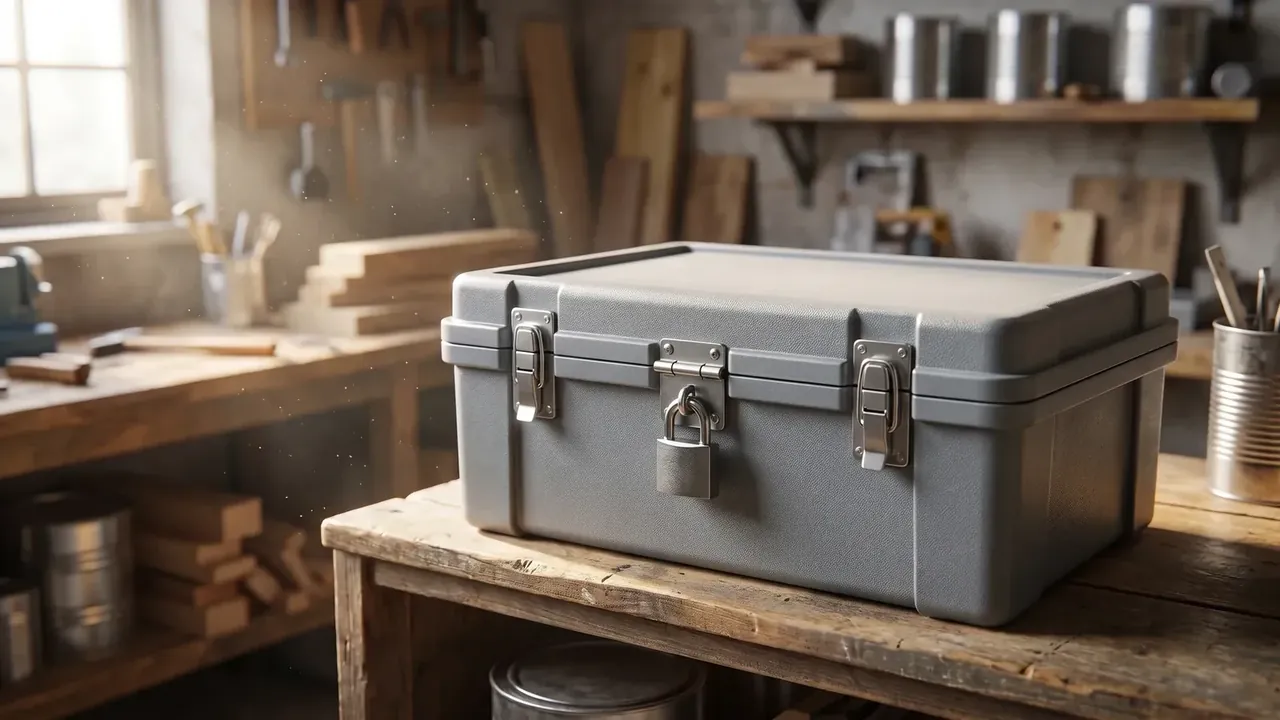
An external hinge exposes its pin, and pulling it removes the lid with the lock fastened. An internal hinge hides the pin; close the lid and look for a pin end.
Walls of 3.0 to 4.5 mm are the range; a thinner wall flares at a loaded point. Specify 304 stainless, since carbon steel rusts within three months outdoors.
4. Lock and seal: clamp pressure is one system
Locking and sealing are one mechanism: the latches pull the lid onto the gasket. Too few points clamp hard near each one and barely touch the gasket between, so compression falls from 40 to 10 per cent and water enters.
Keep compression between 30 and 50 per cent; a 20 per cent latch imbalance tilts the lid and the tilted side leaks first.
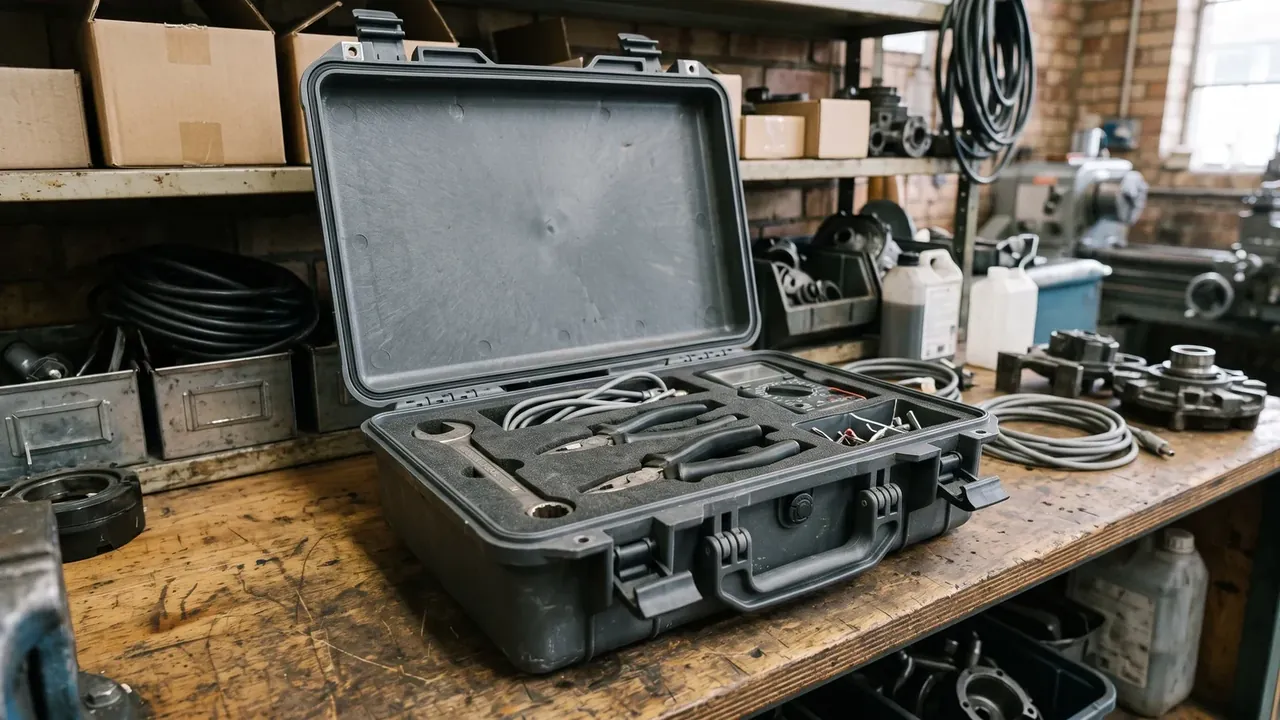
A pressure valve releases pressure before opening and nothing more; it is not a seal upgrade.
5. Acceptance: five actions on site
Acceptance takes five actions on site: pass the padlock through the eyes three times, press the corners for spring-back, pry beside a point with a 200 mm bar, rock the hinge, and count washered screws.
| Check | Pass | Fail |
|---|---|---|
| Shackle fit | under 1 mm play | padlock skewed |
| Lid contact | seam under 1 mm | local gap |
| Pry test | no gap | edge stays lifted |
| Hinge | no axial play | lid rocks |
| Hasp fixing | two washered screws | screws in thin wall |
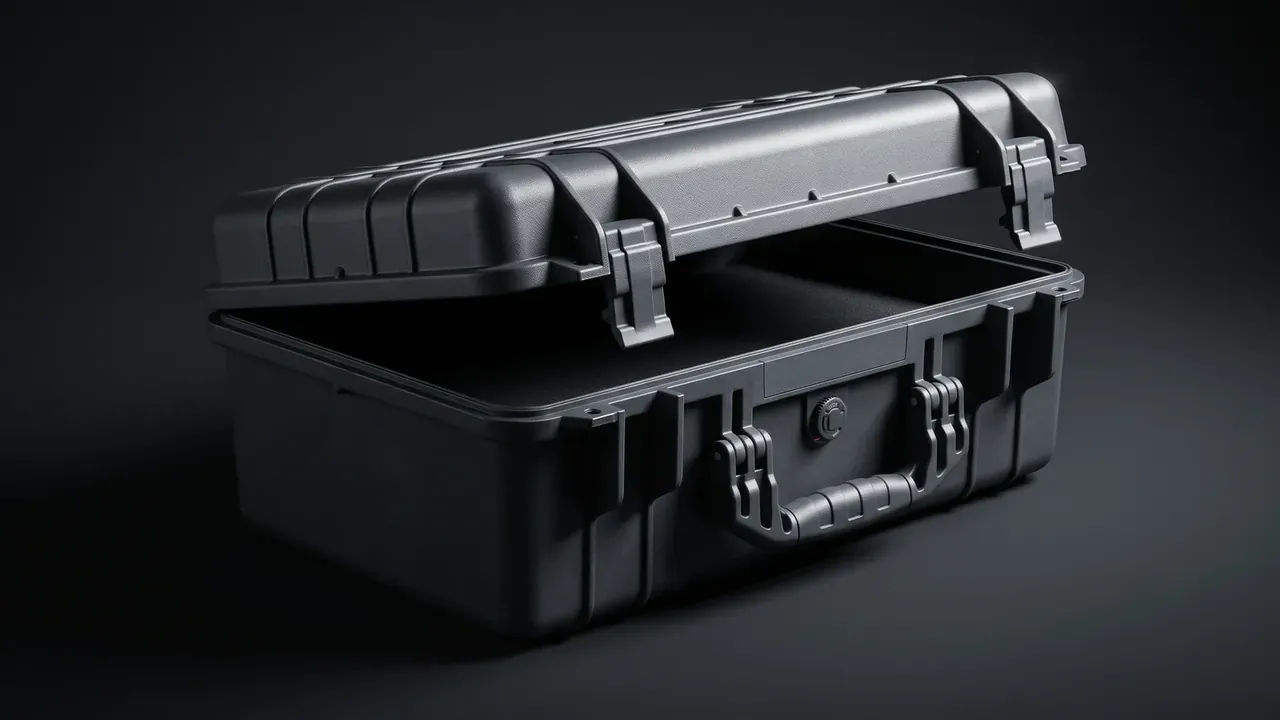
The pry test settles it: an edge that lifts and stays lifted means the wall has yielded, while one that springs back is still elastic.
Conclusion
The order for a lockable storage box is points, lock type, pry resistance, sealing, then acceptance. Count points from lid length, choose the lock from key management, check the hasp plate and hinge against a bar, and run the five actions on site. In that order a plain padlock is enough; out of it, no lock survives a pry bar.
This article covers container-side specifications and design implications only, not the handling, loading or use of the contents.
Related Reading
- Case lock customisation options
- Case hardware latch selection
- Replacing and maintaining case hinges
- TSA locks and air travel
Related Products
- 8 Series — Gun Cases; Military Equipment Cases; Camera Equipment Cases; Drone Cases; Watch Cases; Knife Cases; First Aid Cases; Electronics Equipment Cases
- WL8-2812 PP Gun Case — model WL8-2812
- All protective cases and toolboxes: 7 series, 158 models