

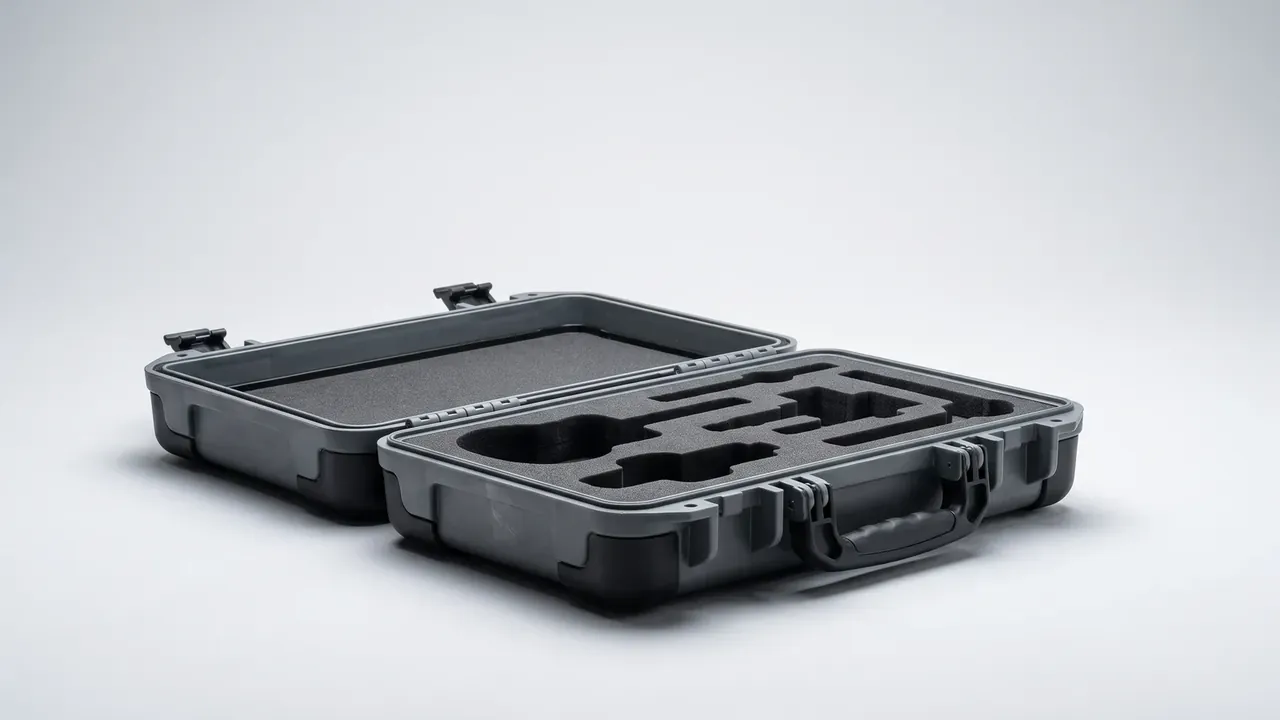
Quick answer: A plastic tool case with foam turns the question of whether a tool is in place into a visible shape. Three count lines give the criteria, a four-step return routine keeps oil and swarf out of the pockets, and a 90-second sweep after a shift catches a missing item.
Table of contents
- How a plastic tool case with foam sorts tools into four pocket types
- Spotting a missing tool: three lines of sight
- Protecting polished faces and cutting edges
- Cleaning order before a dirty tool goes back
- Count rhythm: 90 seconds after shift, full audit weekly
- FAQ
1. How a plastic tool case with foam sorts tools into four pocket types
Pockets follow the way a tool leaves the case: long items lift at both ends, sockets come out between two fingers, round parts pull straight up, special tools peel along their outline. Match pocket to motion and a tool can only go back one way.
The pocket layer is usually 30 mm polyethylene at 45 kg/m³, with a 10 mm base pad and 20 mm convoluted foam in the lid. Clearance of 1.5 mm per side governs feel more than thickness: under 1 mm the tool jams, over 2 mm it slides free.
| Pocket type | Typical item | Depth | Removal | What a gap looks like |
|---|---|---|---|---|
| Through slot | Long screwdriver, pry bar | 30 mm | Lift both ends | Whole slot floor exposed |
| Square pocket | Sockets, gauge blocks | 25 mm | Pinch out | Empty floor, no rim marks |
| Round pocket | Round nuts, punches | 20 mm | Pull straight up | A round hole remains |
| Profiled pocket | Special wrench, polished part | 18 mm | Peel along outline | Outline missing a section |
Once the four types are set, numbering works. Without that sorting, numbers stop at the case.
2. Spotting a missing tool: three lines of sight
Missing-tool detection in a plastic tool case with foam runs on three lines: the pocket floor, the foam rim, the imprint in the lid. Run all three and the answer arrives without counting by hand.
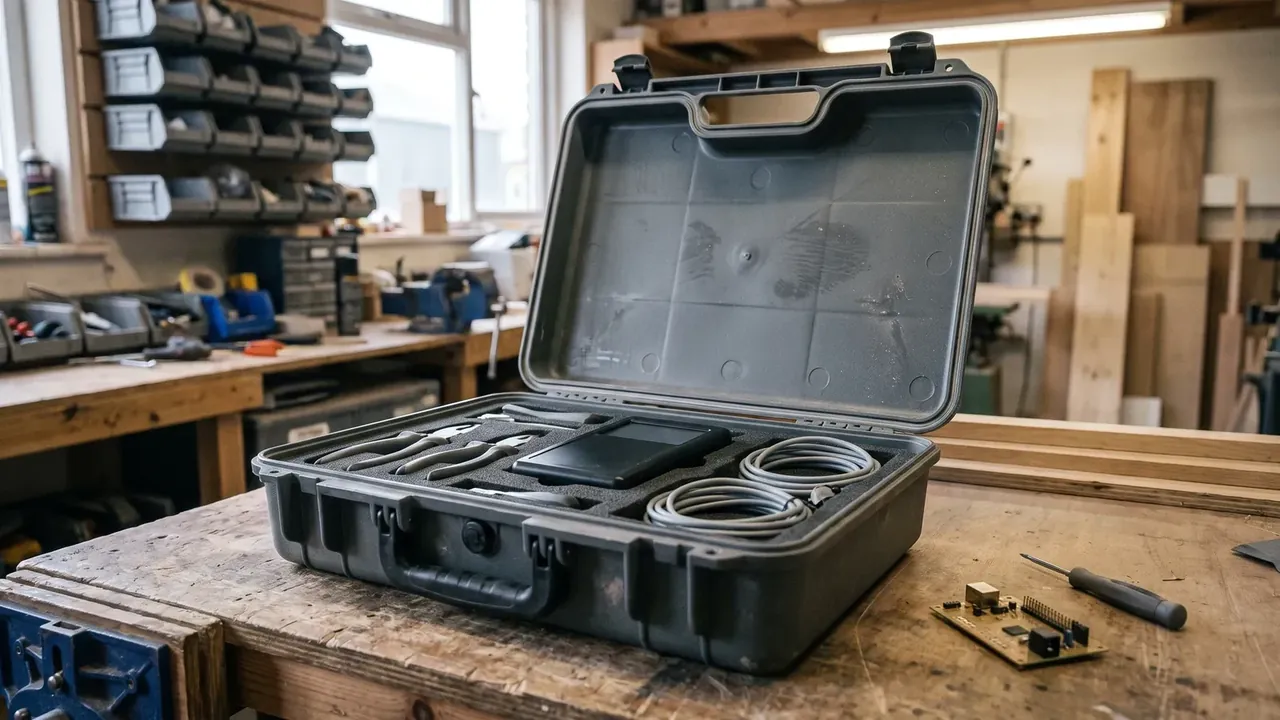
The floor line is fastest: a removed tool leaves a dark hollow on pale foam. Dark tools on dark foam defeat it, so a fingertip pass confirms.
The rim line checks flushness: a seated tool sits level with the rim, while a long item sunk at one end leaves a thin gap. Raking light turns that gap into a shadow, easier to read than a flat ceiling light.
The imprint line reads the lid: continuous marks mean full pockets, a flat patch means an empty one.
| Line | Criterion | Usual misread | Follow-up |
|---|---|---|---|
| Floor | Pocket floor visible means empty | Dark tool on black foam | Fingertip sweep |
| Rim | Tool top level with foam rim | Long item sunk at one end | Rake light, watch shadow |
| Imprint | Marks continuous | Neighbouring marks overlap | Check the pocket list |
Keep the order: floor screens obvious gaps, rim catches tools that never seated, imprint backs both up.
3. Protecting polished faces and cutting edges
Polished parts are measuring faces, mould inserts and optics. They fail on sliding, not impact: a 0.5 mm score scraps a face. Five rules:
- One polished part per pocket, never two in the same cavity
- 0.5 mm clearance per side, held by foam spring rather than compression
- Cutting edges face down, with a 2 mm radius insert at the pocket mouth
- A 20 mm pad above polished parts, pressed but not crushed
- Grip the shank, never the measuring face, and check for swarf first
When edges and polished parts share a case, put a foam divider between them.
4. Cleaning order before a dirty tool goes back
The return routine is wipe, scrape, dry, seat. Reverse it and oil enters the foam: walls harden, rebound drops, and a pocket that gripped begins to rattle.
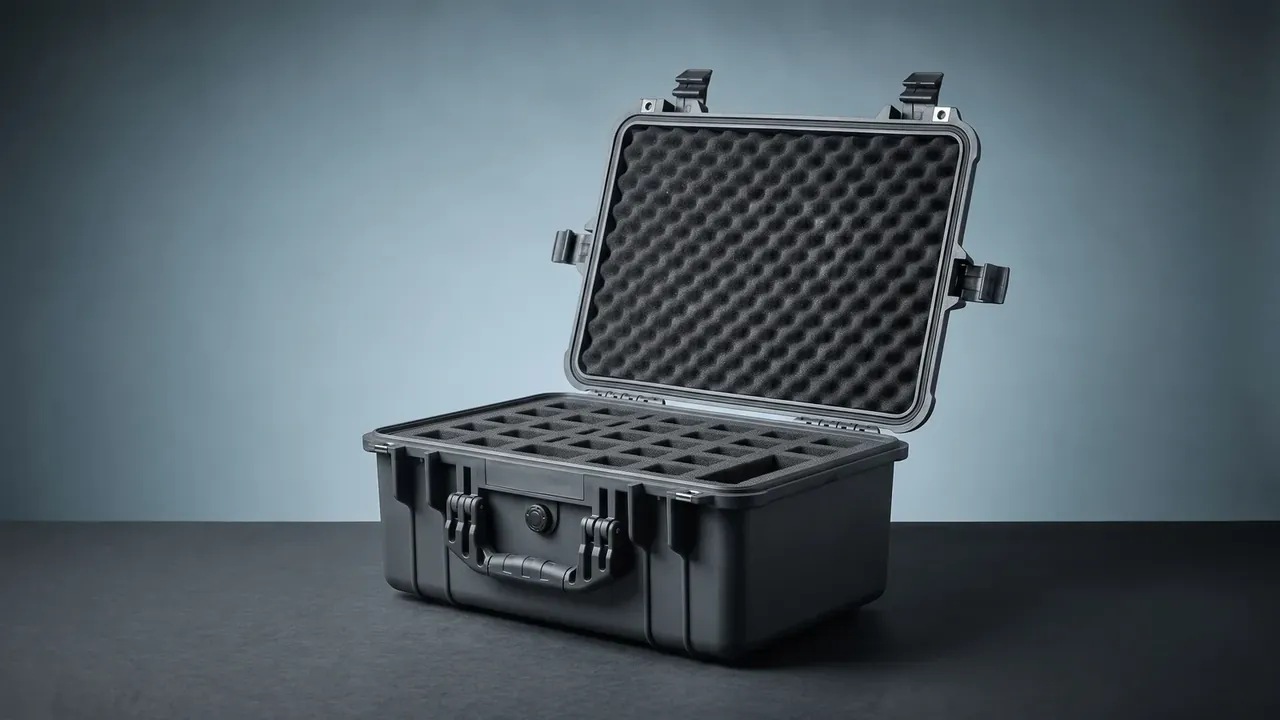
Wipe first with a lint-free cloth, 40 seconds per tool. Scrape second, clearing swarf with a bamboo stick, not a metal scraper that burrs the mouth. Dry third, standing the tool outside for 5 minutes so solvent flashes off. Seat last, dropping it along the outline until it settles. Four steps across 48 tools take about 12 minutes. Oil damage accumulates: glossy walls at one month, crumbs at three, and an 18-month liner finishing at 9.
Laying a paper towel in the pocket, a common habit, makes it worse: the towel saturates and presses oil into the foam.
5. Count rhythm: 90 seconds after shift, full audit weekly
The end-of-shift count runs the three lines in pocket order, top left to bottom right, without skipping; 48 tools take about 90 seconds. A skipped route tends to be skipped again the next day.
The weekly audit of the plastic tool case with foam pulls every tool, checks it against the number list and inspects the foam. It runs about 12 minutes, most on the foam.
Log pocket number, missing item, time found; with all three a replacement arrives inside 24 hours. Leave it longer and something else takes the pocket.
Conclusion
A plastic tool case with foam does two jobs: pocket types give a tool one way home, and three lines make a gap visible within 90 seconds. Fix the return routine at wipe, scrape, dry, seat, and liner life returns from 9 months to 18. Do both and a plastic tool case with foam takes part in the count, not just holds tools.
This article discusses only the container (case body) side of specifications and design intent, and does not cover any handling, loading or use of the contents.
Related Reading
- Bench-side box allocation and shift handover
- How to zone the compartments in a tool box
- Drawer layering in a tool chest
- Moving a wheeled tool case over long distances
Related Products
- 8 Series — Gun Cases; Military Equipment Cases; Camera Equipment Cases; Drone Cases; Watch Cases; Knife Cases; First Aid Cases; Electronics Equipment Cases
- WL8-2812 PP Gun Case — model WL8-2812
- All protective cases and toolboxes: 7 series, 158 models