

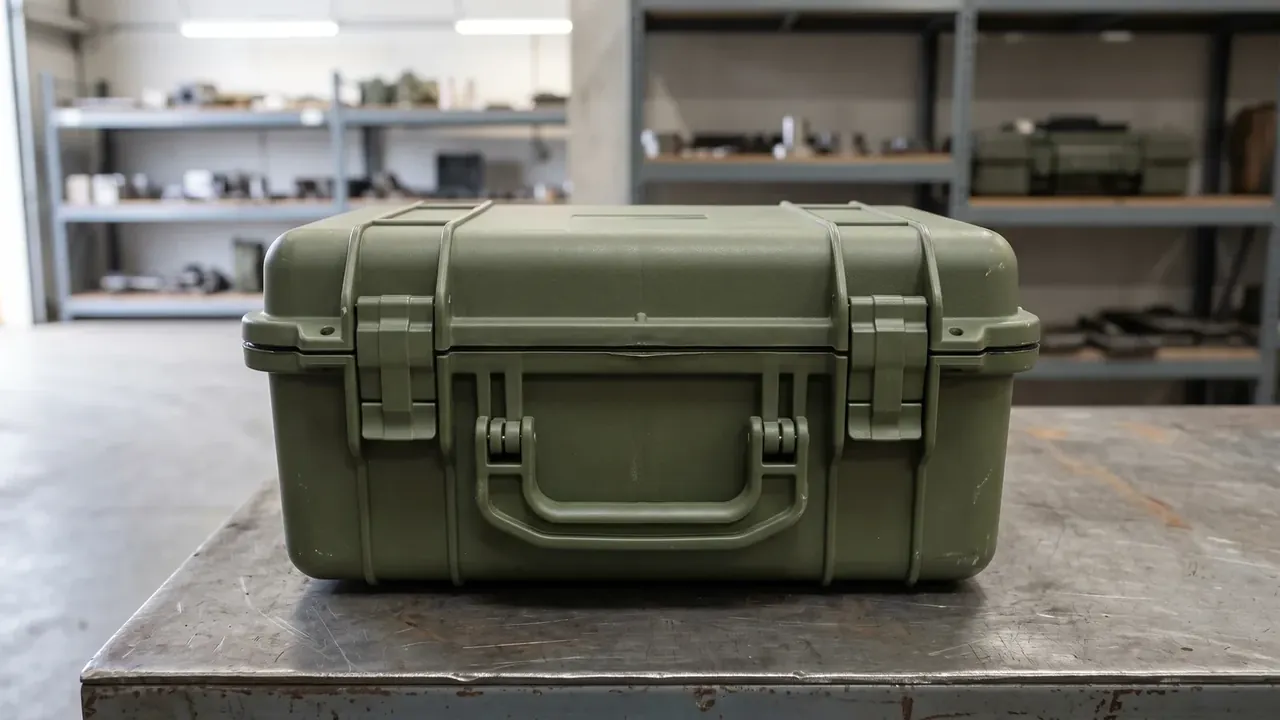
Quick answer: Power inspection meter dustproof waterproof hard case: two 6 mm gaskets at 22% compression keep lid opening ≤50 N after 30 min of rain and 2 h of dust.
Table of contents
- How a Power inspection meter dustproof waterproof hard case splits 22% compression
- Rim fit and the 6 mm gasket cross section
- Rain at 100 L/(m²·h) plus 2 h of dust in parallel
- Re-testing leak rate ≤0.4 kPa/min after 3000 cycles
- Drop at 1.2 m and the temperature band
- FAQ
1. How a Power inspection meter dustproof waterproof hard case splits 22% compression
A Power inspection meter dustproof waterproof hard case uses two gasket rings, not one thick strip. The outer stops spray at the lid edge; the inner, one step back, catches fine dust. Both are 6 mm sections at 22% compression, closing to 4.7 mm and leaving 1.3 mm of rebound reserve. Below 18% the strip shrinks and leaks when cold; above 28% it takes a permanent set. That 22% balances crush against gap. Two rings sharing the load beat a single thick one under a paired condition.
The body of a Power inspection meter dustproof waterproof hard case backs up that figure. Outside 520×400×250 mm, cavity 465×345×200 mm, wall 3.9 mm keep the rim stiff. Empty 5.0 kg and loaded 10 kg, the lid-to-shell face barely flexes, so both rings seat evenly. Compression is free height minus closed height over free height, read at eight rim points.
2. Rim fit and the 6 mm gasket cross section
Where a gasket sits matters as much as the pressure on it. On a Power inspection meter dustproof waterproof hard case the lid and shell meet in a tongue-and-groove, the groove slightly narrower than the 6 mm strip so an interference fit holds it without a rolled lip. A void under the groove absorbs the compression instead of pushing the lid past 50 N.
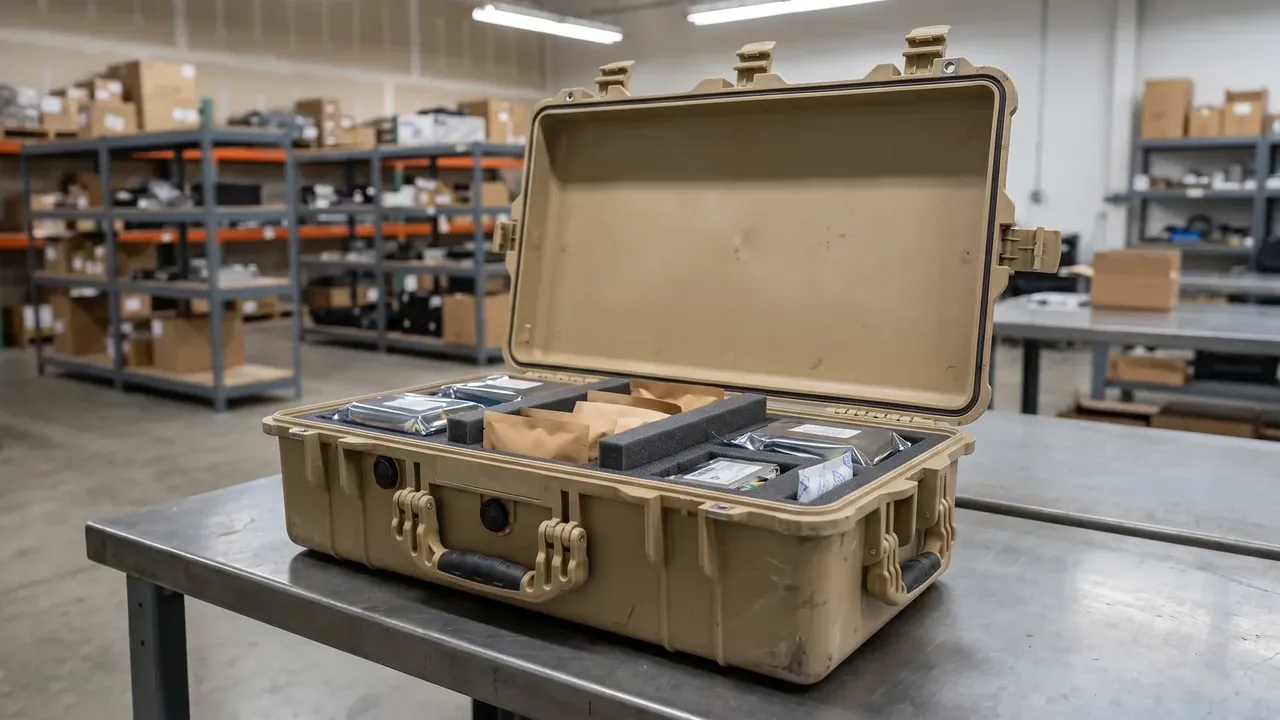
Latch pressure points follow the same logic. Two front latches and the hinge set four datums; pressed together the rim loads evenly, pressed only at the middle a far corner lifts about 0.3 mm and dust reaches the inner ring. Two vertical bands stiffen the rim. Both stages share the 6 mm section and 22% target; only position and job differ.
| Sealing stage | Build | Role |
|---|---|---|
| Outer gasket | 6 mm, lid edge | 22%, stops rain |
| Inner gasket | 6 mm, one step back | 22%, fine dust |
| Rim tongue | tongue-and-groove | locates strip |
| Latch points | four-point clamp | spreads load |
3. Rain at 100 L/(m²·h) plus 2 h of dust in parallel
A Power inspection meter dustproof waterproof hard case is stressed by rain and dust together, not apart. The condition is rain at 100 L/(m²·h) for 30 min alongside 2 h of dust: spray wets the rim, dust rides the water film into the seam, and wet dust clings harder than dry. Lid opening is measured after this pairing, still judged at ≤50 N.
The point is the split of labour between two rings, not how thick one ring is. Dust in the outer lip raises friction; the inner ring holds the last barrier at 22% compression.
| Failure mode | Trigger | Sign and action |
|---|---|---|
| Dust in the lip | rain with dust | opening force rises, clear outer |
| Permanent set | compression too high | height misses 6 mm, recheck 22% |
| Rolled lip | weak interference | local leak, resize groove |
| Water at tongue | outer ring fails | damp inner ring, re-test fit |
On a Power inspection meter dustproof waterproof hard case every failure shares one root: one ring gives way and the other takes the load. After 2 h of dust, check the inner ring for damp marks first.
4. Re-testing leak rate ≤0.4 kPa/min after 3000 cycles
A Power inspection meter dustproof waterproof hard case is not sealed for good at the factory gate. Run 3000 open-close cycles with the latches in the same notch each time, then read leak rate, judged at ≤0.4 kPa/min. Pressurise or evacuate the closed case, shut the valve, and time the pressure drop over a set span; a faster drop means one stretch of gasket is no longer seated.
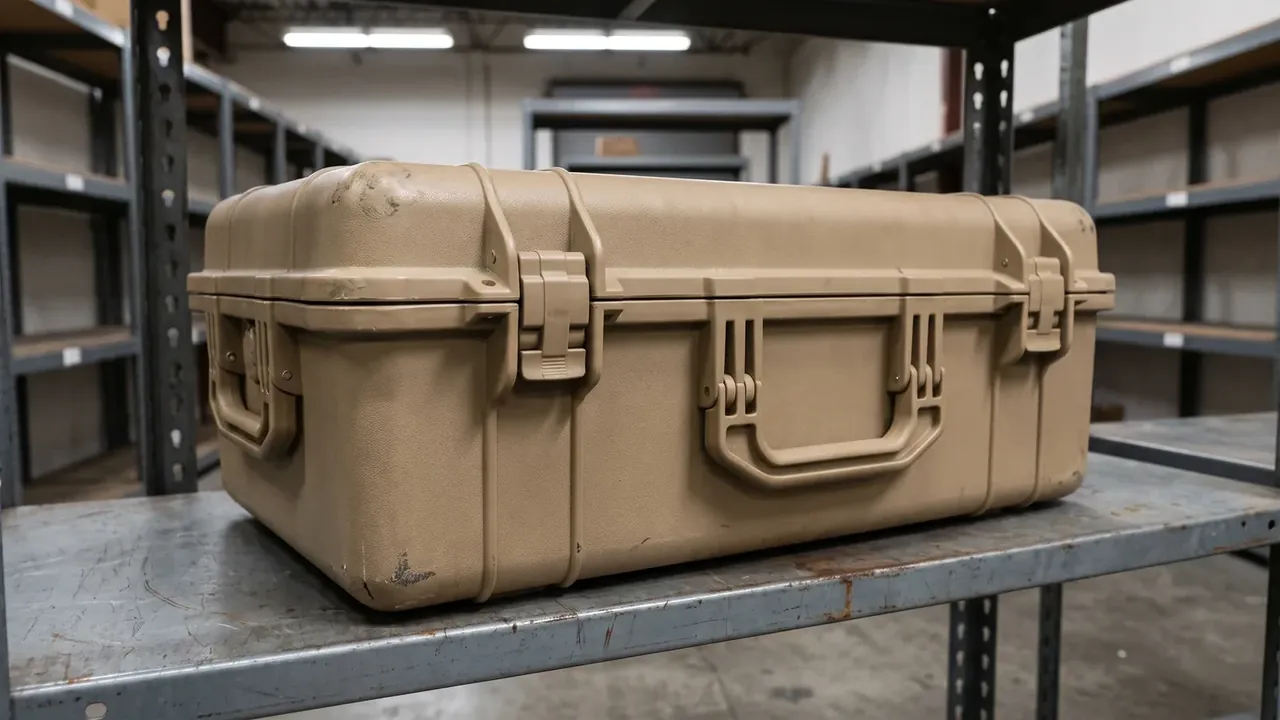
Rebound is what gets skipped. Each close squeezes 1.3 mm out, and returning to 6 mm after 3000 cycles decides the leak rate. The −20 °C to 60 °C band belongs in the check: cold slows rebound, heat invites set. If lid opening drops, measure the latch notch before blaming the gasket.
5. Drop at 1.2 m and the temperature band
A Power inspection meter dustproof waterproof hard case also has to survive one accident. Fall 1.2 m onto corner, face and edge; lid and shell tongue must not gap and neither ring may leave its groove. Re-test opening force and leak rate without swapping gaskets, still at ≤50 N and ≤0.4 kPa/min.
The whole Power inspection meter dustproof waterproof hard case is benchmarked to IP67 dust and water requirements by the matching method. Temperature stays inside −20 °C to 60 °C across the drop. JUNZHIJIA leaves the two rings widely spaced, so that 1.3 mm reserve survives.
| Limit | Value | Condition |
|---|---|---|
| Lid opening | ≤50 N | 30 min rain plus 2 h dust |
| Leak rate | ≤0.4 kPa/min | after 3000 cycles |
| Compression | 22% | eight rim points, lowest |
| Rain | 100 L/(m²·h) | 30 min, paired with dust |
| Drop height | 1.2 m | corner, face, edge |
Conclusion
A Power inspection meter dustproof waterproof hard case sets two 6 mm gaskets at 22% compression so the paired rain-and-dust condition still holds lid opening under 50 N. The 3000 cycles, the 1.2 m drop and the −20 °C to 60 °C band all watch whether that 1.3 mm rebound reserve survived.
Related Reading
- How dust protection ratings are defined
- Selecting an electrician meter case
- Sizing a gasket groove
- Factory inspection checklist for cases
Related Products
- 8 Series — Gun Cases; Military Equipment Cases; Camera Equipment Cases; Drone Cases; Watch Cases; Knife Cases; First Aid Cases; Electronics Equipment Cases
- WL8-2812 PP Gun Case — model WL8-2812
- All protective cases and toolboxes: 7 series, 158 models