

Quick answer: A Protective Case Distributor is judged on three things: the tier it holds, the project registration it can raise, and the delivery date it will put in writing. Tier sets the discount, registration sets price protection, continuity sets the cost of walking away.
Table of contents
- Tiers, and what a Protective Case Distributor may quote
- Letters, territory and registration
- Minimum order, price breaks, samples
- Lead time, spares and liability
- Continuity after an authorisation ends
- FAQ
1. Tiers, and what a Protective Case Distributor may quote
A factory splits its market into three tiers, and a Protective Case Distributor is priced by the tier it holds. The regional master covers one prefecture city and recruits sub-distributors on 1.2 million RMB a year. A sub-distributor commits 300,000 RMB for local retail and small projects. A project authorisation names one job, carries no territory and prices three to five points below the sub tier. Push a master to the sub price and it stops registering projects.
| Tier | Annual purchase | Share of ex-works | Scope |
|---|---|---|---|
| Regional master | 1.2 million RMB | 55 to 62 percent | range, recruitment, projects |
| Sub-distributor | 300,000 RMB | 68 to 72 percent | local retail, small projects |
| Project | none | sub tier minus three to five points | one project, no territory |
2. Letters, territory and registration
Check three things on the letter a Protective Case Distributor hands you: the issuer is the factory rather than a trader passing rights on, the territory names a prefecture city, and the validity covers the project. Twelve months is typical against an eighteen-month project cycle, and orders placed in the gap carry no price protection.
Registration is a sequence: submit seven working days ahead with project name, quantity and milestones, and once accepted the factory will not quote that job to a second party in the region for ninety days. Get the number in writing. A three-step chain keeps the warranty at the factory but pushes spares from seven days to twenty.
3. Minimum order, price breaks, samples
A Protective Case Distributor sells by the pallet. A 1,200 by 800 millimetre pallet takes six cases of 560 by 350 per layer, four layers, twenty-four cases. Mixed orders start at four sizes, six cases each; below that, setup cannot be absorbed.
Breaks run at one, five and ten pallets, worth zero, four and seven points. Lock volume into an annual frame with price open and a review trigger, such as a five percent raw material move. Samples sit at 80 percent of retail, with 60 percent credited against the first order.
| Quantity | Against one pallet | Delivery | Use |
|---|---|---|---|
| One pallet | base | 7 days | trial, replenishment |
| Five pallets | 4 points lower | 12 days | quarterly stock |
| Ten pallets | 7 points lower | 18 days | frame call-off |
4. Lead time, spares and liability
Stock black and olive ship in seven days, a custom colour takes twenty-five, a new mould thirty-five to forty. When a Protective Case Distributor promises fifteen days, it is quoting the stock colour.
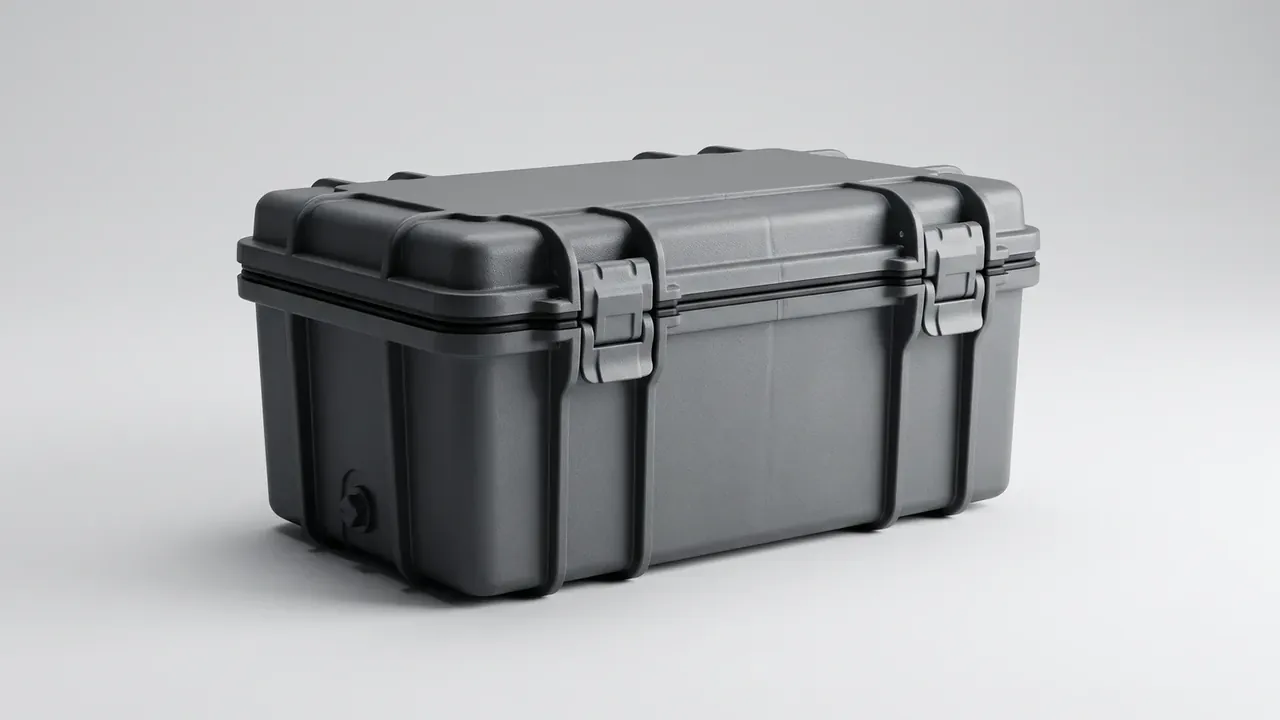
Latches, valves and O-rings are consumables with twelve months of cover; body, hinges and handles get three years. The first order should carry a two percent spares pack. Report transport damage within forty-eight hours with signed photos, leave assembly faults with the factory, and accept that overload deformation is excluded.
5. Continuity after an authorisation ends
At termination, the risk for a Protective Case Distributor is a registered project left without supply. A continuity clause keeps the factory shipping those jobs at the original price for six months, capped at the registered quantity.
Custom foam dies and colour plates stay with the factory, and matching a colour again costs 800 to 1,500 RMB. Keep a three to five percent tail batch, expect retail from month seven, typically thirty percent higher, and buy two years of spares before the end date.
| Item | After termination | Period |
|---|---|---|
| Registered projects | original price, capped quantity | 6 months |
| Tail batch | with the last call-off, 3 to 5 percent | final batch |
| Spares | retail price | from month 7 |
Conclusion
Buying through an agent outsources price, delivery and after-sales to a middle layer that thrives on loose wording. Tier sets the discount, registration sets price protection, continuity sets the cost of exit. Write all three into the annex and a Protective Case Distributor becomes a partner rather than a markup.
This article discusses only the container (case body) side of specifications and design intent, and does not cover any handling, loading or use of the contents.
Related Reading
- How an enquiry becomes a case quotation
- Stages of a protective case sales process
- Reading a supplier qualification file
- Factory or trader for protective cases
Related Products
- 8 Series — Gun Cases; Military Equipment Cases; Camera Equipment Cases; Drone Cases; Watch Cases; Knife Cases; First Aid Cases; Electronics Equipment Cases
- WL8-2812 PP Gun Case — model WL8-2812
- All protective cases and toolboxes: 7 series, 158 models