

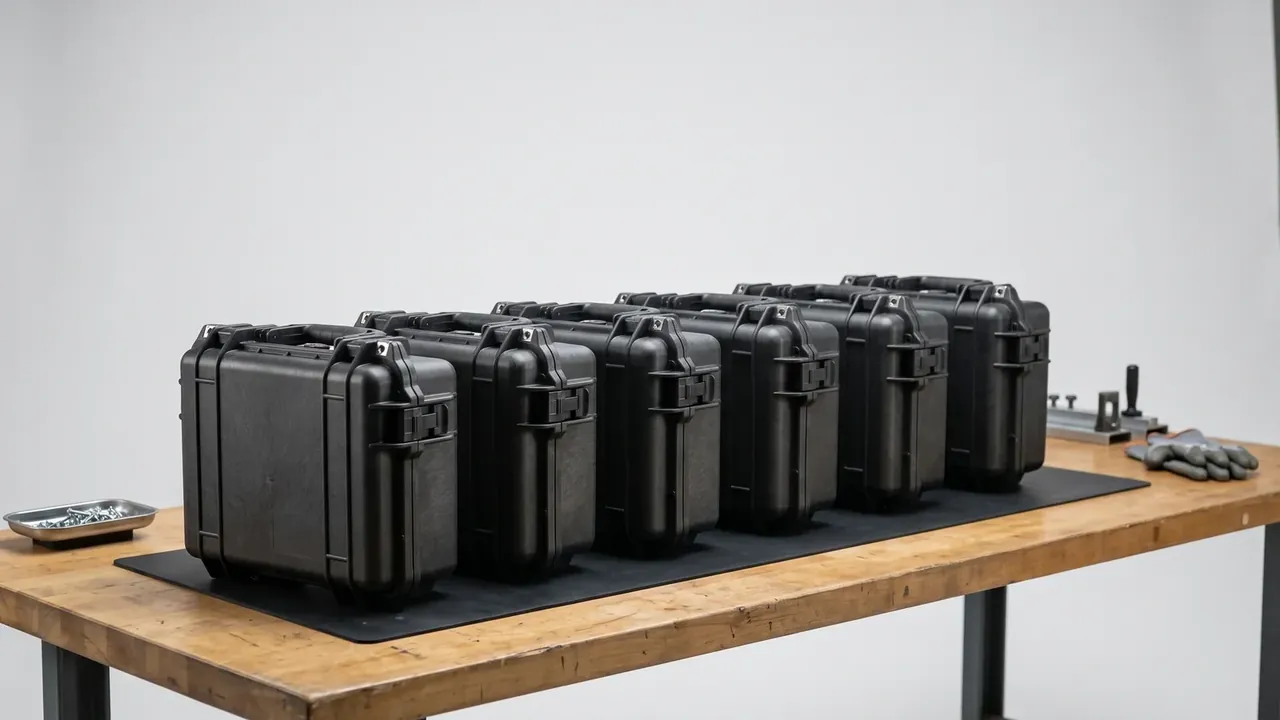
Quick answer: A protective case manufacturer performs six steps: mould design, mould making and trials, moulding, hardware assembly, liner machining, and final inspection with packing. Latches, foam and cartons are bought in, so capability shows in whether the tool room, trial press and assembly line sit on one site.
Table of contents
- Where a protective case manufacturer draws the line
- Tooling and trials: the first two steps
- Moulding: injection, rotational and blow
- Assembly and liner: turning a shell into a product
- Final inspection and packing: the last step
- FAQ
1. Where a protective case manufacturer draws the line
A protective case manufacturer does not make every part. Latches, hinges and valves are bought in, foam is cut by specialists, cartons come from a converter. What stays in-house is tooling, moulding and assembly: the three that fix wall uniformity, seal-groove dimensions and latch engagement.
Judge a plant by its tool room, a trial press, and an assembly line beside the moulding machines. With all three a change runs in days; without them one dimensional drift crosses factories.
| Step | Typical duration | Control point |
|---|---|---|
| Mould design | 7–12 days | parting line and seal groove |
| Mould making and trials | 25–40 days | dimensions and appearance |
2. Tooling and trials: the first two steps
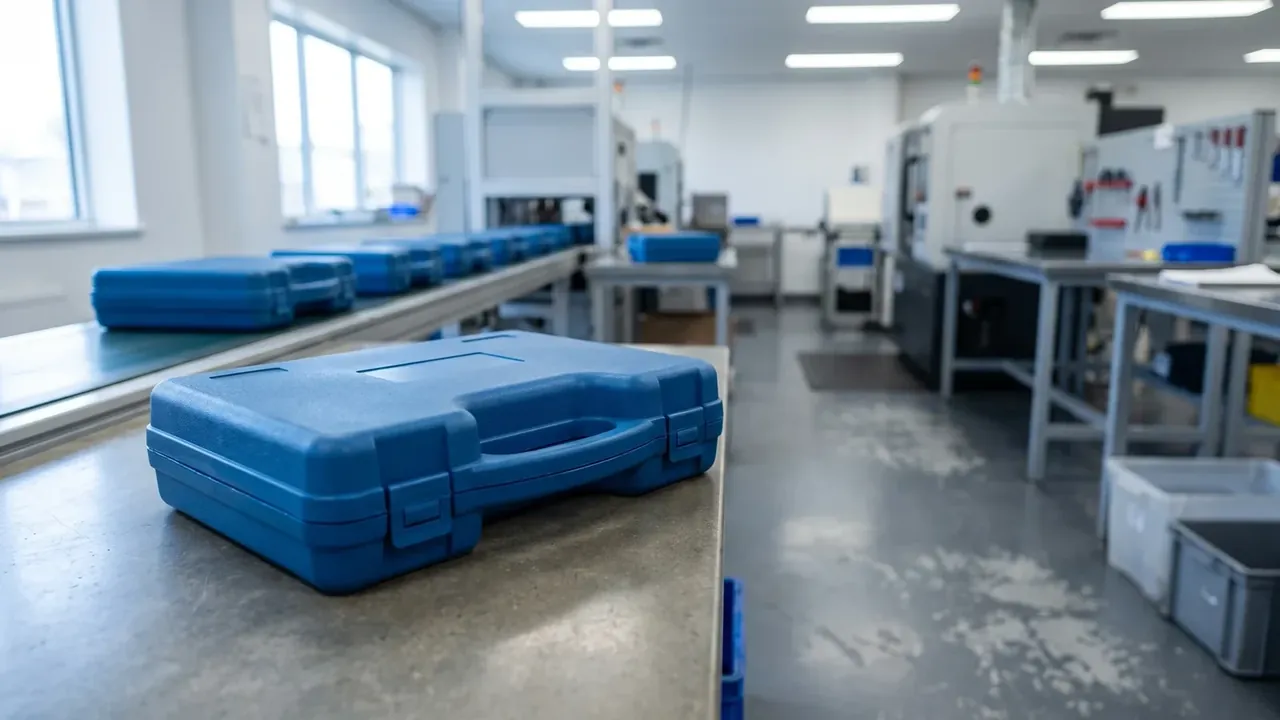
Mould design starts from the model: parting line, cooling circuits, ejectors. The deep cavity cools unevenly and warps after ejection, and the seal groove must match the lid rim — 0.2 mm of groove width decides the air test.
Trials run three rounds: appearance and key dimensions, re-measurement after rework, then a small batch for assembly and sealing.
3. Moulding: injection, rotational and blow
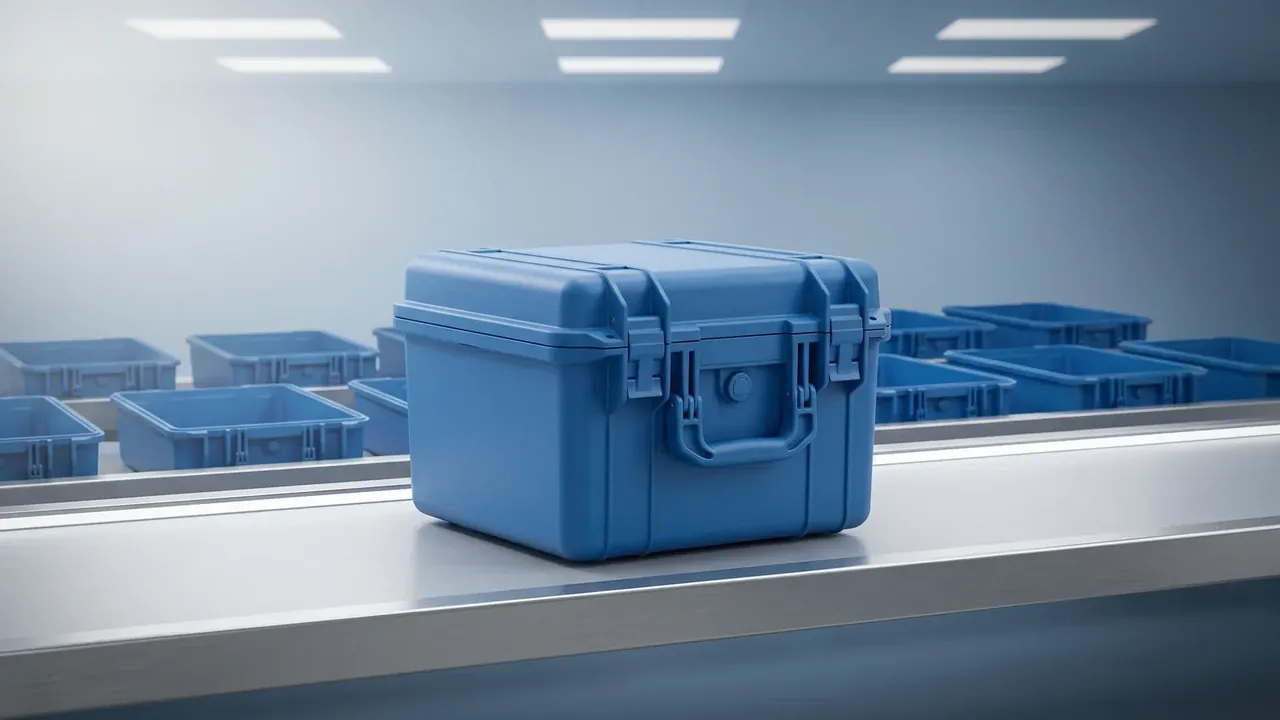
Injection dominates: melt forced in at tens of megapascals, walls of 2.5 to 4 mm, cycles of 60 to 120 seconds, stable dimensions and a good surface at the cost of expensive tooling. Rotational moulding tumbles powder in a heated mould for 20 to 40 minutes and gives 3 to 6 mm walls with cheap tooling, but looser tolerance and a textured inner skin.
Blow moulding makes hollow double walls, light and impact-resistant but least free in ribs. The line follows the batch: injection above 5,000 units, rotational for large cases at 300 to 3,000, blow for light double-wall shells.
| Process | Tooling cost | Unit cost | Sensible batch |
|---|---|---|---|
| Injection | high | low | above 5,000 |
| Rotational | low | medium | 300–3,000 |
| Blow | medium | low | above 10,000 |
4. Assembly and liner: turning a shell into a product
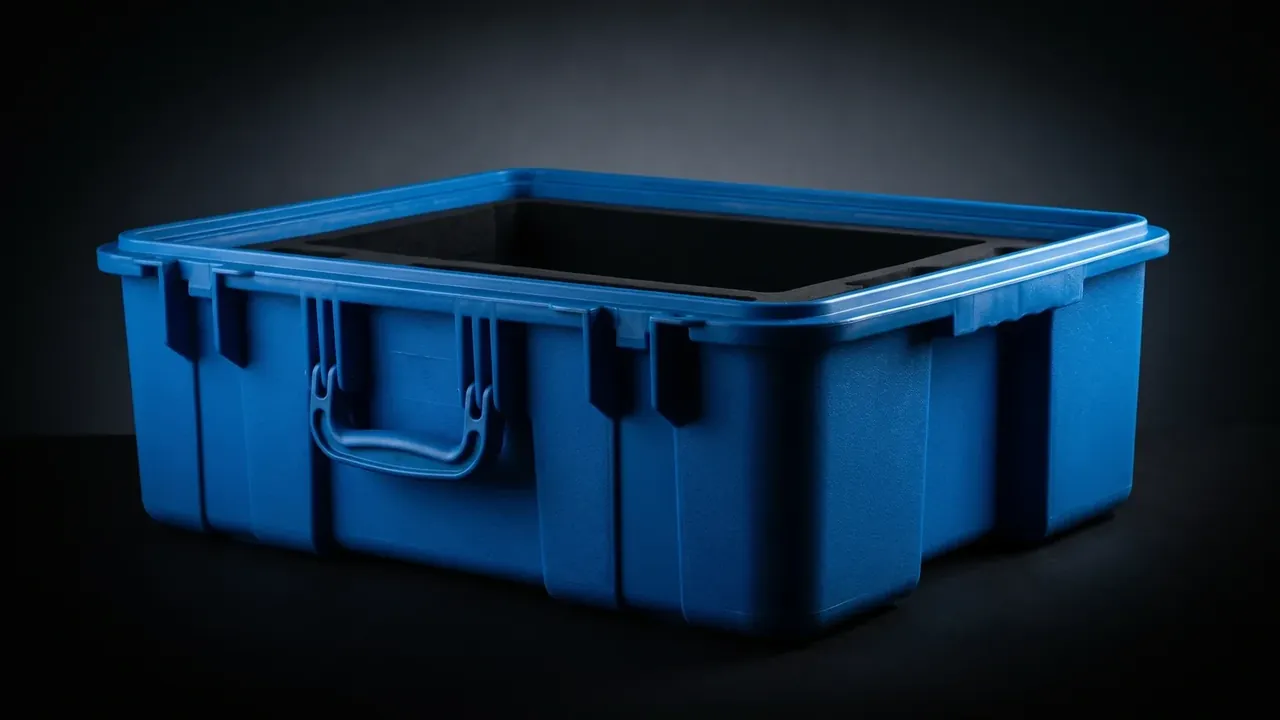
Assembly joins shell, lid, hinges, latches, valve and handle. Hinges first to fix lid position, then latch engagement, then the valve. Too tight and the case cannot be opened one-handed; too loose and the gasket never compresses. Every line needs an air test: charge, hold one minute, fail above the pressure-drop threshold.
Liner machining comes last. EVA and EPE are routed on a CNC table, polyurethane is moulded, tolerance is plus or minus one millimetre. Cut the pocket half a millimetre deeper than the item and it lifts out cleanly.
5. Final inspection and packing: the last step
Inspection samples five items: appearance, outer dimensions, sealing, hardware function and a drop check. Any failed item sends the batch back for rework — sorting is not a remedy.
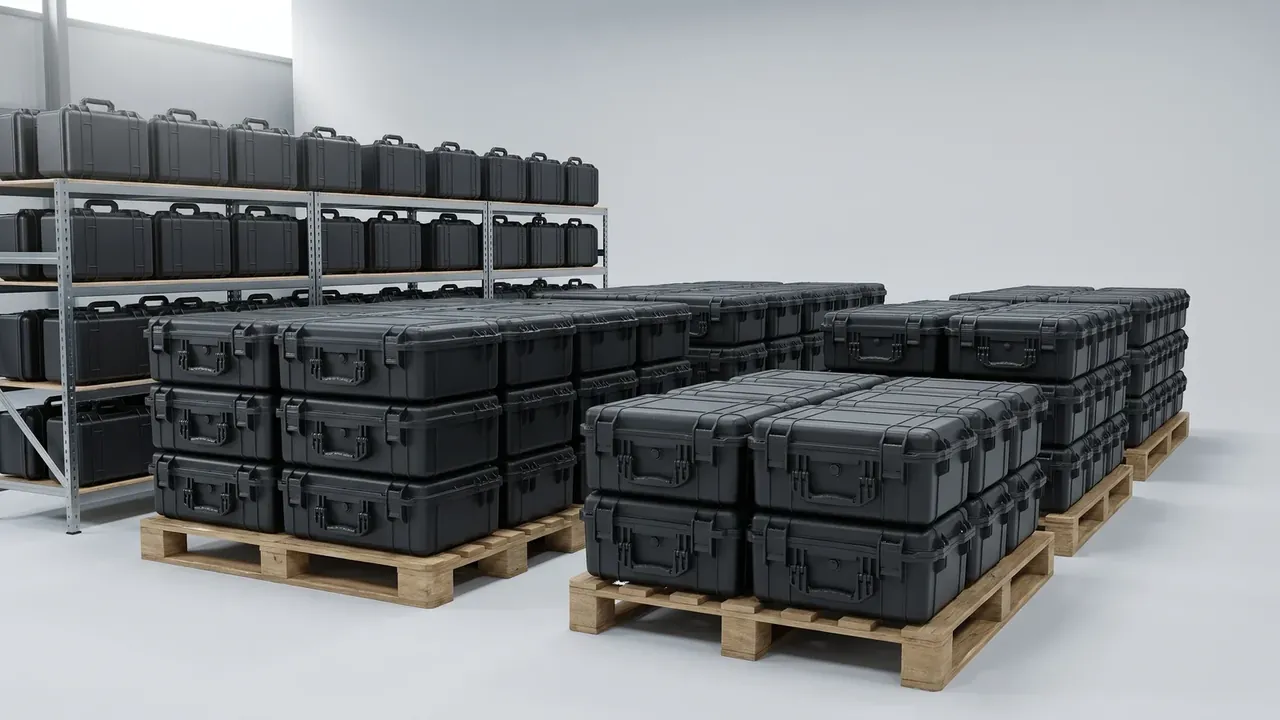
Packing decides how much arrives intact. Each case in a bubble bag, several per five-ply carton, palletised and stretch-wrapped, loaded height including the pallet under 1.6 m. A protective case manufacturer should keep a sample per batch, keyed to the batch number.
| Item | Sample size | Criterion |
|---|---|---|
| Appearance | per sampling plan | no visible sink marks or flash |
| Outer dimensions | five per batch | drawing tolerance |
| Sealing | three per batch | pressure-drop threshold |
| Drop | one per batch | corner drop, no cracking |
Conclusion
The capability of a protective case manufacturer sits between the six steps: tooling fixes dimensions, moulding fixes wall thickness, assembly fixes sealing, inspection fixes batch consistency. Read the six separately and you can tell what a protective case manufacturer does and does not do; read an equipment list and you have seen half.
This article covers container-side specifications and design implications only, not the handling, loading or use of the contents.
Related Reading
- How to audit a protective case factory
- The mould trial process for protective cases
- Injection versus rotational moulded cases
- Pre-shipment inspection items for cases
Related Products
- 8 Series — Gun Cases; Military Equipment Cases; Camera Equipment Cases; Drone Cases; Watch Cases; Knife Cases; First Aid Cases; Electronics Equipment Cases
- WL8-2812 PP Gun Case — model WL8-2812
- All protective cases and toolboxes: 7 series, 158 models