

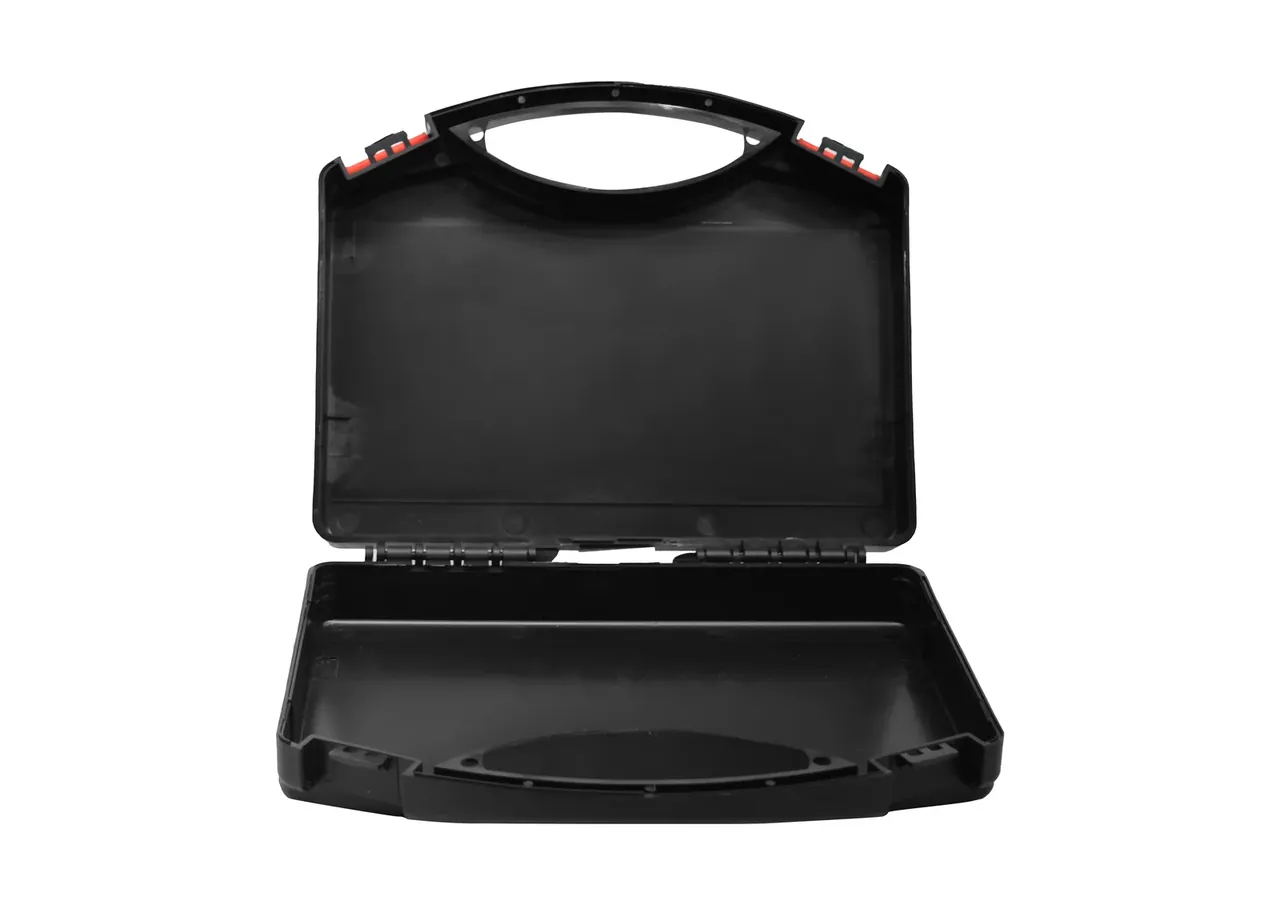
Quick answer: Protective Case Sales does not sell a box; it sells a repeatable specification unit. Three lines hold that unit together: price from weight, cycle and tooling amortization; lead time from four production stages; liability from one warranty sheet. Get the four numbers straight first, and the negotiation has something to stand on.
Table of contents
- What Protective Case Sales Actually Sells
- The Price Line: Weight, Cycle, Tooling
- The Lead Time Line in Four Stages
- The Liability Line: Warranty, Claims, Retest
- FAQ
1. What Protective Case Sales Actually Sells
Ask a buyer what they purchased and the answer is a box. What actually moved was a specification unit: one set of external dimensions, one material recipe, one acceptance rule, identical from the first article to the five thousandth.
On paper that unit is a single cell: model number plus revision. Change wall thickness or latch design and the revision moves up one letter; skip that and nobody can say years later which build shipped.
Three lines are the edges of that unit. Price governs how money is counted, lead time governs when goods land, liability governs who owns a failure.
| Line | Governs | Symptom when it breaks |
|---|---|---|
| Price | Weight, cycle, tooling amortization | Unit price swings with order size |
| Lead time | Material, molding, assembly, packing | Promised days cannot be repeated |
| Liability | Warranty, claims, retest | Arguments about blame before rescue |
Four numbers hang on those lines: 3.2 kilograms per case, a 68-second cycle, 96.5 percent lot yield, 620 cases per 40-foot high cube. Reciting them means quoting without guessing.
2. The Price Line: Weight, Cycle, Tooling
The price line is three additions, not one quote. Material comes from case weight, molding from machine time divided by output, finishing and packing from labor minutes and volumetric weight.
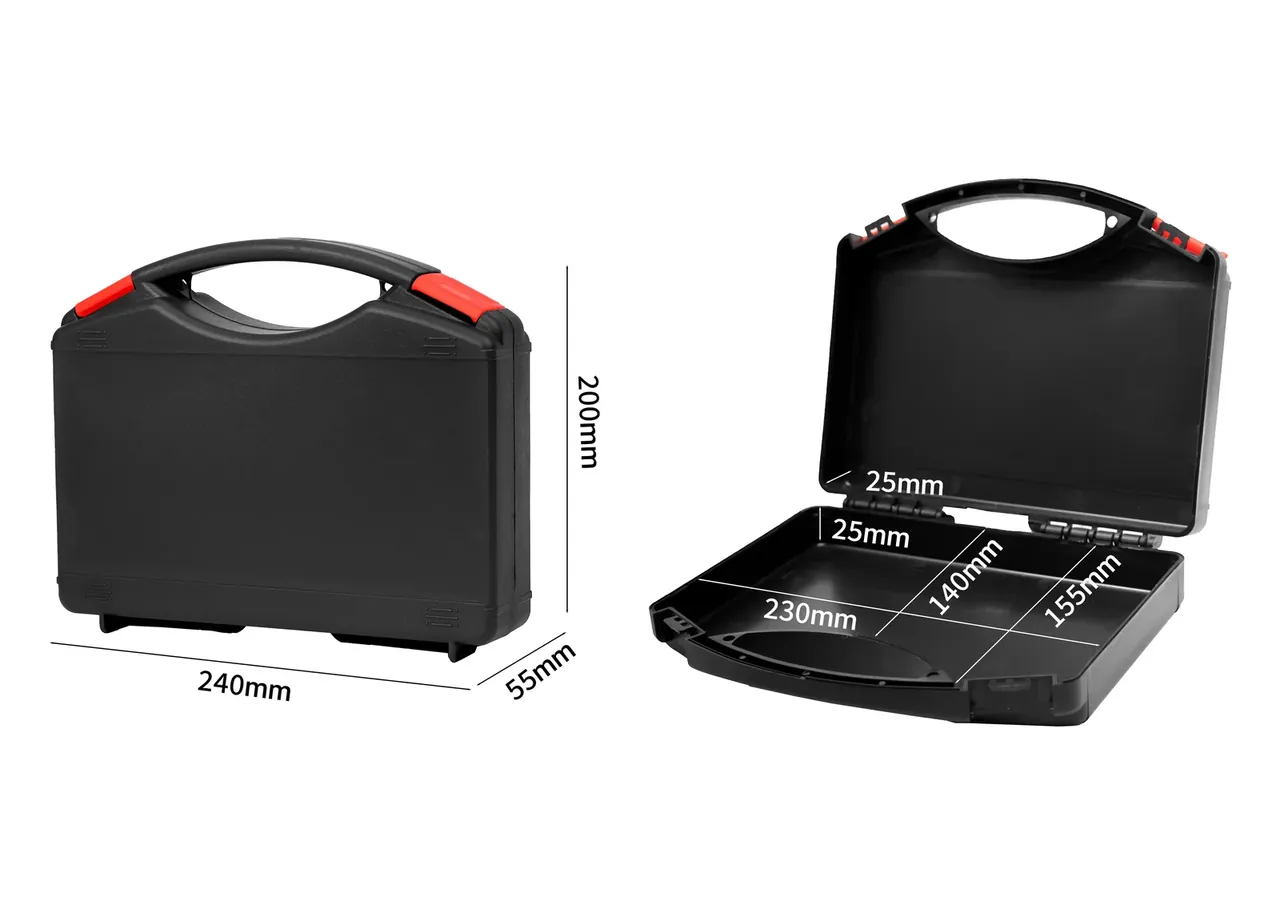
Take a case of 400 by 300 by 160 millimetres at 3.2 kilograms. Resin at 11 yuan per kilogram puts material at 35 yuan. A 68-second cycle yields 53 cases an hour, so 90 yuan of machine time adds 1.7 yuan each. Assembly takes three minutes, or 4.2 yuan; packing adds 1.1 yuan. The four blocks total 42 yuan, and at 52 yuan the margin sits near twenty percent.
| Block | Calculation | This example | Share of price |
|---|---|---|---|
| Material | Weight times resin price | 3.2 kg at 11 yuan | 35 yuan |
| Molding | Machine hour divided by output | 90 yuan for 53 cases | 1.7 yuan |
| Finishing | Labor minutes | 3 minutes assembly | 4.2 yuan |
| Packing | Carton and pallet per case | 4 cases per carton | 1.1 yuan |
Tooling amortization is the fourth block, and the one most often skipped. A 60,000 yuan tool over 250,000 shots adds 0.24 yuan per case; on 2,000 pieces it adds 30 yuan each.
3. The Lead Time Line in Four Stages
Lead time is four stages stacked, not a figure like 30 days. The slowest stage sets it.
- Material: 5 days for a standard color, resin and masterbatch included
- Molding: 1,060 cases per machine day at a 68-second cycle
- Assembly: 600 cases per shift at one station
- Packing: 24 cases per pallet, 620 per 40-foot high cube
Molding is usually the bottleneck, but it moves: add printing or a punched liner and assembly drops from 600 to 400 a day, pushing the line back two days.
A stock-building buyer wants the batch arrival date; a project buyer wants the first units on site. Split shipments answer both: 200 cases by air and the rest by sea turns 28 days into 9 plus 35.
4. The Liability Line: Warranty, Claims, Retest
Liability is the line least often written into a quote and the first one opened when something fails.
- Warranty: 24 months from loading date, excluding misuse and out-of-scope handling
- Claims: replacement rather than repair, with a full lot replacement above 2 percent defects
- Retest: 96-hour salt fog repeated every 12 months, report kept with the lot
- Damage: raised within 3 days of receipt, otherwise handled under freight terms
Retest is the clause most often missed. A report issued with the first lot and never renewed leaves the buyer empty-handed when an auditor asks three years later.
Boundaries matter as much as terms: leakage is a case issue, but condensation inside depends on whether the gasket was replaced on schedule.
Conclusion
Protective Case Sales holds up when all three lines are drawn: price from weight and cycle, lead time from four stage outputs, liability from warranty and retest. Learn the four numbers, write the three lines, and Protective Case Sales becomes a reusable method.
This article discusses only the container (case body) side of specifications and design intent, and does not cover any handling, loading or use of the contents.
Related Reading
- How a case inquiry moves to sampling
- How large protective cases are built
- How injection molded cases are formed
Related Products
- 8 Series — Gun Cases; Military Equipment Cases; Camera Equipment Cases; Drone Cases; Watch Cases; Knife Cases; First Aid Cases; Electronics Equipment Cases
- WL8-2812 PP Gun Case — model WL8-2812
- All protective cases and toolboxes: 7 series, 158 models