

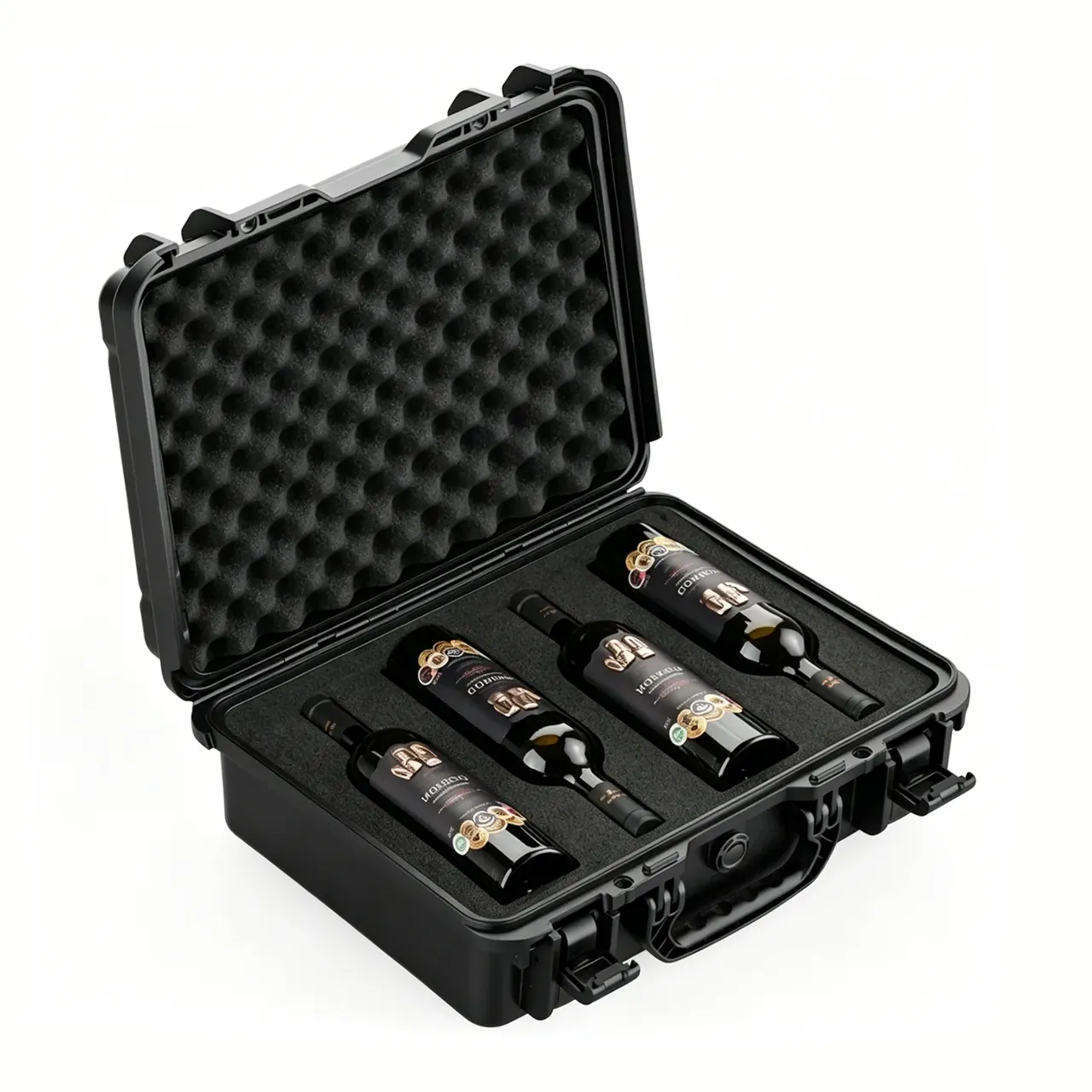
Quick answer: Case quality clauses reading only "inspected to national standard" fail at the first rejected batch, so anchor AQL 1.0 and a three-times claim cap.
Table of contents
- Why "per national standard" fails
- Acceptance tied to AQL
- The claim cap at three times value
- Warranty and defect liability
- Late penalties and the ceiling
- Re-inspection, rejection and concession
- FAQ
1. Why "per national standard" fails
A technical annex that says acceptance follows "the national standard" is almost useless in a dispute. Several standards cover this class of case, and their rules on appearance, drop height and seal testing differ enough to move a batch across the pass line.
The first job of case quality clauses is to replace a standard with a decision: which document, which grade, how many units to sample, how many defects to accept.
| Anchor | Wording to use | Cost of leaving it out |
|---|---|---|
| Acceptance | AQL 1.0 sampling | Arguments over full or sample check |
| Claim cap | Three times batch value | Unlimited claims, suppliers walk |
| Warranty | 12 months from acceptance | Start date disputes drag on |
| Defect liability | 18 months from delivery | Confused with warranty |
| Late penalty | 0.3% a day, 5% cap | Delivery slips with no remedy |
| Re-inspection fee | Paid by the failing side | Nobody owns the invoice |
The six anchors need not share a page, but they need one technical agreement cross-referenced by the main contract.
Clauses reading "to be agreed separately" simply postpone the argument.
2. Acceptance tied to AQL
Only one sentence works in an acceptance clause: sample to AQL 1.0 at general inspection level II, judging appearance and assembly separately.
| Batch (units) | Sample (units) | Ac | Re | Verdict |
|---|---|---|---|---|
| 1201–3200 | 200 | 5 | 6 | Accept at 5 defects or fewer |
| 3201–10000 | 315 | 7 | 8 | Accept at 7 defects or fewer |
| 10001–35000 | 500 | 10 | 11 | Accept at 10 defects or fewer |
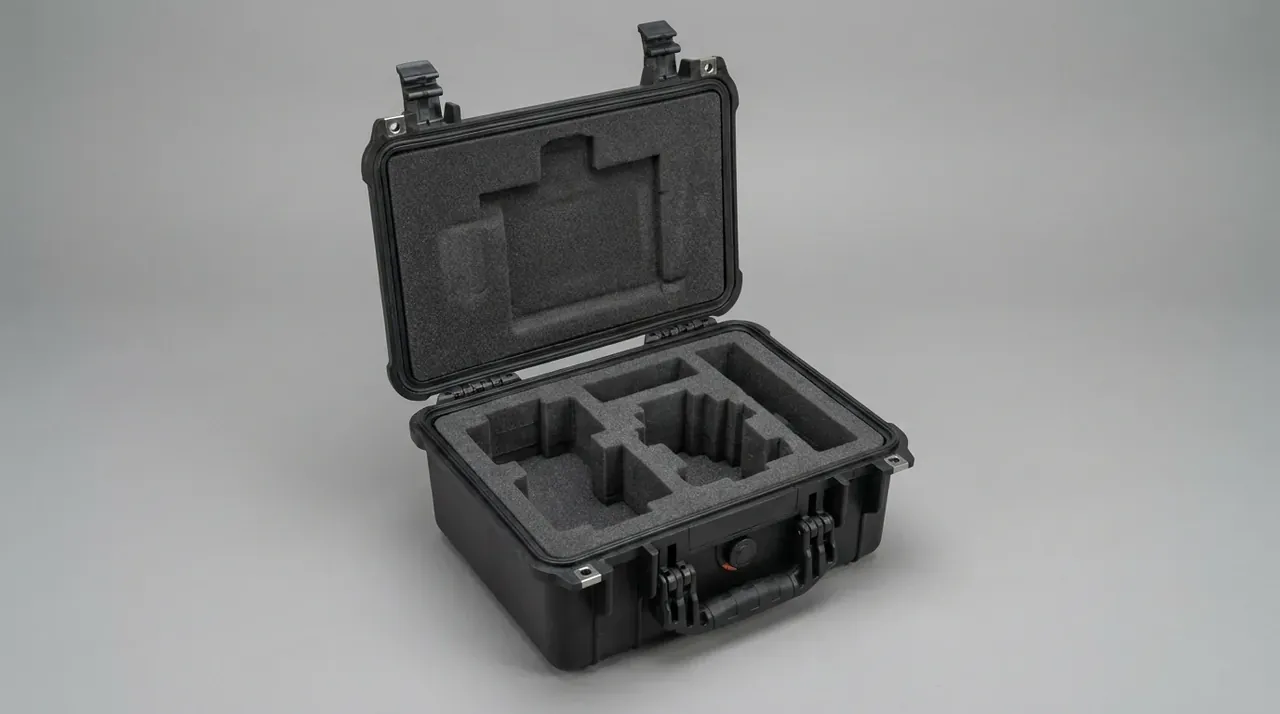
On a 2400-unit order the sample is 200, with Ac 5 and Re 6, so five defects pass and the sixth rejects the batch. Written into the contract, that line needs no negotiation on the inspection floor.
Inspection items split by area: appearance, dimensions, assembly and function, all drawn from the same sample.
Defects need three bands. Critical defects, meaning a broken latch or a crack through the shell, carry zero tolerance; major defects follow AQL 1.0; minor ones relax to AQL 2.5. Mixed into one band, the inspector works on instinct.
The plan also needs a doubling rule: on a re-check the sample doubles while the limits stay put, cutting misjudgement below 1% for half a day of work.
Records are part of the clause: the sampling sheet carries who drew it, when, and the unit numbers, with photographs filed by case number.
3. The claim cap at three times value
A cap of three times batch value is how the risk gets bounded. At 2400 units and 42 yuan each, the batch is worth 100,800 yuan and the cap is 302,400 yuan.
Below three times, suppliers sign readily and the buyer absorbs line-stop losses. Above it, suppliers either add 3% to 5% to the quote or decline to bid.
Claims are calculated per failing batch, not per month of supply. A rejected batch of 2400 units carries three times its own value, and folding last month's good delivery into the sum ends the negotiation.
The scope has to be itemised: rework, sorting, line stoppage, customer penalties. A clause promising "all losses" recovers almost nothing on a full rejection, because the loss cannot be evidenced.
Claims start with a written notice within seven working days, with the inspection record and photographs attached. Later than that, a supplier may refuse.
Deduction beats negotiation. Claims come off the current invoice, the remainder rolls into next month, and the balance clears within three months. Clauses saying "to be discussed" are still being discussed after the contract expires.
4. Warranty and defect liability
Warranty runs 12 months from acceptance, defect liability 18 months from delivery. Two different start dates covering two different failures.
Warranty covers free repair and replacement: a loose latch, a noisy hinge, a seal that no longer holds. Defect liability covers latent faults, so a corner crack or a thin wall at month 18 can still be traced to compound or process.
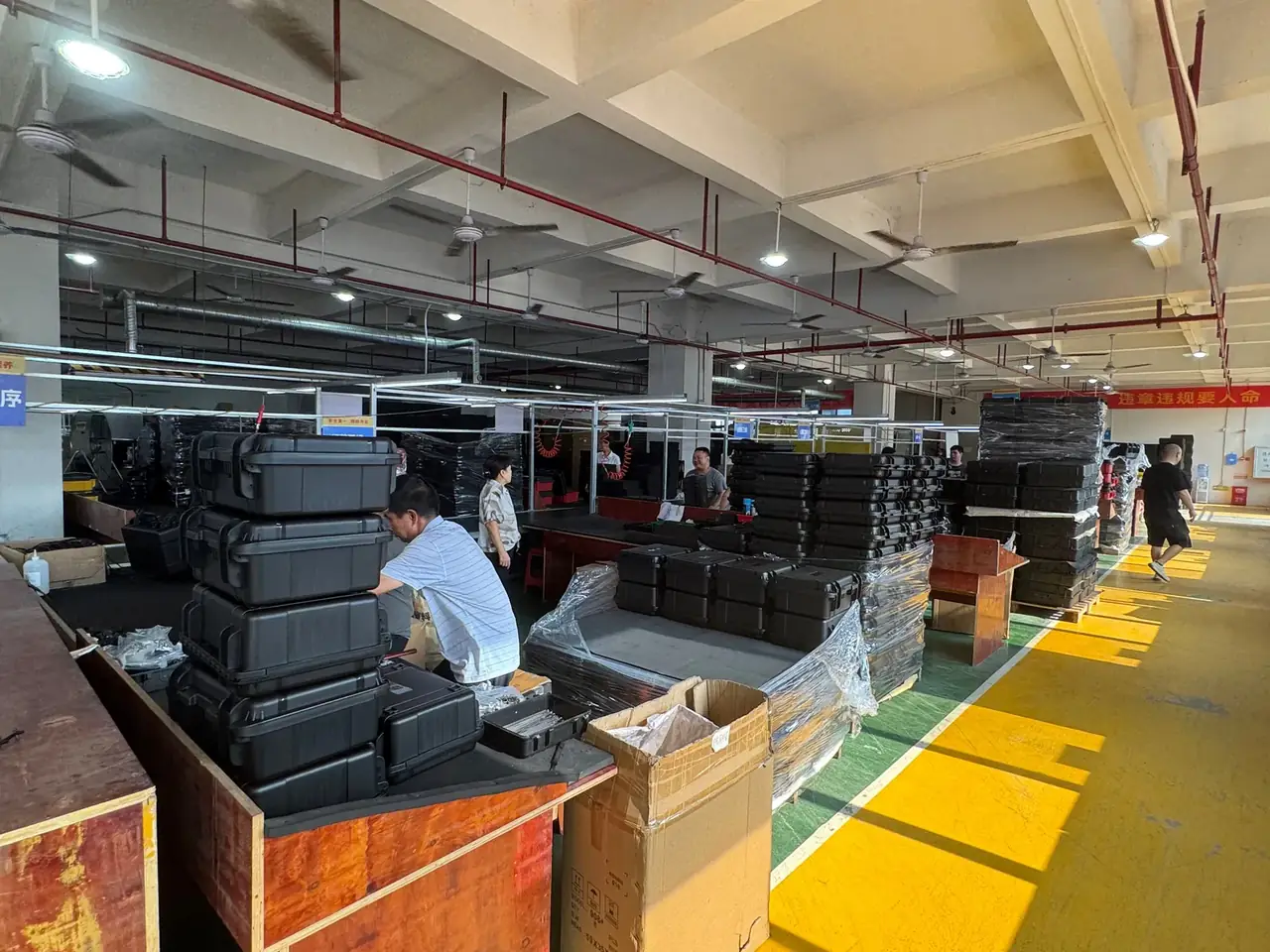
Only both clauses together close the contract. With warranty alone, a batch that cracks in month 13 has nothing to invoke. Inside warranty there are two routes: free repair, or a credit of 6 yuan a case where return freight exceeds the residual value. Start dates must be concrete: acceptance on the date both sides sign the acceptance note, delivery on the date the carrier signs. Writing "after delivery" collapses once shipments arrive in parts. Split deliveries need per-batch dates: a lot of 800 accepted first and 1600 arriving 40 days later cannot share one 12-month window.
5. Late penalties and the ceiling
Penalties run at 0.3% of contract value per day, capped at 5%. On a 1 million yuan contract, five days late costs 15,000 yuan and ten days costs 30,000.
| Days late | Accrued | Of contract | Stage |
|---|---|---|---|
| 5 | 15,000 yuan | 1.5% | Reminder |
| 10 | 30,000 yuan | 3.0% | Formal warning |
| 15 | 45,000 yuan | 4.5% | Near ceiling |
| 17 | 50,000 yuan | 5.0% | Ceiling reached |
| 30 | 50,000 yuan | 5.0% | No further accrual |
At 0.3% a day the ceiling arrives on day 17, and nothing accrues afterwards. The clause therefore needs a second sentence: past 30 days the buyer may cancel the undelivered quantity and buy elsewhere, charging the difference.
Heavier is not better: at 1% a day suppliers abandon the order, and the buyer recovers less than the cost of a new factory.
Excused delay belongs here too: power cuts, production limits and resin shortages are excused only with written notice within three days.
6. Re-inspection, rejection and concession
Re-inspection fees follow the first verdict: a failing batch puts the cost on the supplier, a passing batch on the buyer. A full re-inspection costs 1800 yuan, which is cheaper than arguing over who pays.
Batch rejection has to carry a sorting fee. Return 2400 units, send two supplier staff to sort on site at 380 yuan each per day for three days, and the sorting fee is 2280 yuan on the supplier's account.
Concession needs paperwork: technical, quality and purchasing sign together, stating scope, quantity, discount and the requirement that the defect not recur. Discounts run 3% to 8% in practice. A verbal concession is nothing in case quality clauses.
Concessions also need a counter. Three concessions to one supplier in a year should trigger a review rather than another discount.
Records stay 24 months alongside inspection sheets, the only evidence at the next audit that anything changed.
Conclusion
Wording matters more than the numbers. Acceptance reads "sample to AQL 1.0 at level II, 200 units from a batch of 1201 to 3200, Ac 5 and Re 6". Claims read "capped at three times the value of the failing batch, covering rework, sorting, line stoppage and customer penalties". Warranty reads "12 months from acceptance, repair and replacement free of charge". Liability reads "18 months from delivery, latent defects traceable". Penalty reads "0.3% of contract value per day late, capped at 5%". Re-inspection reads "fees and sorting costs fall on the side judged at fault". Six sentences on page one of the technical agreement turn case quality clauses from a slogan into a working decision sheet.
This article discusses container-side specifications and design implications only, and does not cover any handling, loading or use of the contents.
Related Reading
- Acceptance rules for AQL 2.5 sampling
- Batch inspection and records for incoming cases
- Agreeing AQL limits for custom case acceptance
- Writing clauses into custom case contracts
Related Products
- 8 Series — Gun Cases; Military Equipment Cases; Camera Equipment Cases; Drone Cases; Watch Cases; Knife Cases; First Aid Cases; Electronics Equipment Cases
- WL8-2812 PP Gun Case — model WL8-2812
- All protective cases and toolboxes: 7 series, 158 models