

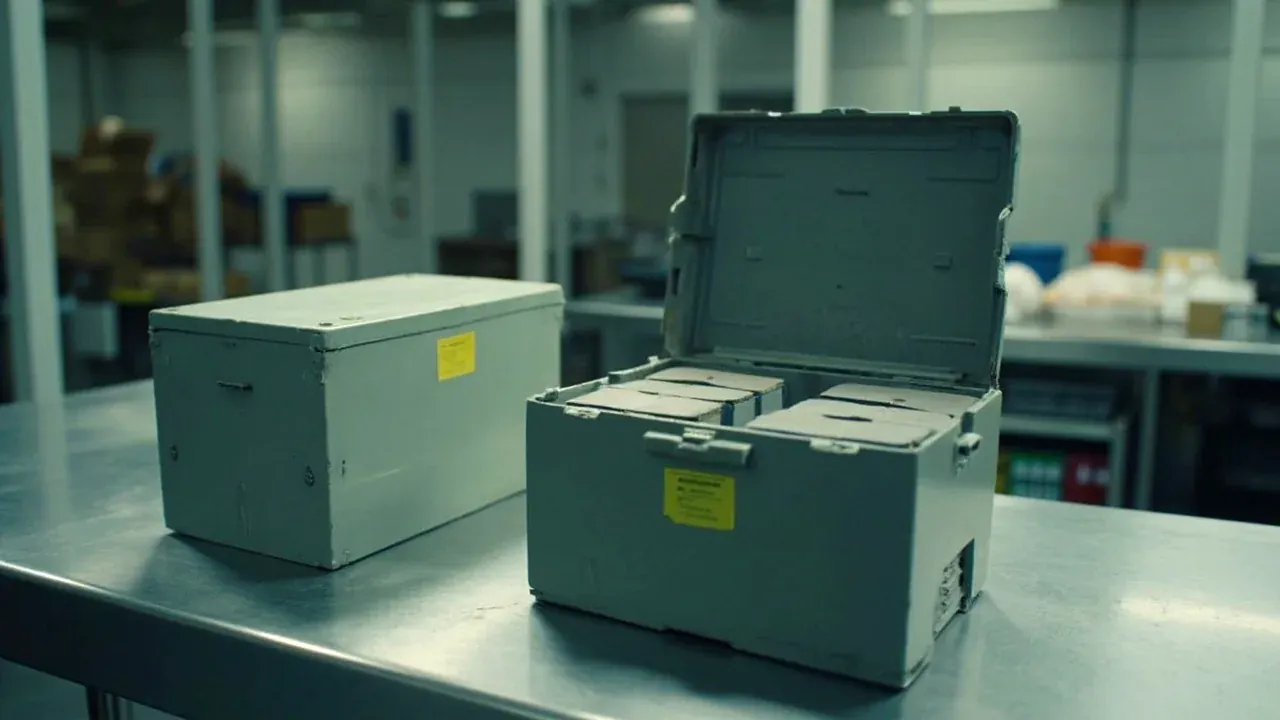
Quick answer: A ration box is a case built for unit packaging of food and tableware: one portion set and utensils in a washable, returnable unit. Four box-side requirements separate it from a shipping box: cleanable walls, odour-tight closure, moisture control, low-temperature durability. Three checks settle it: no dead corners, a lid that keeps odour in, hardware sealed after freeze-thaw.
Table of contents
- Definition: what a ration box is
- How a ration box differs from an ordinary shipping box
- Unit meals: one box as one portion set
- Stacking and thermal behaviour
- Where a ration box fits
- FAQ
1. Definition: what a ration box is
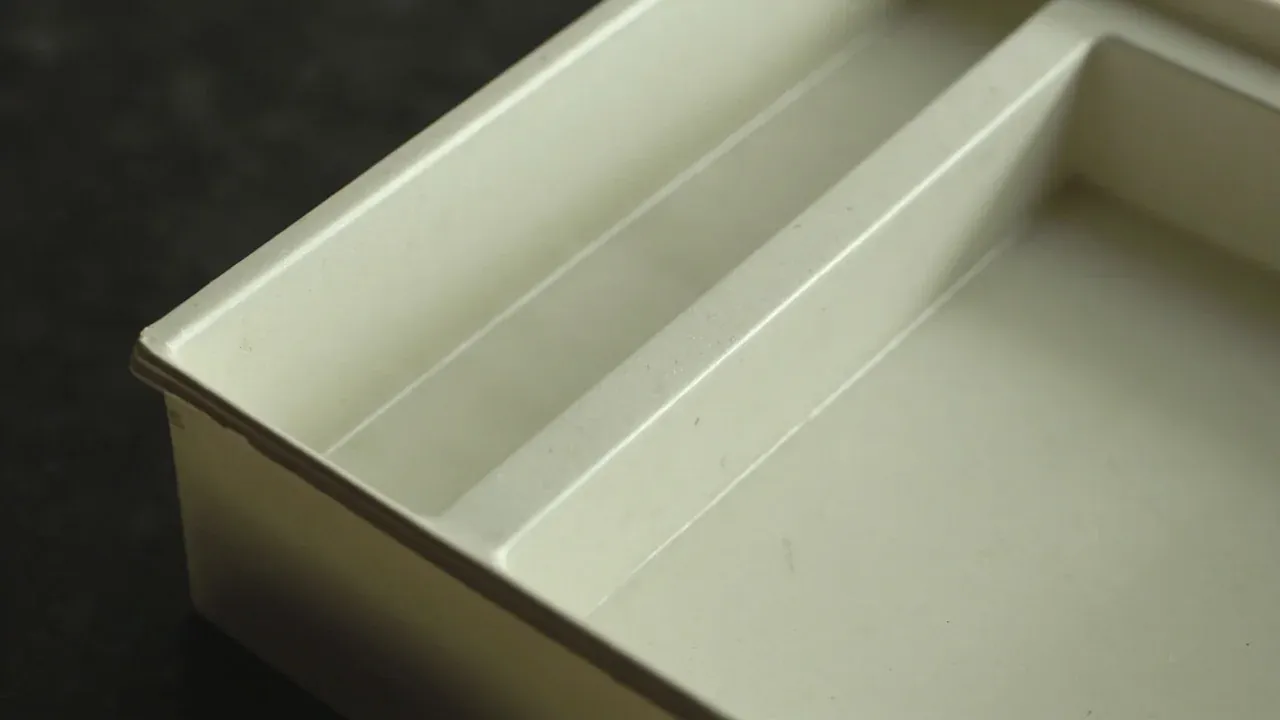
A ration box is a case whose load is food and tableware, laid out as unit portions: the unit, not the volume, defines the box.
The interior reads from above: white walls run unbroken, one divider rib splitting the floor in two — wall meets rib in a radius, so rinse water runs out.
The boundary with a shipping box is not size but four box-side requirements: cleanable, odour-tight, moisture-controlled, low-temperature rated.
2. How a ration box differs from an ordinary shipping box
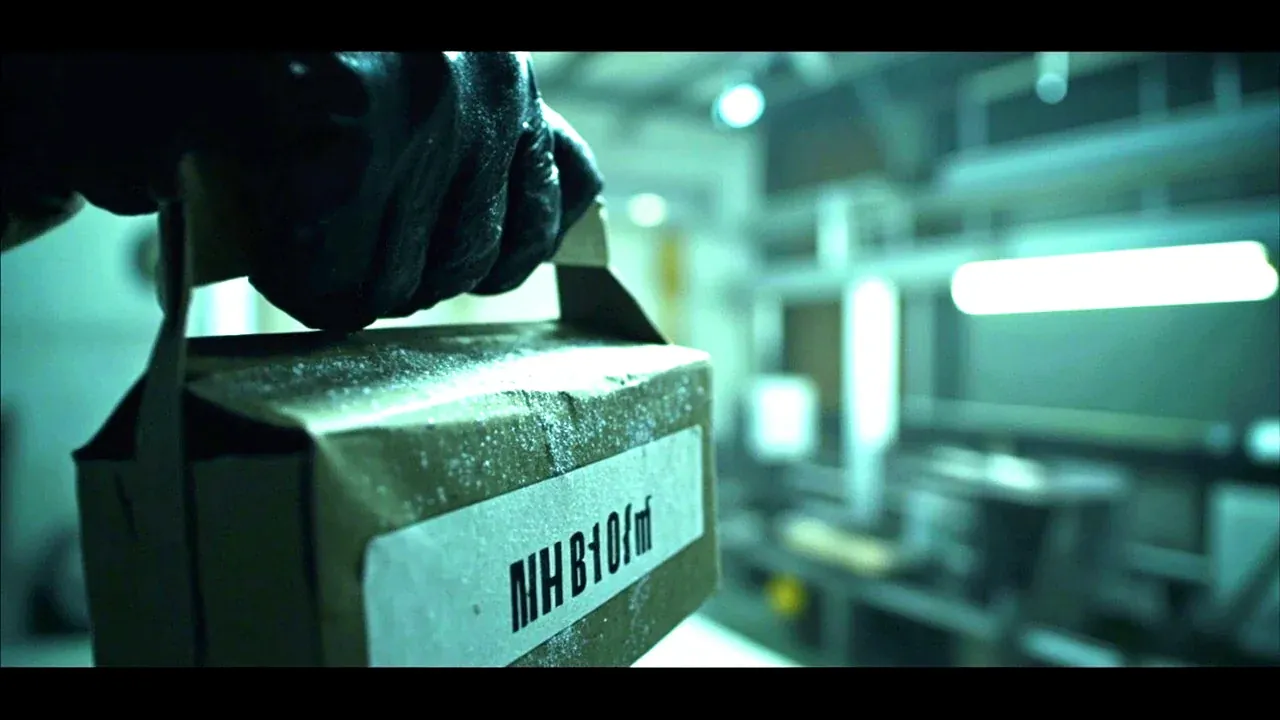
An ordinary shipping box protects contents in transit; a ration box must also survive repeated contact with food.
| Criterion | Shipping box | Ration box |
|---|---|---|
| Cleaning | Ribs trap water | Radiused, washed whole |
| Odour | Lid gap leaks smell | Gasket compressed at rim |
| Moisture | Seams stop water | Sealing targets condensation |
| Low temperature | Plastic turns brittle | Rated for freeze-thaw |
A gloved hand lifts a closed ration box, frost across its face. Each cold-room trip frosts the shell once and thaws it once; melt water creeps into seams and hardware. Low-temperature durability means the gasket does not harden and the latch does not seize.
Odour isolation lives at the rim: the gasket sits in a groove in the lid, latches pull the lid onto the body and the gasket rebounds to fill the gap.
3. Unit meals: one box as one portion set
Unit portions are why a ration box exists: one portion set and utensils in a countable, closed unit.
- Dividers as portions: one cell per portion; an empty cell is a missing portion.
- Trays as order: food and tableware sit on separate levels, so serving order is built in.
- The box as interface: labels outside carry the unit number, cells inside the content.
Where a shipping box loads by volume, a ration box loads by portion count: twelve or twenty is fixed at design time by cell size. Counting runs at cell speed, shortages show from outside, and boxes stack and palletise by module. The cost is flexibility: cell size follows the food shape.
4. Stacking and thermal behaviour
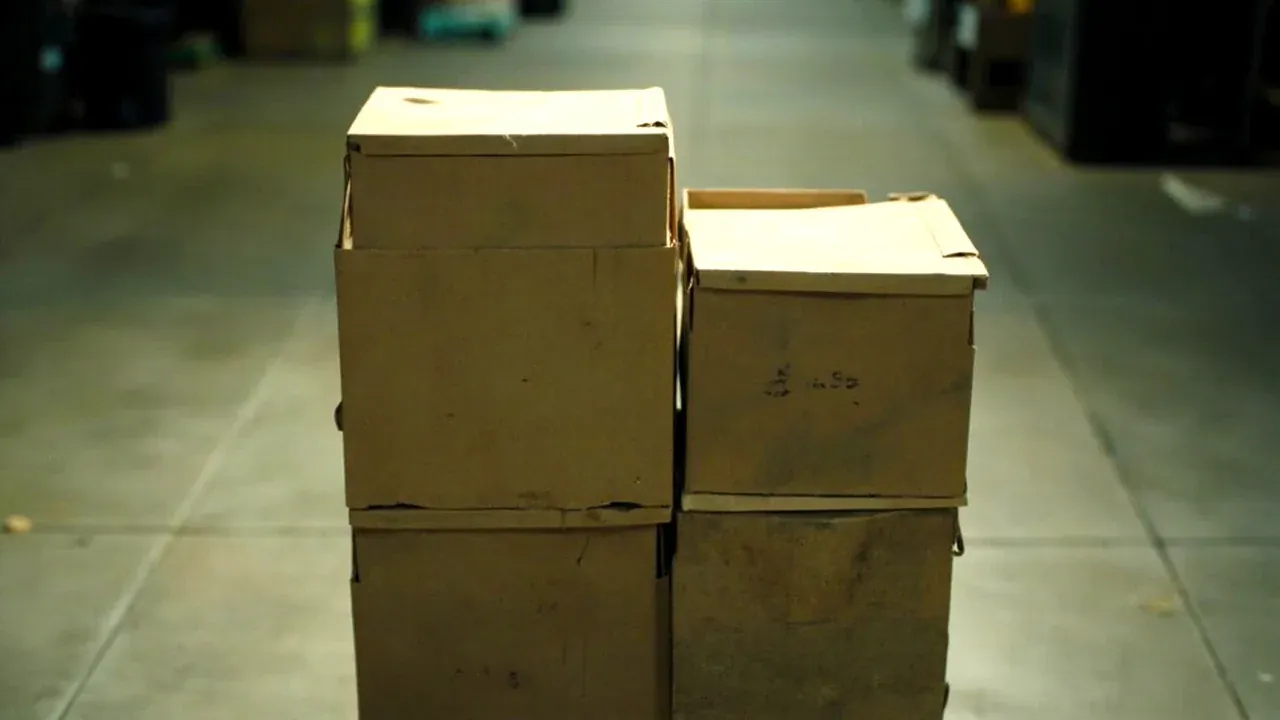
Three ration boxes of different sizes stand in two heaps on a tiled floor. Stacking works on two conditions: a flat lid so the contact face is continuous, and a base locating feature so the upper box cannot slide. A crown turns contact into a line and the stack loses stability.
Insulation is the most misread requirement. A ration box does not hold temperature for hours. What it owes is a slower warm-up inside the transfer window and condensation kept outside the shell; thin walls plus tight sealing beat a cold-room build.
5. Where a ration box fits
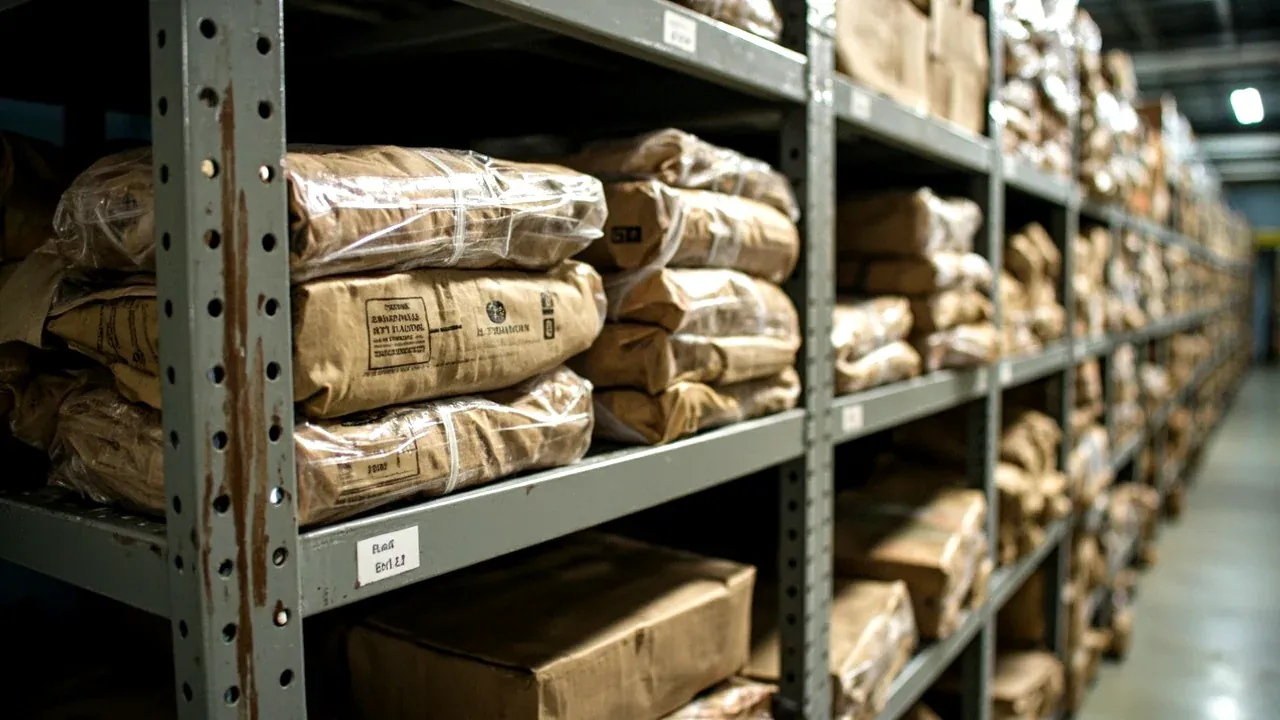
A ration box fits where the menu is stable, the shell touches food repeatedly and units circulate on a loop. In the photo, wrapped cases sit tier on tier on metal racks in a cold-storage aisle.
It does not fit one-way issue, monthly menu changes, or storage beyond a few days.
Where only transport matters, an ordinary shipping box is the cheaper answer.
Conclusion
Three sentences settle what a ration box is. It is the unit packaging shell for food and tableware, fixing one portion set into a countable unit. It tells itself apart from a shipping box by a radiused interior, rim gasket and cold-rated materials. Its stacking geometry serves modular circulation. Confirm the two premises — repeated food contact and portion-level counting — before discussing sealing and insulation; without them, a ration box is just an expensive shipping box.
This article covers container-side specifications and design implications only.
Related Reading
Related Products
- 8 Series — Gun Cases; Military Equipment Cases; Camera Equipment Cases; Drone Cases; Watch Cases; Knife Cases; First Aid Cases; Electronics Equipment Cases
- WL8-2812 PP Gun Case — model WL8-2812
- All protective cases and toolboxes: 7 series, 158 models