

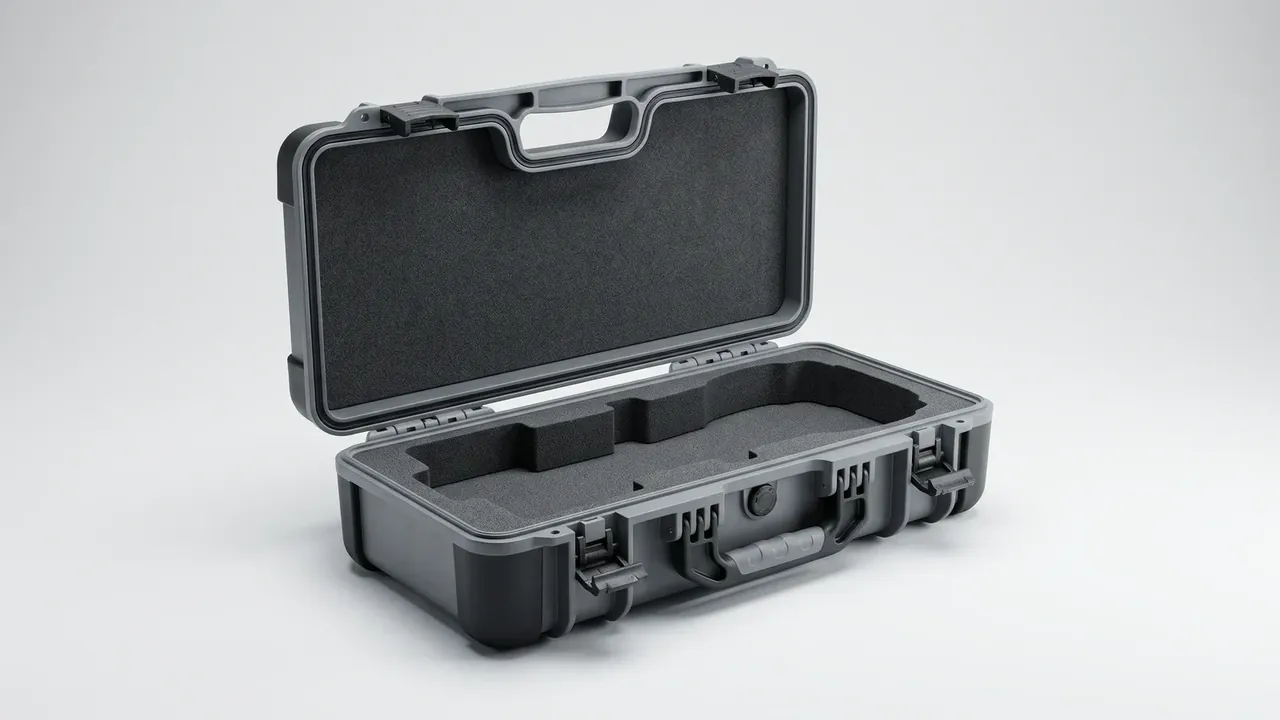
Quick answer: A rifle case is accepted against three documents: shock and vibration for the shell, salt fog for the environment, the IP code for sealing. Fix the revision letter, test order and readout in the purchase order, or the report gets argued over later.
Table of contents
- Three Documents, Three Kinds of Failure
- Drop Testing: Height, Attitude, Surface
- Sealing: Dust and Immersion Are Separate Tests
- Salt Fog, Humidity and Disposition
- FAQ
1. Three Documents, Three Kinds of Failure
A rifle case does not fail in one way, so it cannot be signed off in one test. A corner cracks after a drop. A hinge seizes after a week of salt spray. A gasket passes a splash and still leaks at one metre. Each belongs to a different clause, and each clause wants its own specimen.
| Document | What it settles | Clause | Readout on the record |
|---|---|---|---|
| Shock and vibration | shell and hardware in transport | 516.8, 514.8 | 26 drops, latches closed, no through-crack |
| Environment | what survives heat, cold and salt | 501.7, 507.6, 509.7 | 48 h fog, hinge torque under 2.5 N·m |
| Ingress protection | dust and short immersion | 60529, IP6X, IPX7 | 30 min at 1 m, no free water |
The purchase order matters more than the standard name. Name the revision letter, because a supplier free to choose picks the gentler procedure. Name the sequence too: vibration before drop and drop before vibration disagree on identical hardware. Name the specimen count and who signs off a failure.
A standard cited without a revision letter is an opinion.
2. Drop Testing: Height, Attitude, Surface
Height, attitude and surface decide the result; all three get written down before the first impact.
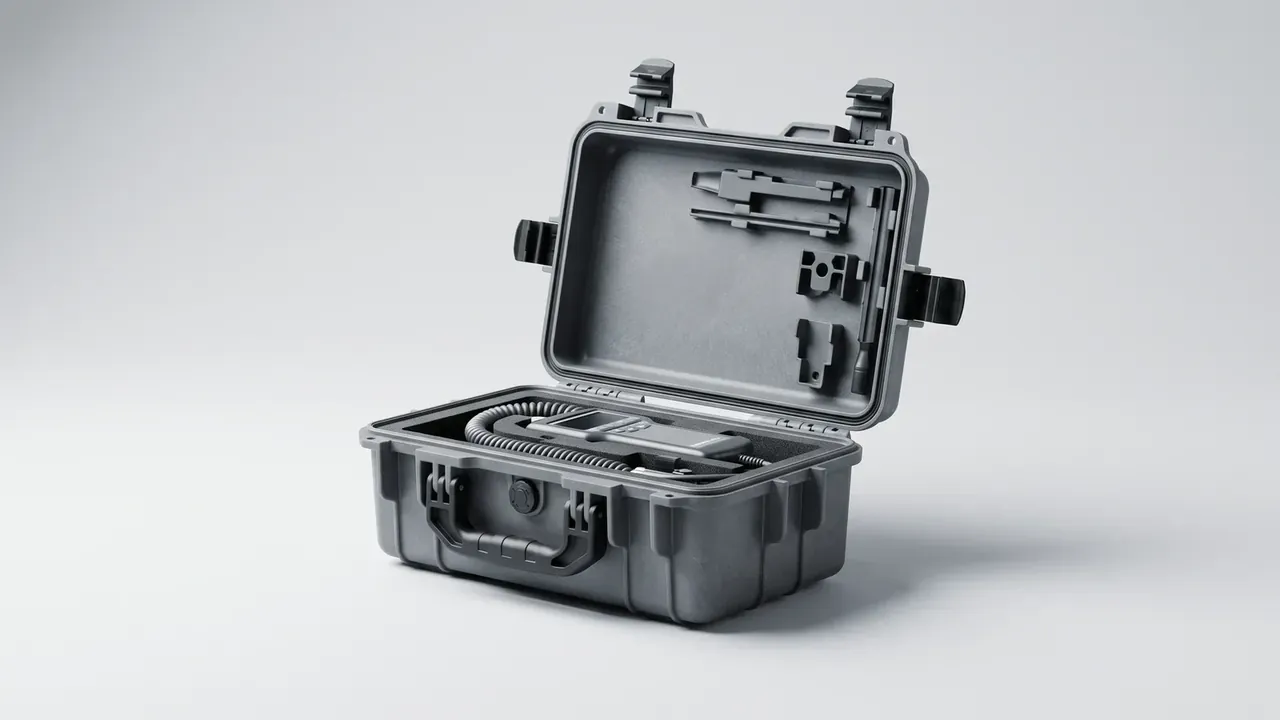
Height follows mass: under 9.1 kg the usual figure is 1.22 m, heavier units step down to 1.07 m. The surface is 50 mm plywood over concrete; steel plate narrows the pulse and raises the peak, enough to flip a pass into a fail. Coverage means six faces, eight corners, twelve edges, twenty-six impacts, lid opened after each.
Three passes read the result. Function: latches still clamp, hinges have no end play. Structure: whitening along the edges, hairline cracks that begin inside a corner. Sealing: a 0.05 mm feeler gauge walked around the gasket line; if it enters, the seal has already failed. Run vibration first on the same rig, one hour per axis, and the drop that follows breaks at the hardware rather than the corner.
3. Sealing: Dust and Immersion Are Separate Tests
One phrase on the datasheet, two different rigs on the floor.
- Dust: eight hours in talcum, interior 2 kPa below ambient, then open and look.
- Immersion: one metre for thirty minutes, open without wiping, check for water.
- Pressure: 0.3 bar for sixty seconds, no more than 0.02 bar decay as a screen.
- Valve: should crack near a 0.2 bar differential and must not stay stuck open.
- Gasket: compression set above 25% means aged material, not a spare.
- Record: water and air temperature, specimen number, the minute the lid came up.
Order matters: pressure before immersion. A gasket stretched by charging reads optimistically if water follows at once. Reverse them and residual moisture shows as slow decay, gets written up as a leak, and sends a sound unit to rework.
Both tests, or neither counts.
4. Salt Fog, Humidity and Disposition
Environmental work is the first thing cut when a schedule slips.
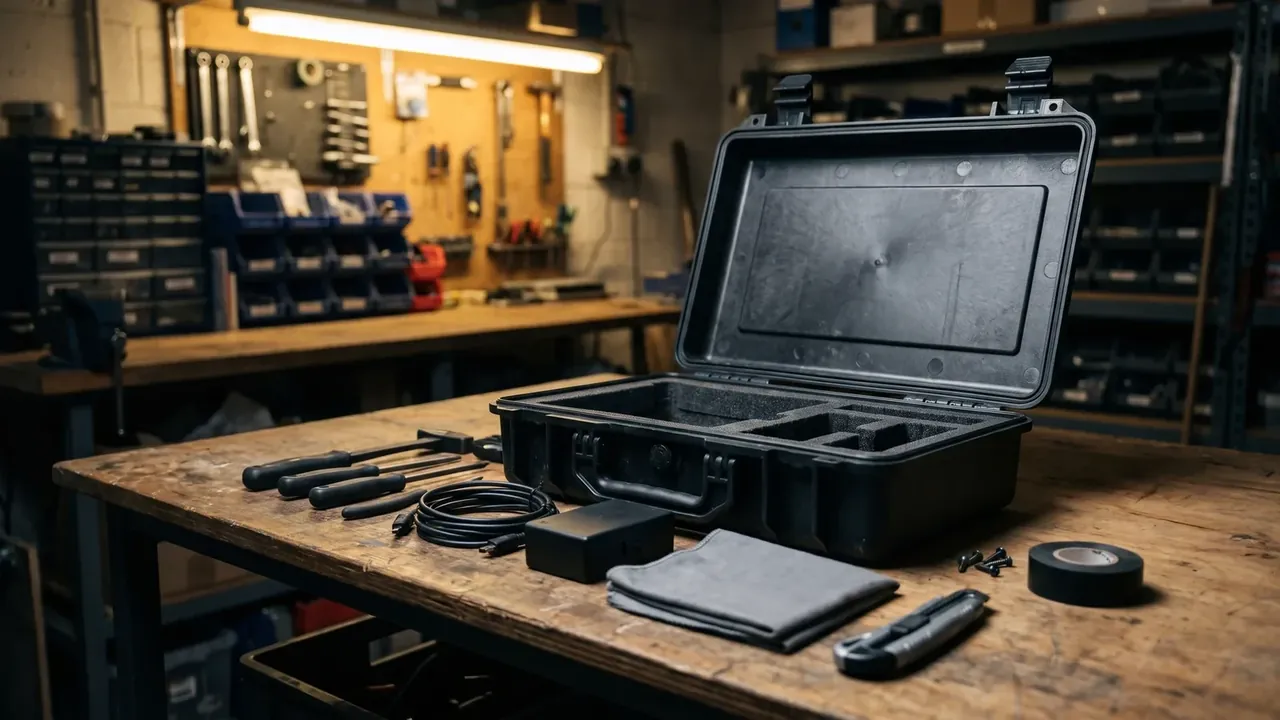
Salt fog at 5% sodium chloride and 35 °C for 48 hours targets metal, not polymer: hinge pins, latch springs, rivets. One seized hinge retires the case, because the lid stops coming up on the shoulder. Humidity runs ten cycles between 60 °C at 95% relative humidity and 30 °C, where gaskets go tacky.
| Finding | Verdict | Disposition |
|---|---|---|
| Through-crack in the shell | structural | scrap, no repair-and-ship |
| Latch will not clamp | functional | new hardware, retest the unit |
| Gauge enters the gasket line | sealing | new gasket, repeat immersion |
| Hinge seized after fog | environmental | extend fog to 96 h for the lot |
Repair and retest belong in one sentence: a case with new hardware is a new case, so every functional check runs again. Concession covers colour drift; never the shell or the gasket line.
Conclusion
Acceptance comes down to three habits: cite the revision and the sequence, split specimens by test type, and settle disposition before the first failure. Then a report traces back to one drop and one immersion. The hard half is making each clause answer to a number somebody can measure, and that is what acceptance means for a rifle case.
This article discusses only the container (case body) side of specifications and design intent, and does not cover any handling, loading or use of the contents.
Related Reading
- What a drop test report should contain
- Pallet marking rules read the right way
- Writing the work instruction for case assembly
Related Products
- 8 Series — Gun Cases; Military Equipment Cases; Camera Equipment Cases; Drone Cases; Watch Cases; Knife Cases; First Aid Cases; Electronics Equipment Cases
- WL8-2812 PP Gun Case — model WL8-2812
- All protective cases and toolboxes: 7 series, 158 models