

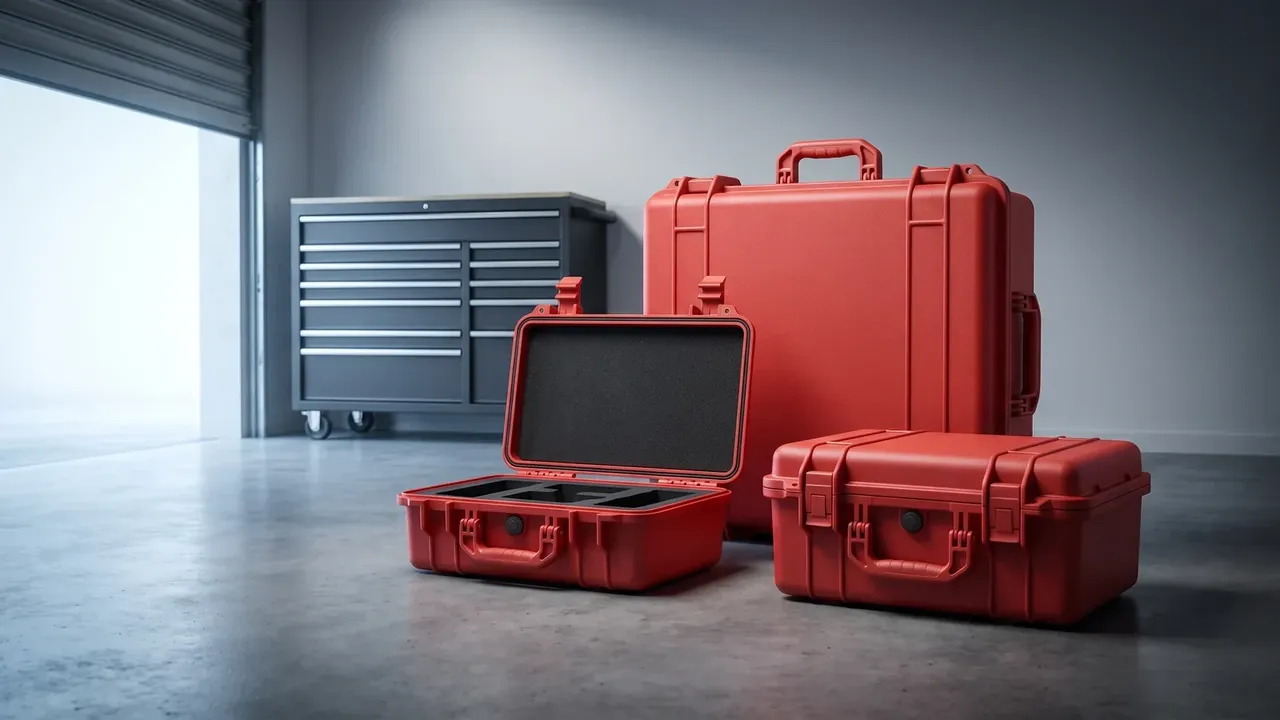
Quick answer: A Rolling Tool Case in thermal cycling fails in a fixed order: seal, axle, track, mount, latch. Check tread and latches each shift, measure track play and stud torque monthly, recheck seal compression quarterly. Past a line, replace the part.
Table of contents
- Failure Order of a Rolling Tool Case in Thermal Cycling
- Daily, Weekly and Quarterly Inspection
- Cleaning and Drying the Case
- Replacement Lines and Life Extension
- FAQ
1. Failure Order of a Rolling Tool Case in Thermal Cycling
A cold-store run is one of the hardest duties a Rolling Tool Case can see. Four hours at -18 °C, then 38 °C air on the dock films the walls, tube mouths and latch anchors with water. Operators wipe the lid, not the ring at the tube mouth; water runs inside, carries grease away and glues dust into the track. A steady workshop shows none of this after two years, so the difference is order, not quality.
The order follows how each material deforms. The seal is foamed rubber, so it strains most and loses rebound first. The axle is steel plus grease, afraid of water but not temperature. The track is aluminium: once the face wears round, play never returns. Mount and latch creep, and creep is hardest to spot.
| Part | Mechanism | Visible sign | Time on a cold-store run |
|---|---|---|---|
| Seal | Rebound fades | A 0.5 mm feeler enters at the joint | 8 months |
| Axle | Condensate emulsifies grease | Rumbling, one wheel stiff | 3 months |
| Track | Face wears oval | Over 1.0 mm side play | 12 months |
| Mount | Stud preload decays | White marks at the stud | 18 months |
| Latch | Creep at the anchor | A 1.2 mm gap when closed | 24 months |
2. Daily, Weekly and Quarterly Inspection
Inspection need not be elaborate. Tie a few checks to fixed moments.
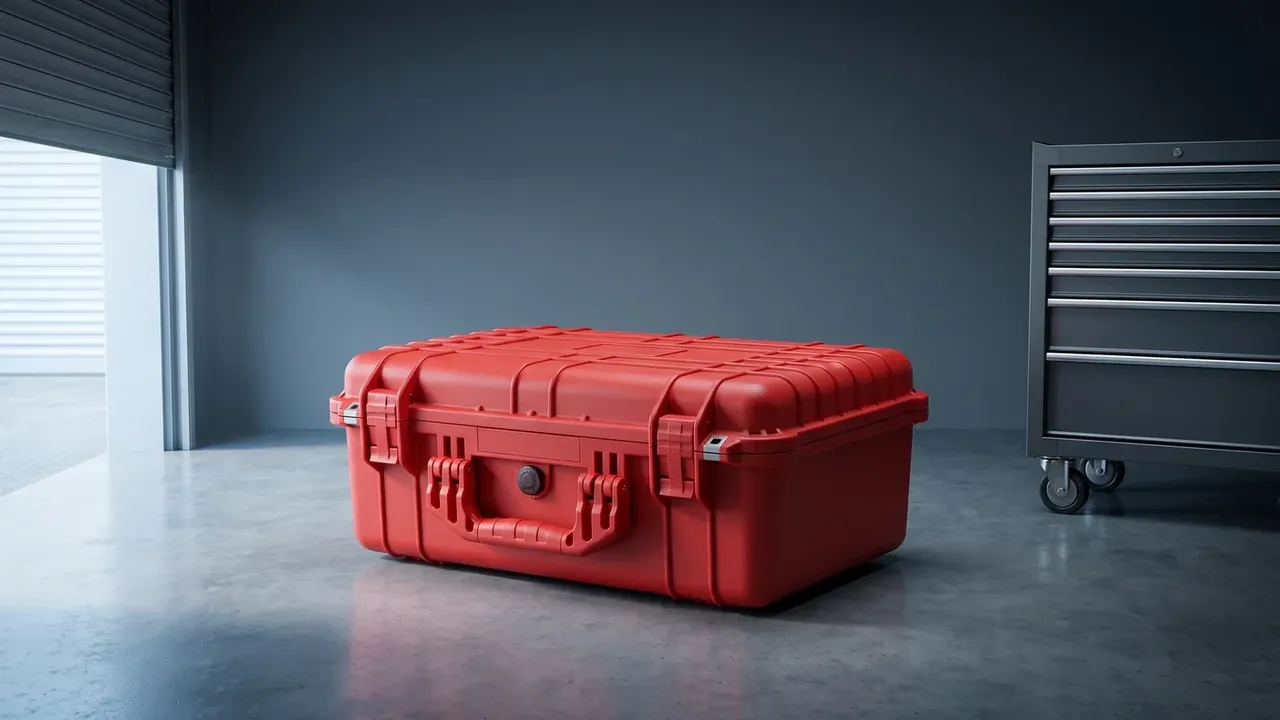
- Each shift: push three metres for a rumble, close both latches for a hollow click, look for whitening at the rim.
- Weekly: run a 0.5 mm feeler along the closing line, corners and tube exit first, logging any point it enters.
- Monthly: extend the trolley and rock the grip, side play under 1.0 mm; spin each wheel for a flat spot.
- Quarterly: measure compression set at three seal points, list it above 25%, spot-check stud torque at 5 N·m.
- Yearly: wash the inner tube, check track roundness, renew axle grease.
The weekly feeler walk on a Rolling Tool Case takes a minute and finds a dying seal two months early.
3. Cleaning and Drying the Case
Remove salt and dust, not oil film. Use water near 35 °C with a neutral cleaner between pH 6.5 and 7.5, brush along the ribs, and avoid alkaline degreasers, which strip the UV layer.
Rinse, then blow dry, not wipe. Air under 0.2 MPa, starting at the tube mouth and finishing in the seal groove where no cloth reaches. At 23 °C and 50% humidity, four hours dries trapped water; at 80%, double it.
Grease goes in three places. NLGI 2 lithium on the axles at 0.4 g each, since excess flings onto the tread. Dry PTFE spray inside the tube, flashed off before it collapses. A film of silicone on the seal, thin enough that a finger leaves no smear. Keep latches dry; oil attracts dust.
4. Replacement Lines and Life Extension
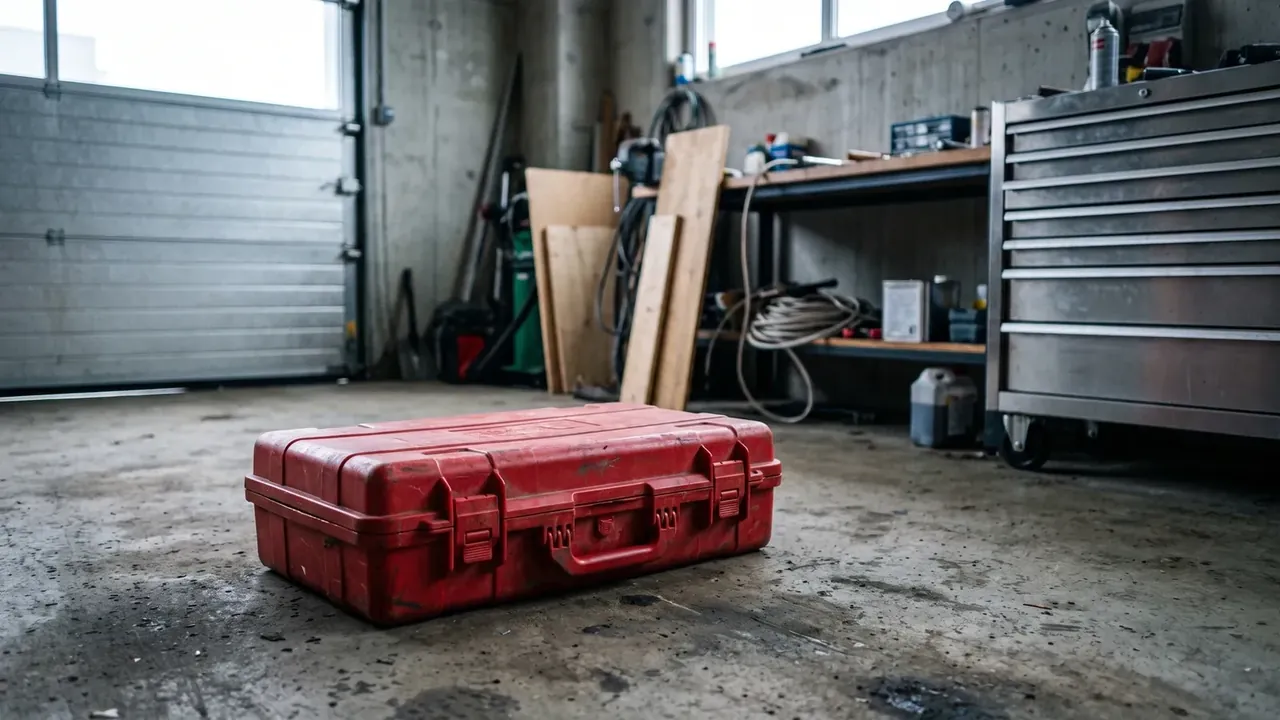
| Part | Replacement line | Action past it | Cost of ignoring it |
|---|---|---|---|
| Wheels | 1.2 mm of tread lost, or one seizing | Change all four | Wear reaches the mount |
| Trolley | Over 1.0 mm play, or a step | Change the trolley | It separates under load |
| Seal | Over 25% set, or a 20 mm crack | Replace the full loop | Freezing opens the joint |
| Studs | Torque under 3.5 N·m and falling | New mount or plate | Stud pulls out |
| Latches | A 1.2 mm gap, weak force | Metal latches | Springs open in transit |
Extending life is cheap work. A rubber grommet at each tube mouth cuts ingress for under ten yuan a case. A 1.5 mm pad under the base spreads load, so studs take twice as long to whiten. Number every case and keep the sheet on a side label. Keep cold-store and ambient cases apart rather than sending one across 56 K daily. Accept hardware on a 72-hour salt spray result, since early rust means thin plating.
Conclusion
A Rolling Tool Case rarely wears out through work; it wears out through sequence, seal first, water in, axle and track next, body last. Fix the checks to a shift, week, month and quarter cycle, record the three numbers, and replacement stops being a guess. Follow it and a Rolling Tool Case earns two more years.
This article discusses only the container (case body) side of specifications and design intent, and does not cover any handling, loading or use of the contents.
Related Reading
- Rust prevention for metal tool chests
- Where a rolling tool case is used
- Hard shell suitcase maintenance
Related Products
- 8 Series — Gun Cases; Military Equipment Cases; Camera Equipment Cases; Drone Cases; Watch Cases; Knife Cases; First Aid Cases; Electronics Equipment Cases
- WL8-2812 PP Gun Case — model WL8-2812
- All protective cases and toolboxes: 7 series, 158 models