

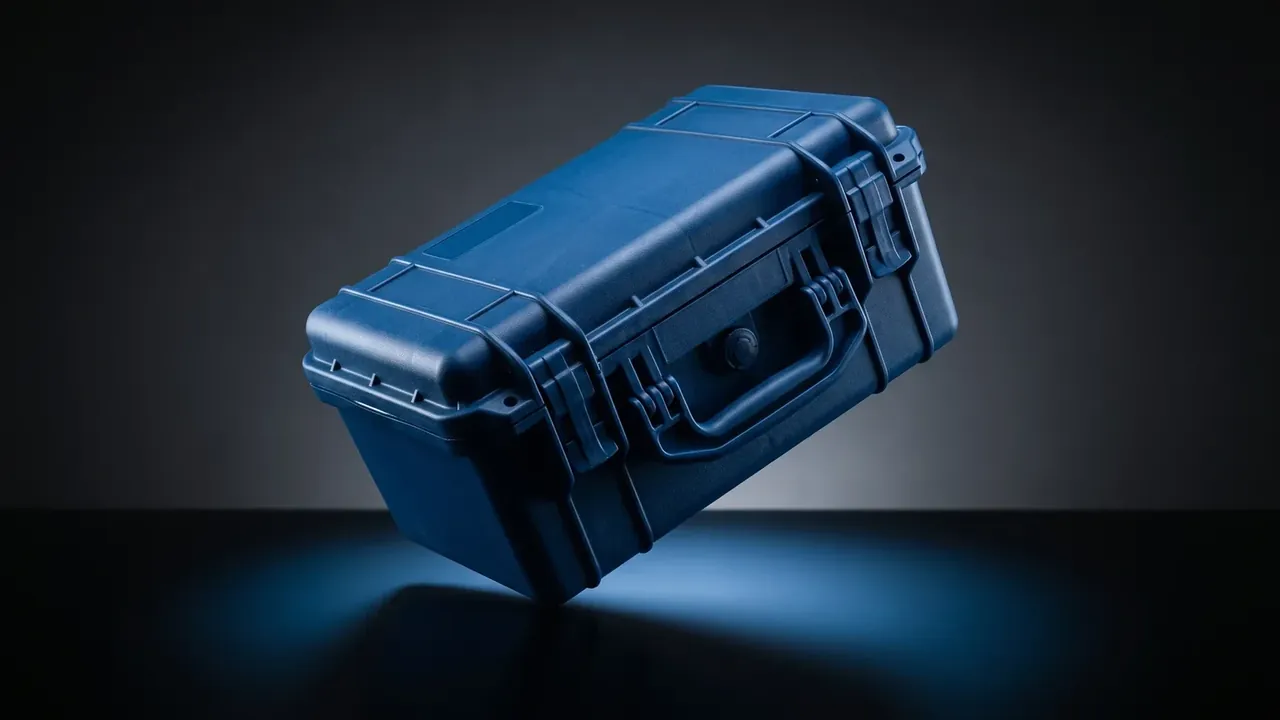
Quick answer: A Rolling Tool Case is specified backwards from the load list: contents fix the cavity, cavity and gross weight fix wall thickness, thickness fixes ribs and wheel mounts. Each step carries a price, from material saved to rework hours and tooling per unit. Put the three costs on one sheet and the specification has one answer.
Table of contents
- Cavity Size Derived from the Load List
- What 0.6 mm of Wall Buys and Costs
- Load Paths from Mount to Rail
- Tolerance Bands and Assembly Rework
- Tooling Amortisation and the Batch Break Point
- FAQ
1. Cavity Size Derived from the Load List
Start with the list of what goes in, not with an outline. A longest item of 480 mm, a tallest of 210 mm, 12 kg at the heaviest and two stacking layers fix the numbers. Two 12 mm foam walls and an 8 mm divider give 520 mm of length; two layers with divider and base pad give 240 mm of height; three pieces at 96 mm plus foam give 310 mm of width. Only then does the outside become a discussion.
Everything outside the cavity serves it: wall, ribs, mounts. The derivation runs cavity, outline, structure, running gear. Reverse it and the load no longer fits, or the walls end up like paper.
| Input | This case | Derived | Cost of overshooting |
|---|---|---|---|
| Longest item | 480 mm | Cavity 520 mm | Foam crushed on removal |
| Two layers | 210 mm each | Height 240 mm | Lid will not seat |
| Three across | 96 mm each | Width 310 mm | Divider bows |
| Gross weight | 35 kg | Wall 3.2 mm | Base sags, mount whitens |
| Trip length | 300 m | Wheel 75 mm | Tread flats |
A 520 × 310 × 240 mm cavity at 35 kg is the dividing line. Under 25 kg allows 2.6 mm walls with local ribs; above 35 kg needs 3.2 mm and a moulded insert at each mount. That 10 kg band decides every cost line below.
2. What 0.6 mm of Wall Buys and Costs
Going from 3.2 mm to 2.6 mm takes part weight from 5.0 kg to 4.2 kg. At 14 yuan a kilo of modified ABS, that is 11.2 yuan saved per case, which looks free until the 0.6 mm is paid back.
The first bill is flatness. Thinner walls cool unevenly, so lid flatness moves from 0.8 mm to 1.6 mm, the middle meets first, the corners stay open and the seal never compresses. The second is creep: 35 kg on a 2.6 mm base sinks 1.2 mm in 30 days, and the mounts tilt with it. The third is scrap, up from 1.4% to 5.2%, whose extra 3.8 points add 4.5 yuan per good unit at 120 yuan each.
Rework is the big one. A flatness failure goes onto a jig for 22 minutes at 45 yuan an hour, or 16.5 yuan. Save 11.2, pay 21, and every case loses about 10 yuan.
3. Load Paths from Mount to Rail
A Rolling Tool Case carries load along three paths, and the specification exists to keep all three unbroken.
- Vertical: cavity floor to side wall, wall to lower edge, then into the mounts. Floor ribs run into the wall at 8 mm minimum.
- Diagonal pull: rail into back panel, back panel into both side walls, on a 3 mm backing plate with bolts no wider than 80 mm apart.
- Carrying: handle into lid, lid into the short ends. Handle blocks wrap the lid edge rather than sit on it.
- Junctions are weakest: mount to wall, rail to back panel, handle to lid, each 4.5 mm locally.
- Fasteners close the chain: M6 studs at 6 N·m through a metal insert, never straight into plastic.
Get the three paths right and strength stops being a matter of adding material.
4. Tolerance Bands and Assembly Rework
Tolerance is not a virtue; every tightened band adds an operation. Five dimensions matter on a Rolling Tool Case and the rest can stay loose.
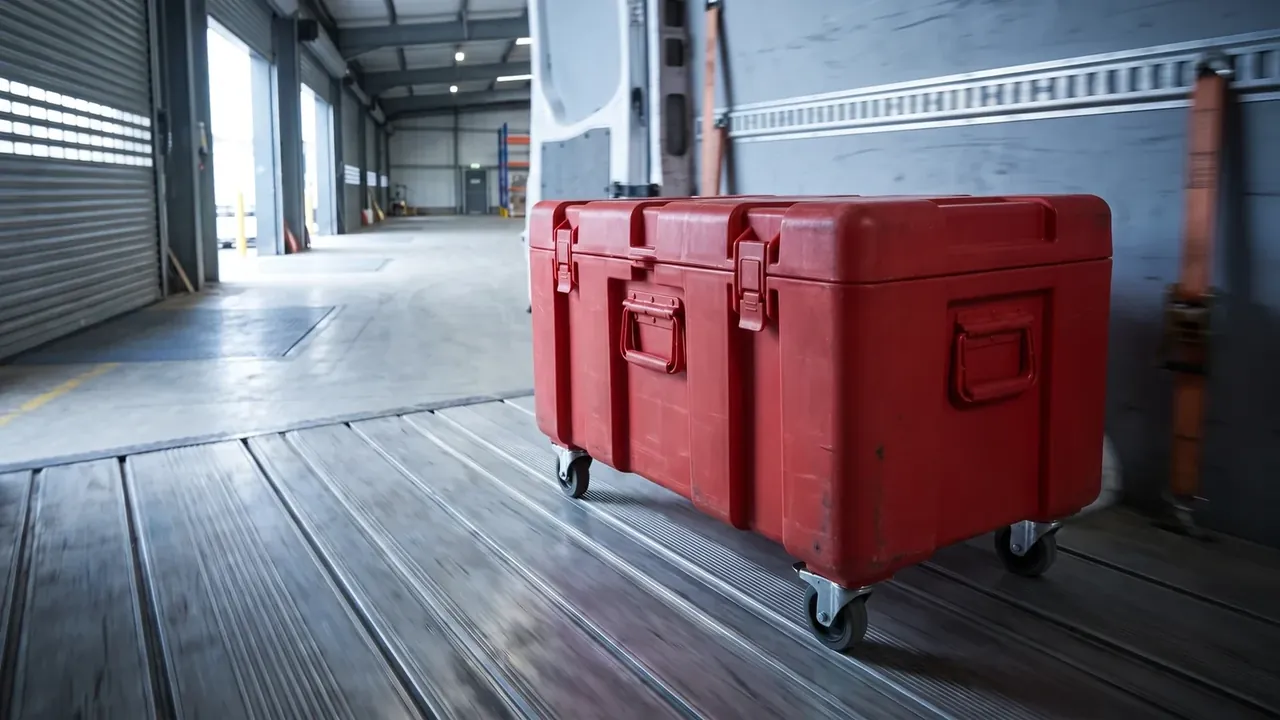
| Feature | Band | If it drifts | Rework |
|---|---|---|---|
| Parting-line flatness | 0.8 mm | Seal never seats | 22 min |
| Lid-to-base gap | 0.3 mm | Latch loose or blocked | 12 min |
| Mount parallelism | 0.5 mm | Wheels uneven, case pulls | 18 min |
| Rail hole position | ±0.2 mm | Trolley will not fit | 25 min |
| Latch anchor height | ±0.3 mm | Weak closing force | 8 min |
Two of the five carry the money: flatness at the parting line for sealing, hole position at the rail for assembly. The rest can sit at ±0.5 mm without complaint.
5. Tooling Amortisation and the Batch Break Point
A mould for a Rolling Tool Case costs about 280,000 yuan. At 6000 units it adds 46.7 yuan per case; at 2000 units, 140 yuan. Same structure, 93 yuan apart, which is why small runs cannot copy the specification of a volume order.
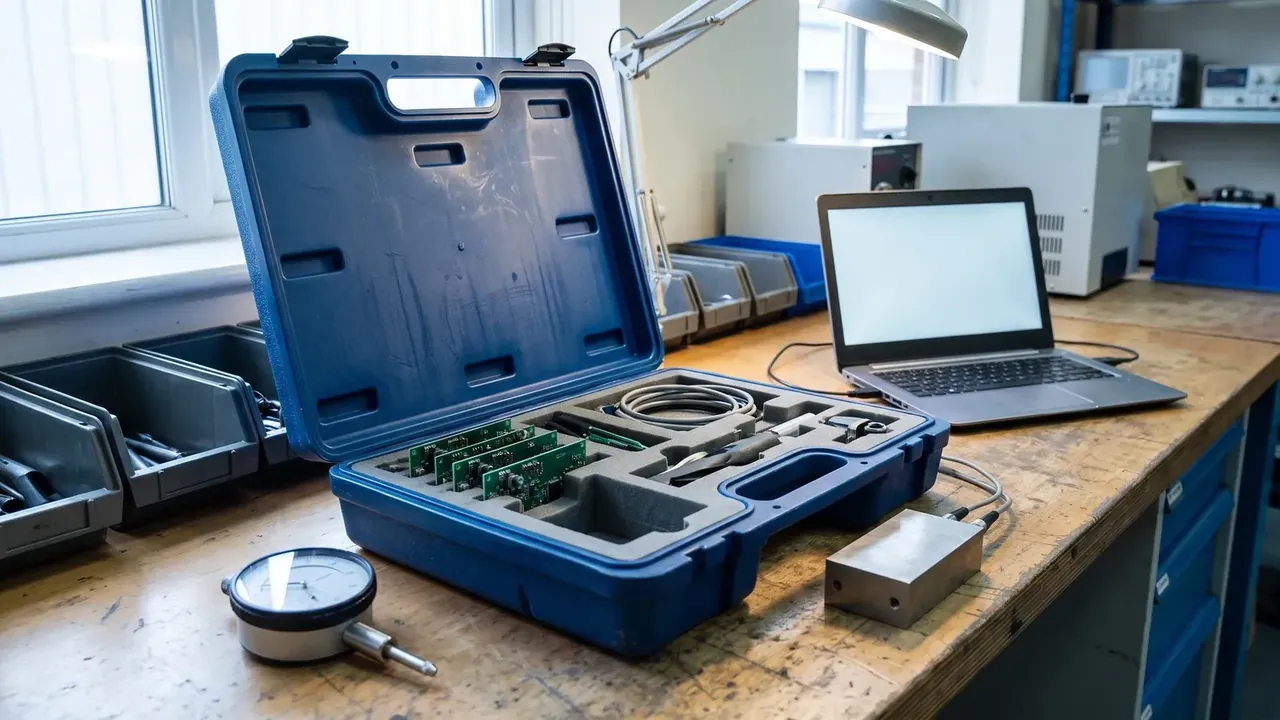
Cycle time counts too: 3.2 mm walls cool for about 210 seconds against 175 seconds at 2.6 mm, two hundred parts a day on one machine. Shorten the cycle and scrap rises, and the bill returns to the section above.
The break point sits near 3000 units. Below it, tooling takes over a third of unit cost and the material saving is noise; above it, wall and structure show in the quote. Ask which side a batch falls on before negotiating price.
Conclusion
The specification of a Rolling Tool Case is a chain that can be costed to the end: load list to cavity, cavity and weight to wall thickness, thickness to ribs and mounts, tolerance budget spent on two features, tooling spread across the batch. Every link converts into money, so where the saving sits and where the loss lands are visible on one page. Walk the chain first, and a Rolling Tool Case is never specified by saving 11 yuan to lose 21.
This article discusses only the container (case body) side of specifications and design intent, and does not cover any handling, loading or use of the contents.
Related Reading
- Where a rolling tool case is used
- Rolling tool case selection guide
- Metal tool chest specifications
- Consolidated tool kit specifications
Related Products
- 8 Series — Gun Cases; Military Equipment Cases; Camera Equipment Cases; Drone Cases; Watch Cases; Knife Cases; First Aid Cases; Electronics Equipment Cases
- WL8-2812 PP Gun Case — model WL8-2812
- All protective cases and toolboxes: 7 series, 158 models