

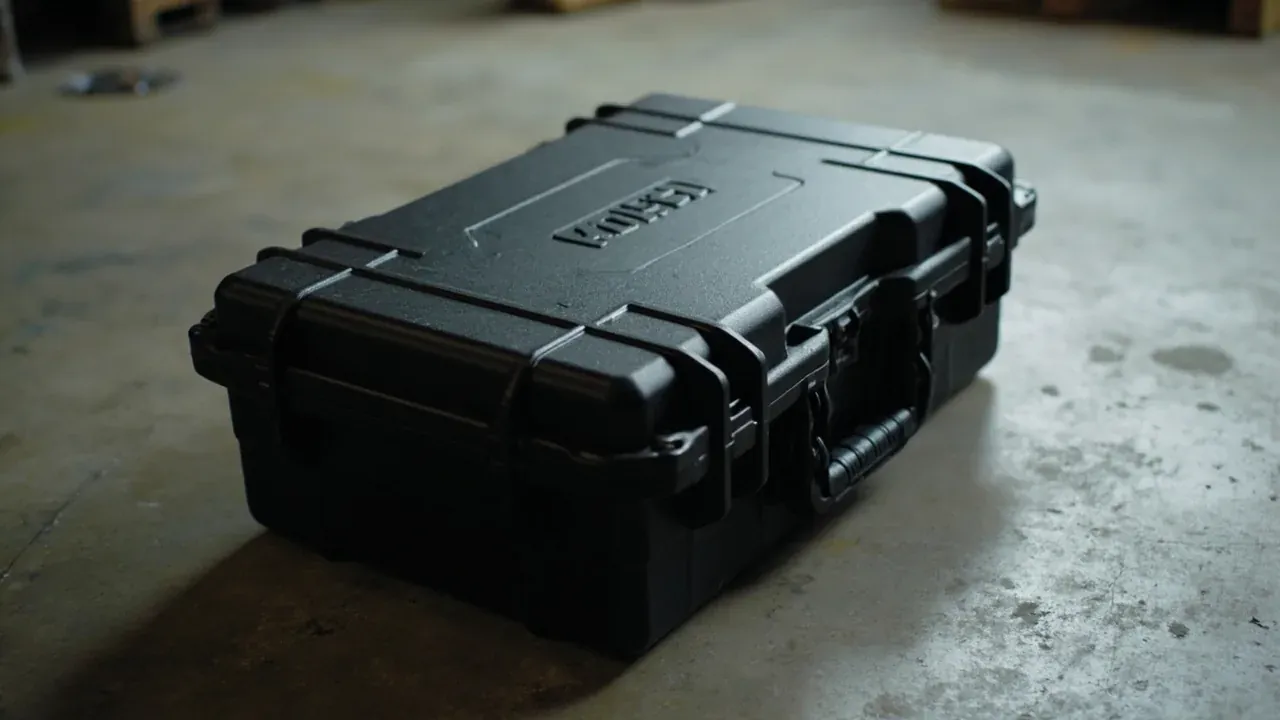
Quick answer: Loss prevention in a consolidated tool kit comes from coordinates, not from the lock: one list line maps to one fixed nest, each nest carries a number, and that number sits on the lid plate. Align the three and a missing item shows with the lid closed. Without that alignment a lock guards the whole case but never a single wrench.
Table of contents
- The list sets the nests before the case
- Compartments and nests that expose a gap
- Numbering, label seats and the count window
- Three physical layers against loss
- Choosing between three ways to hold the list
- FAQ
1. The list sets the nests before the case
Specify a consolidated tool kit backwards from its list: one list line becomes one nest, the nest sets the internal grid, the grid sets the mould. Build the case first and a few tools will not fit, so nests get merged — and a merged nest hides a gap, because a shared recess still looks full when one tool is gone.
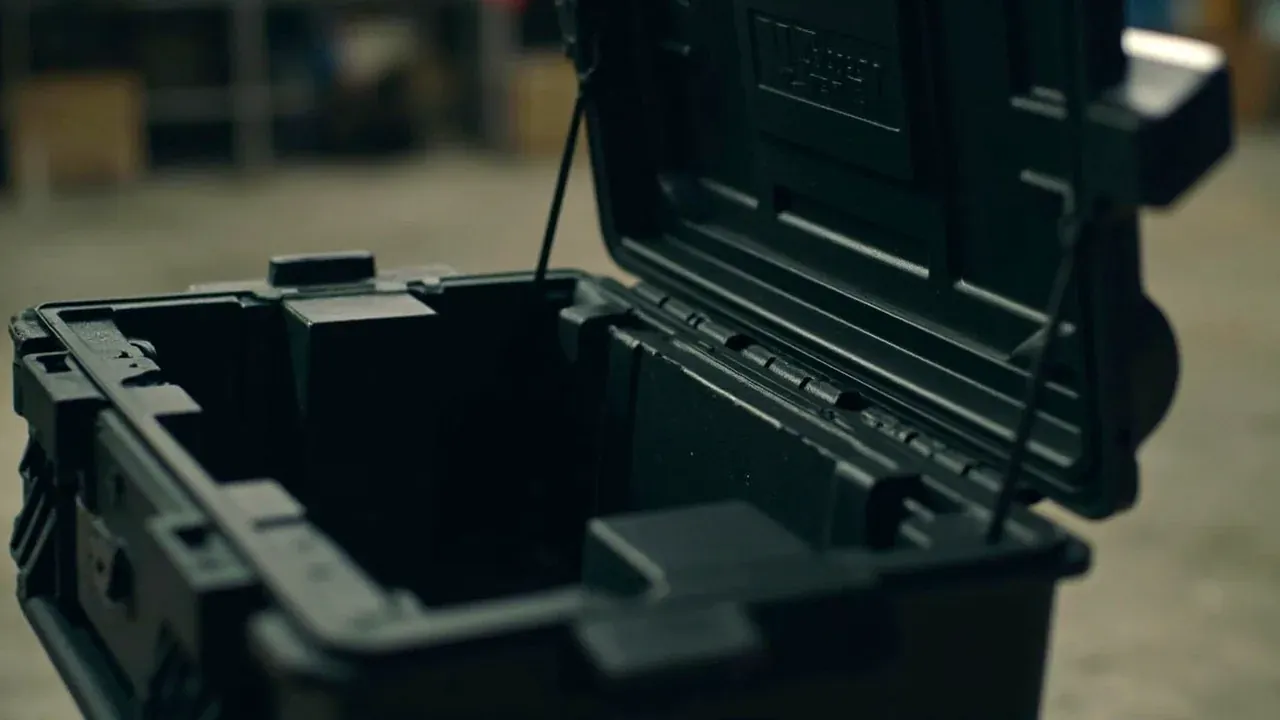
In a consolidated tool kit, structure gives way to the list. Lay the interior on a fifty millimetre module and run ribs under the dividers instead of inside the nests. A two to three millimetre wall holds its shape; thinner walls spring back after carrying. Keep latches off the cross dividers, or the closing load cracks the divider edge first.
2. Compartments and nests that expose a gap
A consolidated tool kit shows a gap under two conditions: every tool sits in a recess that follows its outline, so the floor colour appears once it leaves; and no cell is capped, with the lid foam pressing the top edge without hiding the view. Meet both and one glance finds the empty nest.

In a consolidated tool kit, nest types differ in fit and in the cost of change. Machined foam follows odd handles but softens with oil. Thermoformed inserts are cheap and consistent, yet their corners lift and tilt the tool. Moulded dividers resist oil and can be recycled, though draft angle limits depth. Where a case is washed out, keep foam under a third of the interior.
| Nest type | Fit | Cost to change | List it suits |
|---|---|---|---|
| Machined foam | high, follows odd handles | medium, new tool path | fixed shapes, few items |
| Thermoformed insert | medium, corners lift | low, swap the insert | large batches, changing models |
| Moulded divider | medium, draft limited | high, mould change | stable list, oil resistance |
3. Numbering, label seats and the count window
Numbers on a consolidated tool kit belong where the open lid shows them: the rim of the lid liner and the top edge of each front wall. Mould a half-millimetre recess at both so a label sits flush and no tool scrapes it off. The recess costs one mould change and saves years of re-labelling.
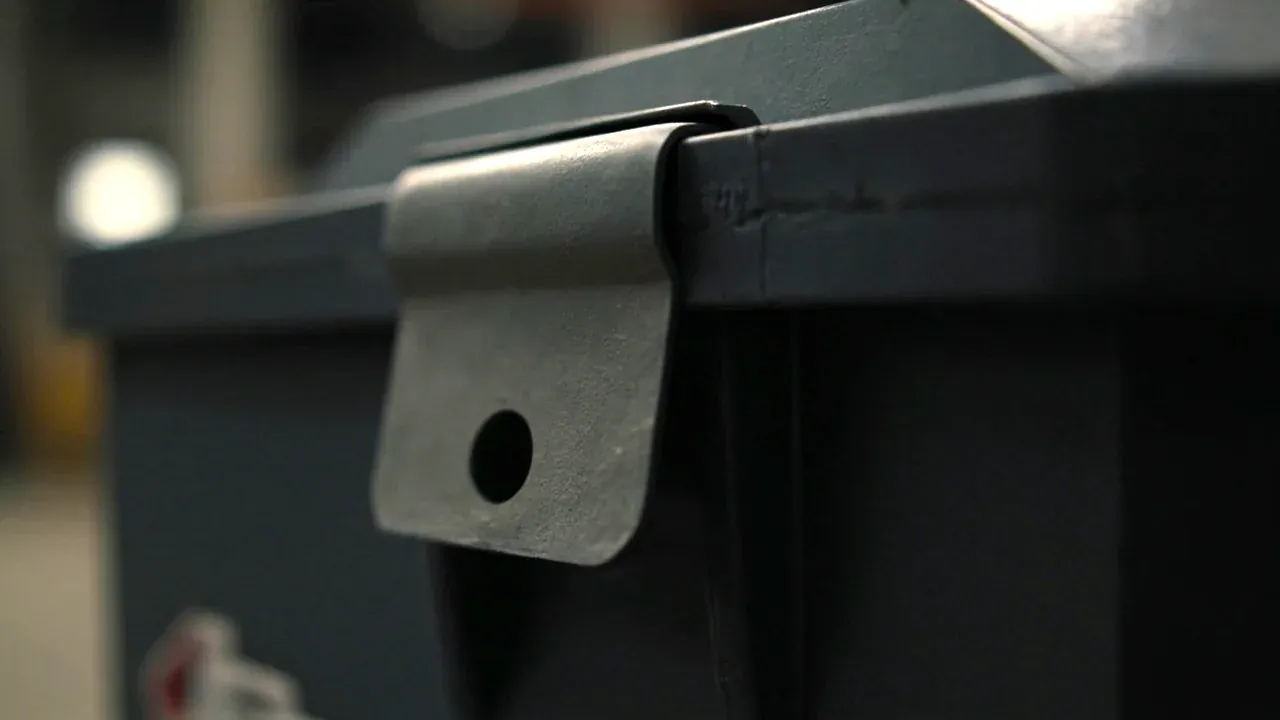
A consolidated tool kit uses three segments — case, layer, position — matching the list line for line. Skip colour, which oil and sunlight merge within two years, and skip raised digits that blur on a rotomoulded surface. A count window is a clear polycarbonate panel framed by a continuous rib, so dust cannot travel to the screw holes.
4. Three physical layers against loss
Protection in a consolidated tool kit has three layers. The case relies on draw latches plus a through pin sharing the lock axis, so the latch cannot retreat. Items rely on a strap across each nest and a moulded tether hole. Counting relies on the lid plate and the window, cutting a check to ten seconds.
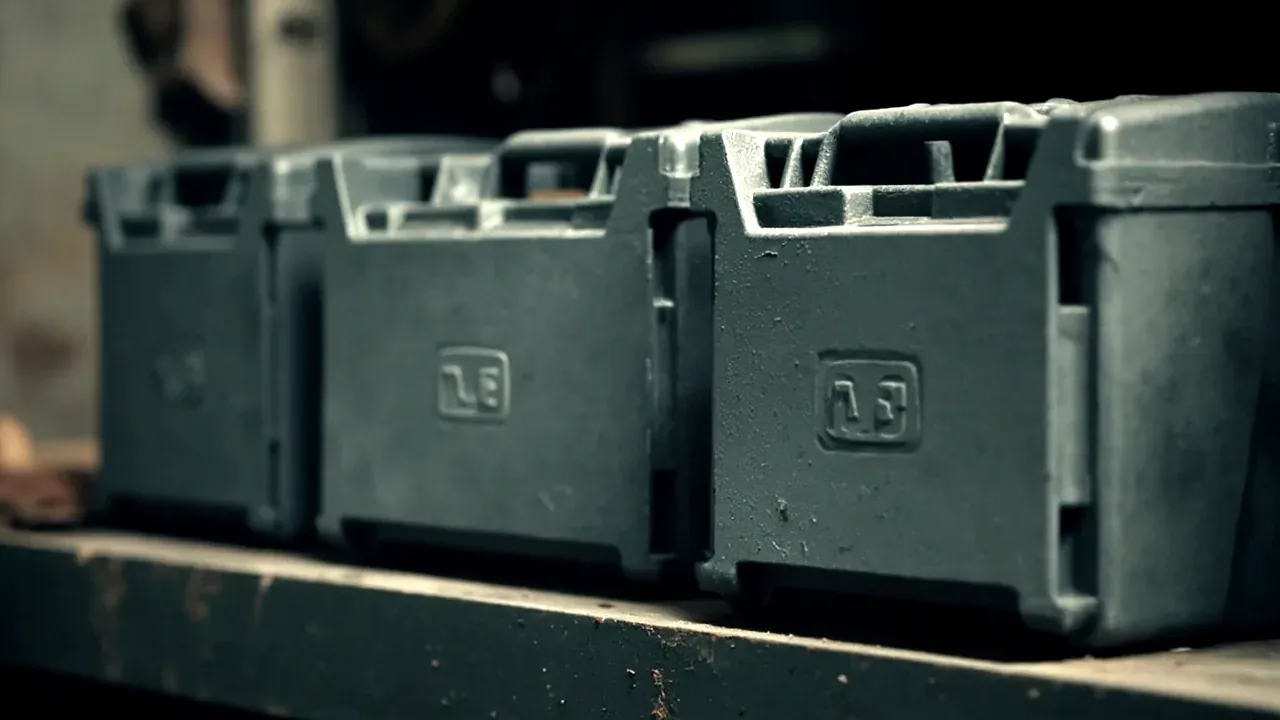
Carrying is the layer people skip. A loaded consolidated tool kit sits low, so its handle belongs within five millimetres of the centre of gravity; further out and the case swings as you walk. Round the corners, since square ones lose paint first in a vehicle. Costs differ: a pin is pennies, a strap a few yuan, a window a mould change.
5. Choosing between three ways to hold the list
In a consolidated tool kit, fully moulded nests suit a list that holds for years: strict mapping, the clearest gap, and a mould change whenever the list moves. Modular dividers suit a shifting list: cells move and gaps are packed with blocks, but tools drift between cells. A hybrid moulds the main cells and leaves secondary ones adjustable.
Decide a consolidated tool kit in three steps: revisions per year, mould cost against the loss from drifting tools, and whether the case follows the machine or the person. Machine-bound cases lean moulded, person-bound cases lean adjustable. A list unchanged for three years probably came from elsewhere, and needs a fresh count rather than a new mould.
Conclusion
Judge a consolidated tool kit in four moves: set list granularity, choose the nest type, fix numbering and label seats, then settle the counting method. Step two is the one skipped, and most invisible gaps come from nests that do not match the list. Past forty lines, a single-layer case should become two layers or trays, or the nests grow until tools rattle.
This article covers container-side specifications and design implications only, not the handling, loading or use of the contents.
Related Reading
- Consolidated tool kits for machine tooling
- Rotomolded Cases: Rotational-Moulded Shell Structure & Pro…
- Material choice for plastic tool boxes
- Tool box lid structure and latches
Related Products
- 8 Series — Gun Cases; Military Equipment Cases; Camera Equipment Cases; Drone Cases; Watch Cases; Knife Cases; First Aid Cases; Electronics Equipment Cases
- WL8-2812 PP Gun Case — model WL8-2812
- All protective cases and toolboxes: 7 series, 158 models