

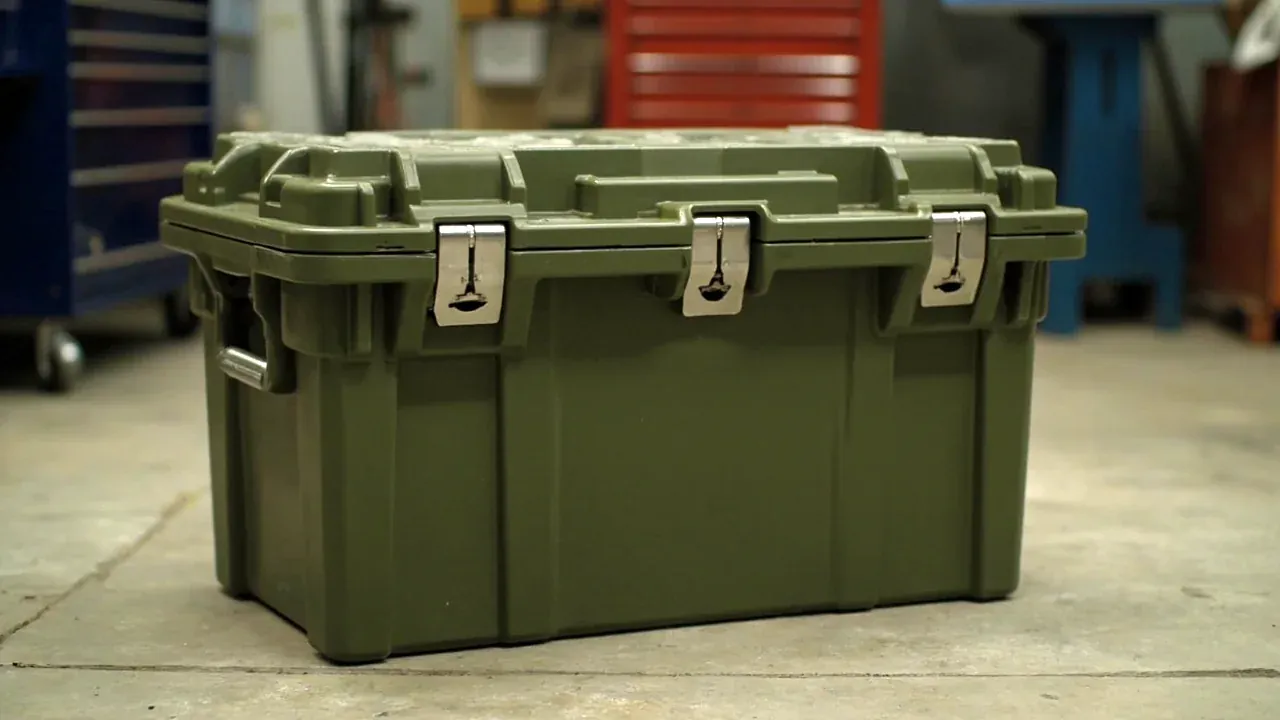
Quick answer: Tool chest datasheets list overall size and total load, which are nearly useless for selection. Four figures decide daily behaviour: load per drawer, slide travel, locking method and anti-tip. Miss any one and it shows up within three months as a drawer that will not pull, a unit that tips forward, or keys nobody controls.
Table of contents
- The four figures a tool chest spec sheet should show
- Load per drawer: the two conditions behind the number
- Slide travel: is full extension worth the premium
- Locking: single point, three-point and cabinet locks
- Centre of gravity and anti-tip: the most neglected figure
- FAQ
1. The four figures a tool chest spec sheet should show
Brochures give three figures: overall size, total load, drawer count. They tell you whether it fits, not whether it works. Two chests of the same size can differ threefold in load per drawer, offer full or three-quarter travel, and lock at one point or three — none visible in a photo.
Four figures matter: load per drawer, slide travel, locking method, anti-tip design. They map to four daily actions — pull, see, lock, stand. Ask about each in turn; it is far more useful than a total load rating.
| Figure | Typical steps | What to check | If it falls short |
|---|---|---|---|
| Load per drawer | 20 / 40 / 80 kg | full travel when loaded | slides distort, drawer sags |
| Slide travel | three-quarter / full | can you see the back | rear tools unreachable |
| Locking | single / three-point / cabinet | lock points and key tiers | edges lift, unclear ownership |
| Anti-tip | interlock / ballast / fixing | one drawer at a time | unit tips forward |
2. Load per drawer: the two conditions behind the number
A per-drawer rating assumes even distribution and static load. Put eighty kilograms into a dozen sockets clustered at the front and the point load can double the rating; the balls brinell first, and every pull afterwards feels notchy.
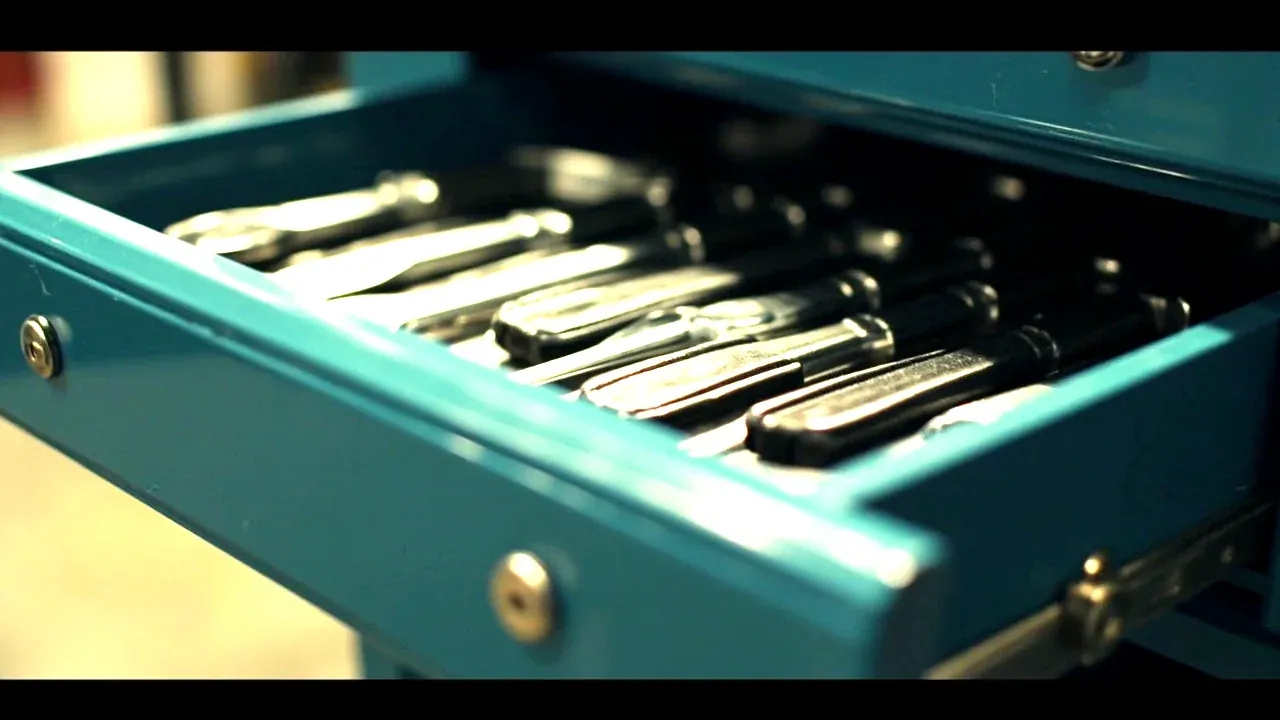
The second assumption is dynamic. Pushing a drawer applies an impact factor of 1.5 to 2, so one hard shove far exceeds the rating. Plan at seventy percent: an eighty-kilogram drawer loaded to fifty-five reaches its design life.
3. Slide travel: is full extension worth the premium
A three-quarter slide leaves a section hidden; full extension brings the drawer right out so the back row is visible. The difference barely shows in shallow drawers and is obvious past five hundred millimetres of depth, where rear tools need a torch.
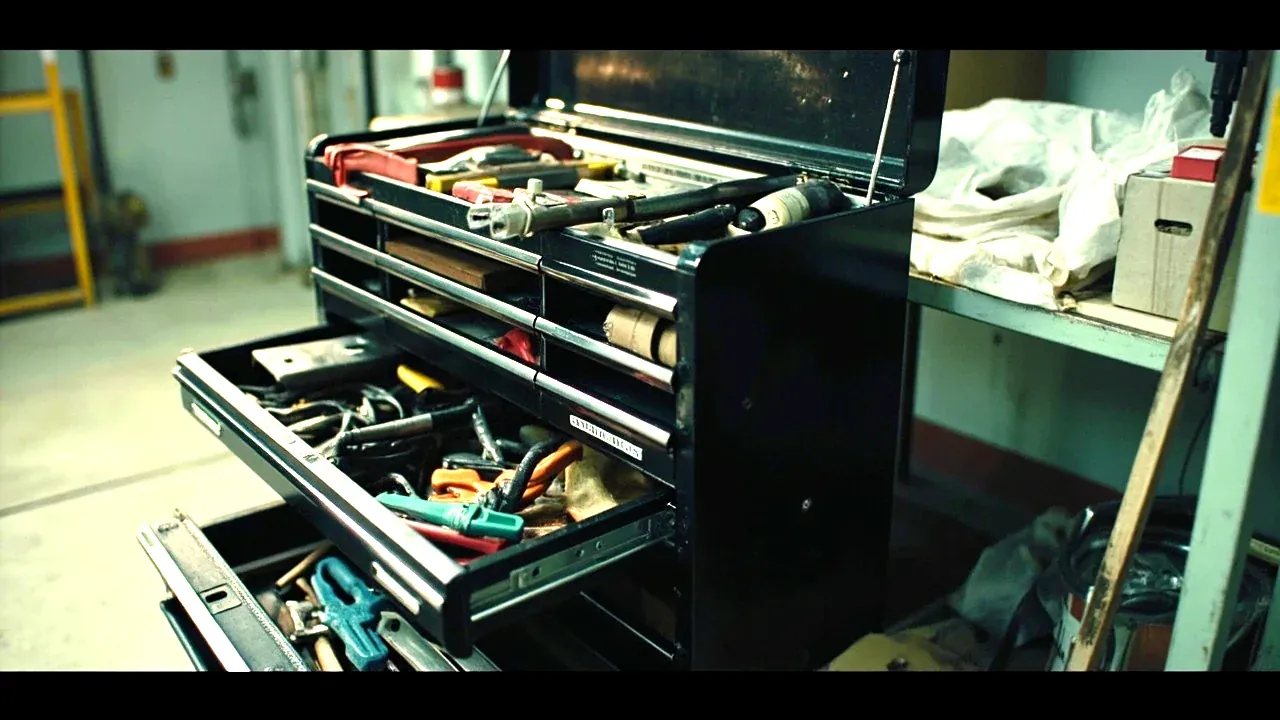
Full extension costs money and stability: the cantilever is longer, so the cabinet must be stiffer, and a soft body sags at full travel. Test it empty and fully open, pressing the front edge — clear springback with no set is the pass mark.
4. Locking: single point, three-point and cabinet locks
A single-point lock secures one side and relies on panel stiffness elsewhere; a three-point lock drives bolts top, middle and bottom; a cabinet lock ties all drawers to one bar. Their pry resistance differs by an order of magnitude, while price differs by about twenty percent.
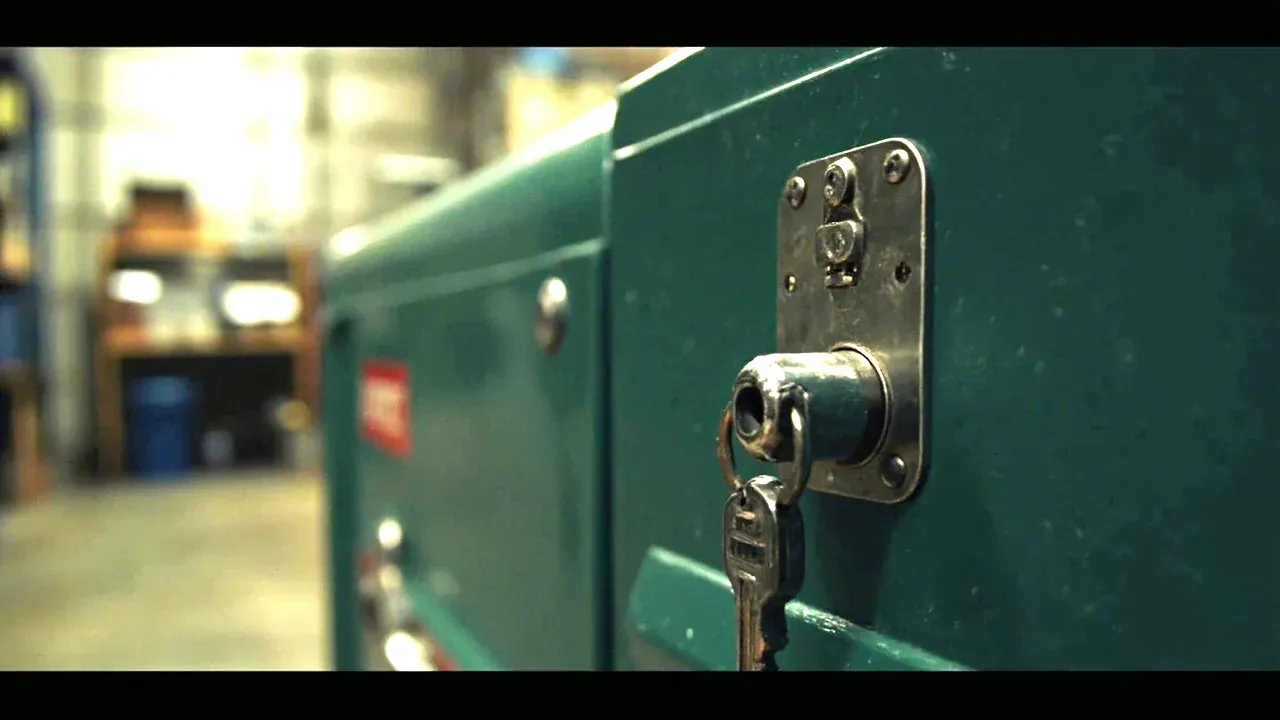
Which one you need follows management, not security level. A fixed crew locking only at night is served by a single point; handovers and traceability call for a cabinet lock with key tiers. Three-point sits between them.
5. Centre of gravity and anti-tip: the most neglected figure
With drawers open the load moves forward and the combined centre of gravity can pass the front edge, tipping the unit about its front castors — the most common injury route and the easiest thing to miss on a brochure, because an empty chest never tips.
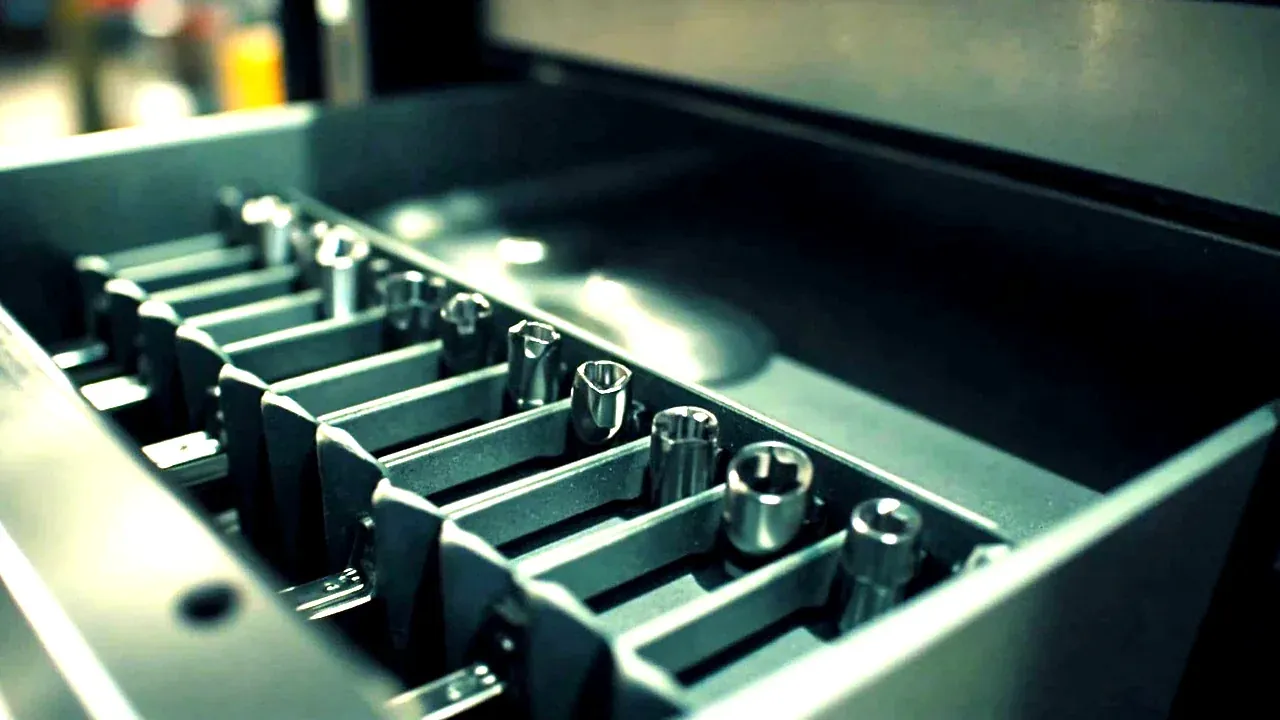
Three answers exist: an interlock releasing one drawer at a time, internal ballast, or fixing to floor and wall. Check whether ballast is standard — many units arrive without it.
One field rule costs nothing: put the heaviest tools in the bottom drawer. It only works if the internal layout is planned at purchase, otherwise weight follows convenience and lands on top.
Conclusion
Read a tool chest spec in four figures: plan drawer load at seventy percent, check that full travel lets you see the back, match locking to management, and require ballast or an interlock. Total load and size answer whether it fits; these four answer whether it still works in three years.
This article covers container-side specifications and design implications only, not the handling, loading or use of the contents.
Related Reading
- Tool chests in workshops and repair bays
- What a tool box is
- Tool box, bag and chest compared
- Tool box foam lining selection
Related Products
- 8 Series — Gun Cases; Military Equipment Cases; Camera Equipment Cases; Drone Cases; Watch Cases; Knife Cases; First Aid Cases; Electronics Equipment Cases
- WL8-2812 PP Gun Case — model WL8-2812
- All protective cases and toolboxes: 7 series, 158 models