

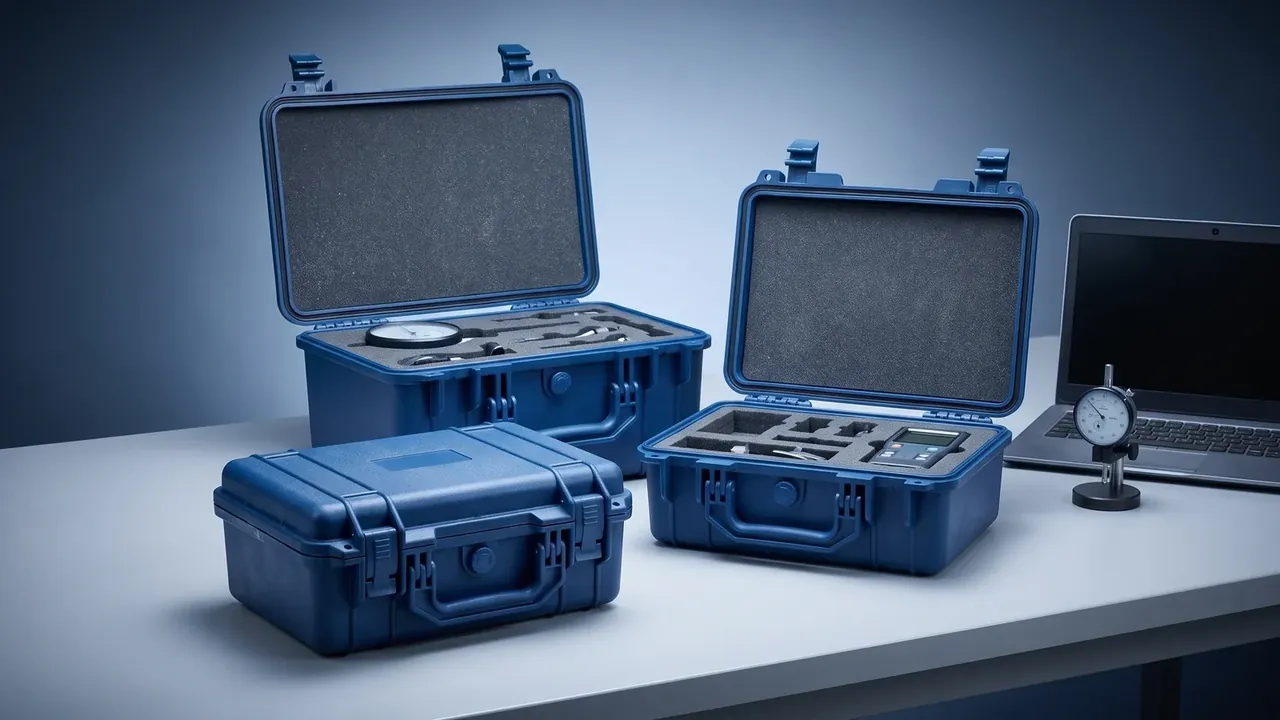
Quick answer: A Rolling Tool Case is accepted on paper before it is accepted by hand: the IP class from IEC 60529, the method number from MIL-STD-810, and a sampling table the buyer writes.
Table of contents
- Which standards a Rolling Tool Case is measured against
- Sealing class and immersion judgement
- Static load and fatigue on handle and casters
- Drop and vibration method numbers
- Field re-checks for salt fog and cold
- Isolation and re-inspection of failed lots
- FAQ
1. Which standards a Rolling Tool Case is measured against
The usual failures at goods-in are a supplier report treated as a verdict, and a claim of drop testing. Neither carries a sample size or a method number.
| Check | Clause | Field method | Pass line |
|---|---|---|---|
| Enclosure sealing | IEC 60529 13.6, 14.2.5, IP65 | Pressure decay, charge to 30 kPa | 0.5 kPa drop in 60 s |
| Cold operation | MIL-STD-810 502.6 proc. I | 4 h at -20 °C, then 3 cycles | Latches free, gasket uncracked |
| Transit drop | MIL-STD-810 516.6 proc. IV | 26 drops from 1.2 m, 8 corners 12 edges 6 faces | No through-crack, latches shut |
| Random vibration | MIL-STD-810 514.6 proc. I | 10 to 500 Hz, 30 min per axis | Handle tight, mounts white-free |
| Salt fog | MIL-STD-810 509.6 | 5% NaCl, 35 °C, 48 h | No red rust, wheels turn |
2. Sealing class and immersion judgement
The 6 in IP65 is dust and the 5 is water jets. Dust runs with 2 kg of talc for 8 hours; jets come from a 6.3 mm nozzle at 12.5 L per minute, 3 m away, 3 minutes per face.
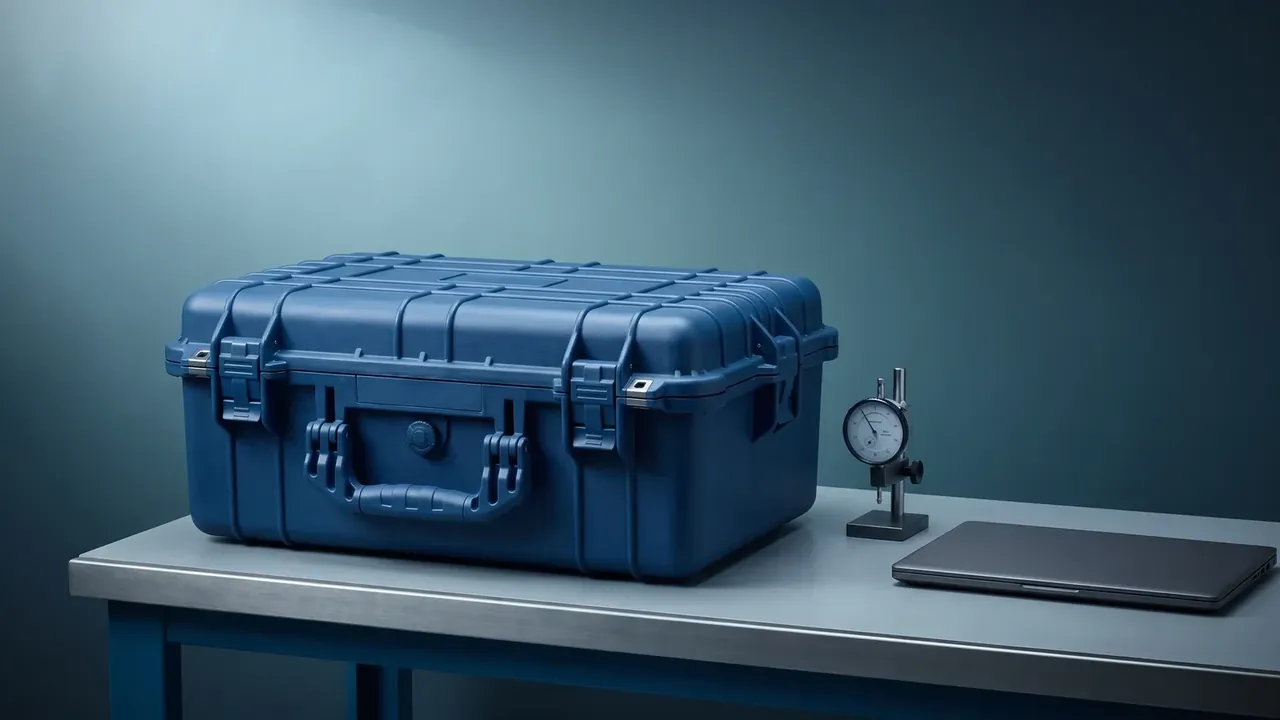
Sealing is judged by pressure. Charged to 30 kPa and held 60 s, a Rolling Tool Case fails above 0.5 kPa of decay; the leak is too small to see, so a soap film finds it.
A 2.5 mm groove with 3 mm cord gives 30 to 40 percent compression; below 25 percent a jet passes and immersion never does.
3. Static load and fatigue on handle and casters
The handle and casters fail first, and both get blurred into a claim about being built strong.
| Part | Load or cycles | Hold or rate | Pass line |
|---|---|---|---|
| Handle, extended | 500 N | 60 s hold | Set 1.5 mm or less |
| Handle cycling | 3000 cycles | 20 per minute | Locks, no creep |
| Caster static | 350 N per wheel | 24 h hold | Flattening 2 mm or less |
| Caster travel | 5 km, 3 mm obstacles | 4 km/h | Hub rise 15 °C or less |
At 1.2 mm wall the head should not shift 2 mm sideways; empty that is invisible, at 20 kg it wobbles.
Caster mounts need 3 mm of wall, or white stress lines appear after 5 km.
4. Drop and vibration method numbers
Method 516.6 procedure IV calls for one drop on each of eight corners, twelve edges and six faces, 26 in total, on the same sample, lid closed.
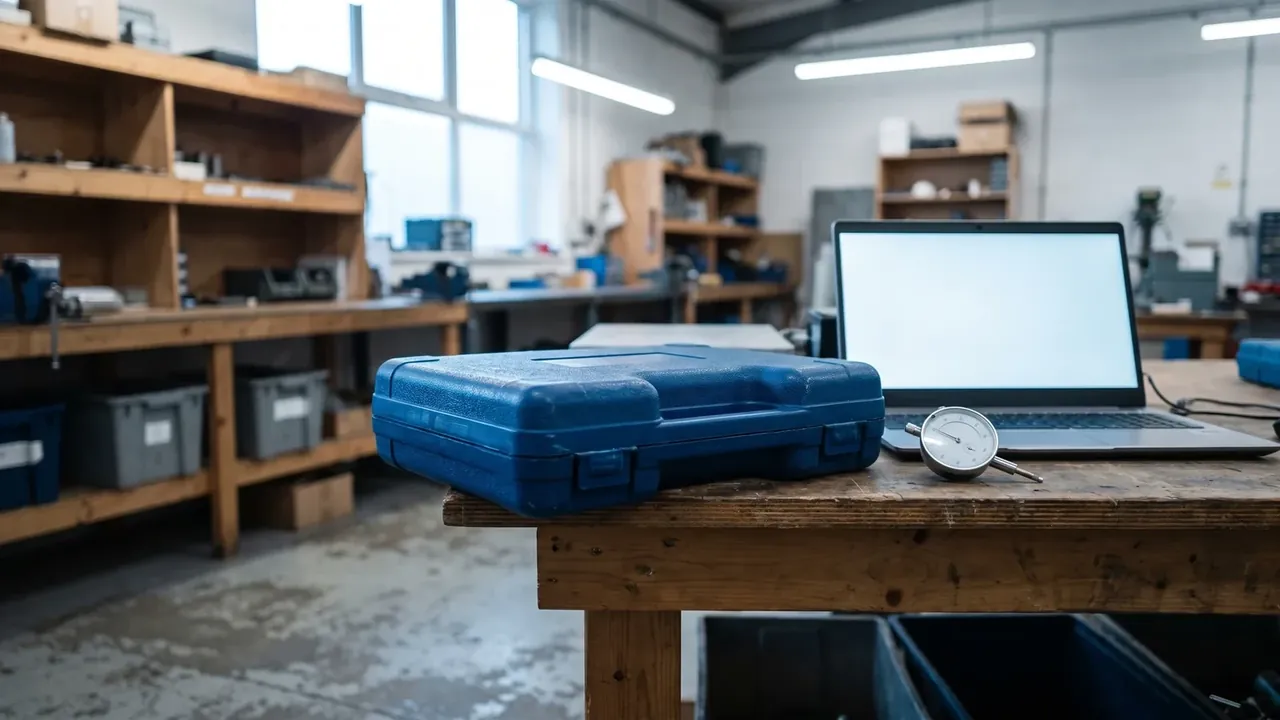
The 1.2 m height comes from carrying height. Three things are judged: through-cracks, latches that spring open, and anything that shifts inside; one popping latch is a failure.
Vibration finds resonance. Sweep 10 to 500 Hz at 1.04 g rms, 30 minutes per axis. A Rolling Tool Case peaks near 25 Hz, where a half-extended handle triples the amplitude; run the sweep half out and fully closed.
5. Field re-checks for salt fog and cold
A plant lab runs the full set; the field re-check is four portable items.
- Neutral salt fog: 5% NaCl at 35 °C for 48 hours, then check plated tubes for red rust.
- Cold soak: 4 hours at -20 °C, then three open-close cycles while cold.
- Hot soak: 2 hours at 55 °C; a softening gasket sticks and tears on opening.
- Cold impact: after -20 °C, a 1 kg ball from 1 m onto the lid centre; dent 3 mm at most.
6. Isolation and re-inspection of failed lots
Judgement uses attribute sampling in three classes: critical cracks and broken latches with acceptance zero, major deviation at AQL 1.0, minor colour and scuffing at AQL 2.5.
At 500 pieces and level II the sample is 50: Ac 1 Re 2 for major, Ac 3 Re 4 for minor.
A failed lot is quarantined whole and tagged red; re-inspection doubles the sample to 100, and two failures in a row retire it.
Conclusion
Acceptance for a Rolling Tool Case is a reproducible document: clause, load, time, pass line. Sealing is 0.5 kPa of decay over 60 s, the handle 1.5 mm of set after 500 N, the drop the latches after 26 impacts from 1.2 m. That sheet, applied to every lot, is what keeps a Rolling Tool Case consistent.
This article discusses only the container (case body) side of specifications and design intent, and does not cover any handling, loading or use of the contents.
Related Reading
- Where a rolling tool case is moved
- Comparing rolling tool case builds
- Drop clauses for airdrop cases
- Inspection of mould storage cases
- Safety checks for children tool boxes
Related Products
- 8 Series — Gun Cases; Military Equipment Cases; Camera Equipment Cases; Drone Cases; Watch Cases; Knife Cases; First Aid Cases; Electronics Equipment Cases
- WL8-2812 PP Gun Case — model WL8-2812
- All protective cases and toolboxes: 7 series, 158 models