

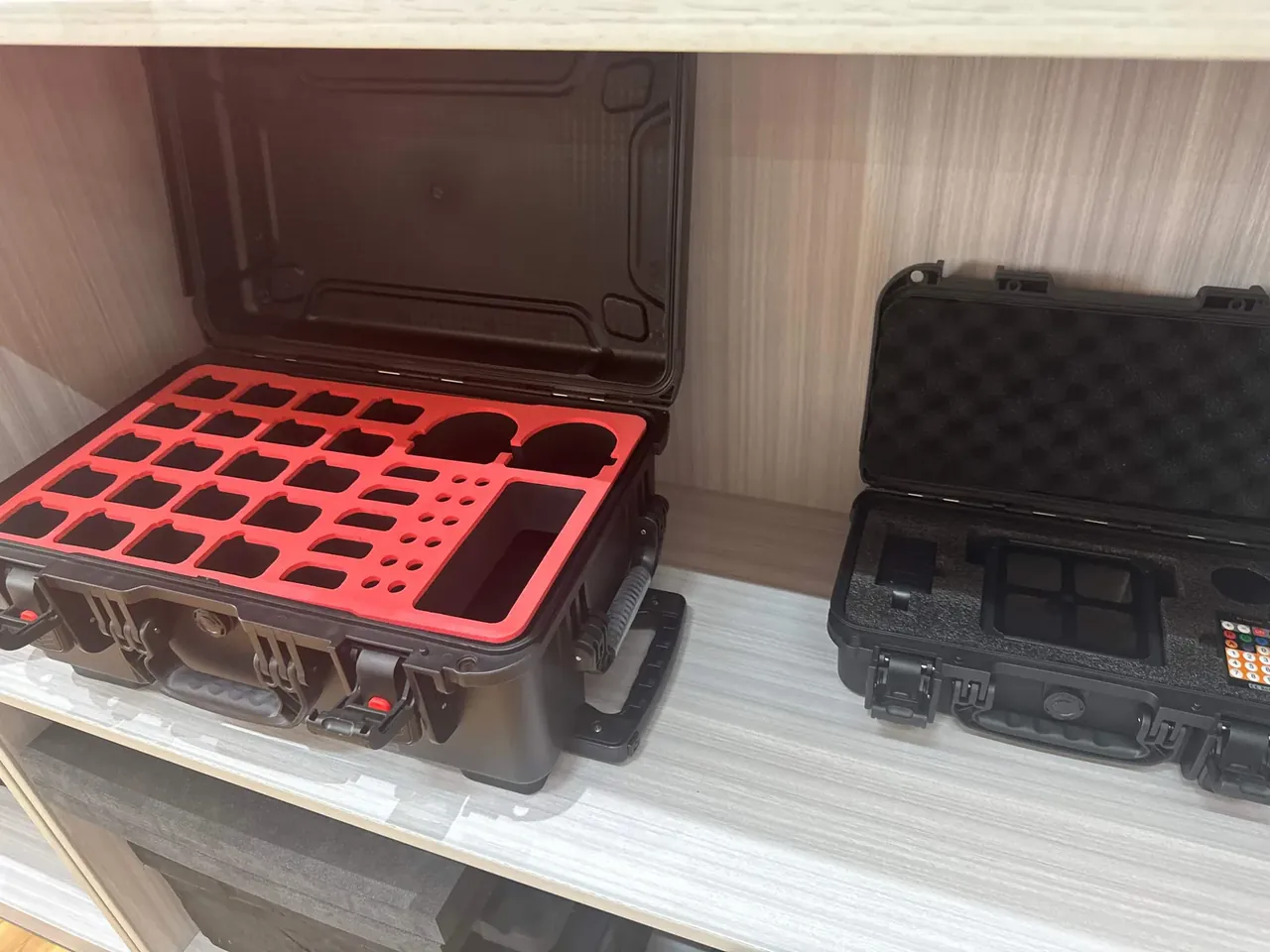
Quick answer: A rotationally molded case is chosen by the trip, not the cargo. Equipment transfer turns on the liner and opening rhythm, camp supply on standing without a bench, sea freight on seal and stack face, yard work on casters. Name the primary setting, then rank liner, opening, handling hardware and seal.
Table of contents
- Where a Rotationally Molded Case Earns Its Place
- Equipment Transfer: Liner and Opening Rhythm
- Field Camps and Emergency Supply: Usable on Landing
- Sea Freight and Multimodal Moves: Seal and Stack
- Matching Configuration to Setting
- FAQ
1. Where a Rotationally Molded Case Earns Its Place
Arguments about a rotationally molded case usually come from mixing settings. Equipment transfer, camp supply, sea freight and yard work look alike, yet their trips run from four hours to forty days.
Short trips with frequent handling wear the latch pin; long trips under a tall stack expose wall stiffness and gasket set. Rotational moulding gives a one-piece hollow shell that thickens through the corners, so a drop is absorbed by the body deforming.
| Setting | Typical trip | Load path | Usual liner | Fails first |
|---|---|---|---|---|
| Equipment | 4 to 12 hours | Handles, latches | Slotted foam | Latch pin |
| Camp, supply | 7 to 28 days | Corners, base | Loose dividers | Corner wear |
| Sea freight | 25 to 40 days | Stack face, gasket | Foam pads | Gasket set |
| Yard | Continuous | Base, hinge | None | Hinge play |
No single build scores on all four lines.
2. Equipment Transfer: Liner and Opening Rhythm
On an equipment run the rotationally molded case opens a dozen to twenty times a day, briefly each time. The liner, not shell strength, decides whether a hand reaches the part in one motion.
Slotted foam is cut per item with the pocket one to two millimetres under part size, gripping by rebound at two thirds of part height. Loaded to forty-five kilograms, two people carry the case about two hundred metres before a trolley.
Two latches release one-handed; four resist accidental release on long routes. A pressure valve earns its place only where day and night differ by over twenty-five degrees Celsius.
3. Field Camps and Emergency Supply: Usable on Landing
In camp the rotationally molded case works as a bench: off the truck, lid up, count the items. Standing on its own and holding the lid at part travel matter more than rated load.
A twenty-eight day cycle puts about five hundred openings on one case, and corners show wear first. Thickened corners and generous radii deform instead of splitting, and a six millimetre drain hole clears wash-down water.
Three colours separate three categories, and a label recess one hundred and twenty millimetres wide keeps it clear of the stacked case.
4. Sea Freight and Multimodal Moves: Seal and Stack
One sea consignment is lifted and re-stowed five to seven times, and the rotationally molded case must stay dry across twenty-five to forty days. Hold humidity sits above eighty per cent, so once the gasket takes a set, moisture enters along the split line.
The seal rests on flatness of that line and compression of the gasket: thirty to forty per cent holds, less leaks, more ages the rubber. A valve core should crack near twenty kilopascals.
A lid recess and base boss engage about eight millimetres, holding a four-high stack square. Above one point six metres the bottom case carries six times its payload, and the answer is a pallet.
5. Matching Configuration to Setting
Flatten the four settings into one grid and the rotationally molded case becomes a set of ticks.
| Item | Equipment transfer | Field supply | Sea freight | Yard |
|---|---|---|---|---|
| Liner | Slotted foam | Loose dividers | Foam pads | None |
| Latches | 2 | 2 plus padlock eyes | 4 | 2 |
| Handling | Side handles | Side, end handles | Fork pockets | Casters |
| Seal | Dust | Splash | Airtight plus valve | Dust |
Release checks:
- The lid holds half open when loaded
- Pockets match the parts they carry
- Latch count matches the opening rate
- Stack height stays inside engagement depth
Where a batch must serve two settings, concede on the liner, never on the latches or the seal. A liner is swapped in an afternoon; a new latch means a new mould.
Conclusion
The order is fixed: primary setting, handling method, then liner and marking. Equipment transfer starts at the liner, camp supply at the corners, sea freight at the seal. Pick one as the lead, and the rotationally molded case will not fail in a setting it was never built for.
This article discusses only the container (case body) side of specifications and design intent, and does not cover any handling, loading or use of the contents.
Related Reading
- How a rotationally molded case is built
- Sizing a rotationally molded case: wall and load
- Acceptance criteria for rotomolded cases
- Rotomolded case upkeep: inspection and replacement
Related Products
- 8 Series — Gun Cases; Military Equipment Cases; Camera Equipment Cases; Drone Cases; Watch Cases; Knife Cases; First Aid Cases; Electronics Equipment Cases
- WL8-2812 PP Gun Case — model WL8-2812
- All protective cases and toolboxes: 7 series, 158 models