

Quick answer: Rotomolded case maintenance is less about cleaning than about three inspection rhythms and a replacement limit per part. Wall thickness, cracks, gasket set and latch pull each carry a number: past it, swap the part or the case; below it, clean and record.
Table of contents
- How to Set an Inspection Rhythm
- Wall Thickness and Crack Thresholds
- Gasket Compression and Lid Sealing
- Latch Hinge and Handle Wear Limits
- Repair or Replace Decision Table
- FAQ
1. How to Set an Inspection Rhythm
Split rotomolded case maintenance by failure speed: a visual pass before dispatch, quarterly seals and hardware, an annual measurement of wall thickness and shell geometry. The last two tiers need records, because a thickness reading means something only as a curve.
| Interval | Items | Tools |
|---|---|---|
| Before dispatch | Shell damage, latch closure, lip debris | Visual, pressure |
| Quarterly | Gasket rebound, latch pull, hinge play | Pull gauge, feeler gauge |
| Annually | Wall thickness, lip flatness, hinge seats | Ultrasonic gauge, straight edge |
2. Wall Thickness and Crack Thresholds
Measure wall thickness with an ultrasonic gauge at five fixed points: four corners plus the middle of the long side. Reading the same spots each year keeps the numbers comparable. A rotomolded case starts at a nominal 5.0 mm; drifting to 4.4 mm over five years, about 12 percent, is normal wear. Below 4.0 mm, a 20 percent loss, it leaves service.
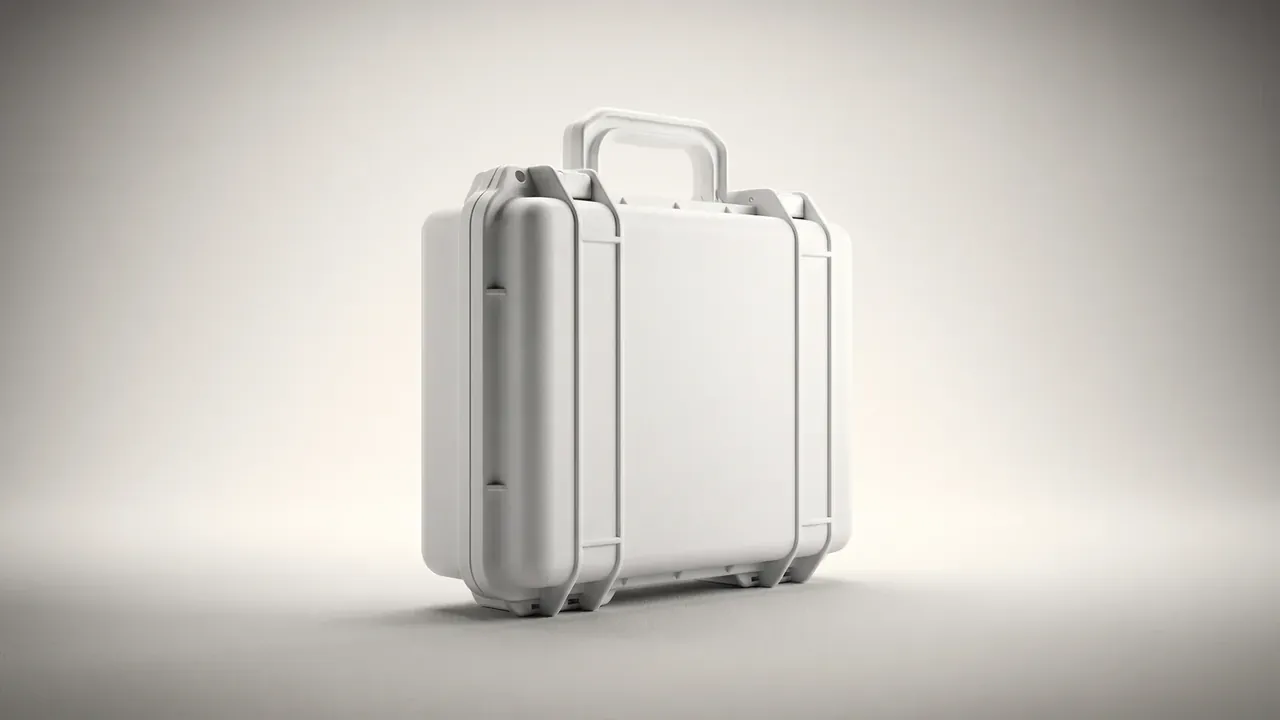
Cracks are judged by position, not length alone. A crack under 25 mm away from a corner can take a hot-melt patch. Once it crosses a corner or runs past 80 mm, the patch cannot stop the stress spreading and the rotomolded case should be replaced. Cut the patch twice the crack length and repeat the air test.
Distortion check: hold a one meter straight edge along the lip; beyond 1.5 mm per meter the gasket cannot compress evenly.
| Check | Normal | Watch | Replace |
|---|---|---|---|
| Wall, nominal 5.0 mm | Above 4.6 mm | 4.0 to 4.6 mm | Below 4.0 mm |
| Crack length | None | Under 25 mm, away from corners | Over 80 mm or across a corner |
| Lip flatness | Under 1.0 mm per meter | 1.0 to 1.5 mm per meter | Over 1.5 mm per meter |
3. Gasket Compression and Lid Sealing
Gaskets rarely fail by tearing. Pull one out and measure compression set; past 30 percent it has lost its rebound and leaks under a small pressure difference. Shore A climbing from 65 to about 78 is the second signal: the rubber has stiffened and contact is uneven.
Plug the openings, charge to 20 kPa, hold 60 seconds and accept a drop of no more than 2 kPa. On failure, look for grit in the groove first. Cut a replacement to the measured perimeter and grease it thinly. Store the case closed but unlatched, away from sun; 2000 hours of UV fades polyethylene.
4. Latch Hinge and Handle Wear Limits
Latches are judged by closing pull. A new latch reads about 600 N; under 350 N the lid can be thrown open by its own inertia in a drop. The loss usually comes from a rounded hook or an offset keeper, both replaceable.
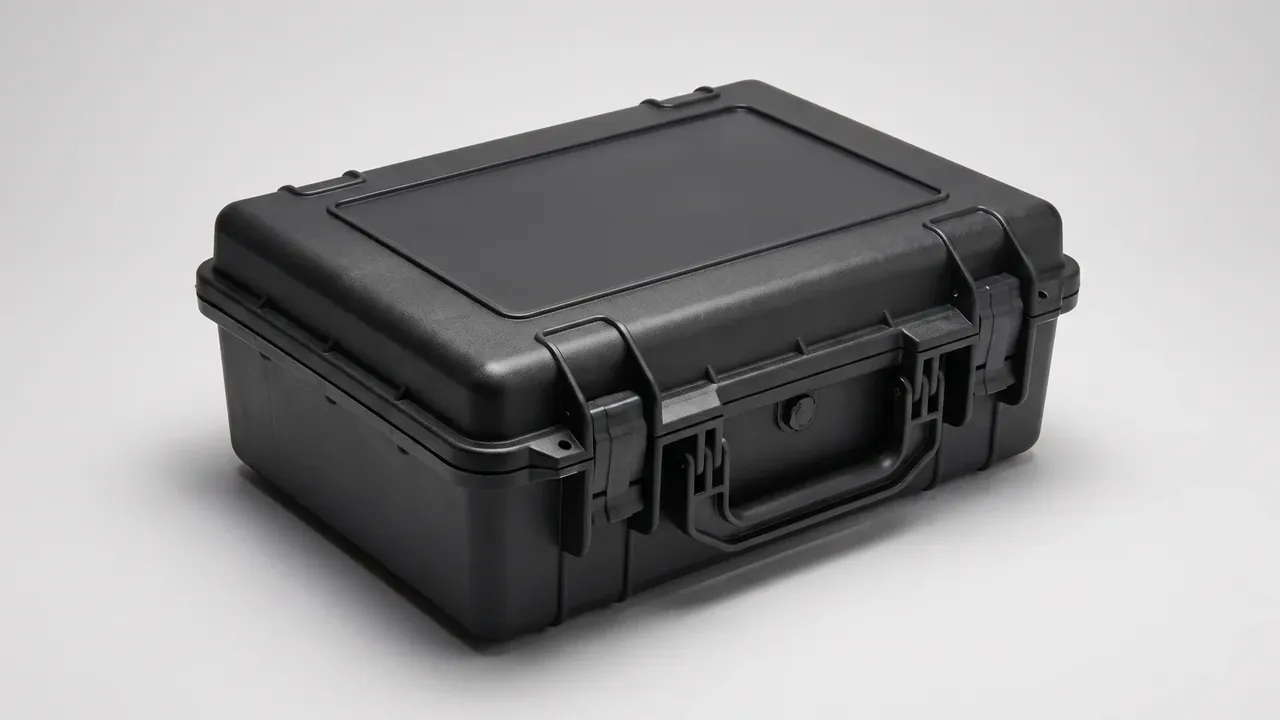
Hinges need two checks: pin clearance and seat cracking. Past 0.7 mm of play the lid rocks on closing and wears one end of the gasket first; a hairline crack in the seat means a new hinge plate. Hang twice the rated load: 50 kg for ten minutes on a 25 kg handle, with no permanent set.
Parts commonality matters: confirm at purchase that latches, hinges and valves are standard sizes.
5. Repair or Replace Decision Table
The thresholds combine into one table any shift team can apply.
| Part | Repair | Replace part | Replace case |
|---|---|---|---|
| Fine shell crack | Patch weld, under 25 mm | Not applicable | Across a corner or over 80 mm |
| Lip distortion | Heat and re-form, under 1.5 mm per meter | Not applicable | Still out after re-forming |
| Gasket | Not applicable | Set over 30 percent | Not applicable |
| Latch | Adjust keeper offset | Pull below 350 N | Latch seat cracking |
| Hinge | Not applicable | Play over 0.7 mm | Cracked seat |
One rule sits above it: when repair cost passes 40 percent of a new case price, or a rotomolded case takes two structural repairs in three years, replace it.
Conclusion
Good rotomolded case maintenance is about writing the intervals and limits down. Wall thickness, cracks, gaskets and latches each carry a number, and once that number sits on the tool room wall, rotomolded case maintenance stops being opinion.
This article discusses only the container (case body) side of specifications and design intent, and does not cover any handling, loading or use of the contents.
Related Reading
- What a rotomolded case is
- Rotomolded case vs injection molded case
- Weather resistance and long-term care
- Low-temperature embrittlement and seal failure
Related Products
- 8 Series — Gun Cases; Military Equipment Cases; Camera Equipment Cases; Drone Cases; Watch Cases; Knife Cases; First Aid Cases; Electronics Equipment Cases
- WL8-2812 PP Gun Case — model WL8-2812
- All protective cases and toolboxes: 7 series, 158 models