

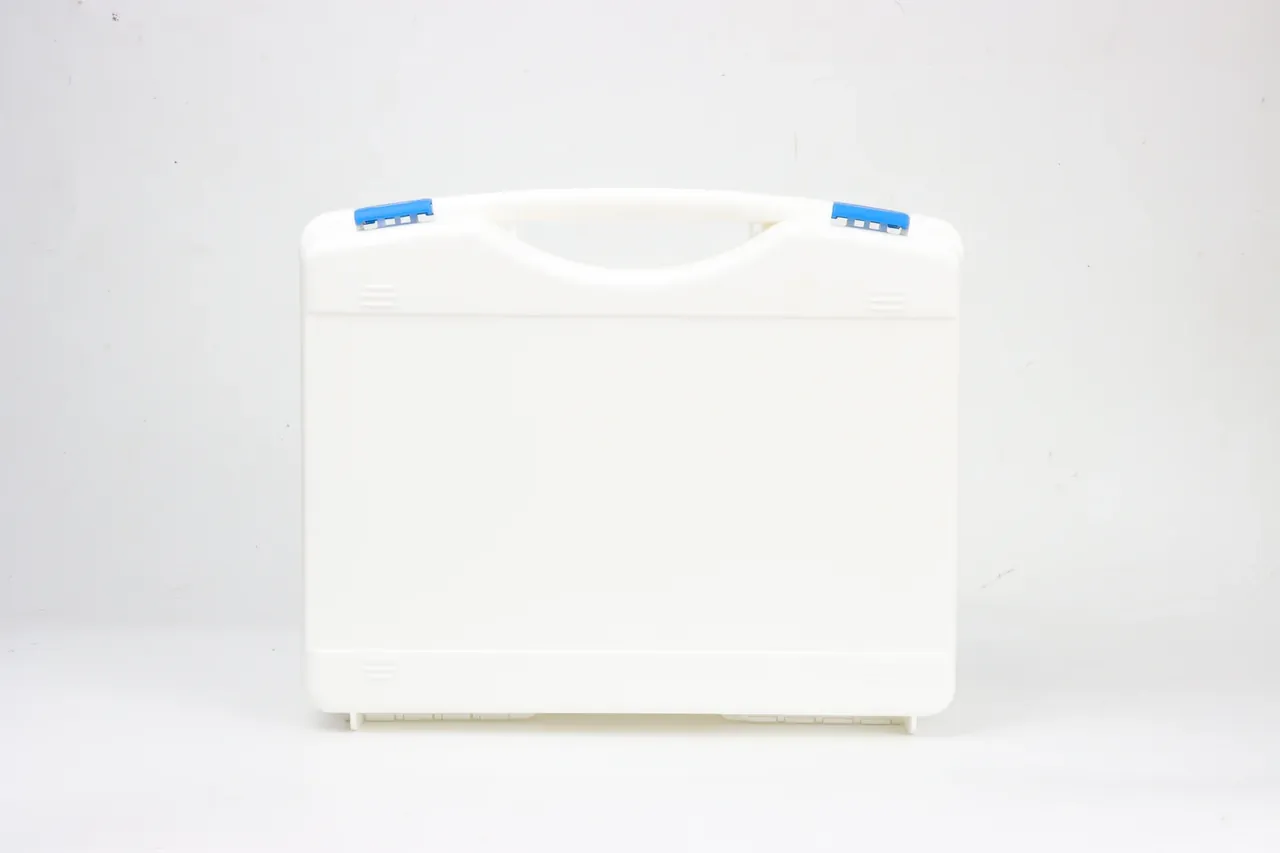
Quick answer: Rotomoulding cases hold a 4 mm wall to ±0.5 mm only when charge weight, powder melt state and the biaxial arm ratio are all logged; drop the thinnest point below 3.2 mm and the impact margin is gone.
Table of contents
- Where the Deviation Starts
- Charge Weight: Kilos Into Millimetres
- Powder Size and Melt Index
- Arm Ratio Against the Oven Window
- Oven Time and Cooling Rate
- Measuring a 0.5 mm Tolerance
- FAQ
1. Where the Deviation Starts
Rotational moulding never injects melt at pressure. The tool turns on two perpendicular axes while powder fuses layer by layer against the cavity wall, so thickness cannot be pinned by the cavity as in injection moulding. Three quantities decide where it lands: charged mass, how far the powder fused this cycle, and the arm ratio.
On one tool and one lot, a 5 % charge error moves a 4 mm wall by 0.2 mm, an arm ratio cut from 6:1 to 4:1 costs 0.6 mm at the short-axis end, and a 20 ℃ oven drop leaves 0.8 mm patches. The errors stack, which makes rotomoulding cases harder to hold than they look.
| Variable | Normal setting | Effect of one step off |
|---|---|---|
| Charge | developed area × density × 1.05 | 5 % short, wall 0.2 mm thin |
| Melt index | 3–6 g/10min | low end, 0.5 mm thin at unfused zones |
| Arm ratio | 6:1, main arm 9 rpm | at 4:1, 0.6 mm thin on the short axis |
| Oven temperature | 280 ℃ | 20 ℃ low, 0.8 mm thin locally |
2. Charge Weight: Kilos Into Millimetres
A cavity of 600×400×220 mm develops about 1.35 m² over six faces and ribs. At 0.935 g/cm³ and a 4 mm target the charge is 1.35×0.004×935, or 5.05 kg, and a 5 % allowance for residue puts it at 5.3 kg. Charging 5.05 kg gives 3.9 mm; 5.6 kg lands at 4.3 mm.
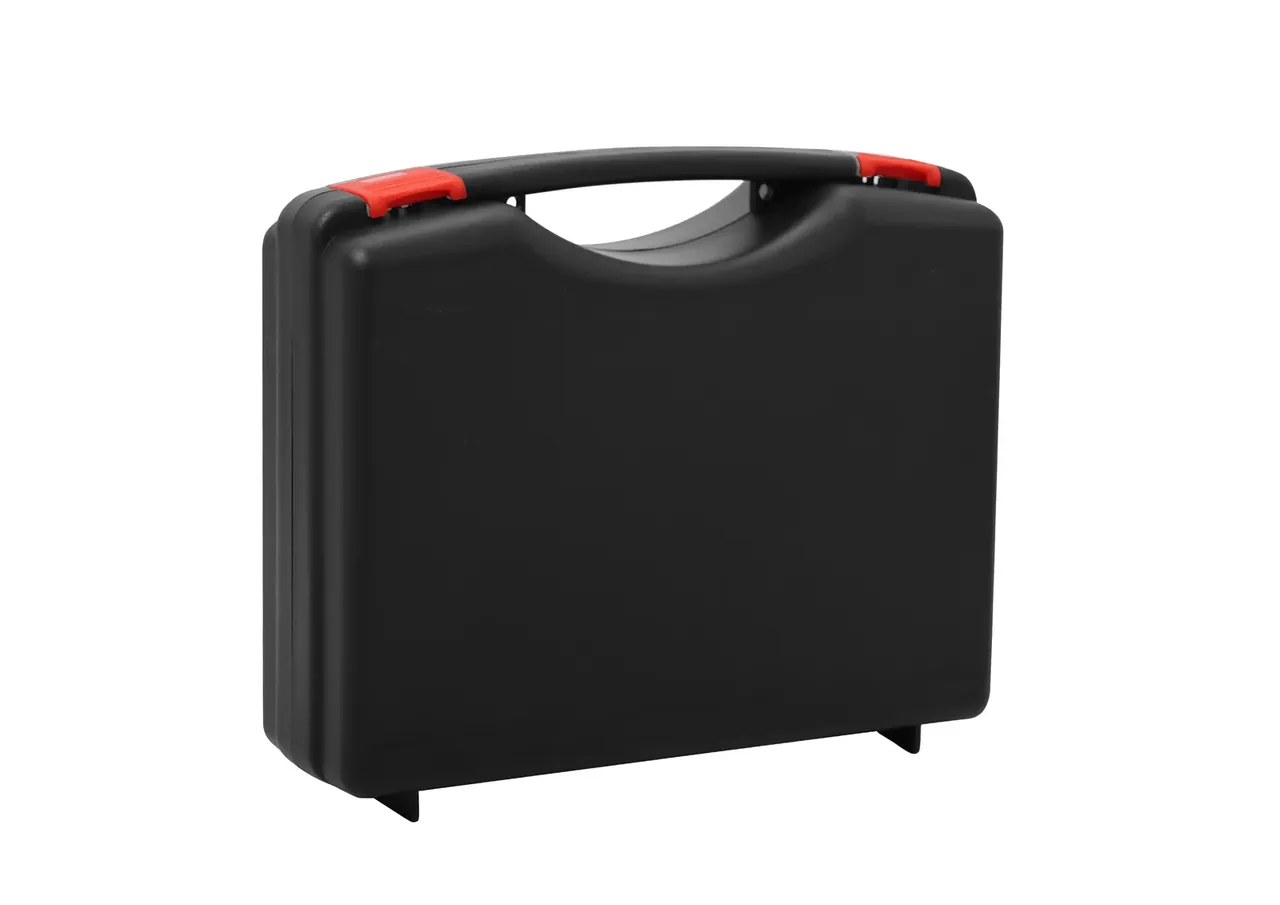
On an R12 corner powder sinks to the low side, so the concave face reads 0.3–0.5 mm thicker than the flat, while the lid centre is the thinnest point. Reverse weighing on rotomoulding cases uses that spread: mass over area gives the average, and a gap above 0.6 mm points at arm ratio rather than charge.
3. Powder Size and Melt Index
Finer powder is not better. Box bodies run 35 mesh, around 500 μm. Below 200 μm the specific surface multiplies, powder skins over on the hot wall and later grains ride on that skin, leaving bubbles and steps; above 800 μm a short cycle leaves unfused cores.
Melt index is the second gate. Rotomoulding grades sit at 3–6 g/10min at 190 ℃ under 2.16 kg. Below 2 g/10min narrow ribs starve, above 8 g/10min powder migrates along the long axis, so hold ±0.5 g/10min lot to lot.
| Property | Normal window | What drifts when it moves |
|---|---|---|
| Particle size | 35 mesh, about 500 μm | below 200 μm bubbles, above 800 μm unfused grains |
| Melt index | 3–6 g/10min | under 2 starves ribs, over 8 skews thickness one way |
| Moisture | ≤0.05 % | past 0.1 %, silver streaks and 0.3 mm blisters |
4. Arm Ratio Against the Oven Window
The ratio sets the path powder takes: the main arm turns the tool about a horizontal axis, the secondary about a vertical one, the pair usually falls between 4:1 and 8:1, and 6:1 at 9 rpm on the main arm suits most box tools. A high ratio parks powder on the long sides, a low one piles it into the corners.
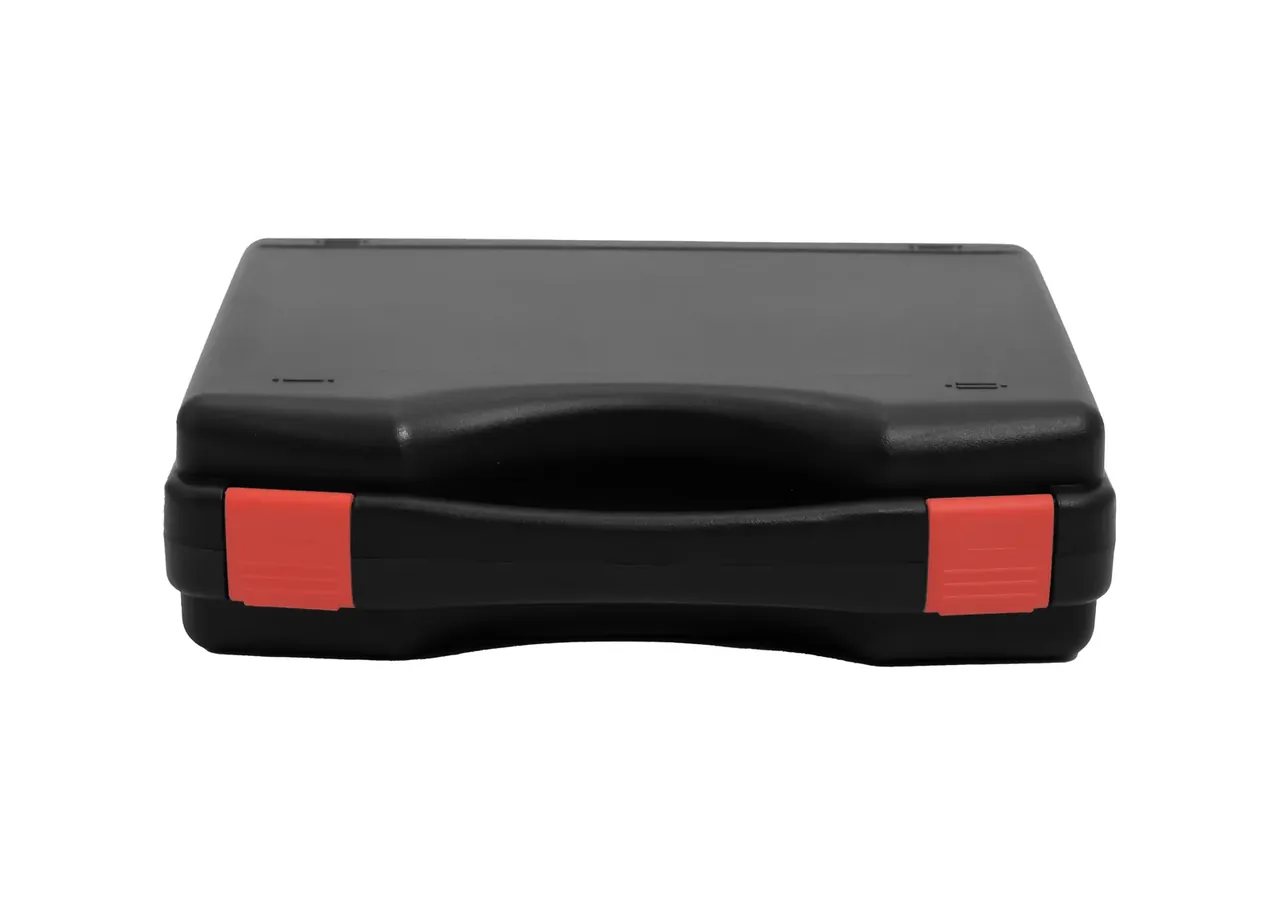
Cut three 30 mm strips, measure six faces and see where the heavy zones sit: heavy long sides drop to 5:1, heavy corners with thin flats go to 7:1, and two rounds usually bring the spread inside 0.3 mm.
Oven temperature and dwell read together. Polyethylene runs at 260–300 ℃ and box tools sit at 280 ℃, where 14 min brings internal air to 225 ℃; at 260 ℃ that takes 18 min, at 300 ℃ only 11 min. Hot and short fuses the outside and leaves powder inside, the common misjudgement with rotomoulding cases.
5. Oven Time and Cooling Rate
Cooling fails more often than heating. Internal temperature at demould runs 220–240 ℃, so the tool is air cooled to 120 ℃ before water mist goes on, held at 6–8 ℃/min, and stripped below 60 ℃. Water straight onto a hot tool shrinks the outer 3 mm while the core is hot: two hours later a 600 mm lid bows 2.5 mm and a 0.3 kPa decay test fails.
A probe bonded to the cavity wall makes this controllable. Log three curves on a new rotomoulding cases tool: the slope to 225 ℃, the peak, and the knee on the way down. A peak below 215 ℃ says the charge never fused.
6. Measuring a 0.5 mm Tolerance
The tolerance on a 4 mm nominal is ±0.5 mm, so 3.5–4.5 mm, with a 3.2 mm floor at the thinnest point. Ultrasonic gauging is the workhorse: 5 MHz probe, glycerine couplant, 12 readings per box, two per face, lid centre and one bottom corner always included. Repeatability is ±0.05 mm, though curves and rib shadows jump; sectioning a 30 mm strip and reading three points under the microscope is the reference.
| Method | Accuracy | Readings | Where it fits |
|---|---|---|---|
| Ultrasonic | ±0.05 mm | 12 per box | routine sampling |
| Sectioning | ±0.02 mm | 3 per strip | first article and disputes |
| Reverse weighing | ±0.1 mm | whole-box average | lot trend monitoring |
Any of the 12 points on a rotomoulding cases body outside 3.5–4.5 mm fails, a single outlier with sound neighbours gets one remeasure, and a thinnest point under 3.2 mm is rejected outright, because a 1.2 m corner drop starts its crack there.
Conclusion
Wall uniformity is not a set value but the sum of three things rotomoulding cases cannot separate: charge weight sets the average, powder size and melt index decide whether the section fuses through, and the arm ratio with oven window decides which faces come out heavy. A 4 mm nominal at ±0.5 mm, a 3.2 mm floor and 6–8 ℃/min cooling let a box survive a 1.2 m corner drop and a 0.5 kPa decay test.
This article discusses only the container (case body) side of specifications and design intent, and does not cover any handling, loading or use of the contents.
Related Reading
- How a rotomoulded case body is formed in one piece
- Preparing and drying case compound before moulding
- What a first-article trial run has to confirm
Related Products
- 8 Series — Gun Cases; Military Equipment Cases; Camera Equipment Cases; Drone Cases; Watch Cases; Knife Cases; First Aid Cases; Electronics Equipment Cases
- WL8-2812 PP Gun Case — model WL8-2812
- All protective cases and toolboxes: 7 series, 158 models