

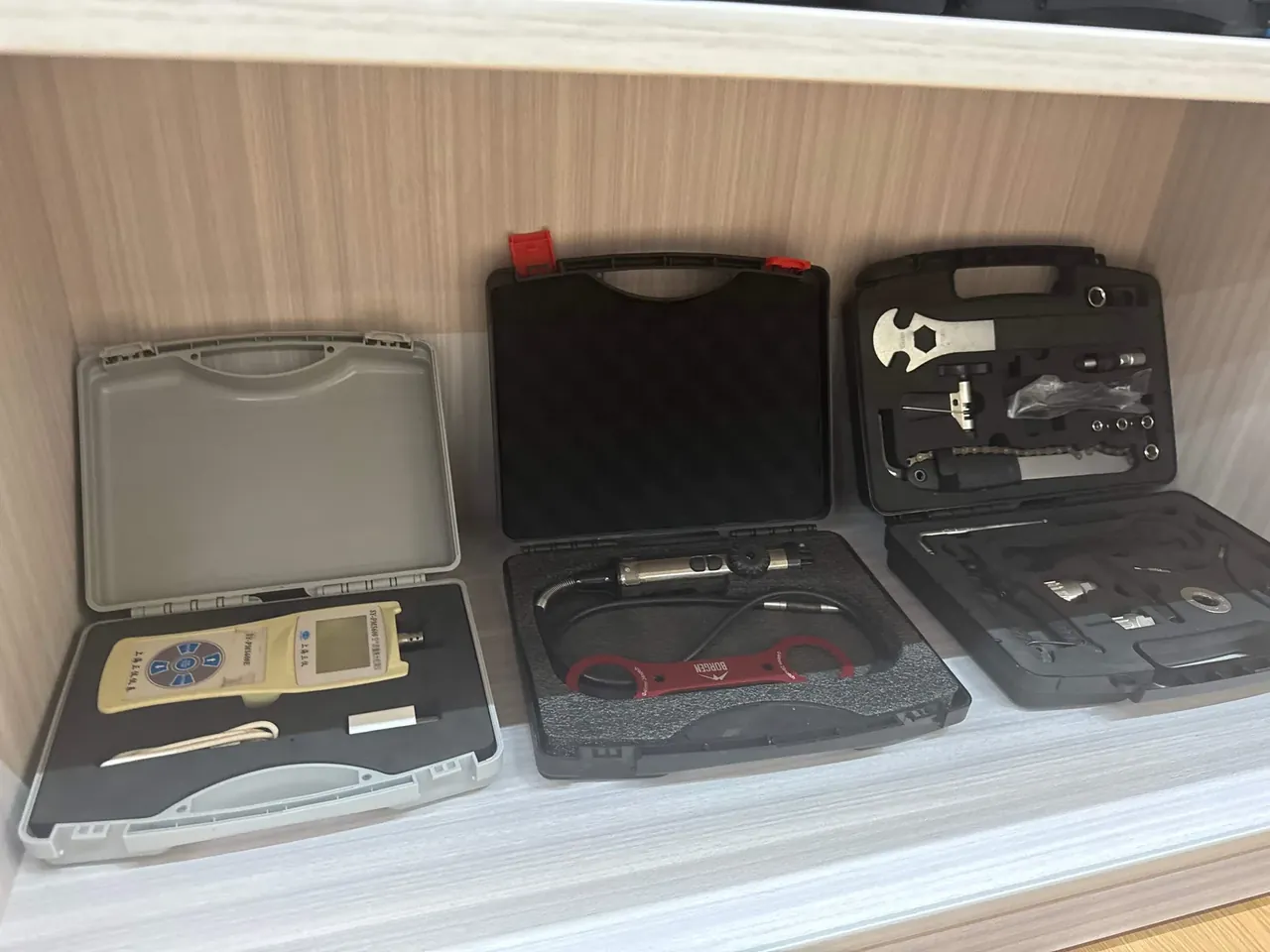
Quick answer: Case salt spray hours at 1000 do not mean five years on a coast; the mist is a constant stress, so hours move the acceptance line, not service life.
Table of contents
- Where 480 and 1000 diverge
- NSS solution, temperature and deposition
- Hardware and shell judged on different lines
- Blister and rust grading
- FAQ
1. Where 480 and 1000 diverge
A 520 × 420 × 220 mm case passes at both 480 and 1000 hours, and the report differs only in the calendar: 20 days against 41.7 days. Buyers read the two as safety classes, when they move the acceptance line and the screening strength instead.
Trade talk maps 480 hours to about 10 years indoors and 1000 hours to sea freight and coastal use. Both carry a premise: one NSS condition set and one grading method, and without either the numbers stop being comparable.
Ask about test conditions before asking about hours.
Purchase clauses differ too. A 480 hour clause reads no red rust and scribe creep under 2 mm; a 1000 hour clause adds an appearance rating of 8 and lists white rust separately.
| Item | 480 hours | 1000 hours |
|---|---|---|
| Test duration | 20 days | 41.7 days |
| Typical use | Indoor plant, dry storage | Sea freight, coastal |
| Hardware | No red rust, creep ≤ 2 mm | Red rust area ≤ 0.1% |
| Protection rating | Rp ≥ 9 | Rp ≥ 8 |
| Appearance rating | ≥ 9 | ≥ 8 |
2. NSS solution, temperature and deposition
NSS rests on three numbers: 5 percent sodium chloride, 35 ℃ chamber temperature and deposition of 1–2 mL/(80 cm²·h). Shift any one and a 480 hour verdict no longer trades against a 1000 hour one.
Mix 50 g/L ± 5 g/L of sodium chloride at pH 6.5–7.2, using water below 20 μS/cm. Tap water carries calcium and magnesium, the nozzle scales, deposition falls to 0.8 mL after 200 hours, and the morphology changes with it.
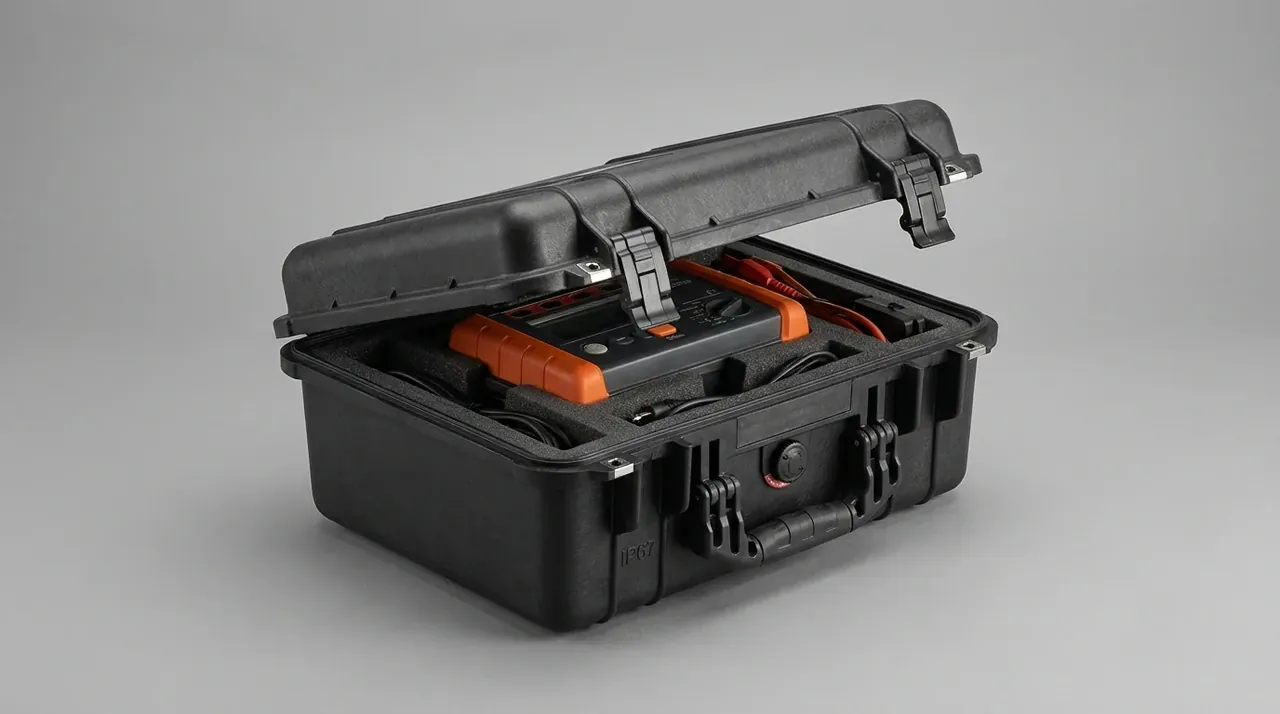
Only 35 ± 2 ℃ inside the chamber counts. Running 5 ℃ hot roughly doubles the corrosion rate, so 480 hours delivers close to a 1000 hour result while the report reads 480.
Samples sit 15–30 degrees from vertical and clear of each other; at 45 degrees the film runs off and the result looks rosier than reality.
Measure the collector every 24 hours and fix the nozzle if deposition leaves the window. Swap the brine tank weekly, or a 1000 hour run fails in its second half.
3. Hardware and shell judged on different lines
Two object classes sit under one hour figure with different lines: hardware is judged on corrosion, the shell on appearance and function.
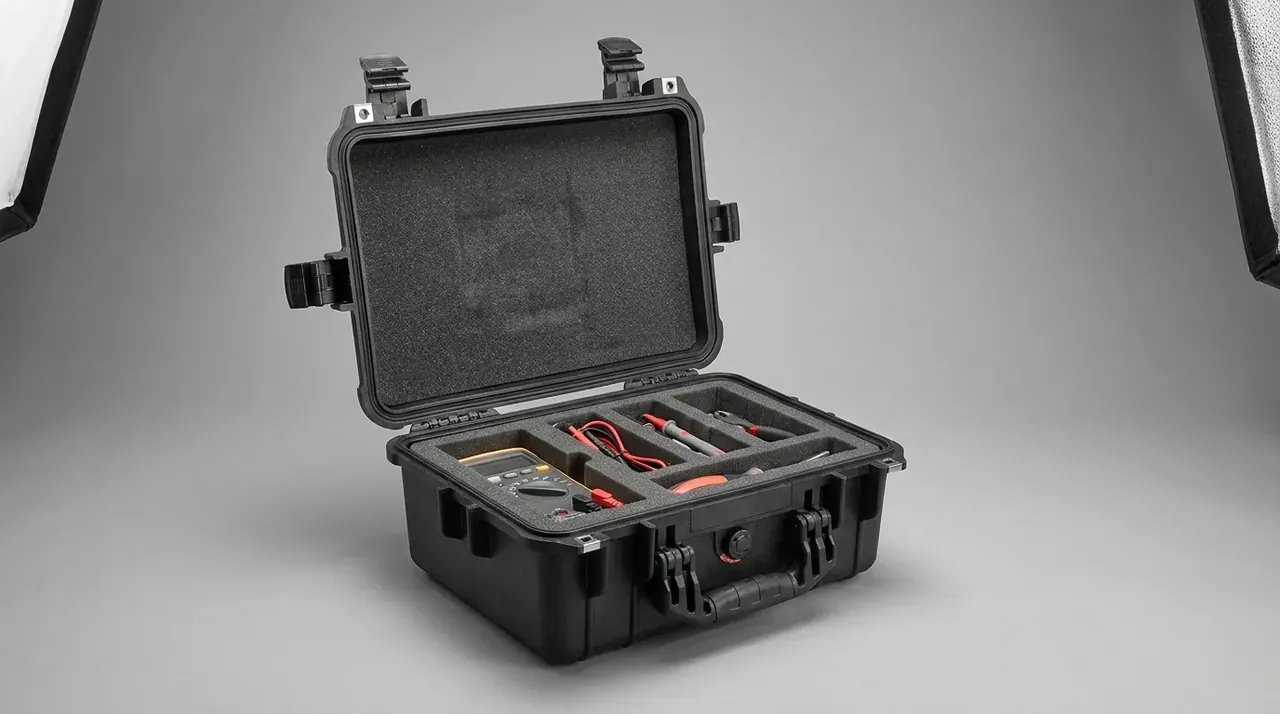
Hardware follows ISO 4628 and the 10 step rating. At 480 hours white rust is allowed, red rust is not, scribe creep stays under 2 mm per side and Rp must reach 9; at 1000 hours red rust may cover 0.1 percent and Rp may fall to 8. White rust marks a zinc layer, red rust marks base metal failure.
The shell is judged on appearance and distortion: no cracking, blistering or chalking, dimensional change under 0.3 percent and latch force change under 15 percent. An ABS shell at 1000 hours normally only loses gloss.
Inserts and screws form a grey zone. When rust appears around an insert, trace the source: a rusted screw is a hardware issue, rust bleeding from the insert bore is an assembly issue of torque and sealing.
State object, location and criterion in the acceptance table. One line saying the case passed leaves nobody able to trace which screw failed.
4. Blister and rust grading
Blistering is recorded on two axes. Size 8 is smallest and size 2 largest, while frequency runs dense D, medium dense MD, medium M and few F, so a full record reads 8-MD.
Red rust is graded by area: up to 0.1 percent slight, 0.1 to 1 percent moderate, 1 to 5 percent marked, beyond 5 percent rejected. A plastic case only rusts at hardware and inserts.
| Defect | Basis | Verdict |
|---|---|---|
| Blister | Size 8 + frequency F | Acceptable |
| Blister | Size 6 + frequency MD | Retest once |
| Blister | Size 4 or larger | Reject |
| Red rust | Area ≤ 0.1% | Slight |
| Red rust | Area 0.1–1% | Moderate |
| Red rust | Area > 5% | Reject |
Extra hours buy less than expected. Salt spray is one constant stress with no wet dry cycling and no light, so 1000 hours doubles exposure of a single failure mode.
Time multiplies by 2.1 from 480 to 1000, yet first red rust often appears only 30 percent earlier, because once pitting turns into general corrosion the rate slows.
Treat the hour figure as a gate, not a conversion table.
Conclusion
Choose the level by service environment. Dry storage and indoor plants take 480 case salt spray hours, with acceptance written as no red rust, scribe creep under 2 mm and Rp of at least 9. Sea freight, coastal sites and long outdoor exposure take 1000 hours, adding a red rust limit of 0.1 percent, an appearance rating of at least 8, and separate lines for hardware and shell. Both levels demand one condition set: 5 percent sodium chloride, 35 ℃ and 1–2 mL/(80 cm²·h) deposition, written into the contract annex, which settles more arguments than any debate over hours. A full 1000 hour run only proves the case cleared that single item.
This article discusses container-side specifications and design implications only, and does not cover any handling, loading or use of the contents.
Related Reading
- Salt spray performance of case hardware
- Conditions and methods of salt spray testing
- Selecting latches and case hardware
Related Products
- 8 Series — Gun Cases; Military Equipment Cases; Camera Equipment Cases; Drone Cases; Watch Cases; Knife Cases; First Aid Cases; Electronics Equipment Cases
- WL8-2812 PP Gun Case — model WL8-2812
- All protective cases and toolboxes: 7 series, 158 models