

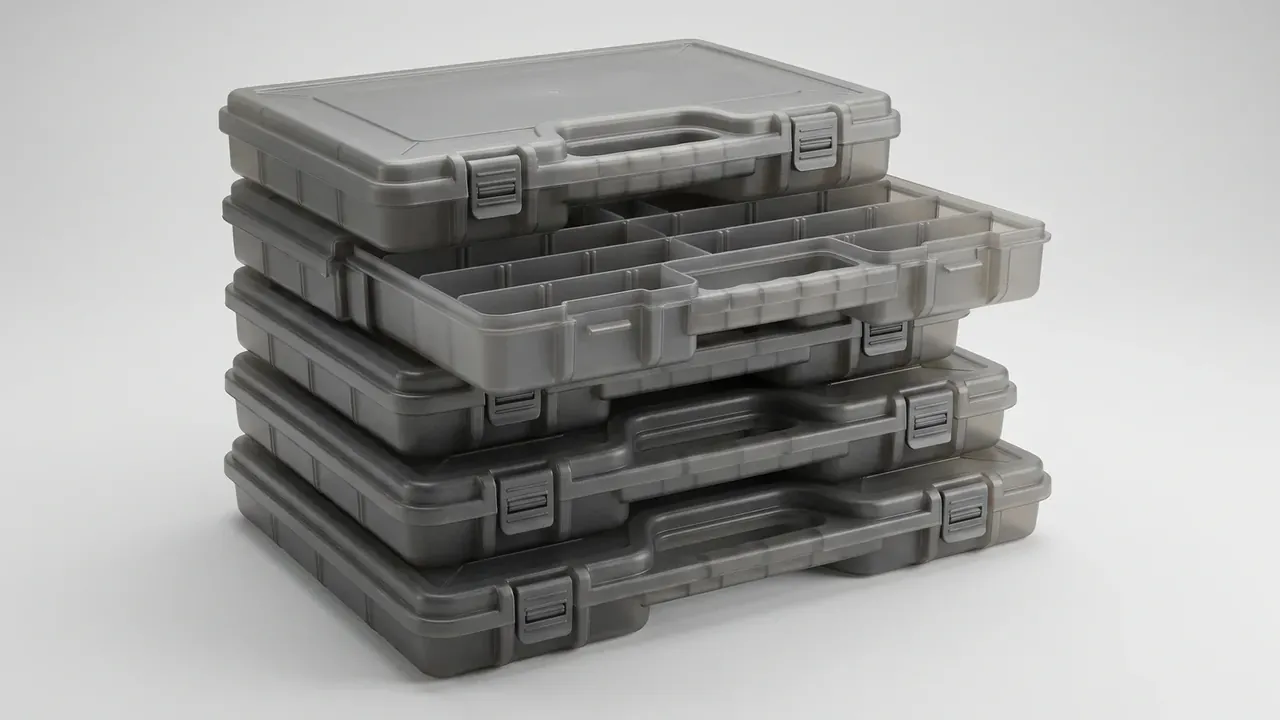
Quick answer: After 96-Hour Salt Spray, hardware is graded before cleaning: white rust can be washed, red rust polished, exposed substrate replaced. Wash in 5% citric acid at 40 °C for 20 min, passivate for 3 min, retest torque at 0.6 N·m, and replace hinge pins and springs whatever the grade.
Table of contents
- Grade the hardware before it is cleaned
- Citric acid: concentration, temperature, time
- Passivation and relubrication close the coating gaps
- Torque retest and the parts that must be replaced
- Three stainless grades and zinc-nickel compared
- FAQ
1. Grade the hardware before it is cleaned
Chamber parameters are fixed: 5% sodium chloride, 35 °C, pH 6.5–7.2, deposition 1–2 mL/(80 cm²·h). After 96-Hour Salt Spray the first job is grading, not washing; rust wipes off in one pass and takes the evidence with it.
Grading reads colour, area and substrate exposure. White rust is powdery zinc oxide that lifts under a fingernail; red rust is brown iron corrosion that does not lift; exposed substrate means the coating has perforated and grey steel shows under a loupe.
| Grade | Appearance | Area within 1 dm² | Action |
|---|---|---|---|
| 1, white rust | Pale powder, lifts easily | Under 5% | Wash, reinspect |
| 2, red rust | Brown pits, does not lift | Under 1%, spot under 1 mm | Polish, passivate, non-load positions |
| 3, substrate | Coating perforated, grey steel | Any | Replace |
The 1 dm² frame ends the argument: one spot is 0.2% of a lid and 8% of a latch seat.
2. Citric acid: concentration, temperature, time
Hydrochloric acid is the wrong tool: at 5% it opens an 8 μm coating in 3 min, and the bright surface left behind is bare steel. Citric acid at 5% chelates instead, sits near pH 2.2 and attacks the oxide, not the coating.
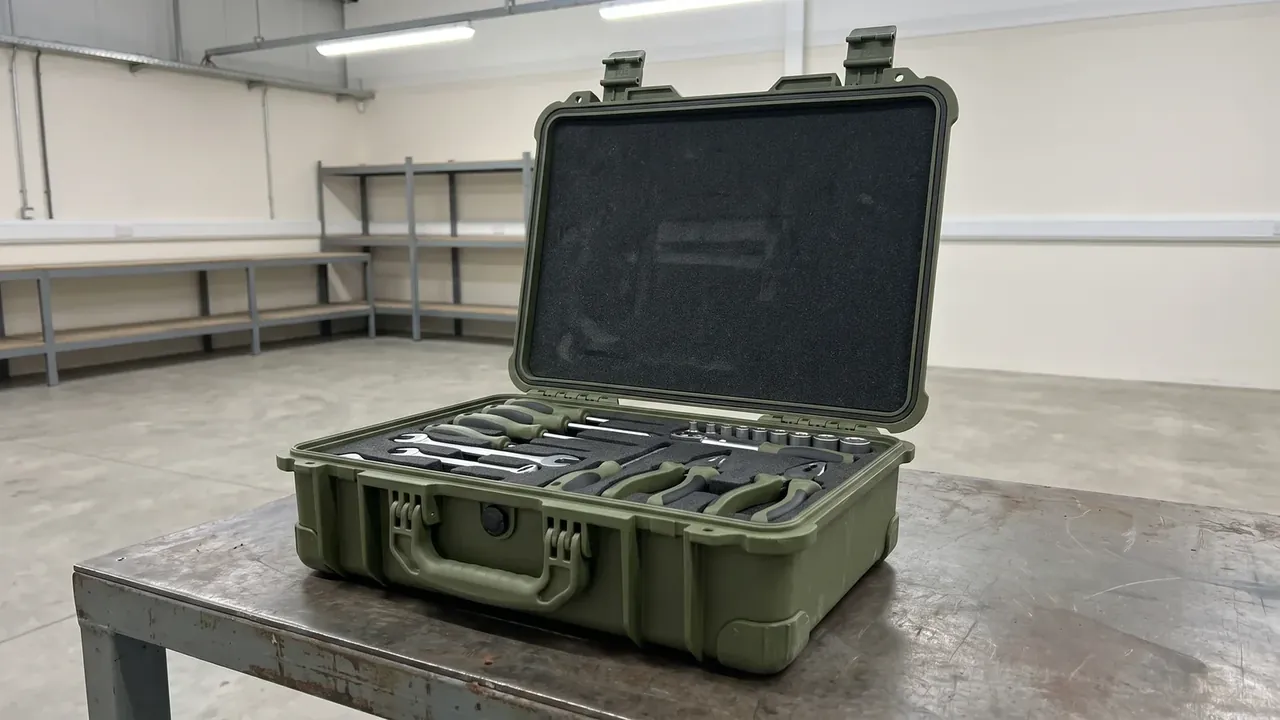
The recipe is 5% citric acid, 40 °C, 20 min, 2 g/L of inhibitor. Below 30 °C the reaction stalls and half the white rust survives; above 50 °C the rate triples and the coating loses more than 2 μm.
Spring parts stay out of the ultrasonic tank: at 40 kHz and 0.5 W/cm², 8 min matches a 20 min dip, but 65Mn leaves lose 6% of load after 10 min. Rinse 60 s in tap water, then 30 s in deionised water below 10 μS/cm.
3. Passivation and relubrication close the coating gaps
Washing removes rust but restores no coating. Trivalent chromium at 25 °C for 3 min, pH 4.0–4.5, builds a 0.2–0.4 μm film worth another 96–120 h; a molybdate system is 20% weaker but free of discharge limits.
| Step | Parameters | Time | Check |
|---|---|---|---|
| Citric wash | 5%, 40 °C, pH 2.2 | 20 min | No white rust in frame |
| Two-stage rinse | Final stage under 10 μS/cm | 60 s plus 30 s | No drying mark |
| Passivation | Trivalent chromium, 25 °C, pH 4.0–4.5 | 3 min | Film 0.2–0.4 μm |
| Drying | 60 °C | 15 min | No runs or stains |
| Relubrication | 0.03 g lithium grease per pin | At assembly | Free movement |
Dry within 30 min at 60 °C for 15 min, then relubricate: 0.03 g of lithium grease per hinge pin, 0.01 g on the latch pivot, silicone on the valve O-ring, never mineral oil, which swells a nitrile ring 8% in 3 months. Under 5 μm of coating, white rust returns within 96 h and the part is replaced, not washed twice.
4. Torque retest and the parts that must be replaced
Torque is where damage hides. The M4 insert is specified at 0.6 N·m. Yet after 96-Hour Salt Spray it strips at 0.45–0.5 N·m. Corrosion has taken coating from the thread root, and clearance has grown from 0.05 mm to 0.12 mm. Tighten, release, repeat 3 times. A drop above 10% means a new insert.
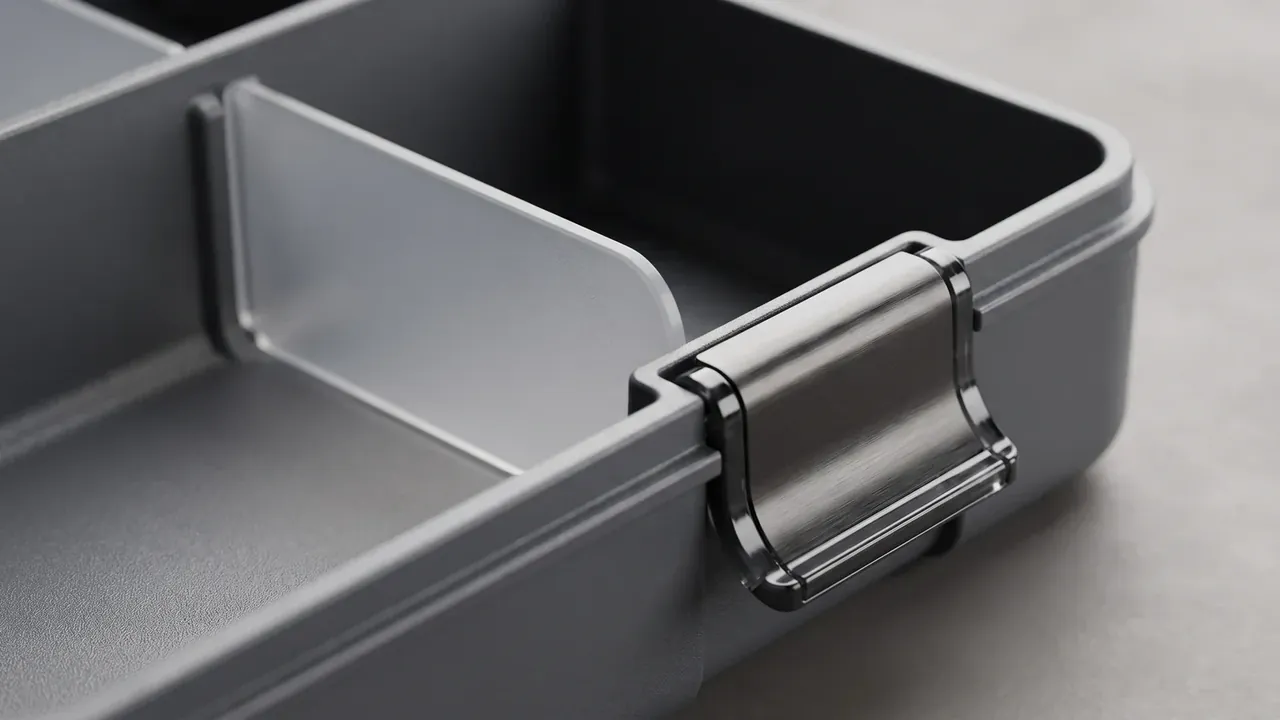
Four items go without discussion: hinge pins worn 0.1 mm or with bore clearance past 0.15 mm; springs whose 65Mn free length shifts 3% or whose load falls 15%; locks with key insertion above 15 N or a dragging barrel; valve O-rings with any crack or set. All four fail invisibly, so they are changed on schedule, not on inspection.
Latch bodies and hinge seats survive under 1% red rust: polish, passivate, touch in paint, move to a non-load position. Above that, scrap them.
5. Three stainless grades and zinc-nickel compared
Four finishes separate at 96 h. Electroplated zinc whitens in 24–48 h, 304 pits from 48 h, 316 holds to 200 h, and zinc-nickel runs to 720 h in 5% sodium chloride at 35 °C. Molybdenum and nickel explain the spread: 316 carries 2%–3% Mo against chloride pitting, while 12%–15% Ni zinc-nickel builds a dense product that plugs its own pores.
| Finish | After 96 h | Replacement cycle | Cost index |
|---|---|---|---|
| Electroplated zinc on steel | 15%–30% white rust | After each run | 1.0 |
| 304 stainless | 3–8 pits per dm² | 2 years | 1.4 |
| 316 stainless | No rust, dulled only | 5 years | 2.1 |
| Zinc-nickel | No white rust, slight edge tint | 4 years | 1.8 |
Inland duty is served by 304; coastal work needs 316 or zinc-nickel, 20% dearer and repaid in saved labour.
Conclusion
The order after 96-Hour Salt Spray is grade, wash, passivate, retest. Three lines cover the criteria: white rust under 5% in a 1 dm² frame is washed and returned to service; red rust under 1% goes only to non-load positions; hinge pins, springs, locks and valve O-rings are replaced outright. Hardware is a small share of case cost, but the torque retest decides whether the case still keeps water out.
Related Reading
- Neutral salt spray conditions and specimen placement
- Washing a case after coastal use
- Rating salt spray corrosion results
- Matching gasket compounds to metal hardware
Related Products
- 8 Series — Gun Cases; Military Equipment Cases; Camera Equipment Cases; Drone Cases; Watch Cases; Knife Cases; First Aid Cases; Electronics Equipment Cases
- WL8-2812 PP Gun Case — model WL8-2812
- All protective cases and toolboxes: 7 series, 158 models