

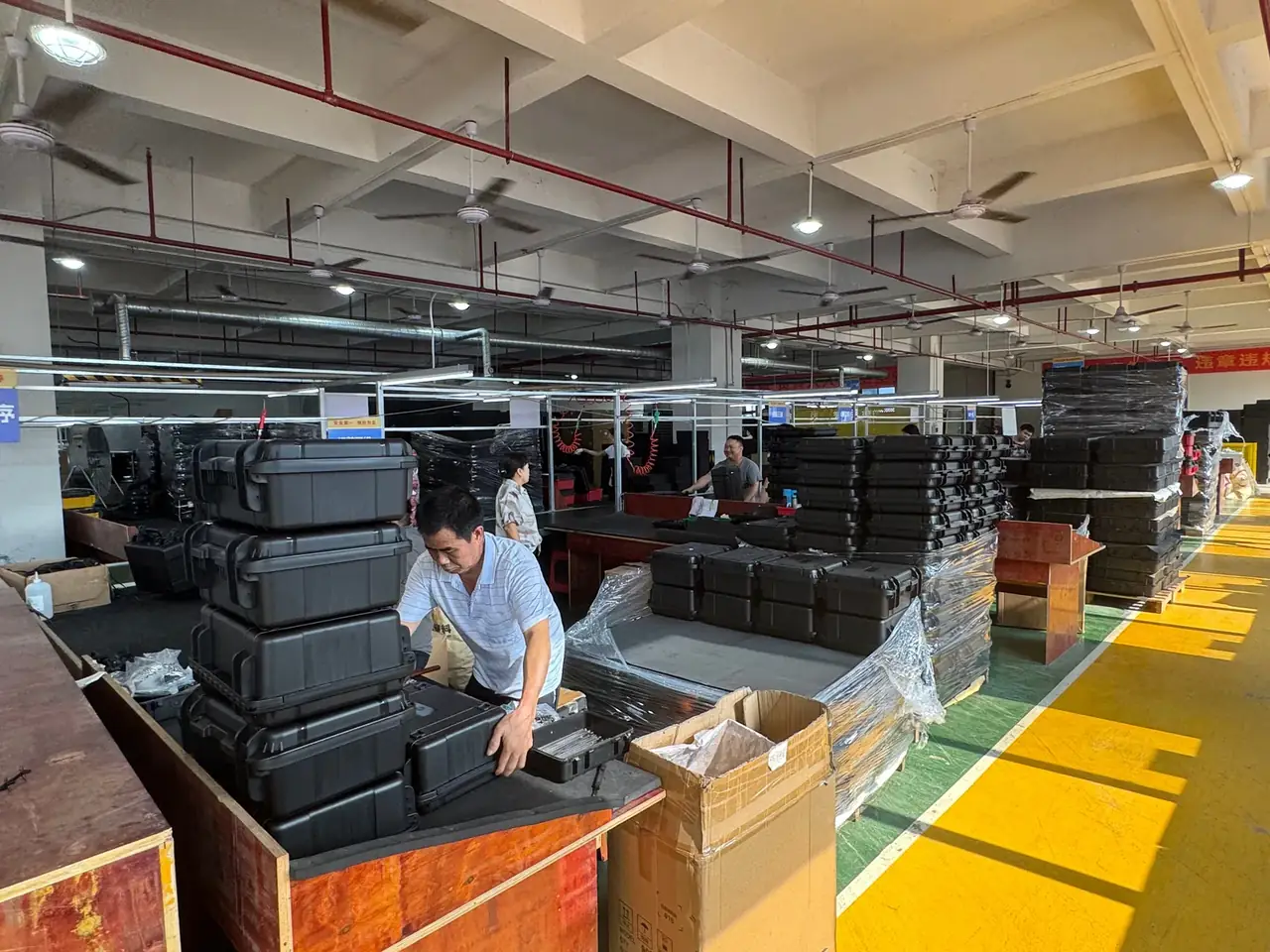
Quick answer: A case sample fee is refunded against first-order volume, not sample quality: 1800 RMB per design comes back in full at 500 units.
Table of contents
- Why order volume decides the refund
- What the 1800 RMB covers
- Writing the 500-unit refund clause
- Sample ownership and the timing chain
- FAQ
1. Why order volume decides the refund
A case sample fee turns on one number: the first order quantity. Surface finish, colour match and the discount dangled in the quotation never enter the refund clause, yet buyers keep quoting them across the table while the supplier only counts shipped units.
Take a 480 mm × 360 mm × 190 mm moulded case: 1800 RMB per design, full refund at 500 units, which is the usual single tier. At 300 units the refund is 60%, or 1080 RMB; at 200 units it is 30%, or 540 RMB; below 100 units nothing comes back and the 1800 RMB turns into credit for two mould changes.
The supplier is not generous, it is doing arithmetic: one simple tool plus 30 trial shots consumes 42 kg of material, 6 hours of machine time and two operators for 8 hours each, landing between 1400 and 1600 RMB. A 500-unit threshold lets the first order absorb that through margin; below it the cost stays open.
What a buyer should negotiate is not whether the money returns but what the base is. The 1800 RMB includes one mould change, so at 350 units the difference between a flat 60% and 60% less a 600 RMB change charge is 600 RMB. That sentence matters more than the percentage.
Refunds also count cumulatively, not per shipment. Three orders of 200, 200 and 150 units in one year total 550 and should trigger the full refund; a clause reading 500 units per single batch returns nothing on those 550. Two words fix it at zero cost.
2. What the 1800 RMB covers
The 1800 RMB is five lines, not one: a hand sample or simple tool, trial material, first-article inspection, printing or laser marking, and courier costs. Each line behaves differently when the first order lands. The classic trap is folding the production tool into this number and then meeting a 38,000 RMB tooling invoice at scale-up.
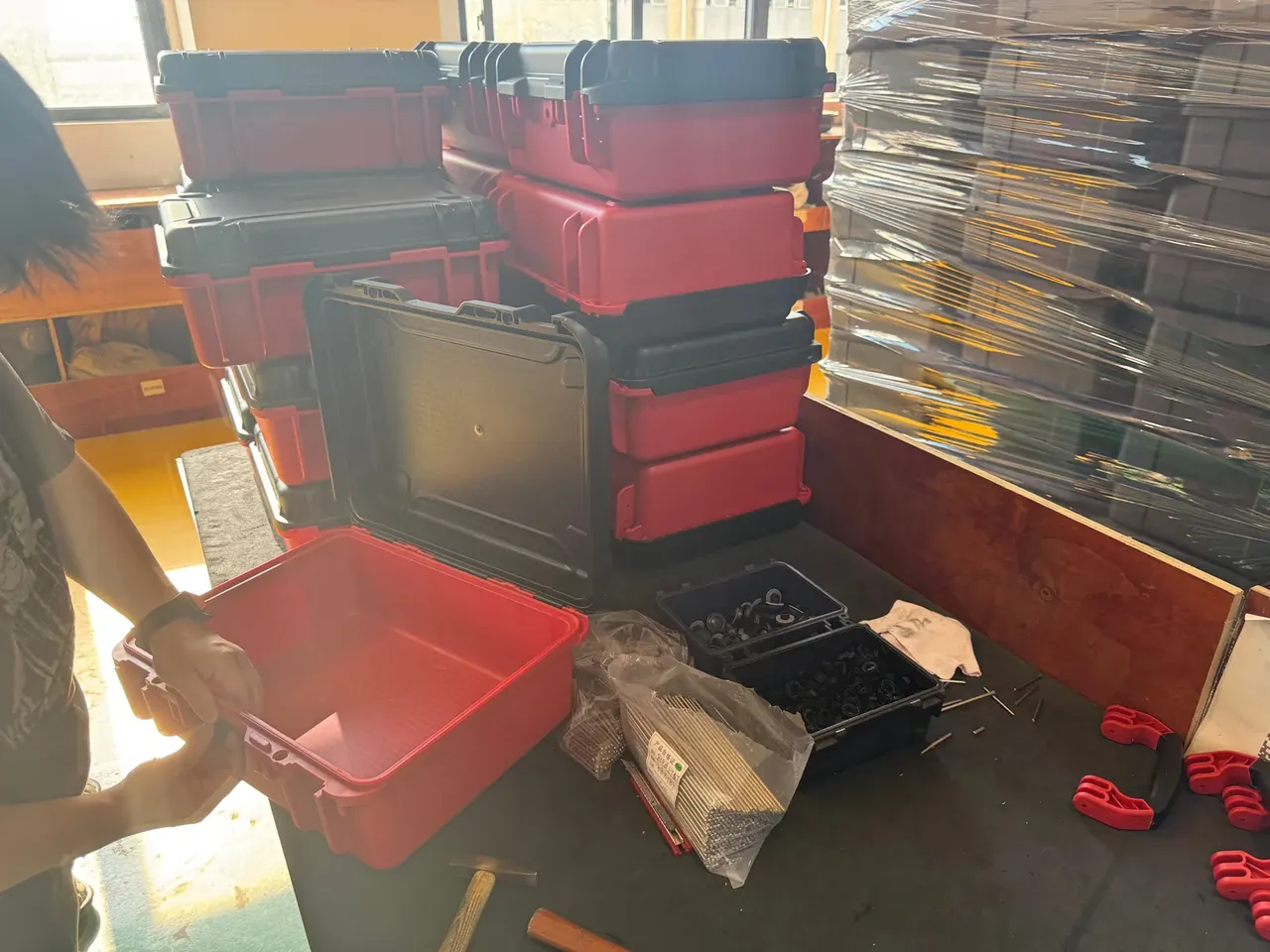
Split the five lines and the refund finally has a base.
| Line | RMB | Refundable | Note |
|---|---|---|---|
| Hand sample or simple tool | 900 | Yes | One cavity, 45 steel |
| Trial material | 320 | Yes | About 42 kg, 8% scrap |
| First-article inspection | 180 | Yes | 42 dimensions, 2 hours |
| Printing or laser marking | 260 | No | Consumed, plate billed apart |
| Courier and packing | 140 | No | Three round trips |
| Total | 1800 | — | Production tool excluded |
Separating the fee from tooling cost is the first layer. The second is the mould change: the one included change covers a single dimensional or fit correction after first-article approval, charged at material cost of 120 RMB with no labour. A structural rebuild is not a change; it is a new quote.
From the second change onward the charge is 600 RMB each, covering 4 hours of toolmaking and one trial shot. Stop before the third: three changes total 1200 RMB against 1400 RMB for a fresh simple tool, so rebuilding wins.
Draw the boundary in one line. Dimensions, fit and colour are changes; structure, wall thickness and parting line are a new tool. The free change inside the case sample fee covers only the first group.
Sampling runs 12 days: 7 days of tooling, 2 of trials, 1 of inspection and 2 of shipping. Each change adds 5 days, the second adds 6, and a slip of that size costs the production slot.
3. Writing the 500-unit refund clause
Three lines cover the clause: trigger quantity, calculation base and payment date. Everything beyond them is commentary, and commentary slows execution.
The trigger needs a time window: 500 units shipped cumulatively within 12 months of sample approval. Without a window the supplier can wait until next year; with too long a window the buyer has no firm expectation. Twelve months is the compromise.
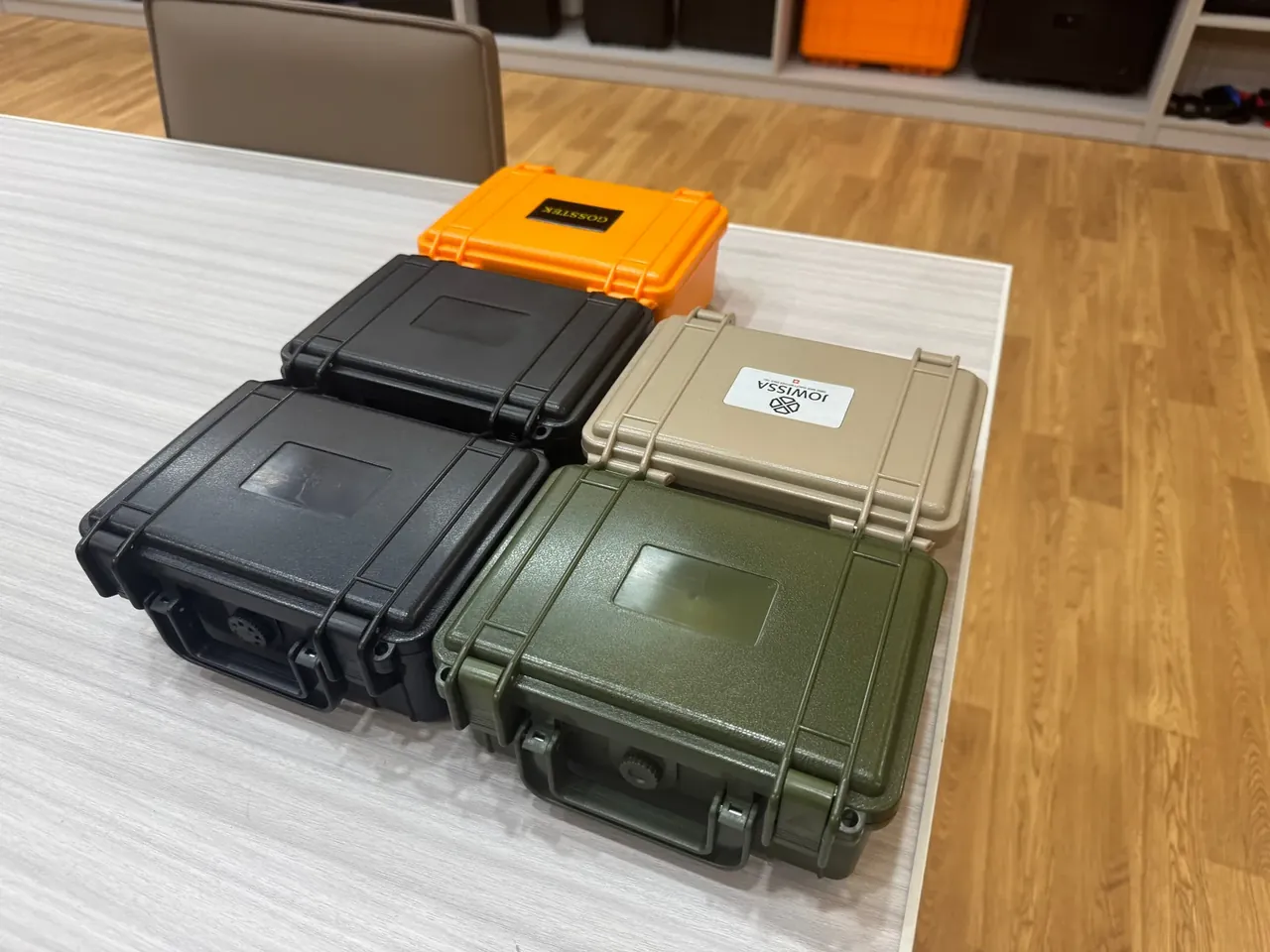
The base must state deductions: 1800 RMB actually paid, refunded in full, with any second or later mould change excluded. Actual payment, not quotation, and change charges kept outside the refund pool.
The date must name its anchor: remittance within 30 days of final-batch acceptance, counted from the acceptance certificate. Without that anchor the supplier counts from dispatch and the buyer from receipt, and the two dates drift 15 to 20 days apart.
Add one line on sample ownership, and put all of it into the contract quality and commercial terms rather than the back of a quotation.
Proportional refunds look precise and behave badly. Full refund at 500 units and half at 300 invites the supplier to argue that 480 units is 20 short, then to reject the top-up order as not counting. A single 500-unit line is simpler to enforce than four tiers.
The claim pack holds three documents: sample approval, cumulative shipment detail and final-batch acceptance. Nine of ten disputes over a case sample fee sit in the second, where order-level and carton-mark totals disagree and 500 units becomes 470. Converting net weight to units beats counting cartons.
4. Sample ownership and the timing chain
Ownership belongs in the contract: three samples, two to the buyer, one retained by the supplier for 24 months. The retained piece never ships and anchors later colour and dimension comparisons.
Reuse has three rules. Samples may not ship as production units, because trial material is often regrind or modified resin with 15–20% lower impact strength; they may serve as display or training pieces if marked as non-sale; and a hand-cut sample insert cannot set the acceptance baseline for production foam.
Sampling and production must mesh. Sampling 12 days, first-article approval 3 days, material preparation 9 days and production 25 days total 49 days from order to first shipment. Without an order within 3 days of approval the slot goes to another buyer, and re-insertion costs 10 to 14 days.
Here the refund meets the calendar: an early first order triggers the refund early, while an order delayed to month four may find the simple tool scrapped, and reopening it at 1400 RMB usually comes out of the refund.
Conclusion
The case sample fee comes down to three figures: 1800 RMB, 500 units and 30 days. Before signing, turn them into three lines — a trigger with a 12-month window, a base equal to actual payment with later change charges excluded, and a date anchored to the final acceptance certificate. Keep the sampling fee and the tooling cost on separate lines, define the single included change, and write sample ownership with a 24-month retention into the terms. Run the table below line by line: any blank row turns the refund into a negotiation, while seven filled rows reduce it to a finance transaction. The test at the end is a zero balance across fee paid, unit price and amount returned.
| Rule | Value | Check |
|---|---|---|
| Fee unit | 1800 RMB per design | One change included, tool excluded |
| Full refund | 500 units cumulative | Within 12 months, not per batch |
| Partial refund | 60% at 300 units, 1080 RMB | Base is payment, changes deducted |
| Payment date | 30 days after acceptance | Anchored to acceptance certificate |
| Change charge | 600 RMB each from the second | Review a rebuild before the third |
| Sample ownership | 2 to buyer, 1 retained 24 months | Retained piece never ships |
| Sampling lead time | 12 days | +5 days per change, +6 for the second |
This article discusses container-side specifications and design implications only, and does not cover any handling, loading or use of the contents.
Related Reading
- Three ways to word the sampling and tooling fee
- Order quantities and price tiers for custom cases
- How mould cost is built up and amortised
Related Products
- 8 Series — Gun Cases; Military Equipment Cases; Camera Equipment Cases; Drone Cases; Watch Cases; Knife Cases; First Aid Cases; Electronics Equipment Cases
- WL8-2812 PP Gun Case — model WL8-2812
- All protective cases and toolboxes: 7 series, 158 models