

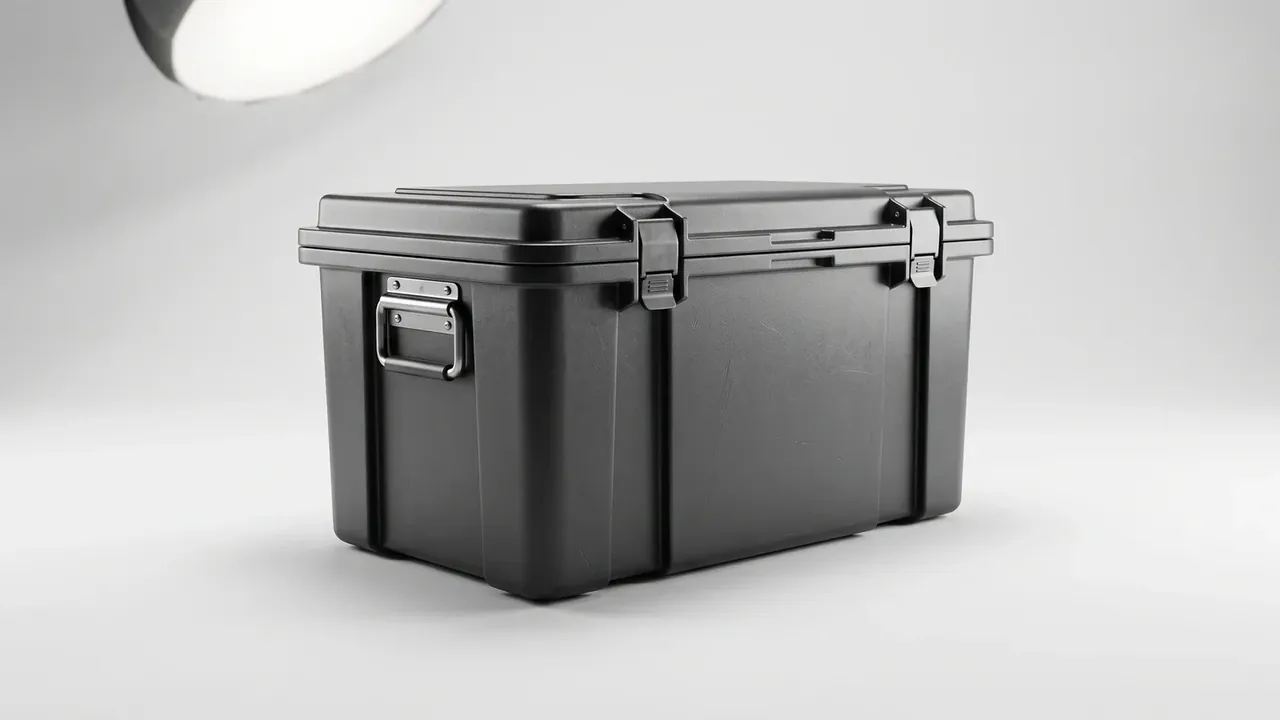
Quick answer: The gap between two sealed protective case quotes rarely sits in wall thickness. It sits in gasket compound, groove depth and latch clamping force. Fix immersion depth, temperature range and opening frequency first, then check compression ratio and test method.
Table of contents
- Where a Sealed Protective Case Specification Starts
- Gasket Compound and Compression Set
- Groove Geometry and the Sealing Line
- What an Air Decay Test Actually Proves
- Latch Force, Relief Valve and Temperature
- FAQ
1. Where a Sealed Protective Case Specification Starts
Selection meetings usually end on one question: does this box have to survive being submerged. A sealed protective case is bounded by immersion depth, temperature range and openings per year.
| Service condition | Number to write down | Structural choice |
|---|---|---|
| Rain and standing water | 200 mm, 30 minutes | Single line, 5.8 mm groove |
| Overboard or pressure wash | 1 m, 30 minutes | Deeper groove or twin lines |
| Hot cabin storage | 70 °C, 8 hours | Silicone, not nitrile |
A case opened more than four hundred times a year wears its gasket out before the wall shows anything.
2. Gasket Compound and Compression Set
The gasket is a consumable, and its life is read from compression set, not softness. To GB/T 7759.1 at 70 °C for 24 hours, silicone lands inside 25 percent and nitrile about 15 percent.
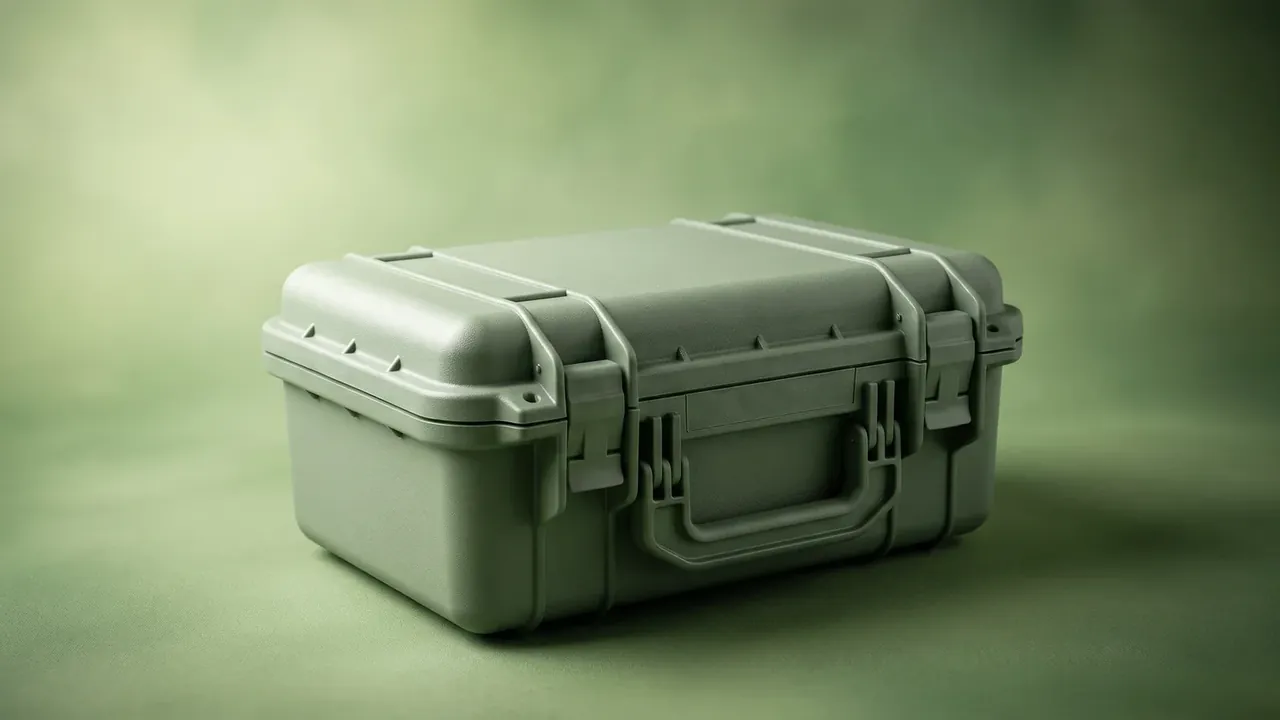
Choose by temperature window first.
| Compound | Temperature window | Compression set |
|---|---|---|
| Silicone | −55 to 200 °C | ≤ 25% |
| EPDM | −40 to 120 °C | ≤ 20% |
| Nitrile | −30 to 100 °C | ≤ 15% |
| Fluorocarbon | −20 to 200 °C | ≤ 20% |
Hold compression between 25 and 30 percent. Below 20 the lid tolerance cannot close the gap; above 35 the cord takes a permanent set at 70 °C. Accept cord at ±0.15 mm diameter.
3. Groove Geometry and the Sealing Line
An 8.0 mm cord in a 5.8 mm deep groove gives 27.5 percent compression. A 10.0 mm wide groove leaves the cord at roughly 87 percent fill, so material can flow sideways.
A 0.5 mm root radius and a 0.3 mm chamfer decide whether the cord is sheared. A sharp corner nibbles a notch over repeated closures, and a decay test finds it.
Lid flatness is held to 0.3 mm and parting-line mismatch to 0.2 mm. Ribs every 100 mm keep deflection low; at 160 mm spacing the middle of the lid lifts off the line under vacuum, which is where most leaks on a sealed protective case sit.
4. What an Air Decay Test Actually Proves
Pressure decay is the workhorse: charge to 20 kPa, hold 60 seconds, accept no more than 0.5 kPa. The vacuum version pulls to −15 kPa and allows 1 kPa of recovery within 30 seconds.
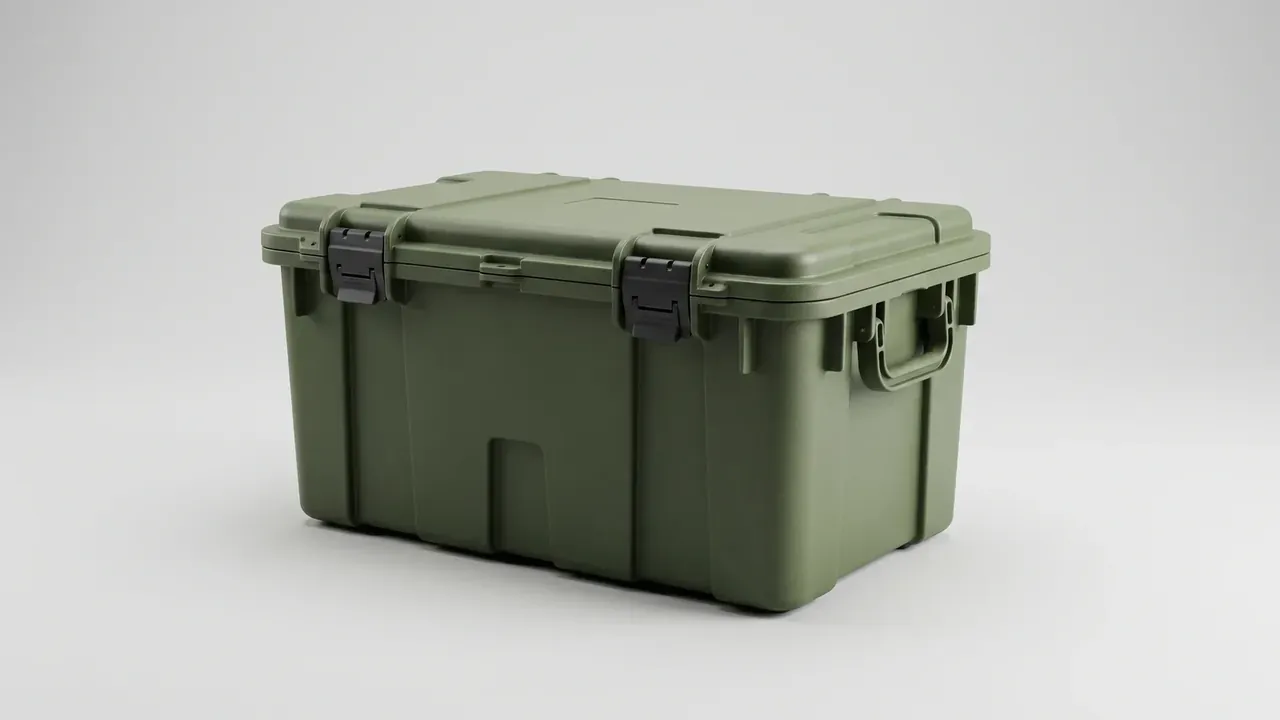
Sensitivity differs by an order of magnitude: bubbles locate a leak, decay suits batch sampling, helium reaches very small rates for stored cases. Condition samples four hours at 23 °C ± 2 °C.
Passing decay is not passing immersion. A sealed protective case can pass one and fail the other, since IP67 is judged at 1 m for 30 minutes with no visible water inside.
5. Latch Force, Relief Valve and Temperature
A latch should close at 90 to 120 N, spaced 250 mm along the lid. Too little and the lid lifts; too much and it bows a gap either side. Run a 0.05 mm feeler around the lid after assembly.
Two hours in a 70 °C cabin raises internal pressure, and the vacuum at opening pulls the gasket against the groove. A valve opening at 3.5 kPa releases it without letting water in.
| Item | Control value | Purpose |
|---|---|---|
| Latch closing force | 90 to 120 N | Even clamping |
| Latch spacing | 250 mm | Limits lid deflection |
| Relief valve opening | 3.5 kPa | Balances thermal pressure |
Handles are rated at three times payload, so a 30 kg case must hold 90 kg static. At −30 °C the latch-to-handle junction cracks first.
Conclusion
The order cannot be shuffled: bound the condition, choose compound and ratio, lock the numbers with groove, latch and test method. Two acceptance lines, decay and immersion, beat one word for waterproof. What separates one sealed protective case from another is the figures a buyer can re-measure.
This article discusses only the container (case body) side of specifications and design intent, and does not cover any handling, loading or use of the contents.
Related Reading
- Waterproof hard case ratings and test conditions
- How the sealing structure of a waterproof hard case is built
- Reading the cushioning figures of a shockproof case
- Fittings, handles and latches for case bodies
Related Products
- 8 Series — Gun Cases; Military Equipment Cases; Camera Equipment Cases; Drone Cases; Watch Cases; Knife Cases; First Aid Cases; Electronics Equipment Cases
- WL8-2812 PP Gun Case — model WL8-2812
- All protective cases and toolboxes: 7 series, 158 models