

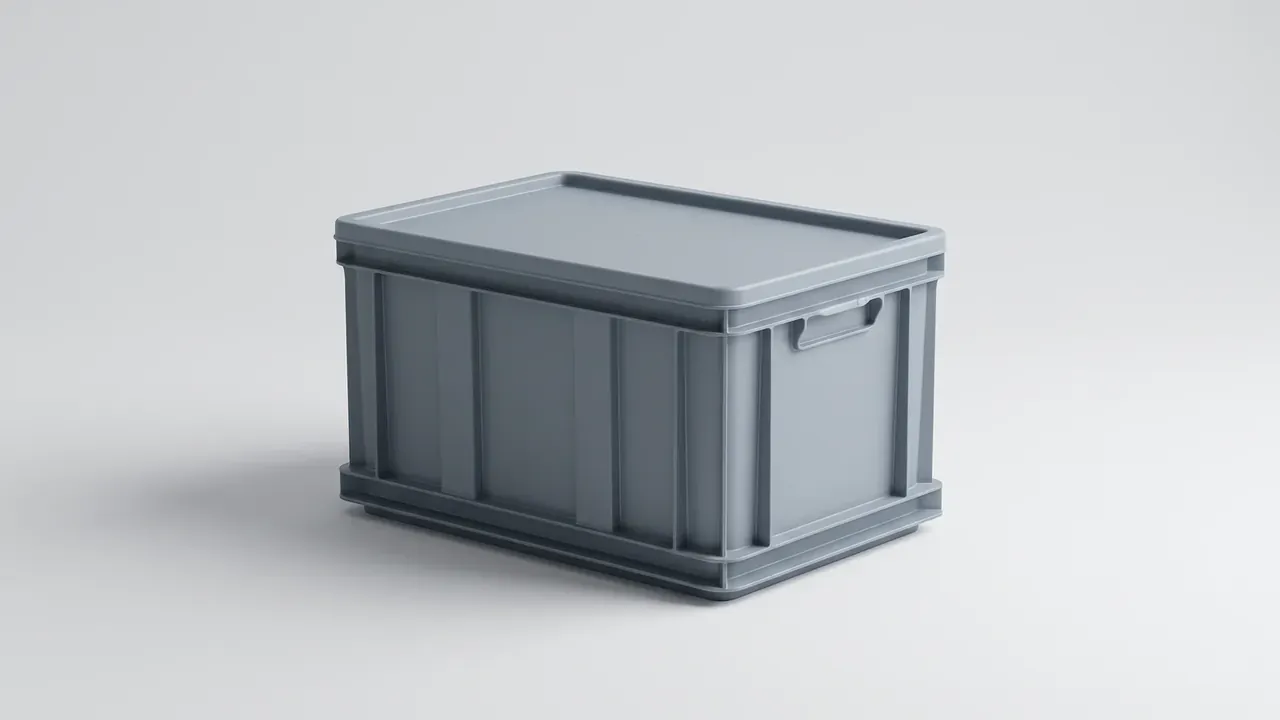
Quick answer: Choose a specialized shipping and storage container by five criteria in order: mission profile, dimension chain, temperature and sealing, handling and stacking, and whole-life cost. The first two decide whether it works; the last three decide how long.
Table of contents
- Five Selection Criteria for a Specialized Shipping and Storage Container
- Dimension Chain and Load Efficiency
- Temperature, Humidity and Sealing
- Handling and Stacking
- Whole-Life Cost
- FAQ
1. Five Selection Criteria for a Specialized Shipping and Storage Container
Selection of a specialized shipping and storage container starts with the mission, not the box. The same shell meets very different loads in full-truck haul, multimodal transfer, warehouse storage and site handling, and protection level follows the load rather than the budget.
Fix three numbers first: trips a year, transfers a trip, stacking tiers in storage. Protection level then follows, leaving only shell and insert to settle.
| Mission profile | Dominant load | Structural focus | Drawing parameter |
|---|---|---|---|
| Full-truck haul | Vibration, strap squeeze | Base strength, stacking lip | Static load, tiers |
| Multimodal | Lifting, repeated transfer | Lifting points, corner buffer | Point location, drop height |
| Warehouse | Static stacking | Creep resistance | Tiers, floor flatness |
| Site handling | Frequent opening | Latch life, handle | Cycles, unit weight |
2. Dimension Chain and Load Efficiency
Work the chain from inside out. Fix internal clear volume, then add wall and rib depth to reach the outside. A 600 x 400 x 230 mm interior with 20 mm per side for wall, rib and stacking lip lands at 640 x 440 x 262 mm outside. Choosing the outside first usually costs 15 mm of interior.
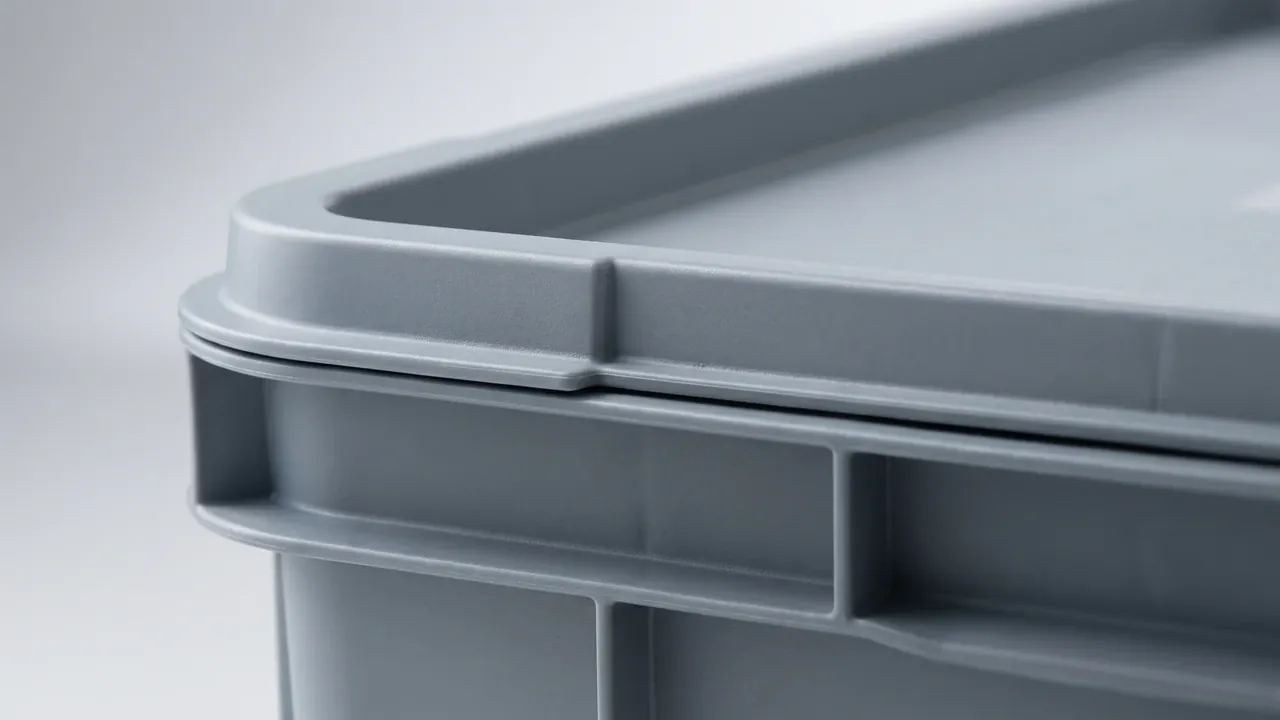
Load efficiency is calculated back from the pallet. A 1200 x 1000 mm pallet takes four 600 x 400 mm units at 80 percent area use, against 60 percent for three; if height limits the stack to three tiers, recalculate the cube, not the area.
Handles, latches and castors protrude; book the envelope over them.
3. Temperature, Humidity and Sealing
Sealing follows the environmental envelope, not habit. A dry indoor route needs one gasket line; a hard day-night swing needs an equalisation valve, since an 85 K swing can leave 30 kPa across the wall and make the lid hard to open.
| Envelope | Sealing | Equalisation | Verification |
|---|---|---|---|
| Dry indoor | Single gasket | Not needed | Feel and visual |
| Humid store | Gasket plus desiccant bay | Optional | Humidity card |
| Wide swing | Dual gasket | Valve at 4 kPa | Thermal cycling |
| Outdoor rain | Dual gasket, drain channel | Valve | Rain test |
Cold and humidity pull opposite ways: silicone cord rebounds at minus 25 °C while plain rubber stiffens, and in long storage trapped moisture beats ingress.
4. Handling and Stacking
Handling sets the details on a specialized shipping and storage container. Manually carried units stay at or under 120 kg loaded, with a handle that takes four fingers; mechanical handling moves the focus to base structure and fork pocket position.
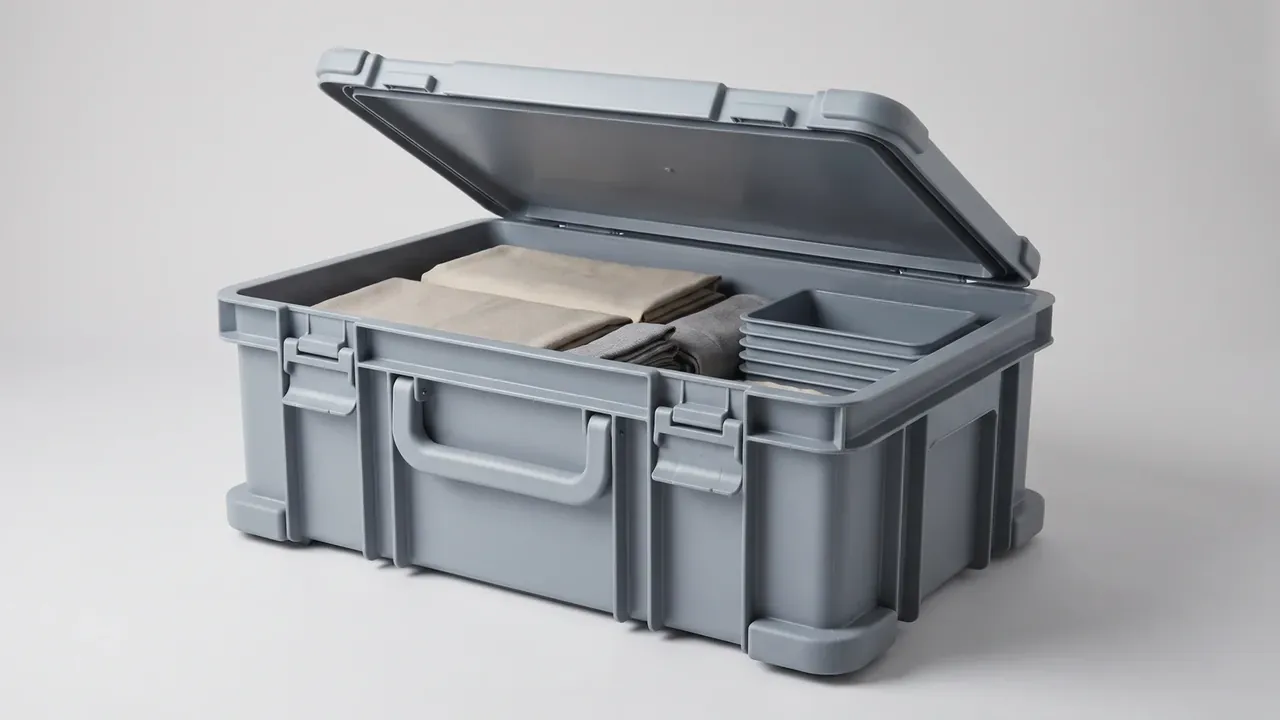
State stacking twice. Five tiers static and three in transit is a common pair; at 120 kg per unit the bottom layer is checked at 480 kg, not unit weight, and transit adds a dynamic factor.
Castors are not a default: the wheel becomes a point load under stacking, so the foot pattern must change to flat bearing.
5. Whole-Life Cost
For a specialized shipping and storage container, whole-life cost is counted per part. The shell is bought once, gaskets, latches and inserts repeat, and downtime is invisible until it happens; together they often exceed the price gap.
Over five years the shell holds 62 percent of first cost, the insert 18, gaskets 6, latches 8, downtime 6; by year five those read 62, 24, 12, 14 and 18.
At three openings a day, 800 cycles is about nine months, after which opening force climbs from 50 N to 68 N, operators reach for a tool, and the boss cracks.
Hold spares at 5 percent of the fleet; that line is usually missing from the comparison sheet.
Conclusion
Five criteria cover the choice: mission profile sets protection, dimension chain sets volume, envelope sets sealing, handling sets the handle and tiers, and whole-life cost settles the trade. Walk them in order and put each on the drawing as a number or an interval. Do that, and a specialized shipping and storage container will still be in service in year three.
This article discusses only the container (case body) side of specifications and design intent, and does not cover any handling, loading or use of the contents.
Related Reading
- Custom specifications and acceptance points
- Stackable case specifications and load ratings
- Maintenance checks for reusable cases
- Where temperature-controlled cases stop making sense
Related Products
- 8 Series — Gun Cases; Military Equipment Cases; Camera Equipment Cases; Drone Cases; Watch Cases; Knife Cases; First Aid Cases; Electronics Equipment Cases
- WL8-2812 PP Gun Case — model WL8-2812
- All protective cases and toolboxes: 7 series, 158 models