

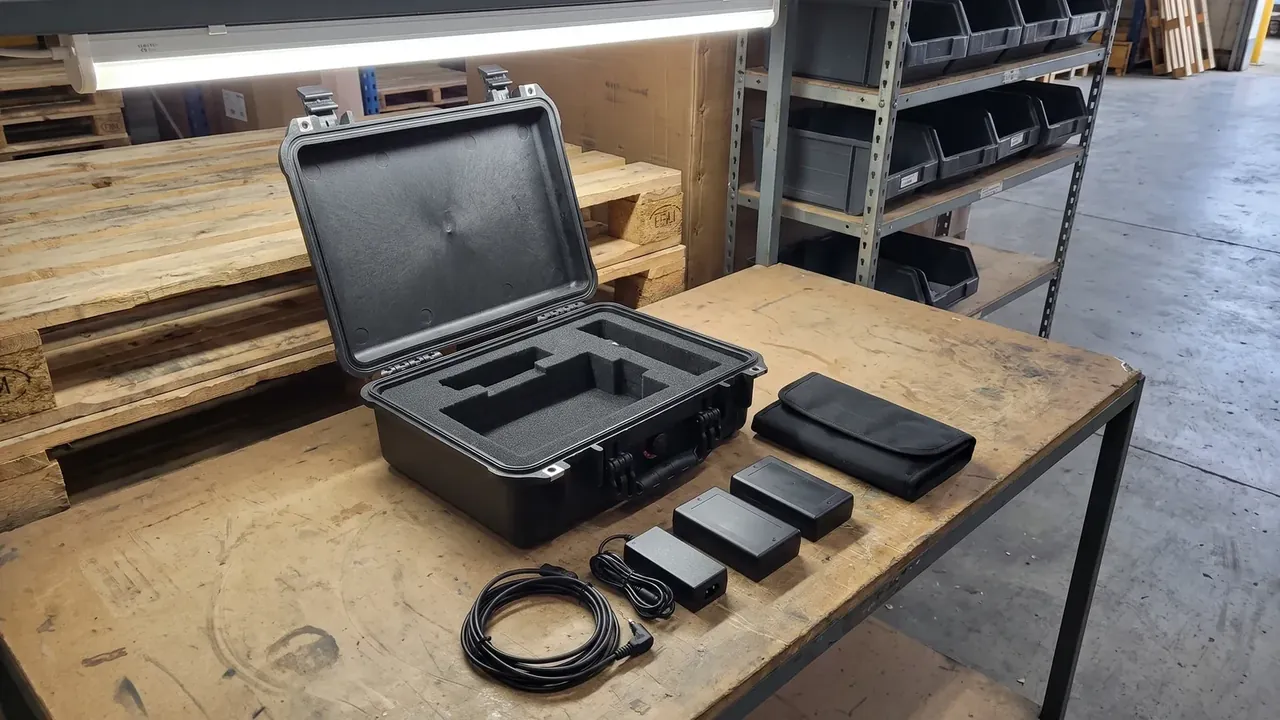
Quick answer: Eight corner drops at 0.8 m pass a Spectrometer Protective Case only if an R18 cell radius and a 3.2 mm overmould hold the eighth peak under 42 g.
Table of contents
- Cell Corner Radius in a Spectrometer Protective Case
- Corner Overmould Thickness
- Peak Acceleration After Eight Corner Drops
- Corner Rebound After a Rest Period
- Locking the Corner Radius for an Optics Batch
- FAQ
1. Cell Corner Radius in a Spectrometer Protective Case
A case tumbling onto a corner answers one thing at once: whether the cell radius or the corner overmould takes the impact, read straight from the acceleration peak. A Spectrometer Protective Case is built on a 470×330×175 mm shell with a 410×275×120 mm cavity and a 3.8 mm wall, so drawing R18 fixes how much foam the four corners can keep.
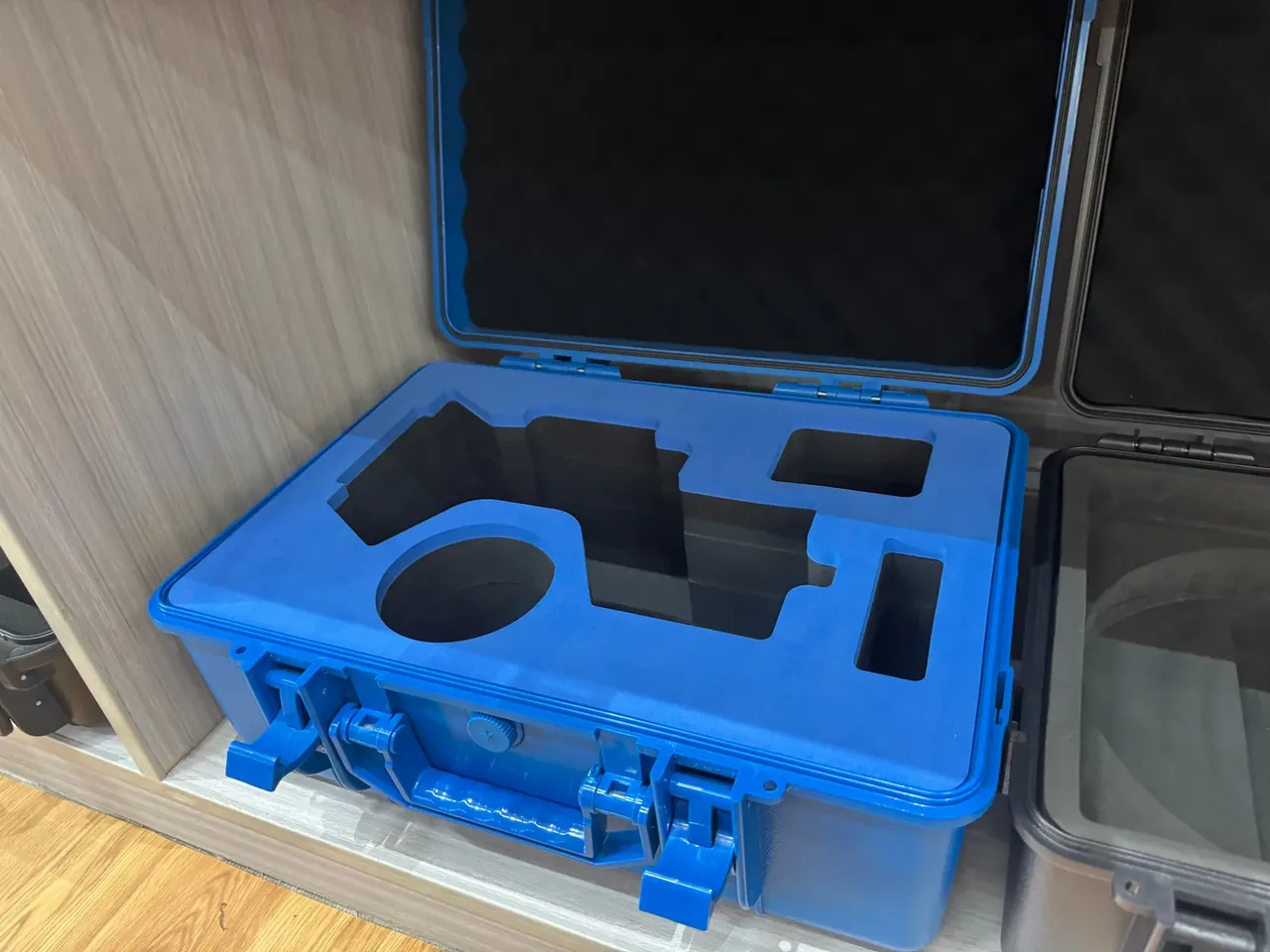
Foam is cut at R12, R18 and R24, with the overmould held at 3.2 mm and nothing else altered. R12 concentrates stress and hands the shock to the wall; R24 spreads so wide that the cell wall thins and the overmould cannot seat. R18 sits between them, holding the eighth peak down while leaving the cells room to be laid out.
| Corner tier | Radius | Eighth-drop peak |
|---|---|---|
| Small | R12 | 51 g |
| Middle | R18 | 38 g |
| Large | R24 | 47 g |
Height and drop count are the same for all three; only the peak reaching the wall at the corner separates them.
2. Corner Overmould Thickness
The 3.2 mm overmould in a Spectrometer Protective Case is worked back from the corner load rather than filled in by hand: each of the four corners in a 410×275×120 mm cavity takes one layer, too thin to stop a crack and too thick to leave the cell depth R18 needs. The 3.8 mm wall climbs along the ribs and the overmould lands where the ribs close, keeping eight corner drops from squeezing a dent into the shell.
A separate rig logs 4700 open-close cycles, checking the overmould for lifting and the cell corners for scuffs at intervals; the corner shape must last to the final cycle. As the lid presses down, two latches at 330 N each pull the rim tight, and one gasket ring at 17% compression seals the opening so drop dust cannot work in along the seam.
3. Peak Acceleration After Eight Corner Drops
For the drop stage the closed shell is set corner-down at 0.8 m, released, caught and reset, eight times running, with no change of corner and no repair to the overmould between drops. A Spectrometer Protective Case watches how the peak climbs: a small radius piles stress onto the corner, a large one lets the peak rise again late in the run.
| Drop number | Height | Middle-tier peak |
|---|---|---|
| Drop 2 | 0.8 m | 33 g |
| Drop 5 | 0.8 m | 36 g |
| Drop 8 | 0.8 m | 38 g |
Drop 2 opens at 33 g, drop 5 reaches 36 g and drop 8 stops at 38 g, so the middle tier never crosses 42 g. Before the fifth drop the R12 and R24 curves still overlap, and only the last three pull them apart.
4. Corner Rebound After a Rest Period
The shell is not judged the moment it lands: after eight drops it rests, and only then is the corner rebound measured. A Spectrometer Protective Case holds 92% rebound as the hard line, because a corner that passes on peak but will not spring back has taken a dent in its overmould and sits loose once refitted.
The clamps come off first, the shell is laid flat, and a gauge takes one point at each of the four corners. R12, its corner gouged in the late drops, rebounds only 86% and had already passed 42 g on peak. R18 returns to 94% and R24 to 92%, both above 92%. Judgment rests on the worst corner, not the tidiest one, and two corner profiles are stored so subtracting them gives the rebound.
| Peak reading | Corner rebound | Disposition |
|---|---|---|
| 38 g | 94% | Keep |
| 41 g | 92% | Keep |
| 47 g | 86% | Exclude from optics liner drawing |
The 47 g row at 86% leaves the optics batch; the other two pass, leaving only which radius wastes less foam.
5. Locking the Corner Radius for an Optics Batch
The corner radius is fixed at the largest tier whose eighth-drop peak still stays below 42 g; anything larger is kept out of the optics liner drawing. That leaves R18 as the only tier on the right side of the line, since R24 thins the cell wall too far, so the drawing, the cutting sheet and the inspection card all lock to it. A Spectrometer Protective Case turns here from scattered rig readings into one batch card, with the 3.7 kg empty shell and 9 kg payload noted on it.
When the value goes onto the card, one gasket ring at 17% compression and two latches at 330 N each are rechecked item by item, and IP66 is logged as a design target rather than a certificate held. The 4700 cycles, the eight drops and the 92% rebound sit on three separate rig sheets. Kexin New Materials (Guangdong) Co., Ltd. schedules from this card, and JUNZHIJIA does not revise the batch drawing once the radius is set.
Conclusion
A Spectrometer Protective Case closes on one pairing, the R18 radius with a 3.2 mm overmould, where the 42 g peak and 92% rebound left by eight drops from 0.8 m join the 410×275×120 mm cavity margin into a set that can be checked item by item. R12 piles the shock onto one point and R24 thins the cell wall past support, so only R18 survives both readings, and the choice comes from the numbers rather than a round figure drawn first. JUNZHIJIA logs IP66 as a target only, rechecking the 17% gasket ring and the 330 N latches.
Related Reading
- Optical Instrument Case: Zoned Protection and Shock Isolation for Precision Optics
- Precision Instrument Cases: CMM, Spectrometer & Laser Rangefinder Protection
- Custom EVA foam lined precision instrument case
Related Products
- 8 Series — Gun Cases; Military Equipment Cases; Camera Equipment Cases; Drone Cases; Watch Cases; Knife Cases; First Aid Cases; Electronics Equipment Cases
- WL8-2812 PP Gun Case — model WL8-2812
- All protective cases and toolboxes: 7 series, 158 models