

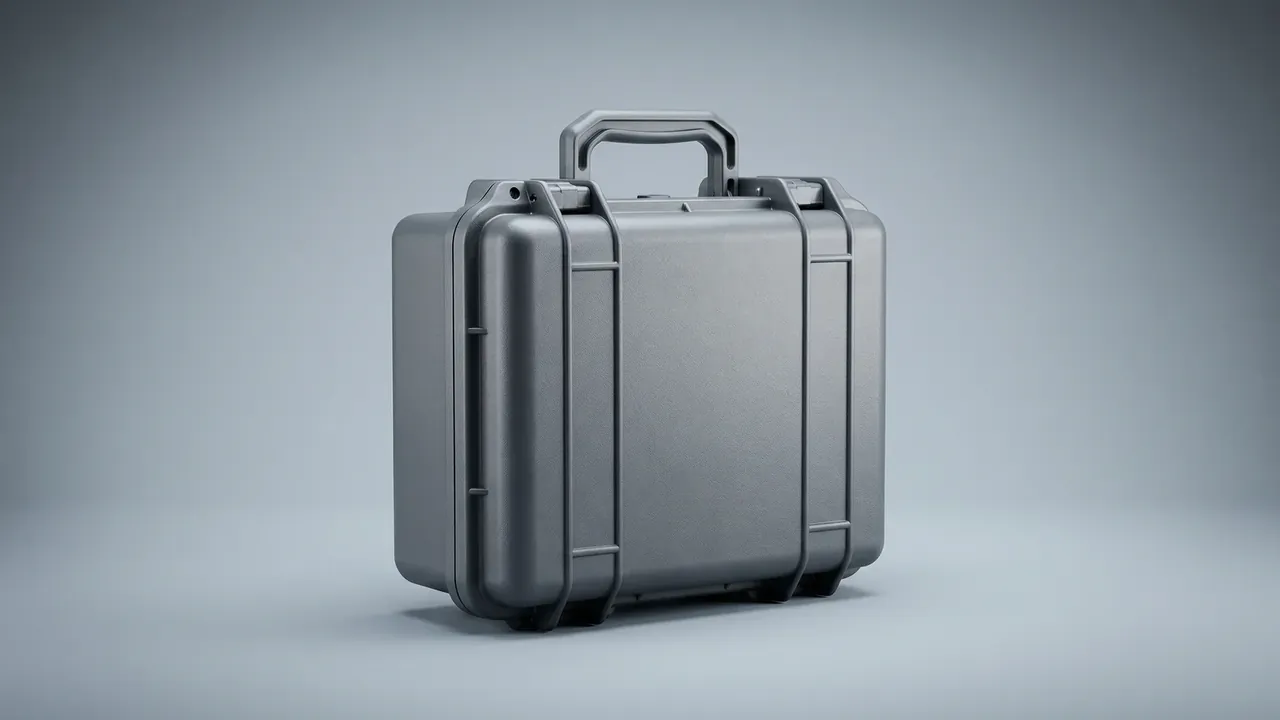
Quick answer: A stackable plastic tool storage box earns its place in six settings: repair bays, electronics line-side stores, spare parts racks, mobile service vans, home garages and lab rooms. Start from stack height and load per layer, then set lip depth and wall thickness, and check shelf height against the body.
Table of contents
- Where a Stackable Plastic Tool Storage Box Is Used
- Stacking Lips and How the Frame Works
- Shelf Heights in Line-Side Stores
- Palletising and Strapping in Transit
- A Selection Sheet for Bulk Orders
- FAQ
1. Where a Stackable Plastic Tool Storage Box Is Used
A stackable plastic tool storage box is worth more in a pile than on its own: the same 1.2 m² of floor holds eight laid flat or forty in five-high stacks, and the picking order stays intact.
Repair bays are the obvious home: each keeps two boxes, one for common sockets, one for special tools. The body stays at 400 × 300 × 150 mm, so five layers reach 1.6 m.
Electronics line-side stores want visibility: a 60 × 20 mm label pocket takes a card with part number and count. Lab rooms want a full lip that closes the seam below 0.5 mm.
| Setting | Layers | Load per layer (kg) | Focus |
|---|---|---|---|
| Repair bay | 5 | 12 | four catches, base lip |
| Electronics line | 4 | 8 | front label pocket |
| Service van | 2 | 10 | anti-slip pad, strap holes |
2. Stacking Lips and How the Frame Works
A stackable plastic tool storage box stays upright because of the lid-to-base fit, not wall thickness. A 3 mm groove in the lid meets a rim on the base and holds drift under 2 mm; without it, the top box of a 1.6 m stack wanders 15 mm and goes over at a nudge.
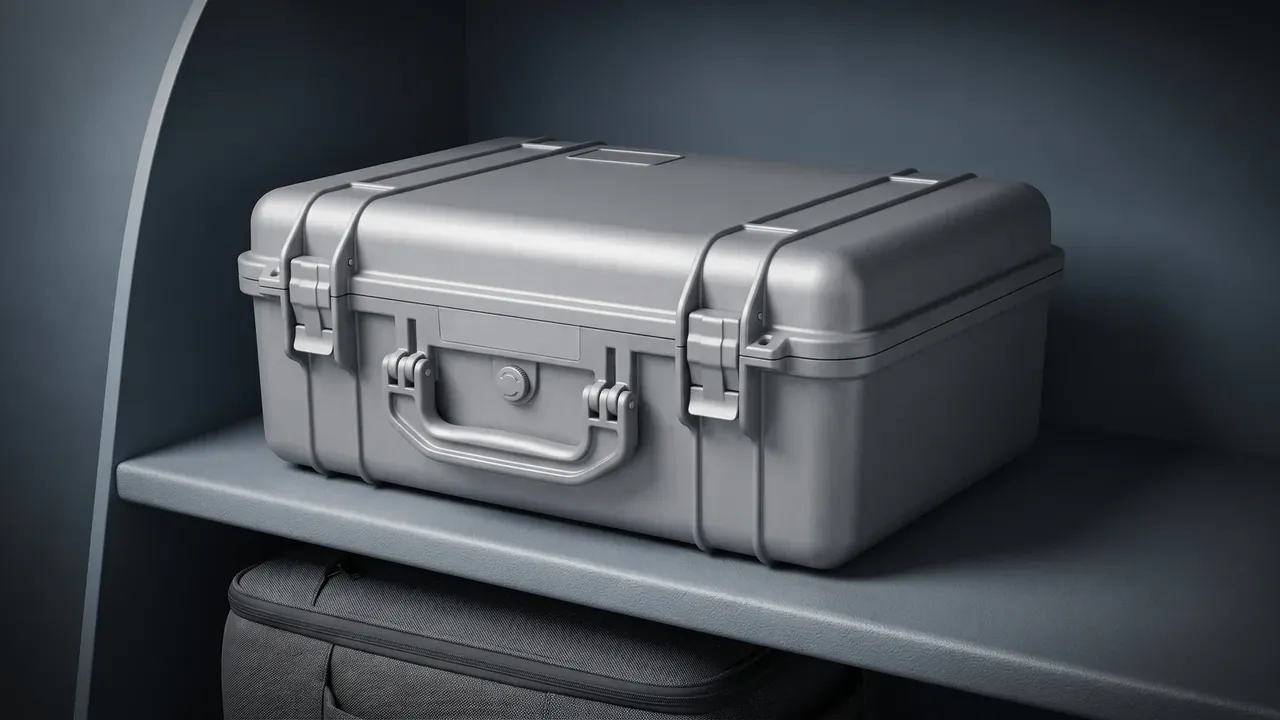
Vertical ribs at 45 mm pitch and a grid under the base carry load from the boss above into the ribs, bypassing flat panels. At 2.5 mm wall, a 12 kg layer deflects the top by under 1 mm.
Top flatness gets skipped: past 0.8 mm the fourth layer contacts on a point and the lid blooms.
3. Shelf Heights in Line-Side Stores
Shelf height is body height plus clearance, never habit. A 150 mm body in five layers stands 750 mm and a hand needs room, so 850 mm clears it; under 800 mm the top layer comes out at an angle.
Rack depth needs the same arithmetic: a 600 mm rack with a 300 mm body takes two rows, and the rear row must be picked under once a week.
Some stores skip racks: a 400 × 300 mm outline per stack, 900 mm aisles. Replenishment rolls away by trolley, at the cost of dust protection.
4. Palletising and Strapping in Transit
On a moving floor the top box sees sideways force up to 0.8 times its weight, which the lip will not hold. Strap each stack with 15 mm polyester in a cross, routed over the ribs, not the lid centre.
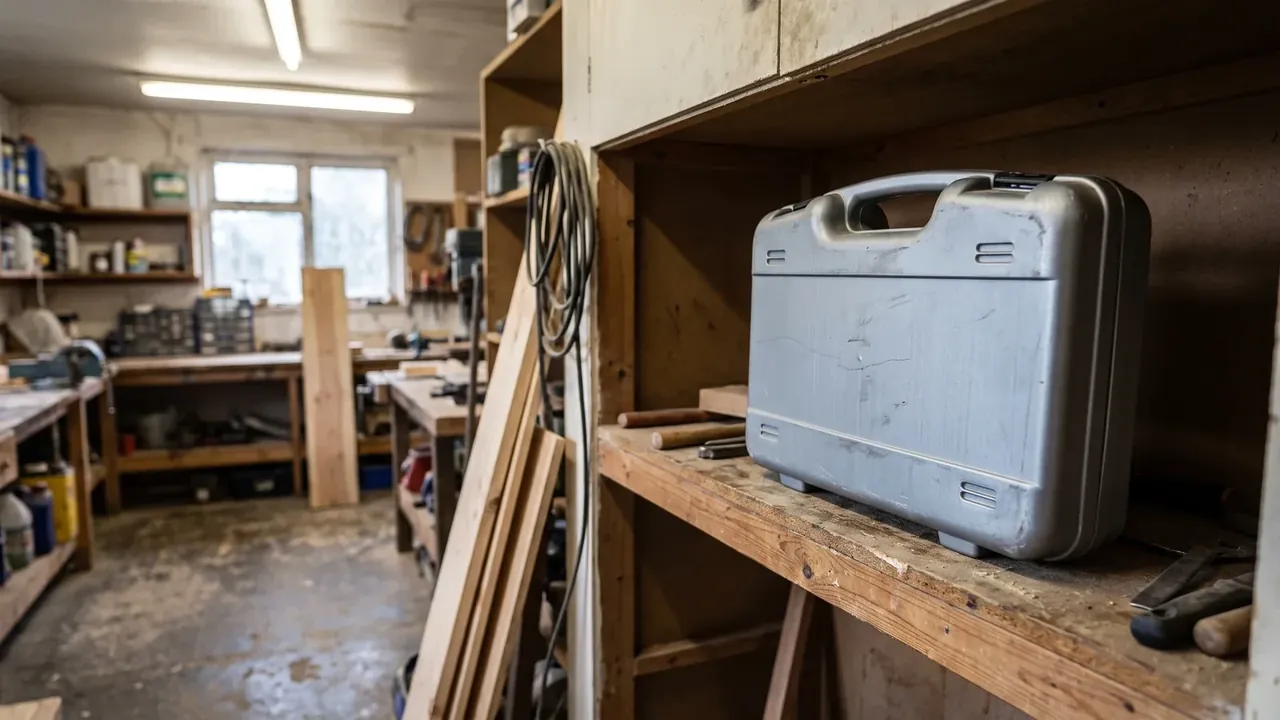
Write −25 to 60 °C into the transport clause: a winter trailer at −25 °C cracks PP corners, a summer roof at 60 °C creeps the bottom layer. Long routes ship three high.
Two 8 × 25 mm slots per side, placed where ribs cross, let the ribs take the pull so the edge does not tear. Hardware takes 24 hours of neutral salt spray.
5. A Selection Sheet for Bulk Orders
Bulk orders of a stackable plastic tool storage box need four lines: outline, layers, load per layer and lip depth, plus label pocket and colour. Red marks hold stock, blue released stock.
| Item | Bay use | Line-side use | Transit use |
|---|---|---|---|
| Outline | 400 × 300 × 150 mm | 350 × 250 × 120 mm | 500 × 350 × 200 mm |
| Layers | 5 | 4 | 3 |
| Load per layer | 12 kg | 8 kg | 15 kg |
| Lip depth | 3 mm | 3 mm | 5 mm |
Moulding belongs on the same sheet: two cavities on a 250 tonne press, 55 second cycle; past 3,000 units the cavity count sets delivery more than price.
A 40 ft high cube takes 1,200 boxes, wrapped twice in stretch film with 50 mm of vent gap at each side wall so humidity does not warp them.
Conclusion
Choosing a stackable plastic tool storage box comes down to three numbers: floor slots, opens per day and load per layer. Slots set the outline, frequency sets catches, load sets the ribs of a stackable plastic tool storage box.
This article discusses only the container (case body) side of specifications and design intent, and does not cover any handling, loading or use of the contents.
Related Reading
- Sizes and load ratings for stackable bodies
- Why stacks drift and tip over
- Divider layouts inside a tool box
- Hardware tool boxes in warehouse use
Related Products
- 8 Series — Gun Cases; Military Equipment Cases; Camera Equipment Cases; Drone Cases; Watch Cases; Knife Cases; First Aid Cases; Electronics Equipment Cases
- WL8-2812 PP Gun Case — model WL8-2812
- All protective cases and toolboxes: 7 series, 158 models