

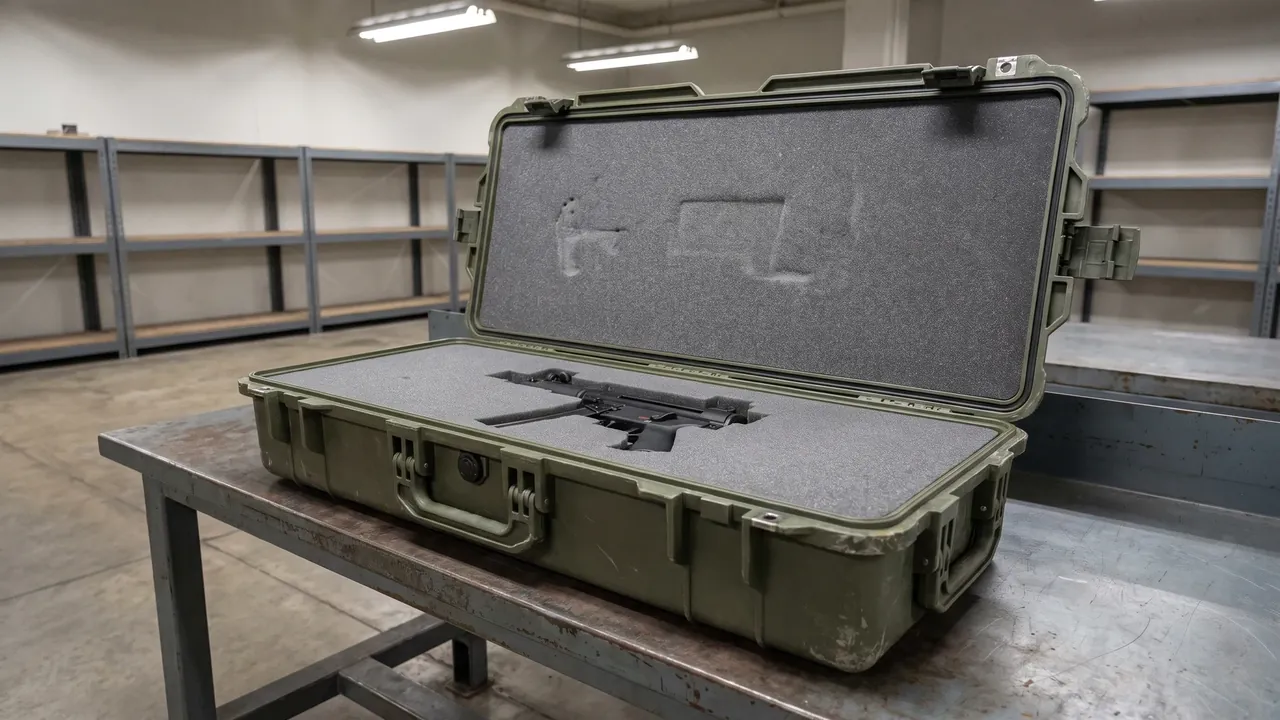
Quick answer: A submachine gun storage box is a hard container in a box form factor that uses a shell, an insert and a gasket to separate its contents from moisture, dust and impact. Its main difference from a storage case is that it is more compact, relies on single-item cavities and a fitted insert, and focuses on daily access and short-term protection rather than bulk transport.
Table of contents
- Definition and boundaries: submachine gun storage box against case and soft bag
- Structure breakdown: shell, insert and hardware
- Sealing and cushioning: the two structures that decide protection
- How material and molding method affect protection
- Procurement and acceptance checklist
- FAQ
1. Definition and boundaries: submachine gun storage box against case and soft bag
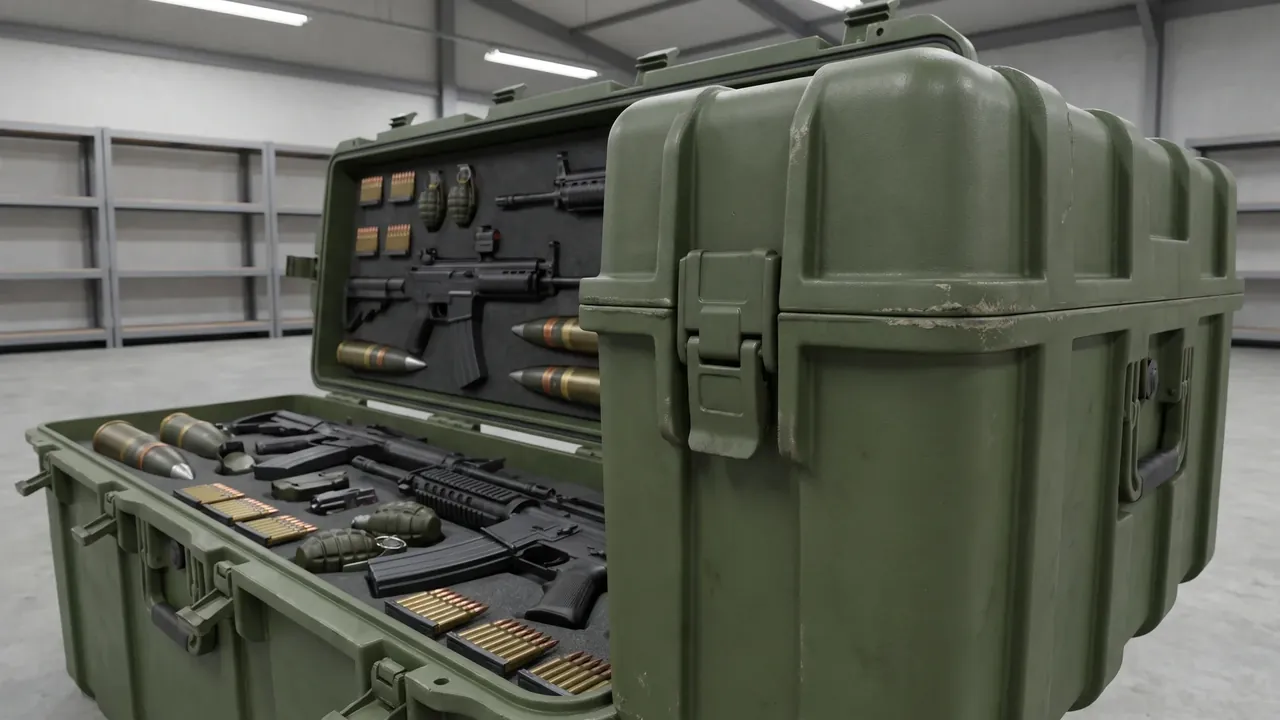
A submachine gun storage box is a hard container that holds one item or a few items, using a fitted insert for positioning and balancing daily access with short-term protection. It is defined by structure, not by name.
- Against a storage case: a case is designed around pallet modules and stacking, emphasizing bulk loading and compression resistance over long distances. A box is smaller and holds a single item.
- Against a soft bag: a bag relies on fabric and foam, costs less and folds flat, but offers almost no barrier against moisture and dust. A box uses a hard shell and a gasket to set a clear protection boundary.
A storage box serves single-item, close-fitting, repeatedly opened protection; a storage case serves bulk, stacked, long-distance transport.
2. Structure breakdown: shell, insert and hardware
A storage box is built from three layers: the outer shell, the insert, and the hardware and sealing parts holding them together. The shell sets the base for impact resistance, the insert decides whether the contents shift, and the hardware and gasket decide whether the box stays closed over time.
- Outer shell: usually engineering plastic, commonly produced by injection molding or rotomolding, with wall thickness and ribs setting stiffness.
- Insert: fitted foam or pre-cut foam. The first offers cavities shaped to the contents, the second uses pluckable layers to fit different sizes.
- Hardware: latches, hinges and handles are opened most often and worn first, so assembly consistency matters.
- Sealing parts: usually a rubber or silicone gasket set into the joint groove of the shell, forming the last layer of the boundary.
3. Sealing and cushioning: the two structures that decide protection
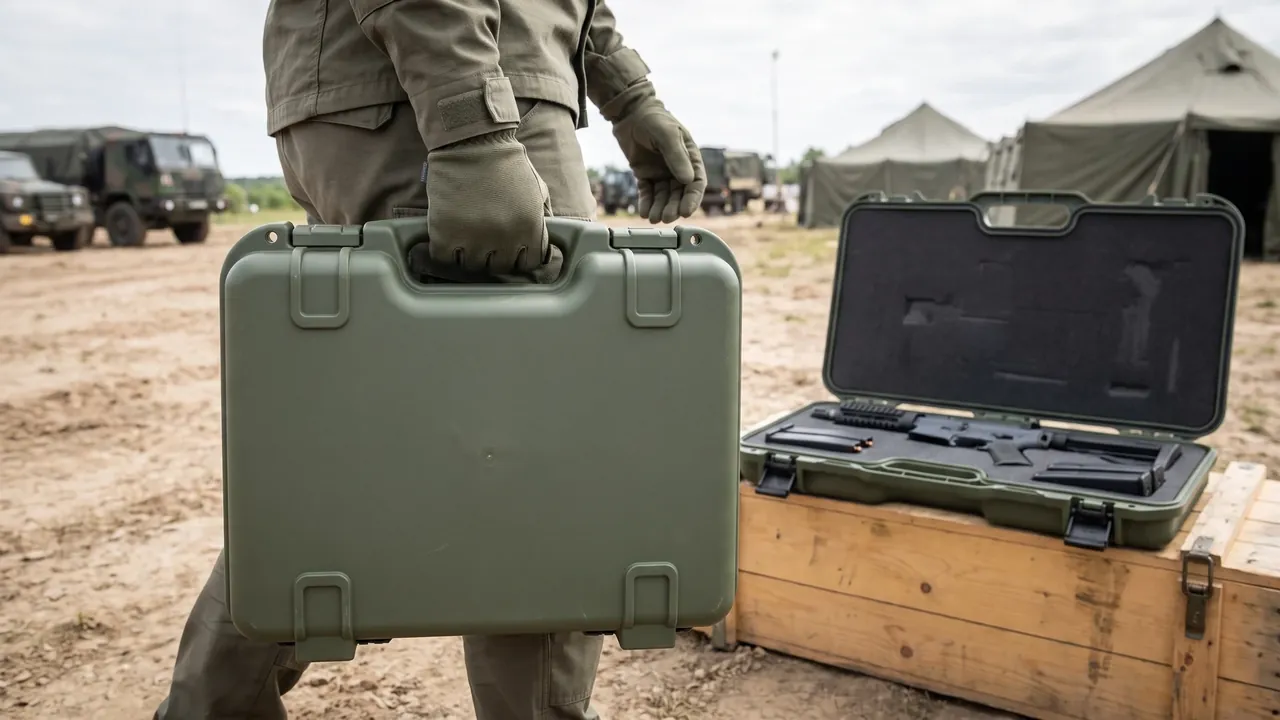
Protection splits into barrier and cushioning: the barrier is carried by the gasket and closing pressure, cushioning by insert thickness and shell deformation space.
| Structure | Main function | Common material | Failure mode |
|---|---|---|---|
| Gasket | Blocks moisture and dust | Nitrile rubber, silicone | Hardens, cracks |
| Insert foam | Absorbs impact, limits movement | EVA, EPE, PU | Collapses, powders |
| Shell ribs | Raises compression stiffness | Same as shell | Warps, whitens |
| Latches and hinges | Maintain closing pressure | Engineering plastic, metal | Loosen, jam |
Following the structural thinking behind IP ratings, a gasket must stay evenly compressed against the mating surface; any spot with too little pressure creates a leak path. The actual rating should be confirmed by a third-party test report; this article makes no certification claim.
4. How material and molding method affect protection
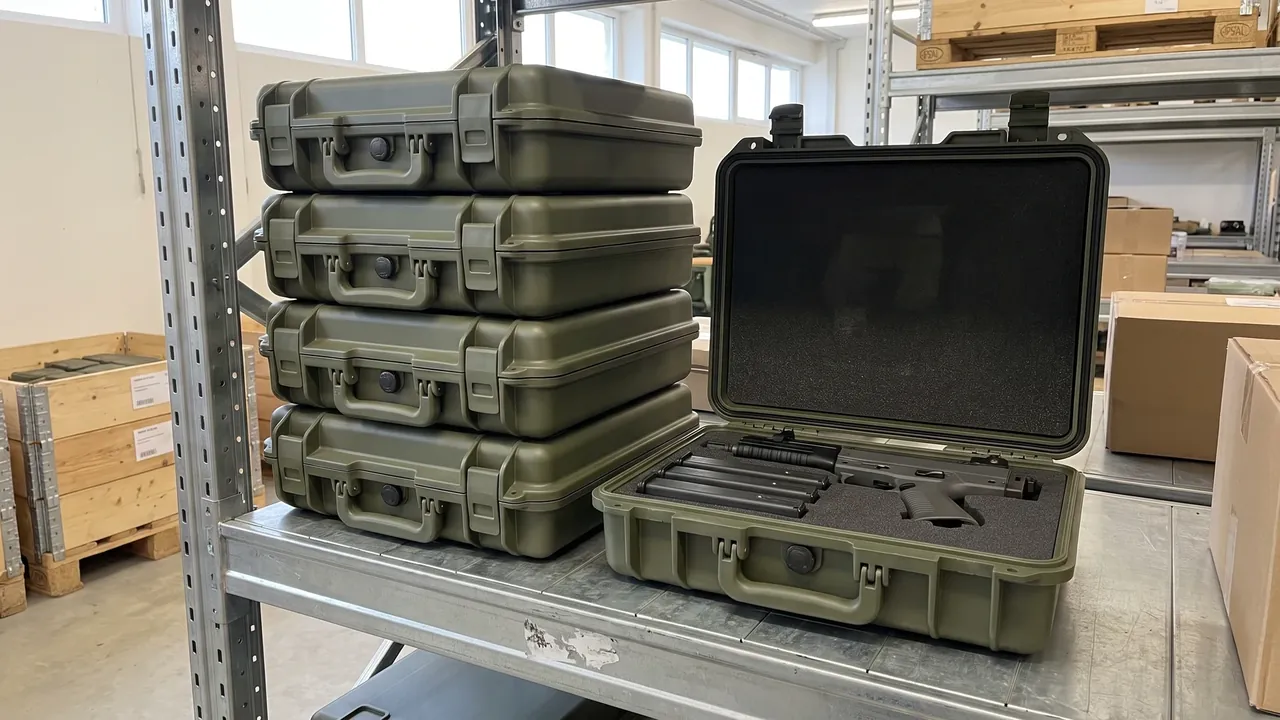
The same shape can behave very differently depending on material and molding method. Injection molding gives high surface precision for small to medium bodies, while rotomolding gives even wall thickness for larger sizes.
- Injection-molded body: good dimensional precision and consistent hardware assembly.
- Rotomolded body: seamless and evenly walled, with better drop resistance, but heavier.
- Material choice: PP offers toughness and chemical resistance; ABS offers high surface hardness; PC resists impact strongly but costs more.
Define the weight and shape of the contents first, then the insert and wall thickness, and only then the material and molding method.
5. Procurement and acceptance checklist
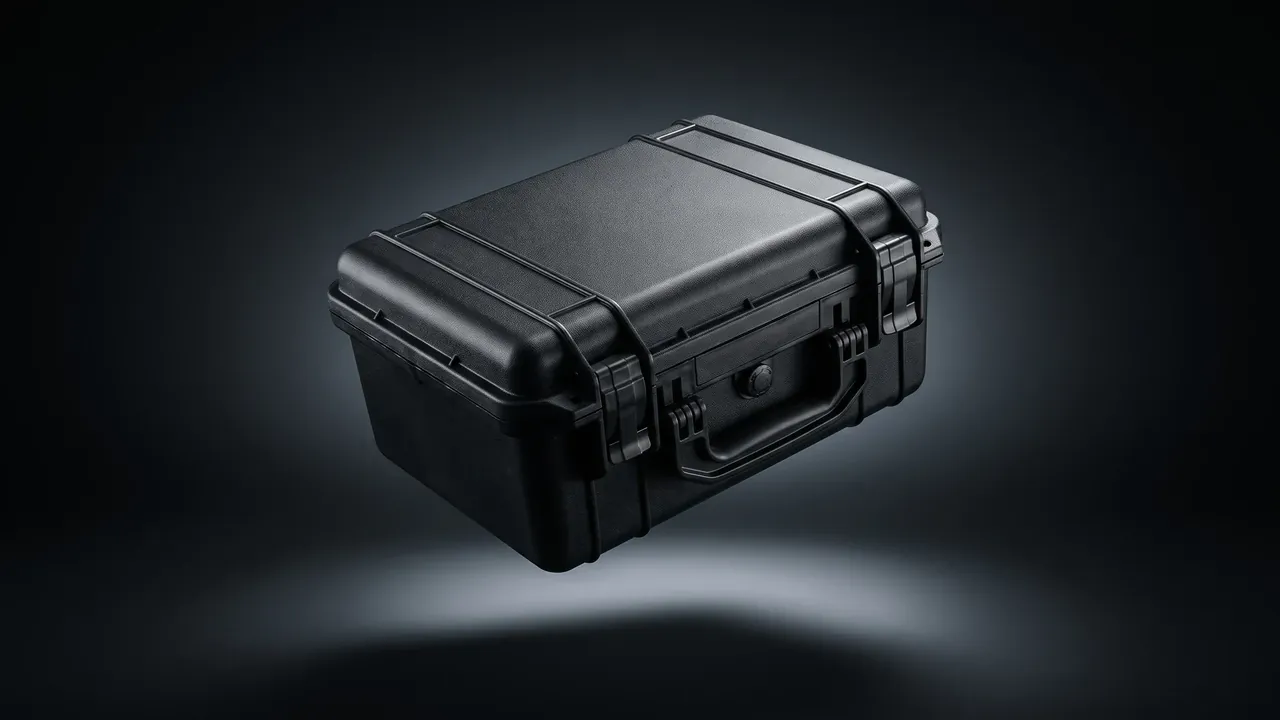
- Check that the inner cavity leaves enough cushioning allowance around the contents
- Confirm the gasket is fully seated, without twisting or gaps
- Open and close each latch to confirm even closing pressure with no play
- Check that insert cavities fit the contents profile without looseness
- Confirm the assembly strength of hinges and handles
- Request the test documentation agreed in the contract
Conclusion
To judge whether a submachine gun storage box is fit for purpose, reduce it to three questions: does it locate the contents through a fitted insert, does it keep a stable micro-environment through a gasket, and can its shell and hardware survive repeated opening and closing? In practice, measure the contents first, work back to insert thickness, wall thickness and material, and verify item by item with the checklist.
This article only discusses the specifications and design meaning of the container (case body) side and does not cover any operation, loading or use of the items inside.
Related Reading
- Selection and comparison thinking for submachine gun storage cases
- Seal performance and maintenance cycles of submachine gun storage boxes
- How to read the specifications of ammunition protective boxes
Related Products
- 8 Series — Gun Cases; Military Equipment Cases; Camera Equipment Cases; Drone Cases; Watch Cases; Knife Cases; First Aid Cases; Electronics Equipment Cases
- WL8-2812 PP Gun Case — model WL8-2812
- All protective cases and toolboxes: 7 series, 158 models