

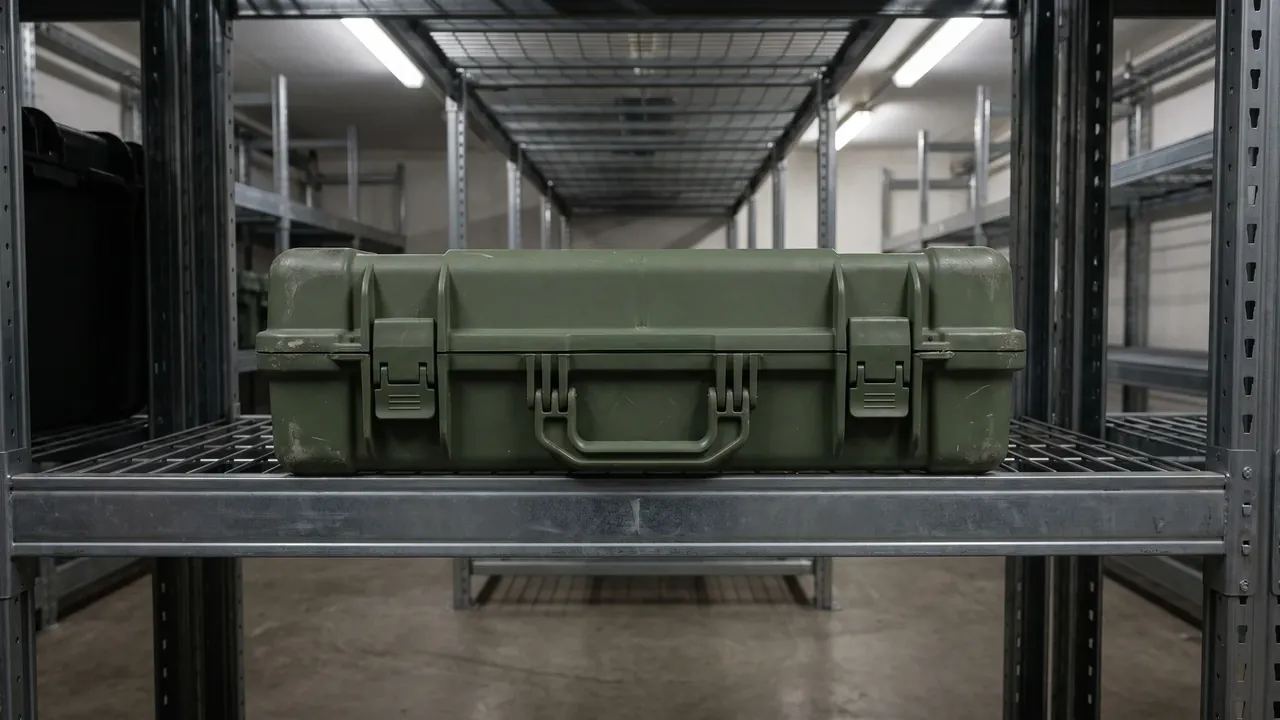
Quick answer: Choosing a submachine gun storage case is not about the largest cavity. Four hard specifications decide it: cavity length, foam cutout depth, net height after lid compression, and latch-to-strap matching. Short-body contents leave spare length, so the real bottlenecks are the vertical direction and cutout accuracy. Measure the contents at their largest outline, work back with 10 to 20 mm cushioning per side, then verify compressed net height.
Table of contents
- Start With Stowage Geometry, Not Internal Volume
- Foam Cutout Depth and Pocket Wall Design
- Matching Latches, Hinges, and Carry Straps
- Trading Off Sealing Rating Against Portability
- Selection Checklist
- FAQ
1. Start With Stowage Geometry, Not Internal Volume
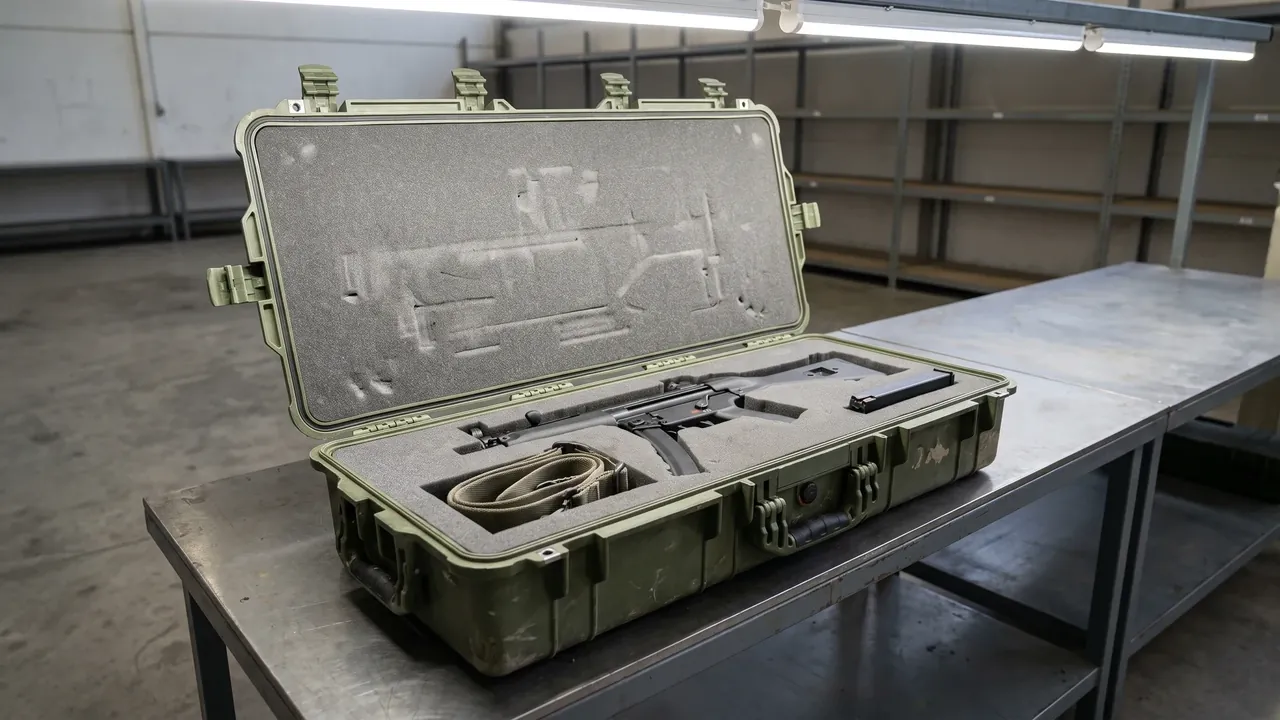
Short-body contents are long but not wide, low but not flat. Spare length is easy to provide, yet a grip, a folding mechanism, or a top-mounted accessory creates a local vertical peak, so the real footprint is taller than the body thickness suggests. Buy by volume and the lid will not close.
- Length: measure the longest point. The 400 to 700 mm range is common, so leave at least 15 mm at each end of the cavity.
- Height: measure the highest peak, including top-mounted accessories, then recalculate against compressed net height. This is where most projects fail.
- Width: measure the widest point, typically a grip or a side-folding part, or contents cannot seat fully.
2. Foam Cutout Depth and Pocket Wall Design
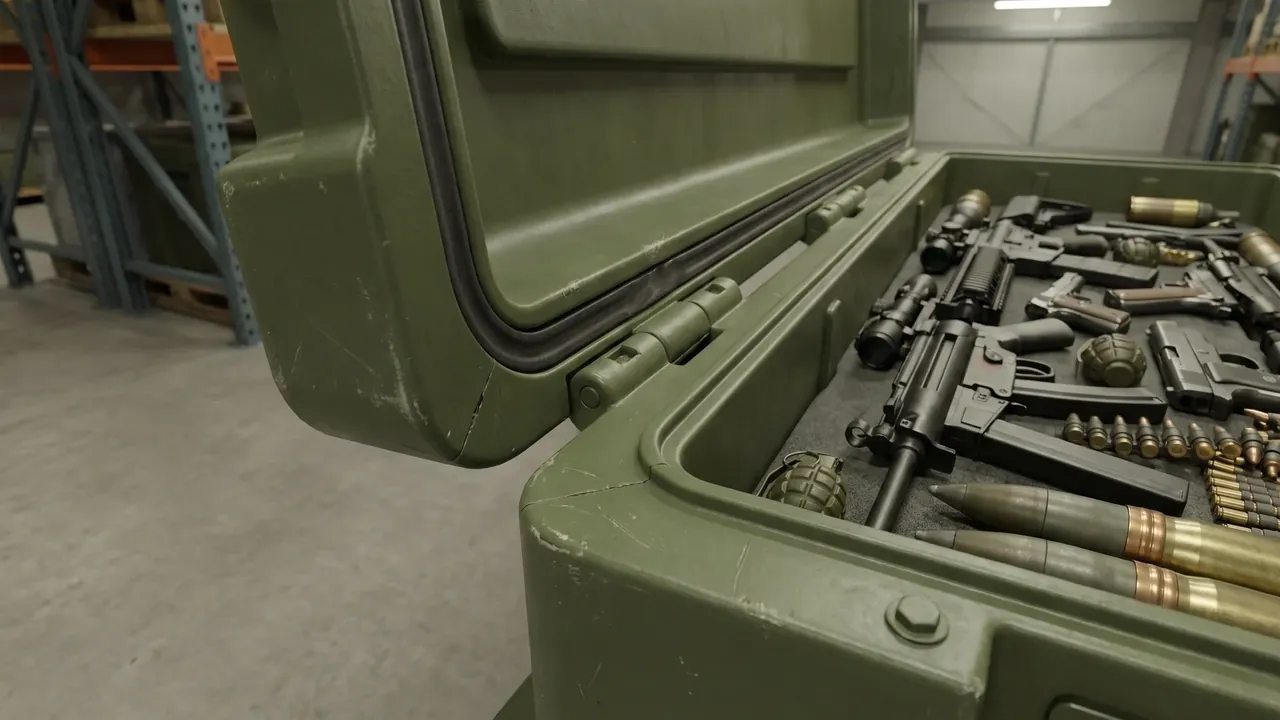
The cutout decides whether contents sit perfectly still. Because short-body contents are slender with local protrusions, use a main pocket plus steps rather than one flat cavity. Set pocket depth at 60 to 80 percent of contents thickness, so the body keeps vertical restraint after seating, and deepen the steps at protruding areas so they settle without pressing into the lid foam. Keep pocket walls at 15 mm or more, or transport vibration will tear them.
A single-piece CNC cutout gives the highest positioning accuracy. Layered inserts suit shapes that change often, while pluckable foam saves tooling cost but gives the least consistent walls.
- Depth: too shallow and contents shift; too deep and removal becomes awkward.
- Walls: 15 mm minimum, thickened on long sides.
- Layers: a load-bearing base, a positioning middle, and a cushioning lid.
3. Matching Latches, Hinges, and Carry Straps
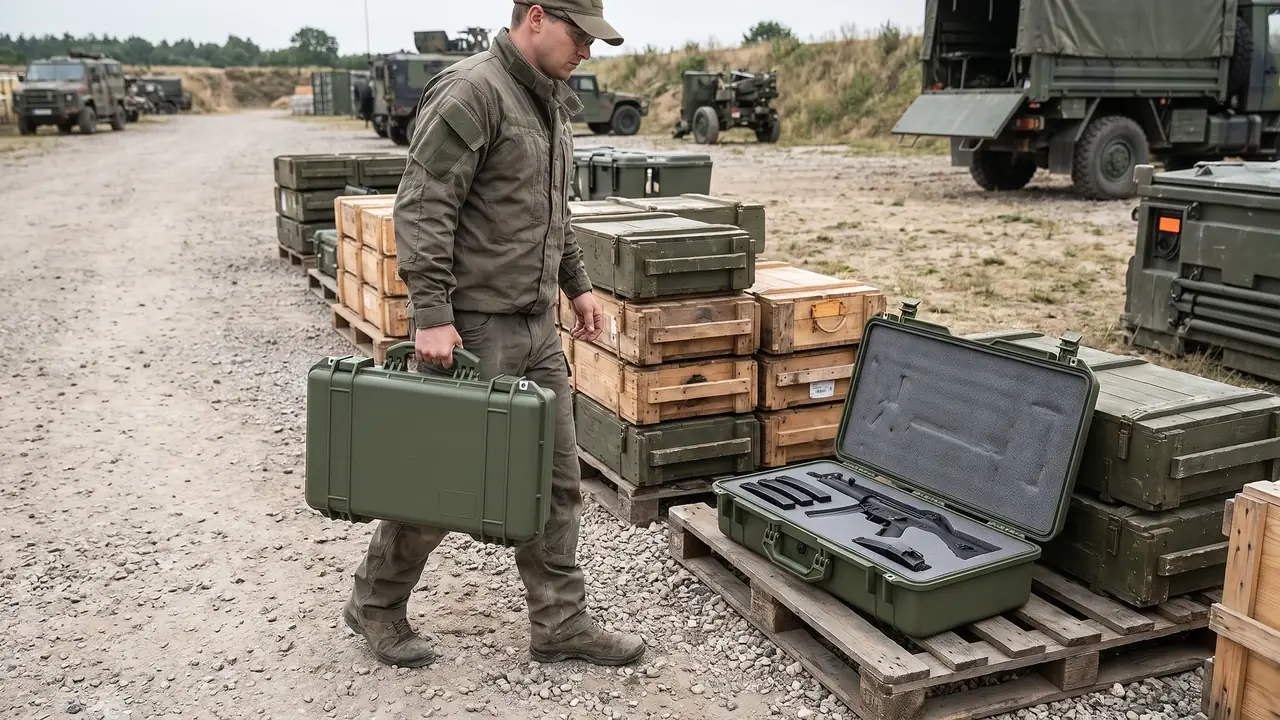
A short case has a shorter long side, which lowers the prying risk of a single latch point, but it is easier to lift with one hand. Latch, hinge, and strap therefore work as one system.
Choose the latch tier by management requirement: a plain latch for controlled storage, a latch with a padlock hole for registered issue, an integrated combination lock for controlled opening, or an air-travel lock combined with a pressure equalization valve and sealing structure. Once the long side passes roughly 500 mm, two-point latching is clearly more stable than a single point. For the hinge, choose a metal pin core and a reinforced boss, since frequent opening on one side otherwise lets the lid sag and the sealing face misalign. Match the strap to full-load weight and anchor it on the center-of-gravity line.
4. Trading Off Sealing Rating Against Portability
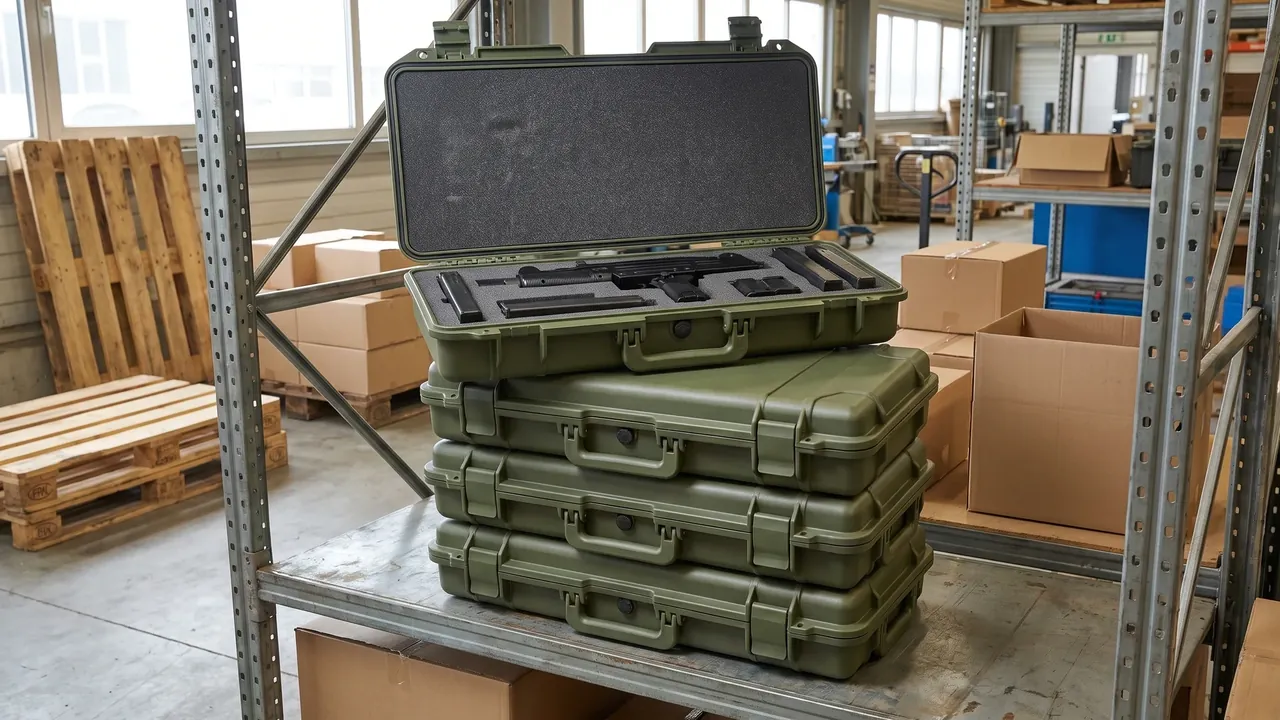
The five specifications pull against one another, so selection is a matter of balance.
| Specification | Direction to increase | Cost of increase | Suggested range |
|---|---|---|---|
| Cavity size | Enlarge to fit accessories | More bulk and weight | Contents outline plus 15 mm per side |
| Foam cutout | Deeper and layered | Machining cost | Depth at 60 to 80 percent of thickness |
| Latch tier | More points and types | Cost, slower opening | Two-point above 500 mm long side |
| Strap and handle | Wider, more anchors | Weight, protruding shape | Anchor on the center-of-gravity line |
| Sealing and valve | Higher class design | Cost and maintenance | Grade by actual environment |
Sealing ratings can only be described by structural design and published standards such as IEC 60529 ingress protection. The actual grade should be confirmed by a third-party test report, not a brochure.
5. Selection Checklist
- The three dimensions were measured at the largest contents outline, including protruding accessories.
- The vertical direction was verified against net height after lid compression, and the case closes.
- The foam approach is fixed, and wall thickness has been checked.
- The latch tier matches the management requirement, and latch points match the long side length.
- The strap anchor sits on the center-of-gravity line, and full-load weight stays comfortable.
Conclusion
Selecting a submachine gun storage case follows one main line: define the cavity from stowage geometry, define positioning from the foam cutout, and define management from the latch and strap. Compressed net height, pocket depth, and wall thickness are the most underestimated of the five specifications and generate the most rework. Next, measure the contents once in their final resting posture and request the actual cavity dimensions and foam layout drawing.
Scope note: this article discusses container-side specifications and design implications only, and does not address the operation, loading, or use of items placed inside the case.
Related Reading
- How short-weapon containers differ from general gun cases
- Structure and protection points of a submachine gun storage box
- Latch and size selection logic for pistol storage cases
Related Products
- 8 Series — Gun Cases; Military Equipment Cases; Camera Equipment Cases; Drone Cases; Watch Cases; Knife Cases; First Aid Cases; Electronics Equipment Cases
- WL8-2812 PP Gun Case — model WL8-2812
- All protective cases and toolboxes: 7 series, 158 models