

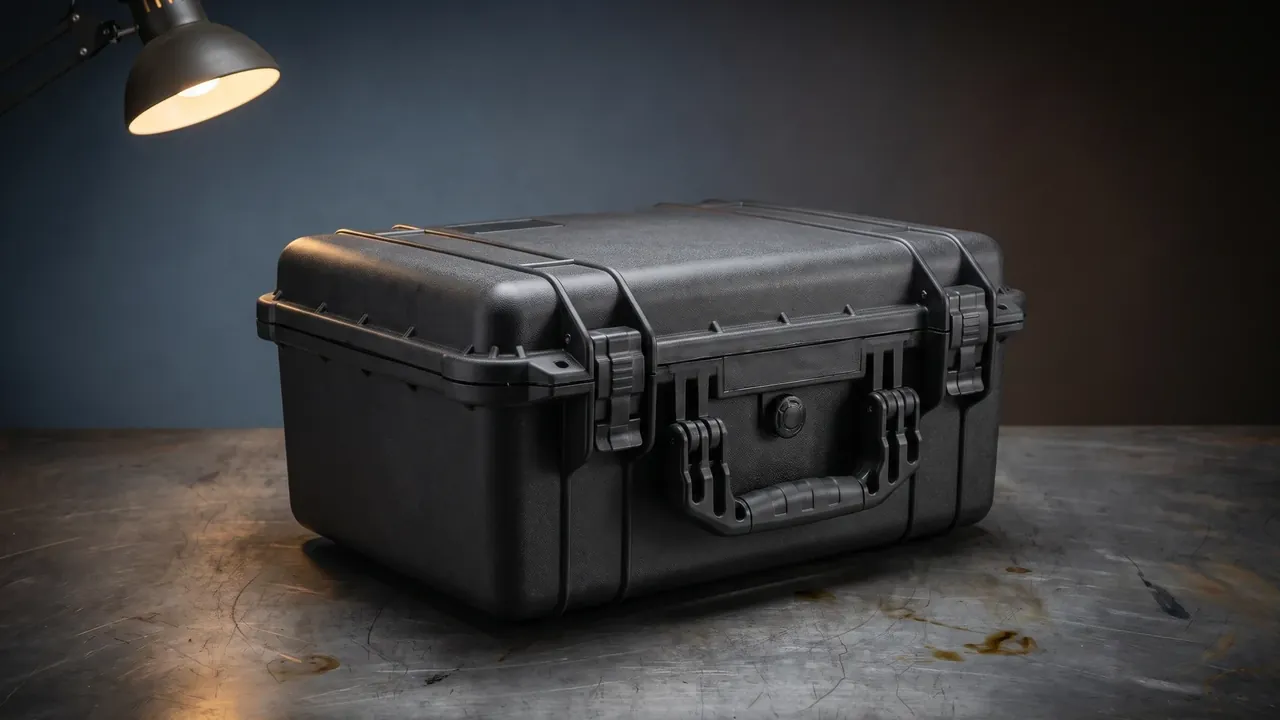
Quick answer: The difference between a submachine gun storage case and a general gun case is not capacity but the stowage geometry of a short weapon body. Short-body contents leave spare length and peak vertically, while a general gun case is a deep cavity that clamps contents between thick foam. A purpose-built short-body container relies on a shallow, wide cavity and precise cutouts, using shape restraint instead of compression restraint.
Table of contents
- How the Two Stowage Geometries Differ
- Cutout Depth and Cavity Layering Compared
- Center of Gravity and Portability Differences
- Short-Body Fit Across Five Container Types
- Comparison Checklist
- FAQ
1. How the Two Stowage Geometries Differ
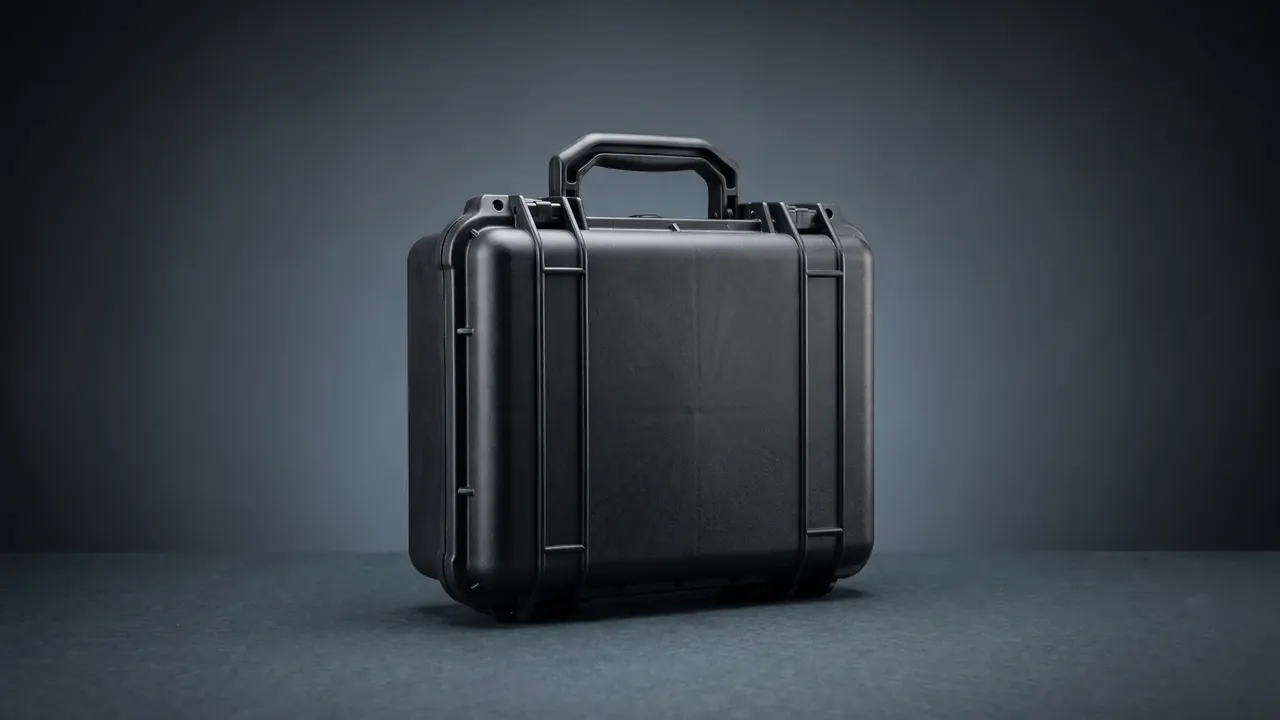
A general gun case starts from long, straight stowage: a deep cavity that clamps contents between two thick foam slabs. Short-body contents have the opposite profile. They are shorter but carry many local protrusions, and a grip or a top accessory makes the vertical footprint far larger than the body thickness. Drop that into a deep cavity and the lid foam is pushed up from below.
- Length: a general case leaves a large margin, so short-body contents slide. A purpose-built container removes surplus length.
- Height: a general case has a tall, fixed net lid height, so protrusions press on the lid.
- Width: short-body contents are often folded or spread sideways, so width demand is higher than expected.
2. Cutout Depth and Cavity Layering Compared
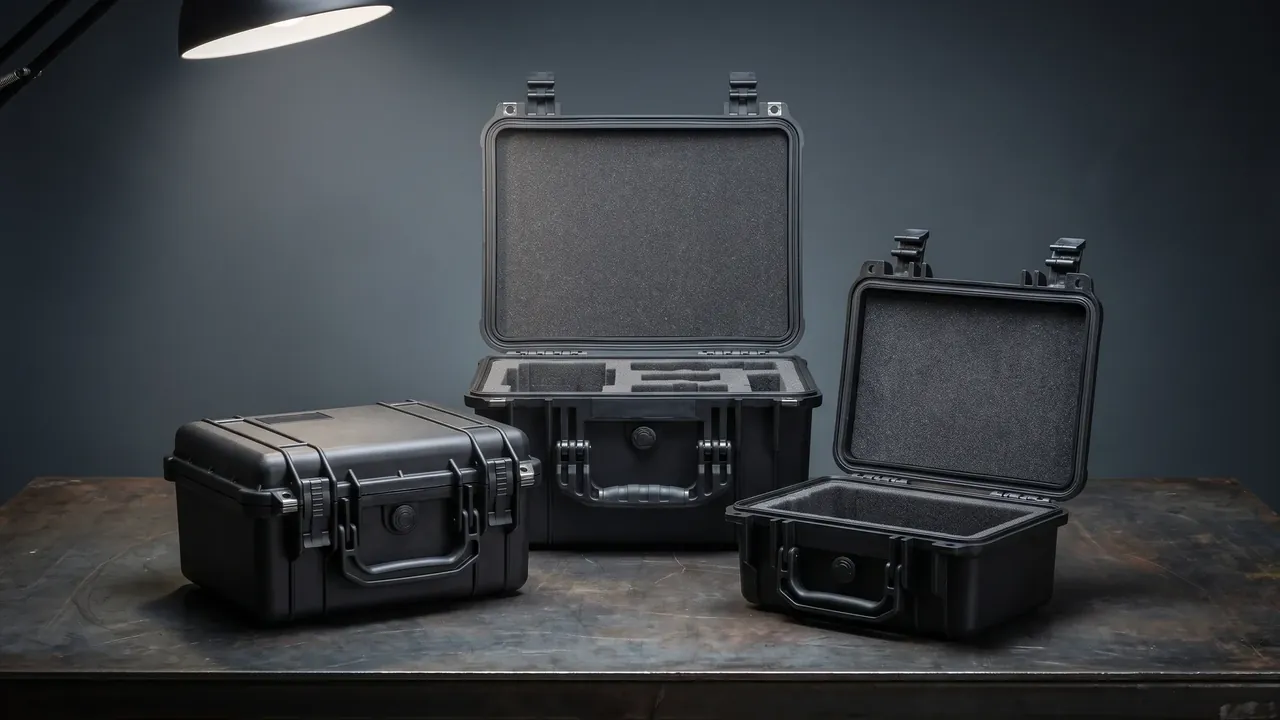
The two follow different restraint routes. A general gun case is mainly compression restraint, where foam resilience presses contents tight and positioning depends on rebound consistency. A short-body container is mainly shape restraint, where the cutout profile holds a fixed posture and foam only cushions.
| Item | General gun case | Short-body purpose-built container |
|---|---|---|
| Restraint | Compression by rebound | Shape by cutout |
| Repeat positioning | Lower, foam dependent | Higher, cutout dependent |
| Contents change | Replace the whole slab | Replace the positioning layer |
| Typical cavity | Deep and narrow | Shallow and wide |
A purpose-built container more often uses three layers: a load-bearing base, a positioning middle, and a cushioning lid. Wear then requires replacing one layer rather than re-machining the whole block.
3. Center of Gravity and Portability Differences
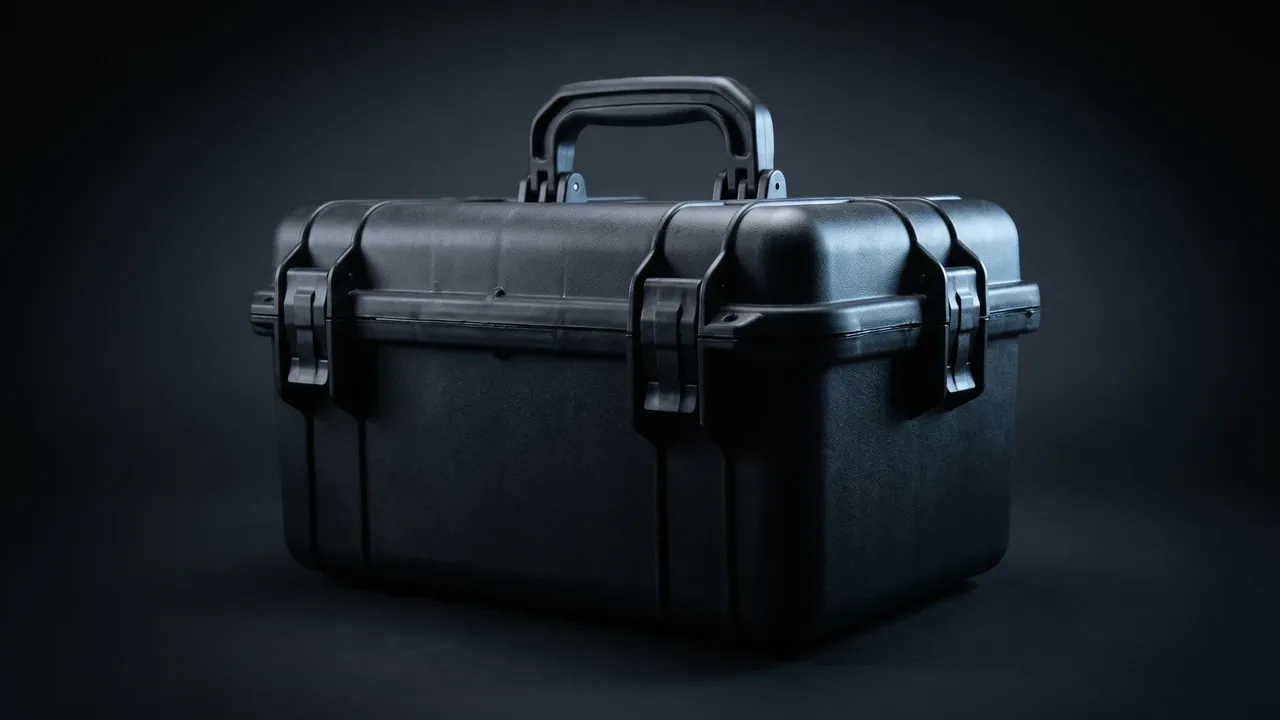
Short-body contents sit closer to the middle of their own mass, unlike long items that push weight toward one end. A general gun case keeps long-case proportions: a lower center of gravity but surplus length, so it swings when lifted one-handed.
- Length-to-width ratio: a general case consumes more length in a vehicle or on a rack, while a purpose-built container is closer to a rectangle.
- Anchor position: when the handle anchor sits on the projection line of the center of gravity, the case stays level; an offset anchor loads the lid edge alone.
- Load at full weight: spreading contents across a wide surface lowers load per unit area.
Better portability does not mean weaker protection. A shallow, wide cavity can still carry a sealing structure and a pressure equalization valve, though those features consume lid-edge space.
4. Short-Body Fit Across Five Container Types
| Container type | Geometry fit | Positioning | Portability | When it makes sense |
|---|---|---|---|---|
| General gun case | Medium: spare length, deep height | Thick foam clamping | Long, swings | Mixed contents, low frequency |
| Pistol-type container | Low: short in both directions | Shallow cutout | Light | Shorter, smaller contents |
| Short-body container | High: shallow cavity shaped to protrusions | Cutout plus layers | Stable, centered anchor | Fixed posture, frequent carrying |
| Soft gun bag | Medium: no fixed shape | Elastic strap or none | Lightest | Short trips, low demand |
| General instrument case | Medium-high: similar cavity ratio | Single-piece cutout | Stable but heavy | Rebuilt insert |
Fit is decided not by price but by whether the geometry matches the protruding profile of a short weapon body.
5. Comparison Checklist
- Confirmed a vertical protrusion exists, and measured the highest point.
- Assessed whether a deep general cavity would cause sliding and lid contact.
- Decided whether a fixed posture is needed, choosing cutout or clamping.
- Compared length-to-width ratio and stacking footprint across both types.
- Checked that the handle anchor sits on the center-of-gravity line.
Conclusion
The split between a submachine gun storage case and a general gun case is a split between compression restraint and shape restraint. Short-body contents concentrate protrusion vertically, and the deep cavity ratio of a general case is misaligned with that. Three questions decide it: is there a vertical protrusion, is a fixed posture required, and is frequent carrying involved.
Scope note: only the container-side specifications and design implications are covered here; no operation, loading, or use of the items held inside the case is addressed.
Related Reading
- Size and foam cutout selection method for submachine gun storage cases
- Structure and protection points of a submachine gun storage box
- Selection priorities for military firearm storage cases
Related Products
- 8 Series — Gun Cases; Military Equipment Cases; Camera Equipment Cases; Drone Cases; Watch Cases; Knife Cases; First Aid Cases; Electronics Equipment Cases
- WL8-2812 PP Gun Case — model WL8-2812
- All protective cases and toolboxes: 7 series, 158 models