

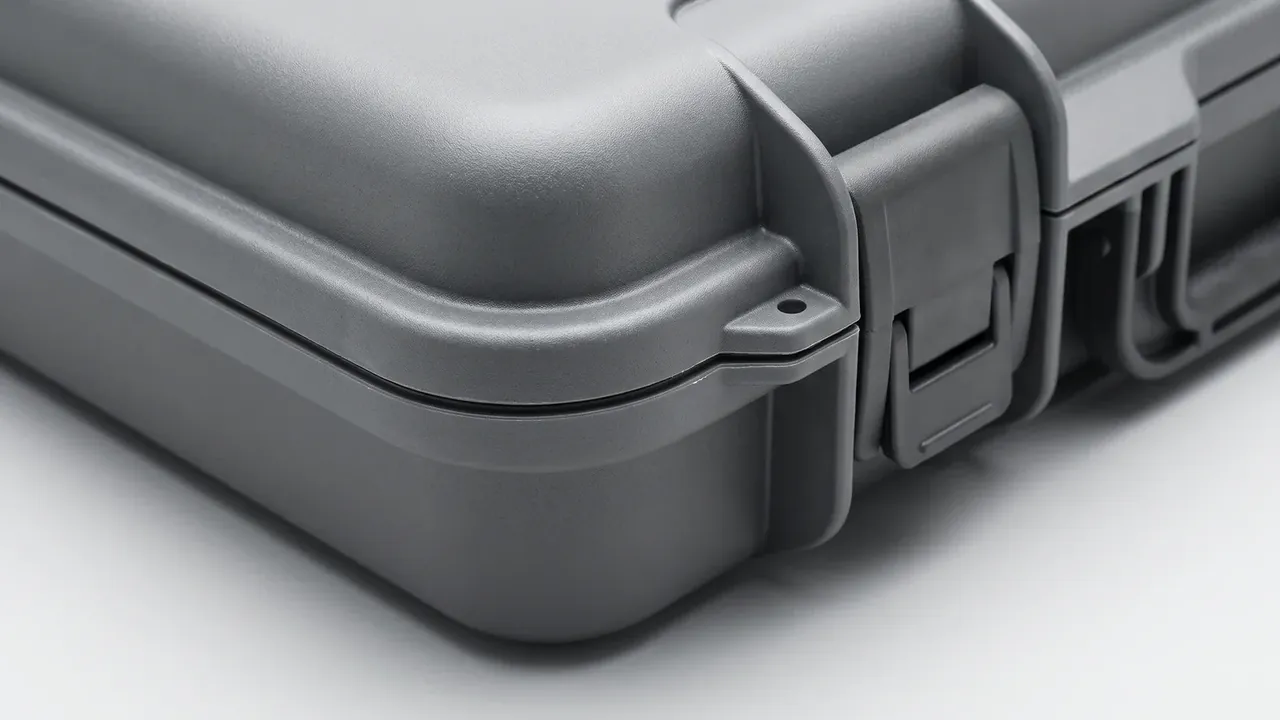
Quick answer: Buying a tactical hard case comes down to four documents — a quotation split into lines, an MOQ table with volume steps, a clause on tooling and cut-out amortisation, and a delivery table with a stated start date. With all four, prices compare and dates bind.
Table of contents
- What a Tactical Hard Case Quotation Should Break Out
- Order Quantity, Tooling and Cut-Out Amortisation
- Delivery Milestones From Deposit to Dispatch
- Samples and First Article in Three Rounds
- Payment, Inspection and Liner Change Control
- FAQ
1. What a Tactical Hard Case Quotation Should Break Out
Moulding, hardware, liner, assembly and testing are five costs, yet quotes arrive as one delivered price. Split the lines and fix a unit for each.
| Line | Unit | Variable to confirm |
|---|---|---|
| Shell moulding | per unit | Shot weight, cavities, cycle |
| Hardware | per set | Latch material and count, valve model |
| Liner | per set | Foam density, layers, cut-outs |
| Assembly | per unit | Label, carton or crate |
| Testing | per lot | Sample rate, report format |
One shell off an 850-tonne press, single cavity, 95-second cycle, takes a 2.9 kg shot at 12.6 per kg, so material lands near 36.5. A shell quoted at 32 has cut shot weight or grade, so ask about wall thickness.
2. Order Quantity, Tooling and Cut-Out Amortisation
A tactical hard case MOQ falls out of cavities, colour purging and the economic run for one press slot: 200 units in dark grey, 500 in sand, which needs a 3-hour purge.
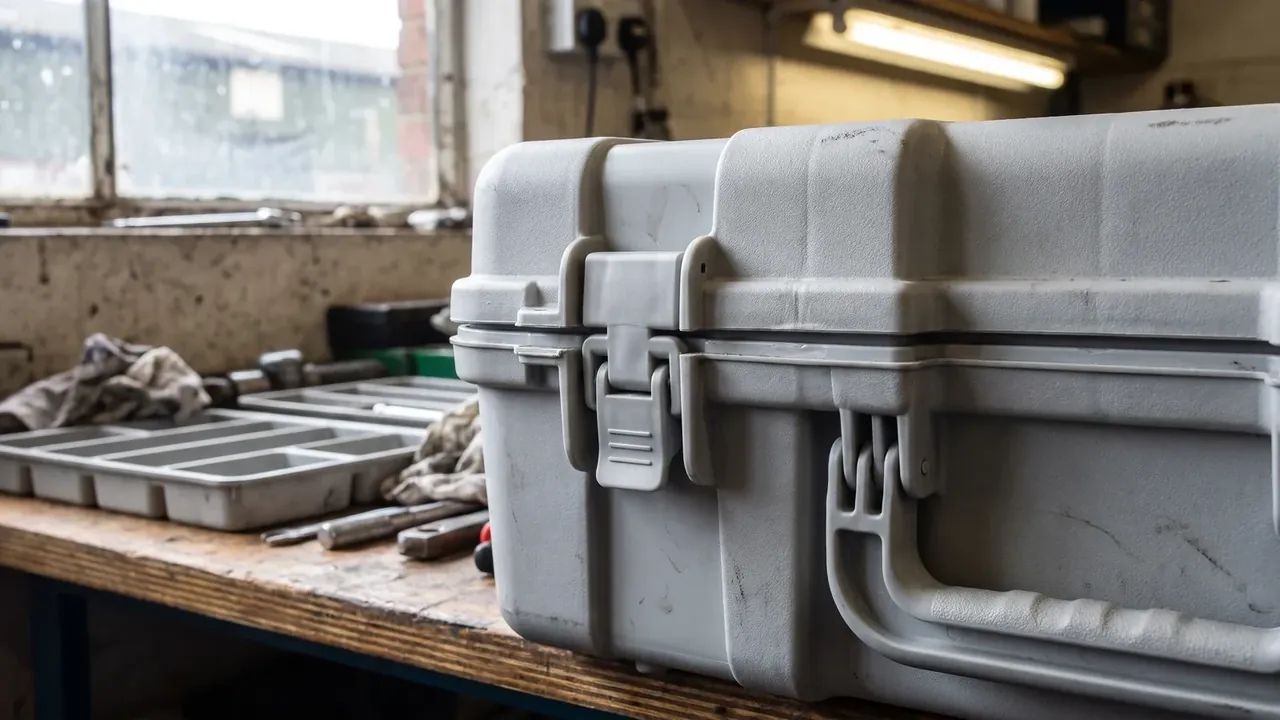
Tooling is paid once but spread across the order: a single-cavity steel tool at 86,000 is 86 per unit over 1,000 and 28.7 at 3,000.
Cut-outs are the line most often missed: locating holes, panel openings and strap points run on a CNC at 9 per hole, 700 per program and 2,400 for a fixture, spreading to 1.2 at 2,000 units and 8 at 300.
| Order | Tooling per unit | Fixture per unit | Combined |
|---|---|---|---|
| 300 | 286.7 | 8.0 | 294.7 |
| 1,000 | 86.0 | 2.4 | 88.4 |
| 2,000 | 43.0 | 1.2 | 44.2 |
| 3,000 | 28.7 | 0.8 | 29.5 |
3. Delivery Milestones From Deposit to Dispatch
Delivery disputes trace to the start date: order, deposit and sign-off can sit three weeks apart. Write it as 54 days from sign-off and deposit received, so neither side shifts it alone.
| Milestone | Days | Usual snag |
|---|---|---|
| Tool build | 22 | Structure review drags |
| Trial and sample | 5 | Wall and colour retries |
| First article | 7 | Liner drawing revised |
| Production | 18 | Slot insertion, resin arrival |
| Inspection, packing | 2 | Report slower than the truck |
Those sum to 54 days plus 26 by sea to a European base port; keep freight on its own line and leave 5 days before cut-off.
4. Samples and First Article in Three Rounds
Samples never land in one pass: round one judges appearance and colour, round two structure and latch feel, round three the production first article. Each round is signed, keeps 3 units, costs 900 per sample and is refunded past 500 units.
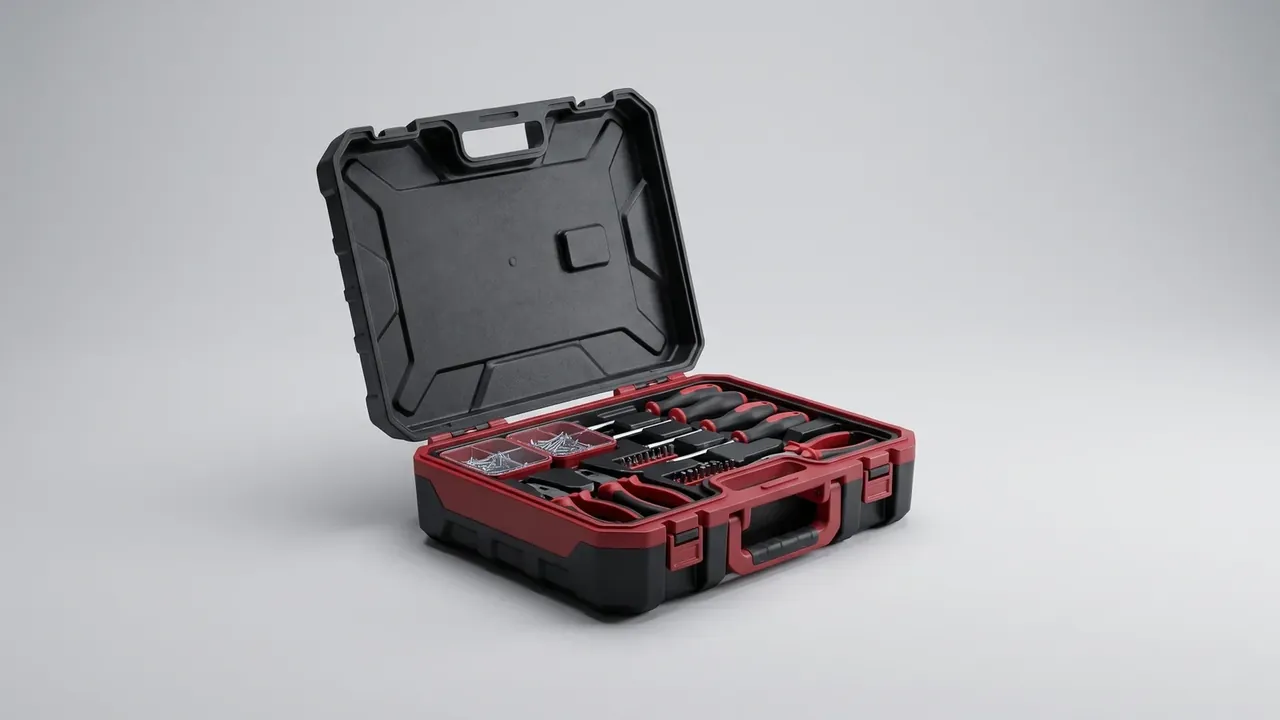
First article checks liner cut-outs against the actual contents, an even lid gap and latch force inside its band. Any change means a new drawing and signature, never a verbal yes; photograph the signed samples.
5. Payment, Inspection and Liner Change Control
Payment and inspection rights travel together. Thirty per cent deposit, sixty on passing inspection and ten within 30 days buys room to fix problems; full prepayment saves 2% to 3% and hands over the risk.
Inspection runs at general level II and AQL 2.5, measuring wall against the first article and cycling each latch three times. A penalty of 0.3% per day capped at 5% earns a slot only once it is in the contract.
Liner changes cause the most trouble: one moved hole means a new program and fixture, and shells already cut past 30 units are scrap. Charge it to whoever asked, on a signed change note. A cut-out revision takes 5 working days at a 100-unit minimum; a colour change adds 3 days at 500.
Conclusion
Procurement terms fit on four sheets: a split quotation, volume-stepped MOQ, a tooling and cut-out clause, and a delivery table with a start date. Attach the change flow to the same file, and the tactical hard case order holds together.
This article discusses only the container (case body) side of specifications and design intent, and does not cover any handling, loading or use of the contents.
Related Reading
- How to choose a tactical hard case by protection and latch system
- Tactical hard case against soft tactical bags
- What supplier qualification review should cover
- Scheduling and delivering mixed orders
Related Products
- 8 Series — Gun Cases; Military Equipment Cases; Camera Equipment Cases; Drone Cases; Watch Cases; Knife Cases; First Aid Cases; Electronics Equipment Cases
- WL8-2812 PP Gun Case — model WL8-2812
- All protective cases and toolboxes: 7 series, 158 models