

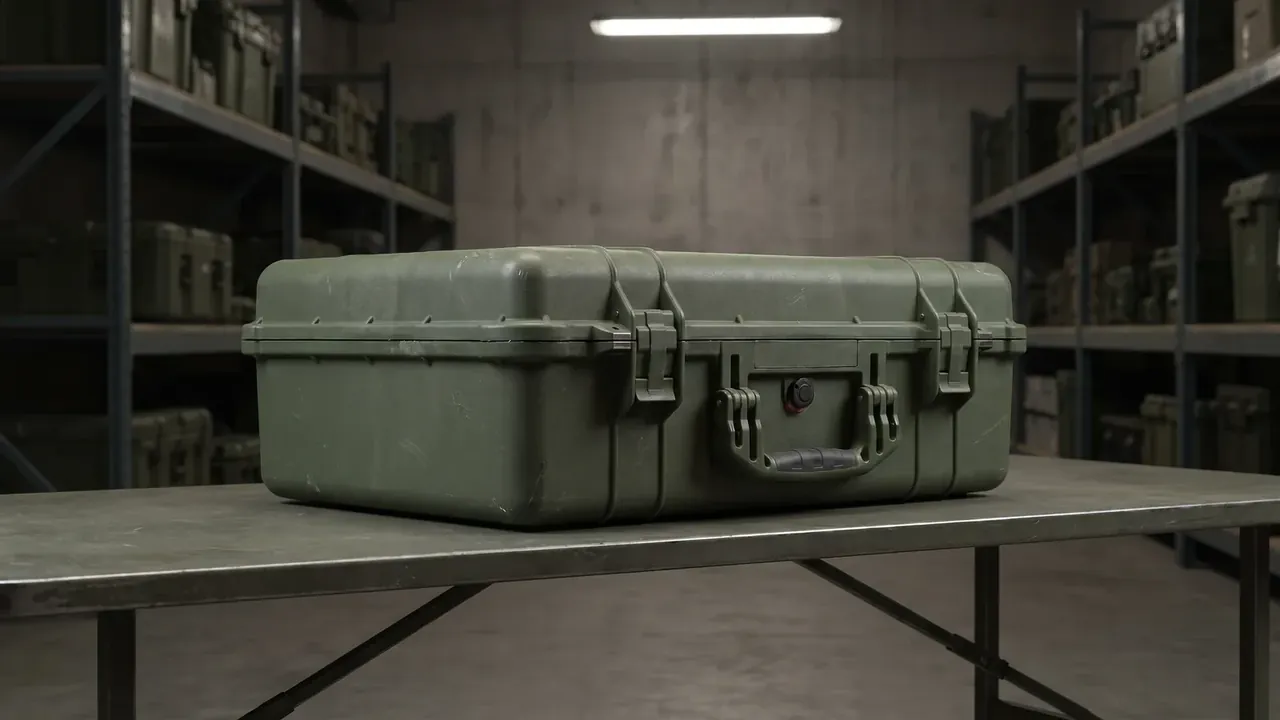
Quick answer: Choose in three passes: size, structure, hardware. Add foam to the largest gear outline for the interior envelope, check rim, wall and hinge, then pick latches and slings. A rating is a design outcome, not a promise; it holds only when groove, clamp and valve are right.
Table of contents
- Where a tactical hard case begins and ends
- Interior envelope, foam and cut-outs
- Carry systems: handles, slings and stacking
- Ratings, latches and storage conditions
- A selection matrix and check sheet
- FAQ
1. Where a tactical hard case begins and ends
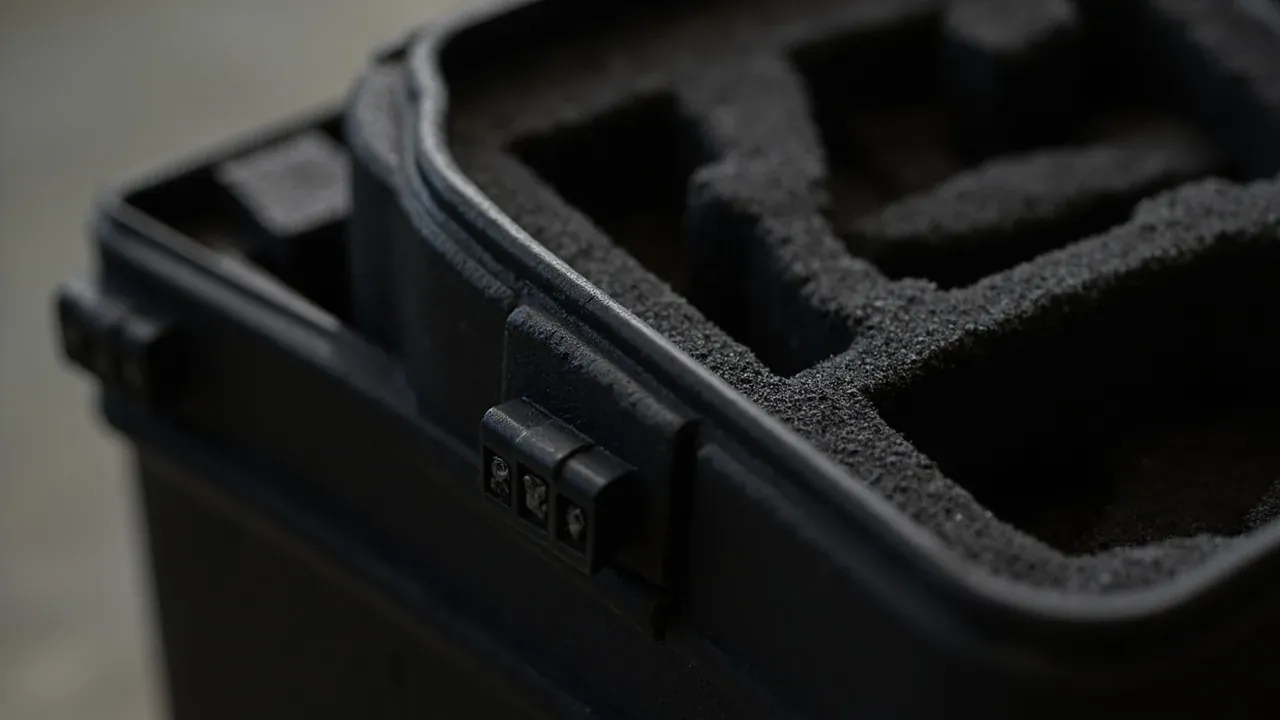
A tactical hard case is a rigid box moulded in one piece from engineering plastic, distinguished by a seamless shell, a swappable gasket and latches that pull the lid along the whole rim. Its stepped lip forces water and dust along a folded path, and latch arms hook lugs on the base, so long cases need a mid-span latch.
| Feature | Check |
|---|---|
| Rim | Steps, warp |
| Latch | Span, travel |
2. Interior envelope, foam and cut-outs
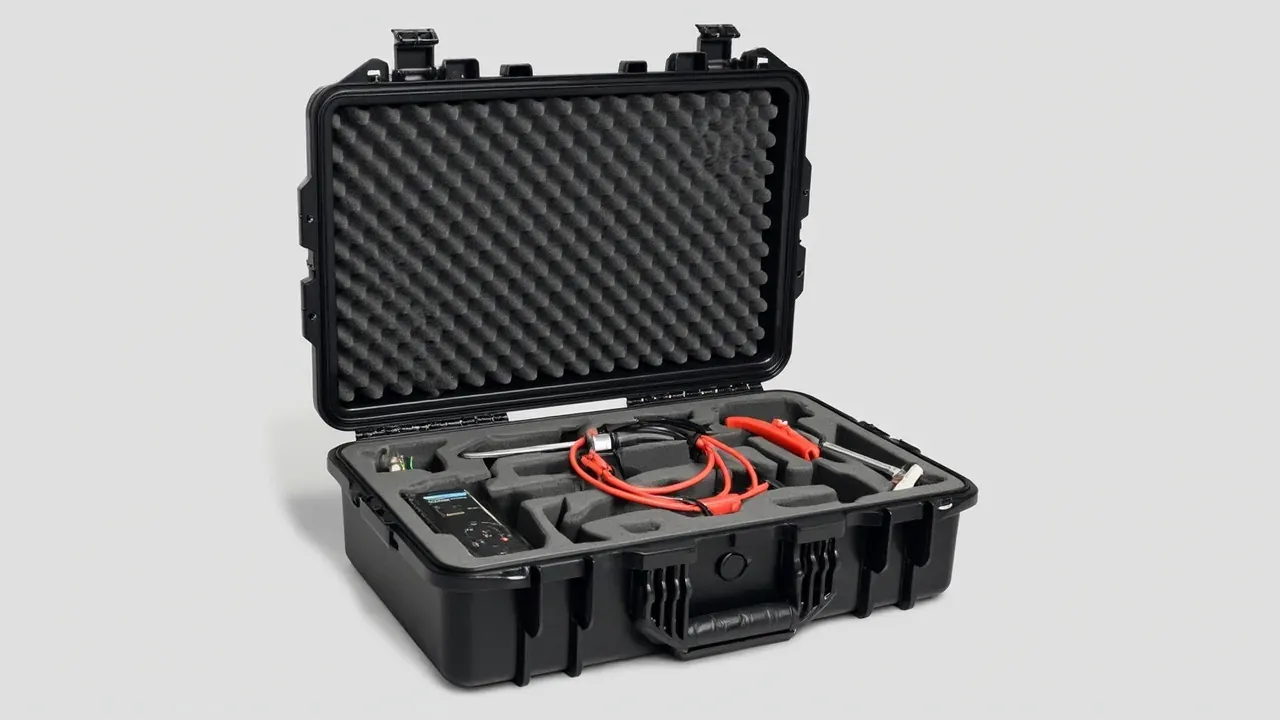
Work backwards: measure the largest outline, add foam and clearance, then confirm lid depth clears the tallest point.
- Measure with rails and optics fitted, worst orientation;
- Allow 15 mm of foam per face, 25 mm or more for heavy items;
- Keep 2 to 3 mm clearance per face, or foam bulges the wall;
- Subtract base and lid foam for usable height;
- Leave 8 to 10 mm between cut-outs.
Die-cut slots suit fixed models in larger runs; dividers suit many models in small runs; pick-and-pluck suits samples.
| Lining | Batch |
|---|---|
| Die-cut | Fixed, tight |
| Pick-and-pluck | Samples, loose |
3. Carry systems: handles, slings and stacking
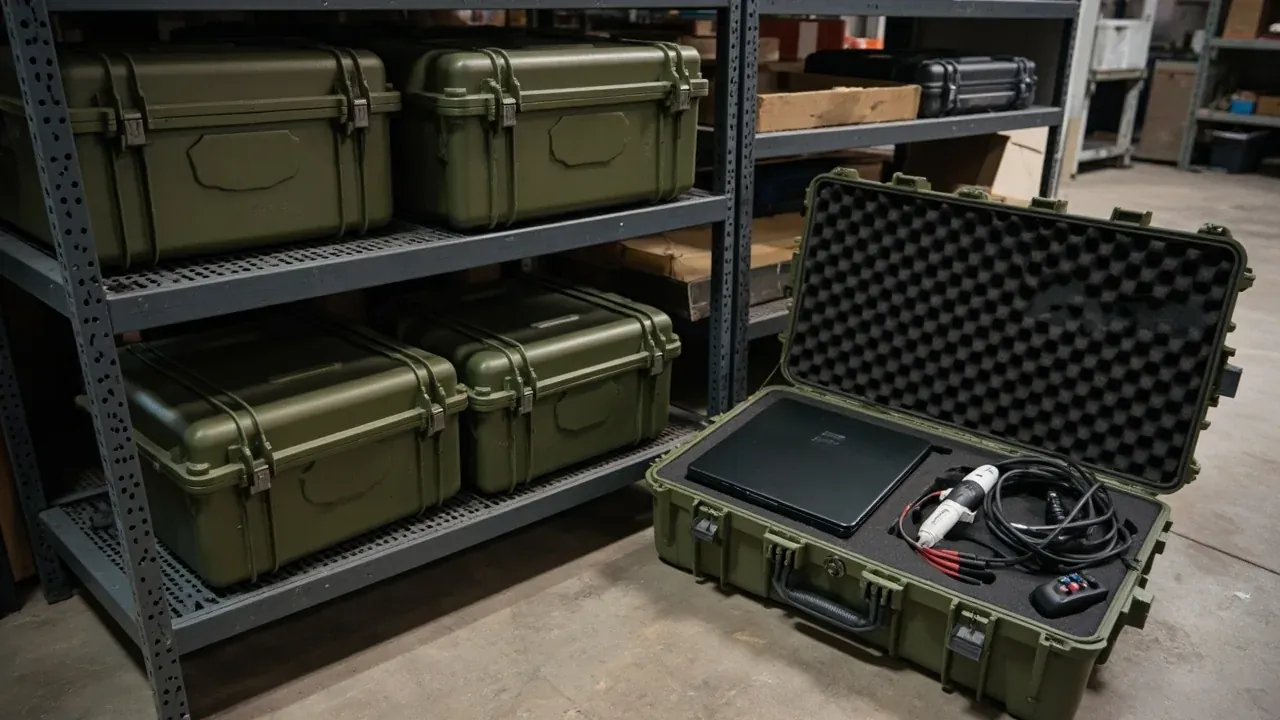
A single-hand handle suits cases up to about 15 kg; its grip must take four fingers, and a shallow recess fails once gloves go on. A lid-centred handle lowers the centre of gravity but forces the case flat to open; a front-face one loads a single side. Two-person lifts need mirrored side handles.
A sling frees both hands but loads the shell harder: anchors belong on reinforced zones or metal rings, never a plastic lug in the lid edge, which tears. Above roughly 400 mm, use a twin harness.
Flat lids with corner recesses stack several high; a raised handle or valve makes point contact, cutting the permitted layers.
| Method | Weight |
|---|---|
| One hand, folding handle | Up to 15 kg |
| Two people, side handles | 20 to 60 kg |
| Shoulder, rings and strap | Up to 20 kg |
4. Ratings, latches and storage conditions
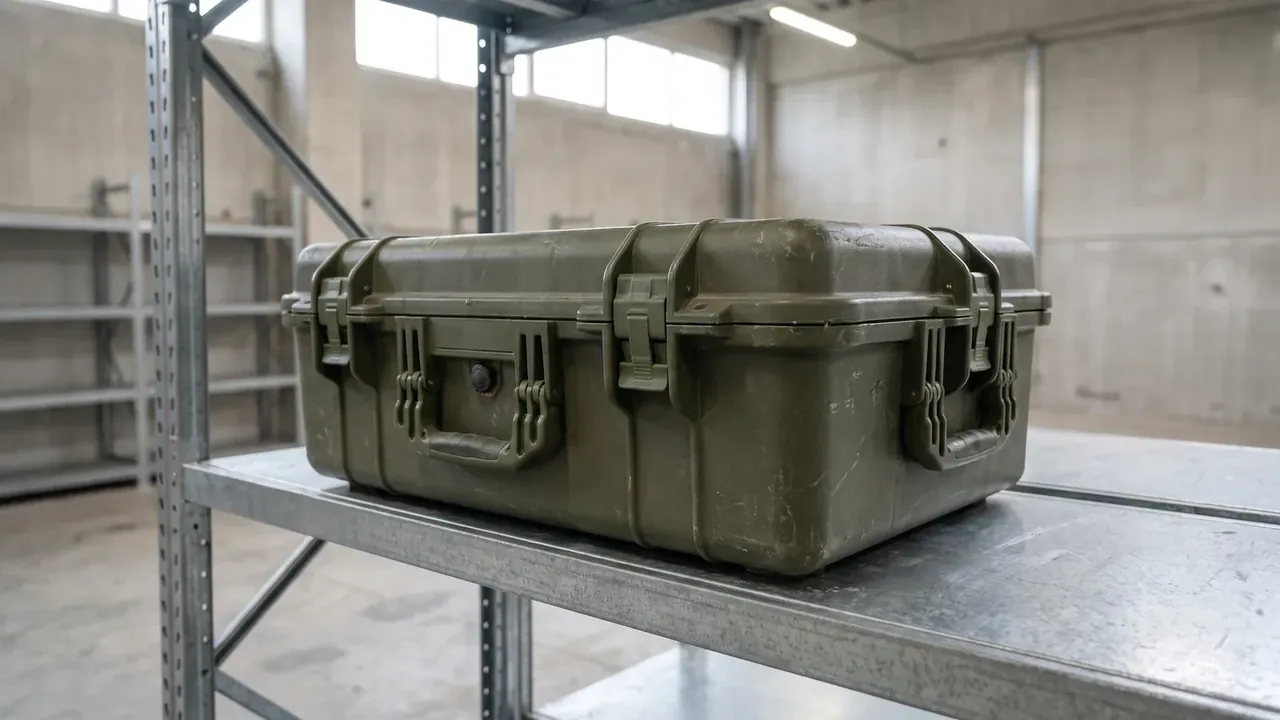
A rating records a design result under test conditions: a case built to IP67 structure targets dust tightness and short immersion, subject to a third-party report.
The groove must confine the cord: a V profile spreads it sideways and tolerates a less flat rim; an O profile recovers as a whole. Silicone suits cold service, EPDM the normal range. Up to 600 mm, one end latch suffices; past 800 mm a mid-span latch is mandatory.
A temperature or altitude swing can pull the lid onto the gasket; the round valve equalises pressure. Store on shelving, not the floor, with short spans.
| Item | Sound or fault |
|---|---|
| Gasket | Seated; cracked |
| Valve | Returns; stuck |
5. A selection matrix and check sheet
No case leads on every axis, so rank by use and state what to relax.
| Use | Protect first | Can relax |
|---|---|---|
| Fixed store | Stack height | Handle fit |
| Vehicle work | Latches | Foam |
| Multi-site | Gasket, valve | Finish |
Five decisions: envelope from gear outline plus foam; structure at rim, wall and hinge; carry hardware; latch and seal by length and climate; rating verified by report.
- Outline measured with protrusions
- Foam and clearance deducted
- Rim lip with two steps
- Mid-span latch on long cases
- Anchors on reinforced zones
- Rating backed by report
Conclusion
Size, structure, hardware: that order keeps a tactical hard case honest. Judge the shell at rim, wall and hinge, and match handles and slings to how the case moves. Latch count follows length, seal grade follows climate, and a test report closes the loop.
This article covers container-side specifications and design implications only.
Related Reading
- How a tactical hard case differs from other rigid case types
- Latch and lock configuration logic for cases
- How foam liners are slotted and bonded
- Wall thickness and impact strength in cases
Related Products
- 8 Series — Gun Cases; Military Equipment Cases; Camera Equipment Cases; Drone Cases; Watch Cases; Knife Cases; First Aid Cases; Electronics Equipment Cases
- WL8-2812 PP Gun Case — model WL8-2812
- All protective cases and toolboxes: 7 series, 158 models