

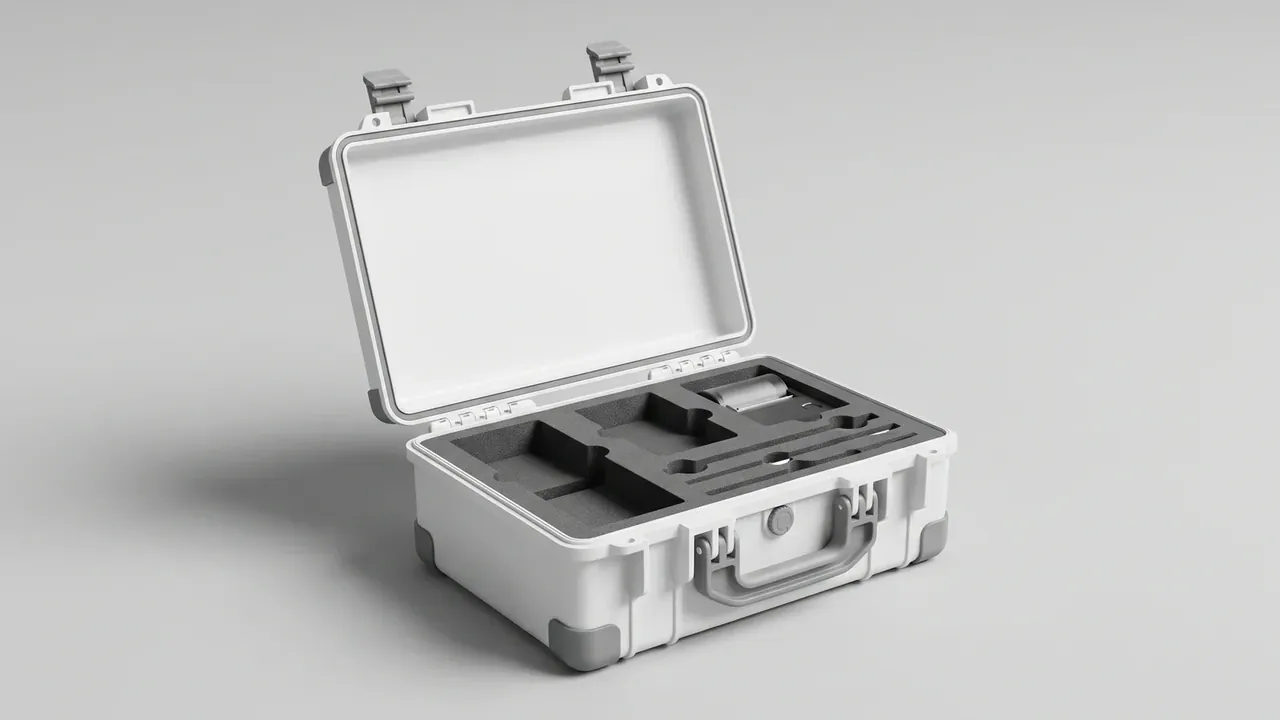
Quick answer: A temperature-controlled case covers four jobs: cold-chain samples, steady heat for medicines and instruments, hold in severe cold, and cooling in a hot vehicle. Change the band, duration, payload or power and the build changes.
Table of contents
- Four Jobs a Temperature-Controlled Case Takes On
- Sample and Pharmaceutical Transfer: A Narrow Band
- Field and Vehicle Use: Power Trade-offs
- Instruments and Optics: Steady and Dry
- Turning Scenarios into a Build Sheet
- FAQ
1. Four Jobs a Temperature-Controlled Case Takes On
A temperature-controlled case is specified by temperature job first: cold chain at 2 to 8 °C for samples, steady heat at 15 to 25 °C for medicines, hold above 0 °C at -30 °C outside, and cooling under 25 °C when a parked vehicle reaches 55 °C. Three constraints follow: duration, payload, power. Under 12 hours gel packs are enough; past 24 hours heat loss and battery swaps take over; at 72 hours insulation thickness decides.
Payload sizes the case and its carriage: under 6 kg in one hand, over 12 kg on wheels; empty weight eats thirty to fifty percent of payload.
| Job | Band | Ambient | Duration | Method |
|---|---|---|---|---|
| Cold chain | 2 to 8 °C | 35 °C | 12 h | Gel packs, foil |
| Steady heat | 15 to 25 °C | -10 °C | 24 h | 48 W, two 10 Ah |
| Hold | Above 0 °C | -30 °C | 7.5 h | 48 W, 20 Ah |
| Cool | Under 25 °C | 55 °C | 6 h | Peltier, venting |
2. Sample and Pharmaceutical Transfer: A Narrow Band
The narrowest link is 2 to 8 °C across 12 hours at 35 °C ambient. No compressor: precooled gel packs and a low-conductivity wall do the work, since a compressor stops with the power.
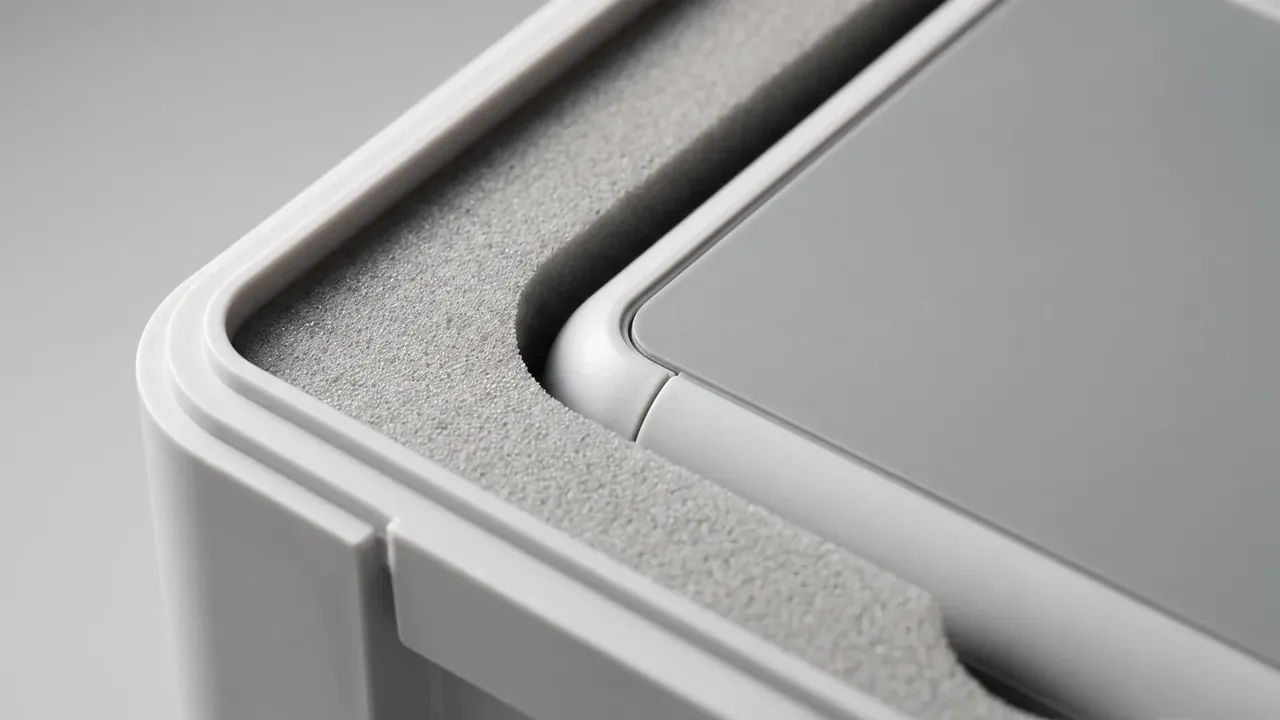
Work back from payload: a 4.5 kg rack takes 1.8 kg of gel pack and a 15 mm air gap, so the near side stays above 0 °C. Pre-chill 30 minutes at 5 °C; freeze packs 24 hours at -18 °C.
Validation reads three numbers: a 6.4 °C peak and 2.9 °C low, rebound under 1.2 °C after three 40-second openings, with probes top, middle and bottom and the worst value deciding.
3. Field and Vehicle Use: Power Trade-offs
Field work asks a temperature-controlled case to survive cold, vibration and power at once. Holding 15 °C at -30 °C draws 48 W, and a 20 Ah low-temperature pack lasts 7.5 hours. The battery bay needs its own heater, or capacity falls to sixty percent.
Vehicle supply runs 12 or 24 V through 2.5 mm² cable with a locking plug. A boot at 62 °C is handled passively: a 5 mm air gap and foil facing hold 26 °C without drawing power.
Vibration at 3.5 g goes through four M8 tie-downs at 300 N, nothing opening after a 1.2 m drop. At 4,500 m the air is at 58 kPa, so the breather must take 40 kPa.
4. Instruments and Optics: Steady and Dry
Optics in a temperature-controlled case fail on condensation, not temperature. At 20 °C and 45% humidity the dew point is 7.4 °C, so a case carried in from -10 °C beads water in minutes.
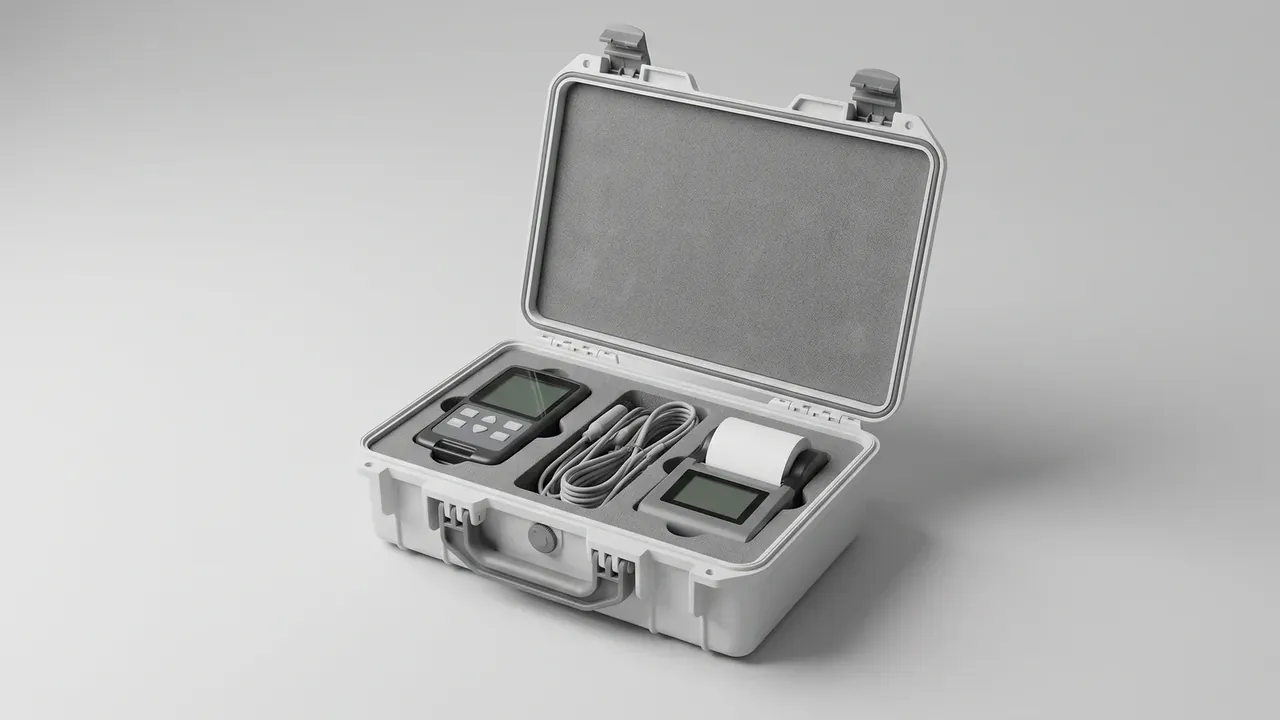
The case slows the return: 20 W of film brings the interior back over 40 minutes and holds the gradient under 45 K per hour.
A 6 kg instrument sits in 8 mm EVA, optics get 25 mm polyethylene, and 20 g of desiccant pulls humidity under 30% and dew point to about 2 °C.
5. Turning Scenarios into a Build Sheet
A build sheet runs in order: band, duration, payload, power, handling. Reverse it and the battery outlasts a case that no longer fits.
Duration is the usual omission: 8 hours take one 10 Ah pack, 24 hours two bays or a swap, past 72 hours a 55 mm wall and a swap hatch.
| Duration | Battery | Wall | Swaps |
|---|---|---|---|
| 8 h | One 10 Ah | 45 mm | None |
| 24 h | Two 10 Ah | 45 mm | One |
| 72 h | Three 10 Ah | 55 mm | Daily |
Where both exist, run dual input that switches in under one second so the controller never resets. Wheels above 12 kg at 75 mm, handles rated at twice the payload.
Conclusion
Scenarios set the build: a narrow band and three probes for samples, long holds and a swap hatch for medicines, cold-rated packs and tie-downs for field work, a slow return and desiccant for optics. Tick band, duration, payload, power and handling in that order, and a temperature-controlled case stops being assembled by guesswork.
This article discusses only the container (case body) side of specifications and design intent, and does not cover any handling, loading or use of the contents.
Related Reading
- Choosing by Band and Power Supply
- Versus a Plain Protective Case
- Electronic Equipment Case Applications
- Emergency Supply Case Scenarios
Related Products
- 8 Series — Gun Cases; Military Equipment Cases; Camera Equipment Cases; Drone Cases; Watch Cases; Knife Cases; First Aid Cases; Electronics Equipment Cases
- WL8-2812 PP Gun Case — model WL8-2812
- All protective cases and toolboxes: 7 series, 158 models