

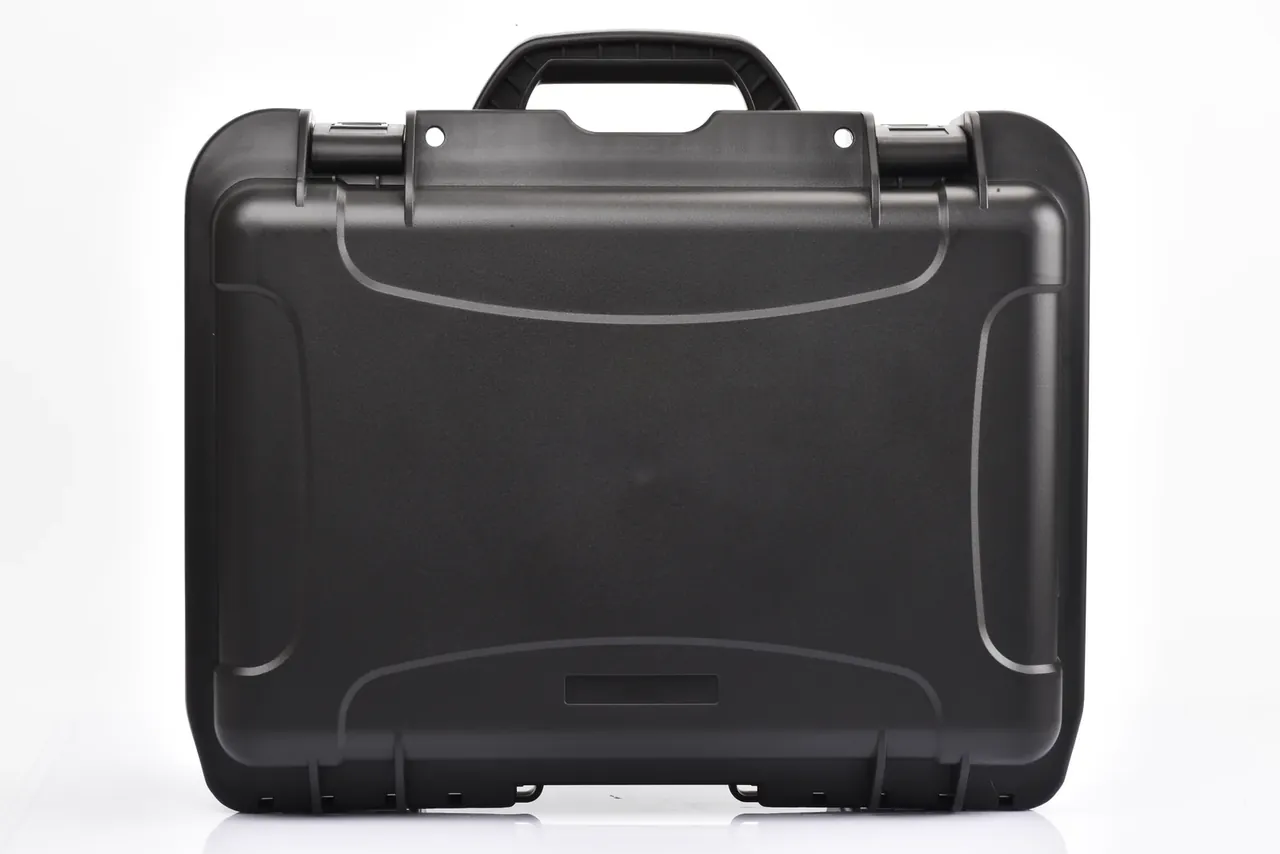
Quick answer: At the depot the case is judged on stacking and counting, in transit on latches that stay shut, in the field on whether one glance shows everything. No case scores full marks in all three.
Table of contents
- What an emergency supply case does at the depot
- Emergency supply case in transit
- The case in the field
- Stage conflicts
- Counts and rotation
- FAQ
1. What an emergency supply case does at the depot
Depot work is four moves: shelving, stacking, counting, issuing. The demands look mild and are the harshest, because one weak detail is multiplied across a rack.
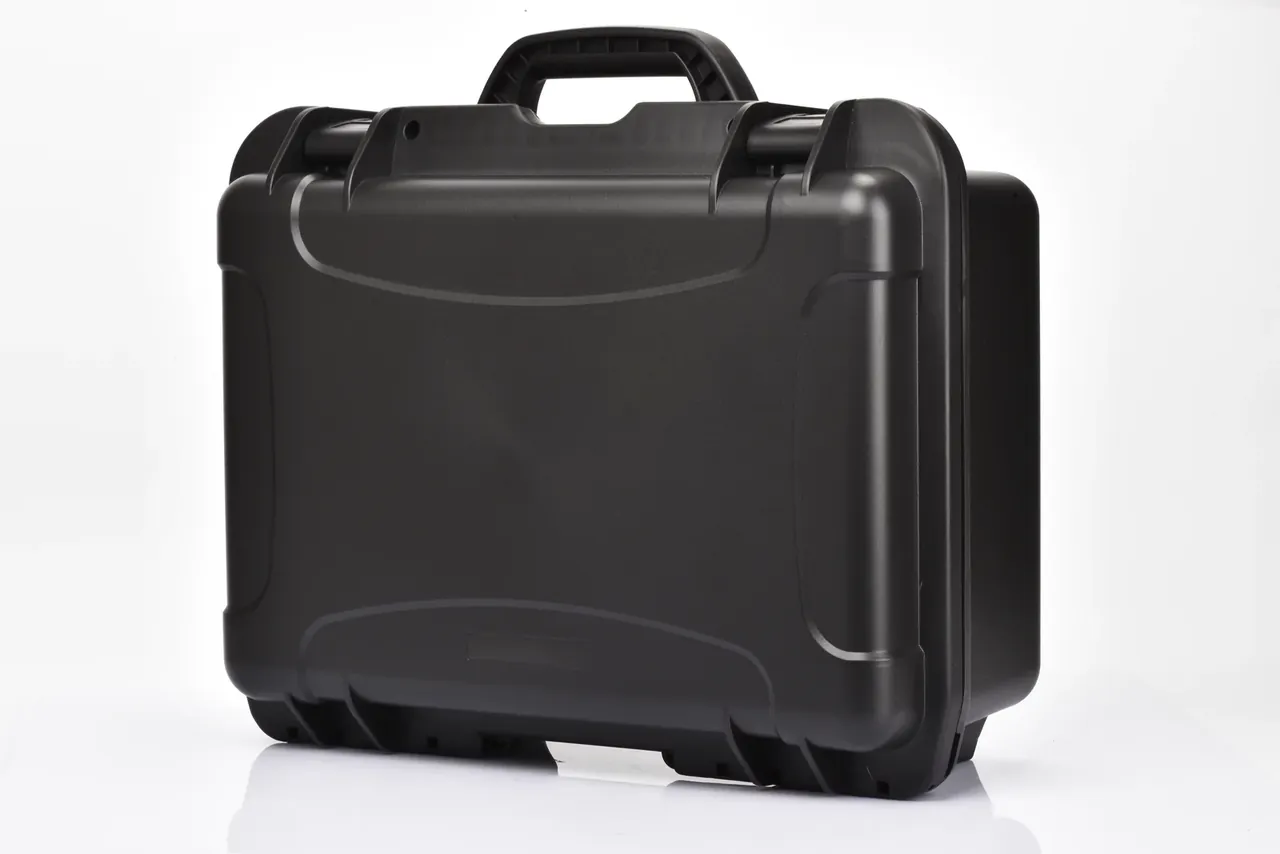
Stack load runs from the upper case floor through its walls into the lid below, and a lid is least stiff at the centre, which is why lids carry a rib across the width; cross two ribs and contact falls on four points. Judge layers by rib direction against the feet, not by wall thickness. Counting is the time sink, so the label belongs on a short side face visible after stacking. Latches stay closed, unlocked.
| Stage | Main moves | Critical structure | Failure sign |
|---|---|---|---|
| Depot | stacking, counting | lid rib, feet, label | stack drift |
| Transit | loading, lashing | latch detent, handle | latch pops open |
| Field | opening, picking | hinge stop, dividers | one pick knocks two |
2. Emergency supply case in transit
Three forces arrive together: vertical stack load, horizontal braking, and a load concentrated at the handle. They land in different places, so stiffening follows them, not wall thickness.
Vertical load sits on the contact band between lid and floor, which is why the lid rim is stepped: the step frames the case above and leads load out to the walls. Draw latches can be pushed open by debris under vibration, so they need a second detent, a short return past the closed position.
Handle roots carry several times the empty-case moment, so the mounting widens into a base that spreads load into the two lid ribs, where cold whitens first. Over distance the lid and body work against each other along the parting line and shear the gasket.
3. The case in the field
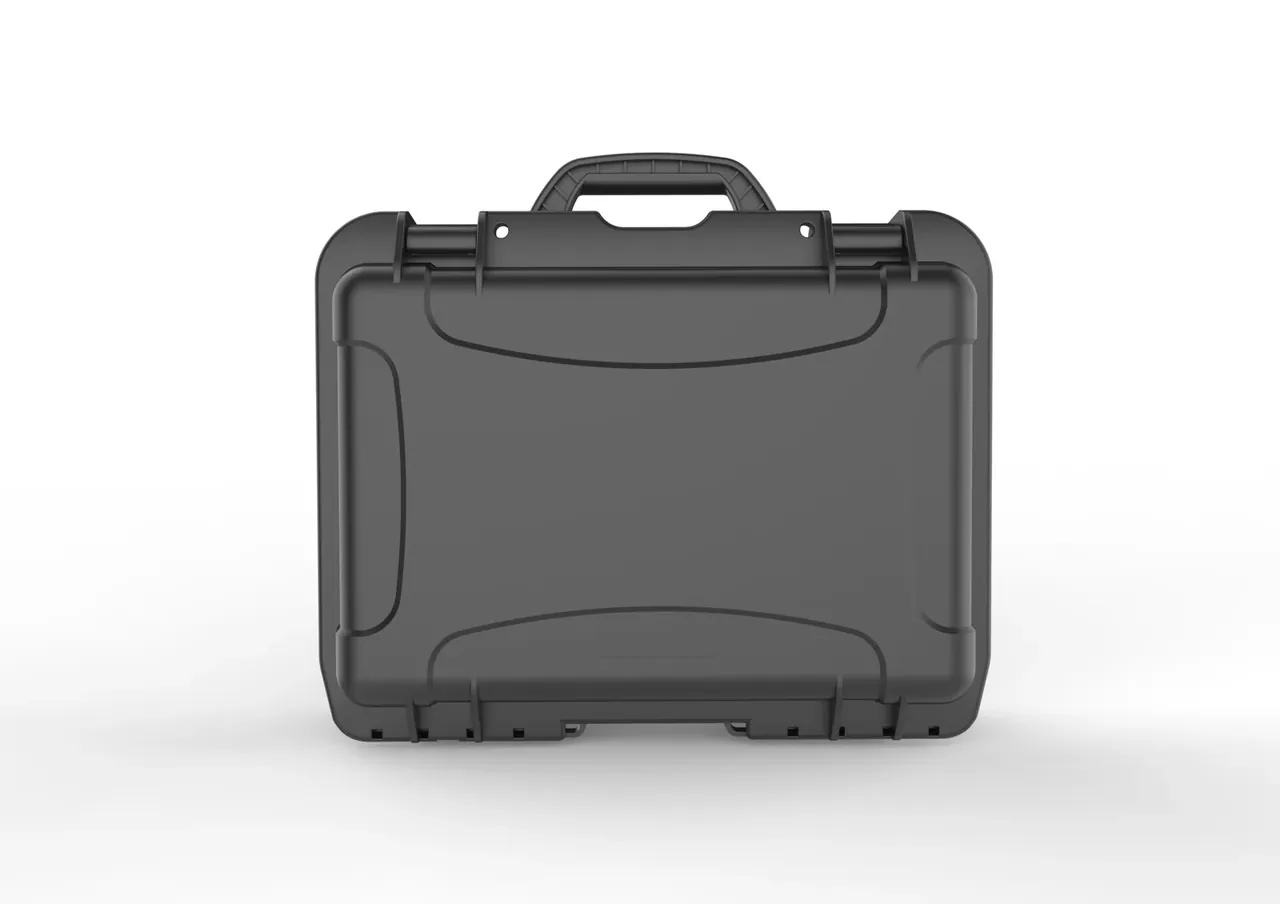
In the field time is counted in seconds: opening, picking, replacing, closing. Any move needing both hands breaks the rhythm.
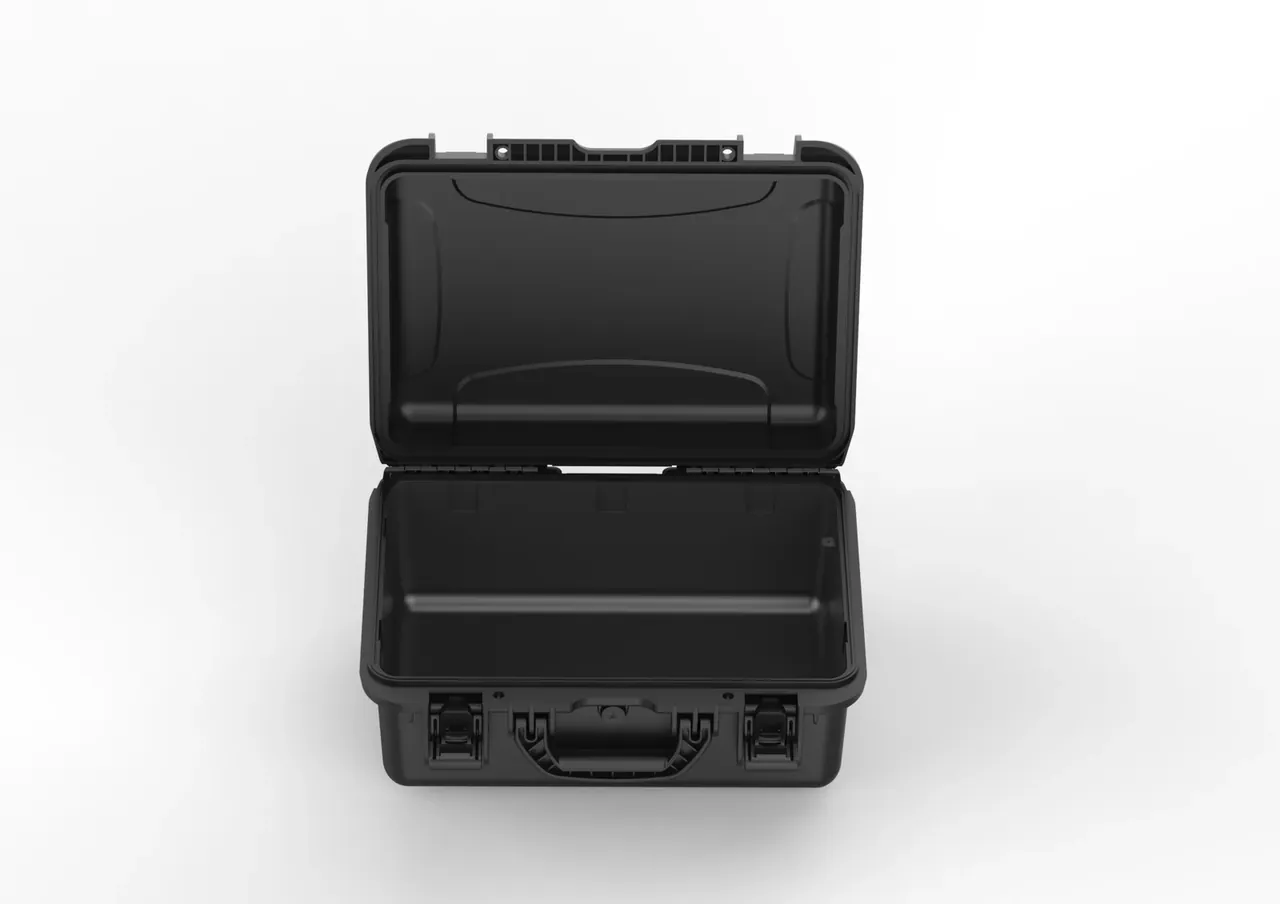
Opening angle comes first: a hinge stopped just past ninety degrees puts the lid centre of gravity behind the tipping point, so one hand holds it; below ninety the lid falls back.
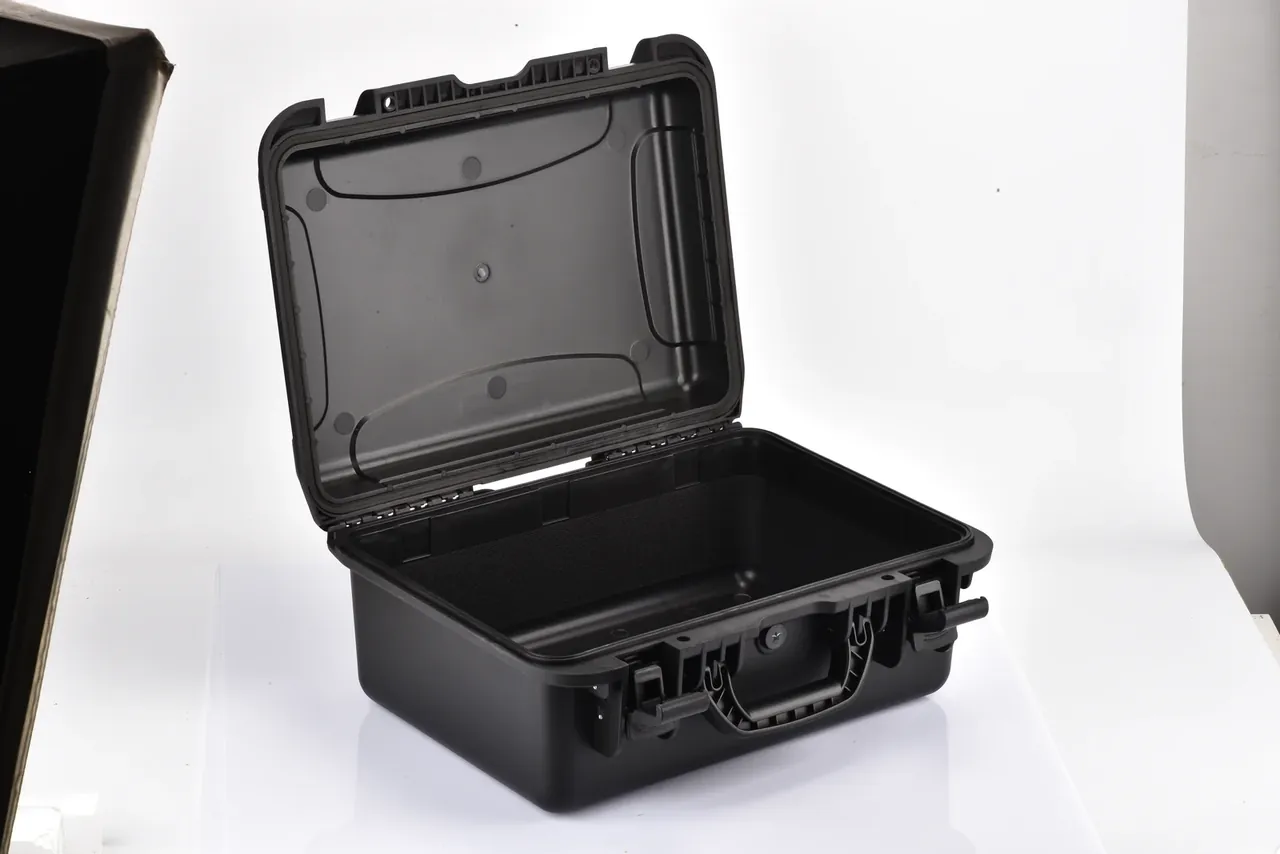
The lid recess and rim are structural, and in use hold paperwork or flat items that cannot drop onto what sits below. An undivided cavity means one pick knocks over two neighbours; division can be foam, a divider set or pressed ribs, tested by whether one item comes out without moving the rest.
4. Stage conflicts
Three conflicts cover most of it: capacity, where the depot wants fewer larger cases and the field wants one person to carry one two hundred metres; dead weight; and closure against opening speed.
Fix the stage that cannot be substituted. Transit is hardest to replace, since nobody watches the case on the road, so impact resistance and latch detent come first; pallets and dividers buy the rest.
| Conflict | Priority | Compensate with |
|---|---|---|
| Capacity | small cases outside | pallets at the depot |
| Dead weight | light cases in field | outer cushioning |
| Sealing | closed at depot | twin draw latches |
5. Counts and rotation
Estimate count from simultaneous deployment: N cases open in the field, half a batch on the road, one batch at the depot, half under inspection, so about three times the field figure; many small depots bring it to 2.5 times.
Rotation depends on a visible date: put the batch date on the short side face with the label and issue from the outward side. Check monthly users quarterly, standing-by cases yearly. Retirement follows hinge play, a detent that no longer holds, or a wall crack.
Conclusion
The division of labour compresses into one line: the depot owns presence, transit owns the road, the field owns the hand. There is no globally best emergency supply case, only a weighted compromise: fix transit, and cover the rest with pallets, labels and dividers.
This article covers container-side specifications and design implications only, not the handling, loading or use of the contents.
Related Reading
- Choosing an emergency reserve case
- Cases for disaster relief supplies
- Structure of an emergency kit case
- Storing and rotating relief cases
Related Products
- 8 Series — Gun Cases; Military Equipment Cases; Camera Equipment Cases; Drone Cases; Watch Cases; Knife Cases; First Aid Cases; Electronics Equipment Cases
- WL8-2812 PP Gun Case — model WL8-2812
- All protective cases and toolboxes: 7 series, 158 models