

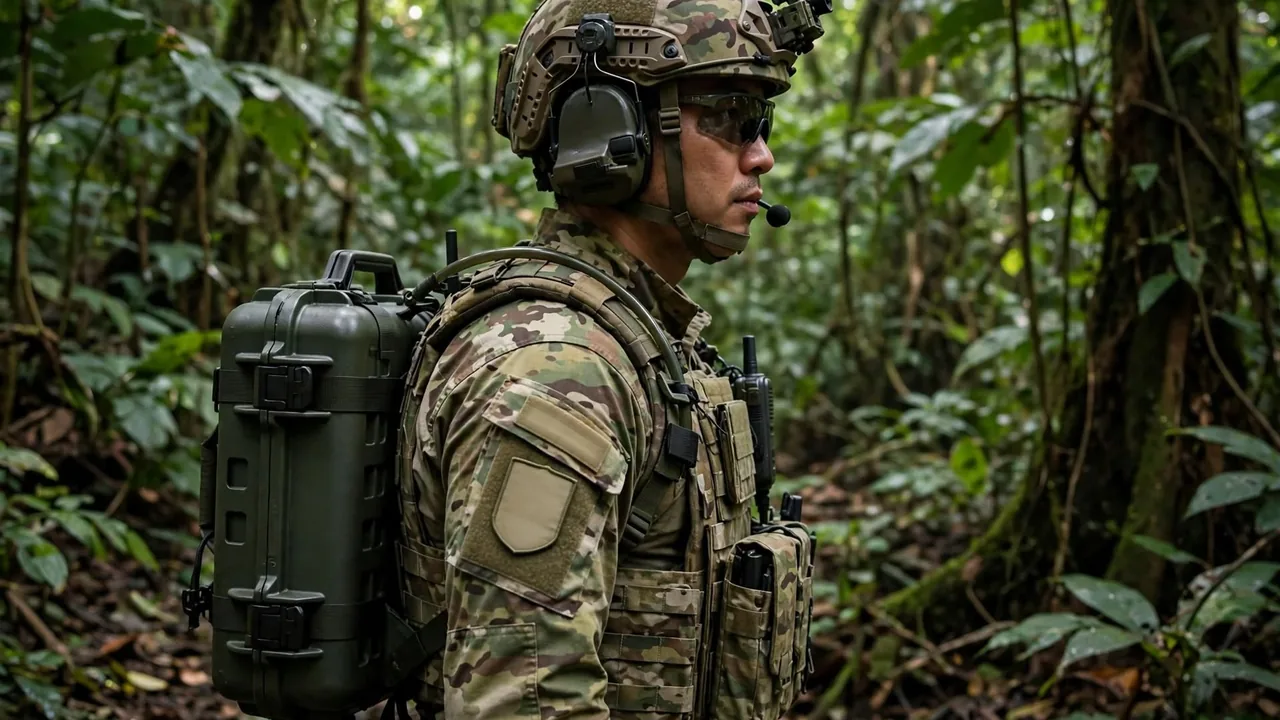
An emergency relief supplies case is a high-strength protective container built for emergency management agencies, Red Cross societies, and disaster relief reserve warehouses. Its core mission is to keep relief goods - rations, blankets, medicines, lighting, and tools - intact, traceable, and quickly distributable across the full chain of receiving, storage, transit, and issue. The key conclusion is that a standardized case system combining IP67 protection, modular liners, batch-level labeling, and stackable geometry can multiply the distribution efficiency during the golden rescue window while sharply reducing moisture damage, mis-issue, and expiry waste. Unlike a household storage box, this container must work reliably for years under mud, rain, drops, and sun, so material, sealing, cushioning, and certification all carry explicit engineering targets. This article focuses strictly on the container itself - the shell, liner, seal, and latch system that protects relief goods - and walks through material selection, modular dividers, waterproof sealing, stack-and-roll distribution, batch traceability, lock and seal management, moisture control, certification, customization, and maintenance so that procurement and warehouse teams can build a workable selection and operation standard for field deployment.
1. Definition and Application Scenarios
An emergency relief supplies case refers specifically to the protective turnover container used to store and move disaster relief goods. It is not a simple storage bin but a logistics node that spans the four phases of receive, store, transfer, and issue. Within a real relief system this case usually carries three tasks. The first is long-term static storage inside a reserve warehouse, where the case must hold its shape and stay leak-tight for years under stacking load. The second is transit across road, rail, air, and inland waterway, where the case must survive vibration, drops, and sharp temperature and humidity swings. The third is fast open-and-issue at the distribution point, where the structure must support stable stacking, wheeled towing, and rapid unlock. Emergency management offices include these cases in standardized equipment lists when building regional reserve centers. Relief organizations rely on uniform case specifications to hand off batches across provinces and borders without friction. Reserve warehouses use case-level batch tags to rotate stock and enforce first-in-first-out discipline. To be clear, this article discusses the container only - the shell, liner, seal, and latch that protect food, blankets, medicine, first-aid kits, flashlights, radios, and pry tools. Those goods are highly sensitive to humidity, impact, and contamination, which is exactly why the case needs professional design rather than a repurposed crate.
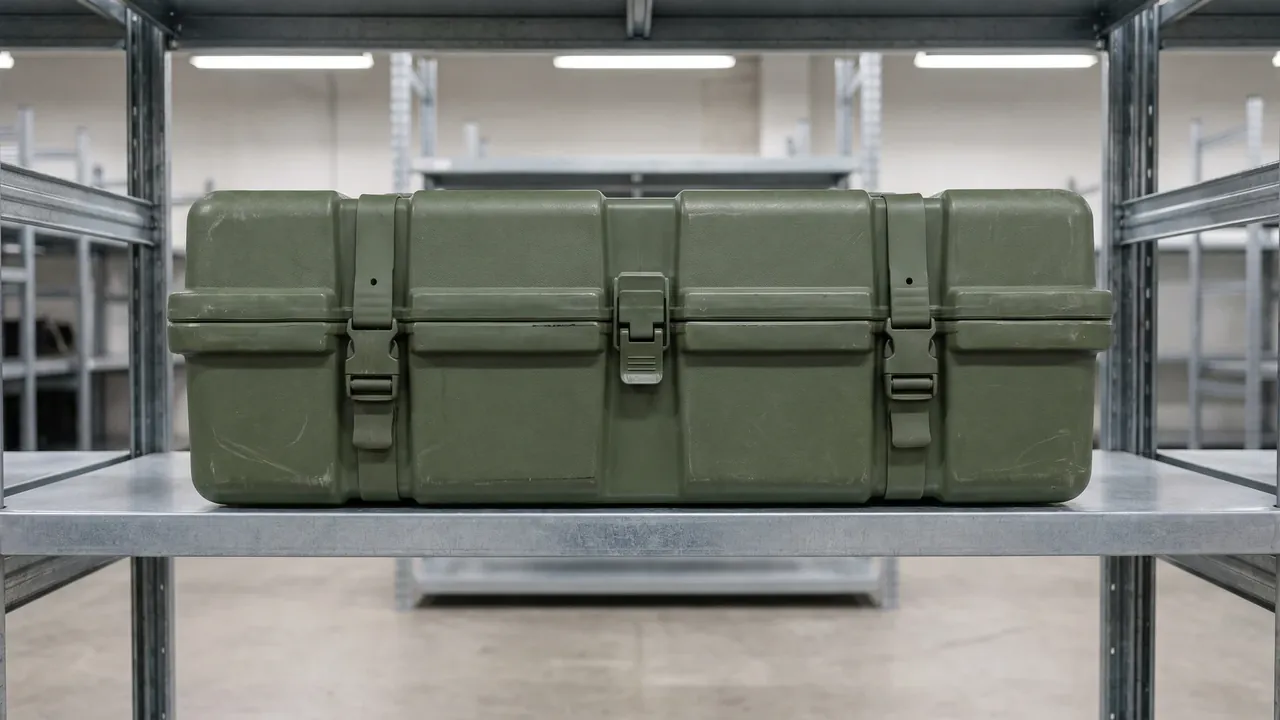
2. Case Material: Engineering Plastic versus Aluminum
The case material decides weight, strength, corrosion resistance, and purchase cost, making it the first selection gate. The mainstream options are modified engineering plastics and aluminum alloy. Modified plastics - based on polypropylene (PP), polyethylene (PE) blends, and acrylonitrile butadiene styrene (ABS) with polycarbonate (PC) alloys - are light, impact-tough, resistant to salt spray and weak acids or alkalis, and cost-efficient at volume, which suits mass distribution. Their weakness is thermal aging and low-temperature brittleness under long sun exposure, so UV stabilizers and impact modifiers must be added to the compound. Aluminum cases offer very high stiffness, extreme-temperature tolerance, and anodized corrosion protection, which suits high-value or high-responsibility medical and communication gear, but they are heavy, expensive, and tend to dent at corners after drops without easy recovery. For civilian relief goods such as rations, blankets, and medicine, engineered plastic cases clearly win on cost and handling convenience; for gear needing electromagnetic shielding or rigid load bearing, an aluminum frame can be added. Regardless of material, wall thickness, rib distribution, and corner radius are the parameters that determine drop survival, so buyers should ask for drawings showing those values. The material comparison in the case shell guide further explains how injection and rotomolding affect service life.
3. Liner and Modular Divider Design
The liner is where the case truly protects goods "skin to skin," separating the rigid shell from fragile contents and absorbing shock energy on the road. Common liner materials include ethylene-vinyl acetate (EVA) foam, cross-linked polyethylene (XPE), pick-and-pluck foam, and pre-cut foam. EVA is soft with good rebound, ideal for wrapping medicine bottles and small instruments. XPE has a closed-cell structure that resists moisture and compression, making it a solid base cushion. Pick-and-pluck foam lets crews carve cavities on site for mixed small batches, while pre-cut foam is molded once by the factory for standardized kits. Modular divider boards split one case into independent compartments - for example separating food, blankets, and medicine to avoid crushing and cross-contamination. Dividers use plug-in slots or hook-and-loop fasteners so the layout can shift with the mission. When sizing, calculate total volume and per-item weight so liner compression stays in a sane band: too loose allows rattle, too tight makes retrieval hard. The liner material should pass UL94 flame class and, when touching food or medicine, meet food-contact or at least low-odor low-emission requirements. Bulky soft goods like blankets are better held by nets or straps than carved foam to save space. The custom foam lining guide covers the full path from measurement to tooling for tailored inserts that match a fixed kit.
4. Sealing and Waterproofing: The Core Value of IP67
Sealing performance is the line that separates a relief case from an ordinary box, and IP67 is the most cited grade. Under IEC 60529 and the national standard GB/T 4208, the first digit after IP is dust protection, where 6 means fully dust-tight; the second digit is water protection, where 7 means no water ingress during specified immersion depth and time. A case reaching IP67 typically relies on a continuous silicone gasket around the lid that forms a sealed chamber once the latches are pressed. It must be stated plainly that IP67 means "protected against temporary immersion," not "safe for long diving," yet on a disaster site it defeats heavy rain, standing water, riverbank mud, and high-pressure washing, keeping food and medicine dry. To balance internal and external air pressure and prevent the lid from being sucked shut or ballooning under altitude or temperature change, most professional cases fit a pressure-equalization valve with a dust screen on the side wall. Gasket material weathers over time, and ethylene propylene diene monomer (EPDM) or silicone performs more stably against ozone and temperature. Buyers should require typical values and test conditions for the water ingress test rather than vague promises. The sealing logic matches the IP67 versus IP68 comparison, but a relief case stresses batch consistency and replaceable gaskets. For the real meaning of the grade, the IP67 versus IP68 comparison helps avoid exaggerated marketing claims from vendors.
5. Stacking and Wheeled Carry: Fast Distribution of Relief Goods
At the warehouse and the issue point, how standardized the case geometry is directly sets distribution speed. Professional cases fit thickened stacking corners and anti-slip feet at all eight corners so upper and lower cases align precisely and stack without shift. Side and bottom lifting rings or fork pockets allow whole-pallet movement. For the last short haul, wheeled models with a telescopic handle let one person drag dozens of kilograms, sharply cutting the physical load on distribution crews. Stacking height must respect the rated stack load; a typical rule of thumb is that empty cases can stack many layers while fully loaded cases should be limited to few layers to avoid long-term creep in the bottom shell. Standard geometry brings a second benefit: identical cases mix freely on standard pallets and containers, raising vehicle and hold space utilization. At issue time, manage tags in three layers - category, batch, destination - and place soon-to-expire cases within easy reach. The concept parallels the transit and shipping case, but a relief case weighs more on dust-water sealing and drop survival than pure load capacity. The protective case accessories focuses on wheel axle load and road adaptability for selection in rough terrain.
6. Shock and Vibration: The Science Behind Transit Validation
Relief goods endure highway bumps, rail coupling shocks, and air-handling drops while being moved, so the case cushioning must be validated, not guessed. The internationally used frameworks are the vibration method 514 and shock method 516 of the US military standard MIL-STD-810H, plus the International Safe Transit Association (ISTA) series such as ISTA 1A for single packages and 2A for grouped loads. These standards simulate random vibration, half-sine shock, and free fall to quantify the protection margin that the case and liner give internal goods. Engineering achieves damping through three cooperating parts: shell ribs absorb macro impact, liner foam absorbs high-frequency vibration, and a safety gap between goods and wall avoids hard contact. For glass vials, precision thermometers, and other fragile items, calculate the fragility value and match foam thickness accordingly. Buyers must note that different makers' "passed drop test" claims use different conditions, so verify drop height, impacted faces, and the corresponding case weight class, and require a typical test report. The protective case vibration test gives a more systematic test mindset useful when writing acceptance annexes and tender technical clauses for relief procurement.
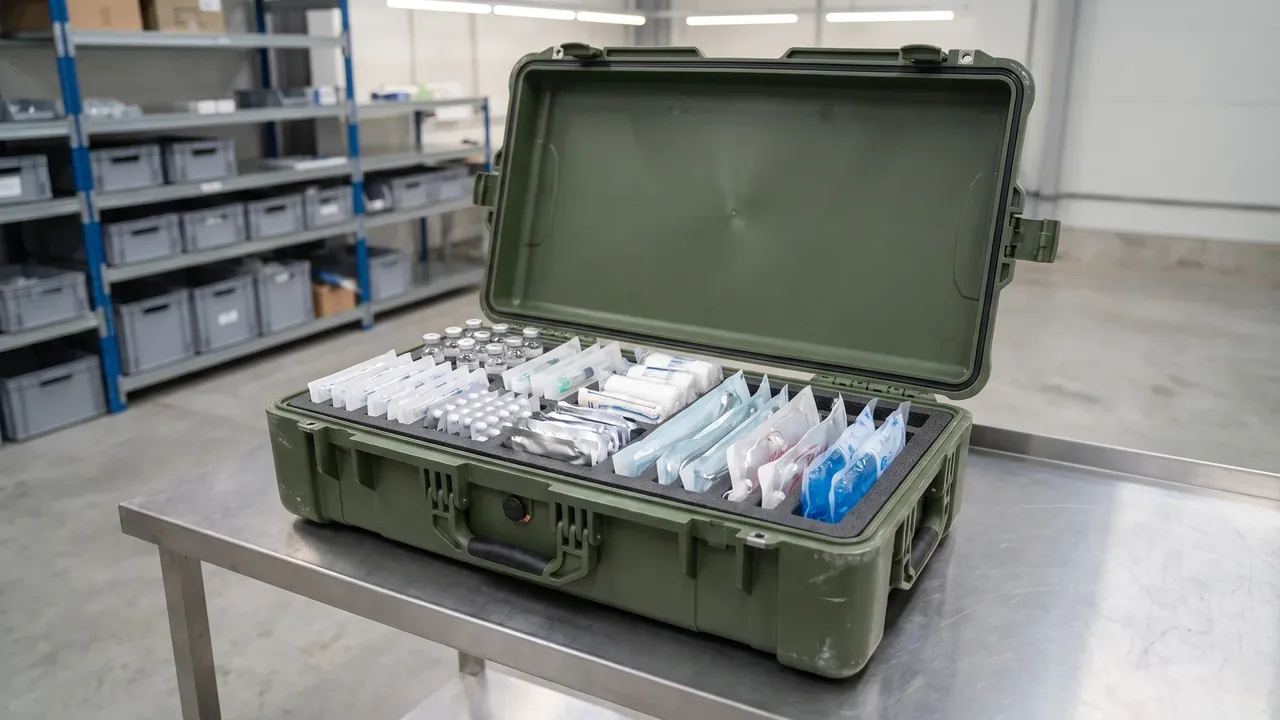
7. Batch Labeling and Goods Traceability
Expiry management and accountability for relief goods depend on a case-level identification system. Professional cases reserve flat areas on the lid and side walls for batch numbers, contents lists, expiry dates, and destination QR codes. The QR code links to the warehouse management system so a scan reveals the category, quantity, production lot, and rotation status inside - realizing "one case, one file." Color coding is also common: red for food, blue for medicine, yellow for tools, letting crews sort by color without opening. Under first-in-first-out rotation, the system flags soon-to-expire cases for priority dispatch, cutting waste of medicine and rations. The label carrier should be weatherproof, abrasion resistant, and wipeable; some sites use laser engraving or corrosion-proof plates for long storage. Note that traceability accuracy relies on standardized inbound operation - the case is only the carrier, and the warehouse must run a scan-and-register flow. The protective case transport marking offers a QR-plus-color plan, while the logistics support box explains how to reconcile labels with physical goods on arrival and reject mismatched consignments early.
8. Lock and Seal Management
Relief goods must be protected from accidental opening and theft during transit yet opened fast in an emergency, so lock design balances security with speed. Three tiers are common. The first uses press latches with padlock holes managed by a unified key or lead seal at the warehouse. The second uses TSA-standard locks that let customs inspect cross-border transfers without destroying the case. The third uses one-time lead seals or anti-tamper strips for audit sealing; opening leaves a mark. For long-term storage at reserve warehouses, add an anti-tamper strip across the lid seam and register its number to form a traceable seal record. Lock and latch materials should resist salt spray; stainless steel and engineering-plastic-clad metal are safe choices. Remember that a lock is not a safe - its core job is to mark responsibility boundaries and stop accidental spring-open during transport. Latch cycle life also belongs in acceptance; a typical requirement is thousands of open-close cycles while keeping clamp force. The protective case accessories and the protective case maintenance explain lock-point layout and latch life trade-offs respectively for high-cycle relief use.
9. Temperature, Humidity, and Moisture-Resistant Liner
Even at IP67, condensation can still form inside from day-night temperature swings, and food and medicine are humidity sensitive, so moisture control is another core ability. Engineering uses a three-layer defense. The first layer is the gasket blocking outside vapor. The second places desiccant and a humidity indicator card inside; when humidity exceeds threshold the card changes color to prompt replacement. The third gives moisture-fearing goods an independent moisture-resistant inner bladder or foil-laminate bag as secondary protection. For vaccines and biologics needing low temperature, the case itself does not refrigerate and must pair with coolant packs and the temperature-controlled case approach, or use an active temperature-control case. Moisture control also watches liner water absorption: closed-cell foam barely absorbs, while open-cell sponge wets easily and should be avoided. Warehouses in plum rain or coastal areas should add humidity-card checks to monthly inspection. The protective case cleaning explains the cause and suppression of condensation as a useful manual supplement for depot staff training.
10. Certification System: Using Standards to Set the Quality Floor
To enter government reserve and Red Cross procurement lists, a relief case must supply verifiable certification that locks the quality floor with standards. Typical standards directly tied to the case include the IP grade defined by IEC 60529 and GB/T 4208; the military environmental adaptability represented by MIL-STD-810H; the transit safety of the ISTA series; the material flame class UL94; and the hazardous-substance limits RoHS and REACH, which ensure the case material does not migrate risk to food or the human body. Some export or special scenarios may also require CE marking. Buyers should ask for numbered third-party test reports or factory typical values, and check that the tested sample model, size, and configuration match the purchased model. Note that certification approves "one specific model with one specific configuration"; changing material, gasket, or liner may void the original certificate, so change control matters. For grade differences, the IP rating helps understand real protection, while the ISTA test explains correct citation in procurement documents and why generic claims fail audit.
11. Customization: From Standard Case to Mission Case
A standard case solves eighty percent of problems; the remaining twenty percent needs customization. When relief goods are fixed in type and the issue kit is standardized, a custom liner sharply raises space use and retrieval speed - for example carving fixed cavities for a specific first-aid kit, flashlight, and radio so crews see everything at a glance. JUNZHIJIA can supply EVA and XPE liners cut to the exact three-dimensional size of the goods and supports OEM/ODM cooperation: clients may specify case color, silk-screen logo, laser-engraved batch zones, and dedicated gasket specifications. For multi-region transfers, JUNZHIJIA matches gaskets and latches to the exact case model so replacement parts stay dimensionally and functionally consistent; at acceptance it can also issue test documents covering IP, drop, and vibration typical values, easing procurement archiving and audit. Customization is not "the more complex the better"; the point is to make liner zones strictly match the goods list and leave replaceable modules for future tweaks. The custom foam lining helps judge when to go custom, and the protective case selection guide lists the technical clauses a request should state to avoid later disputes over acceptance.
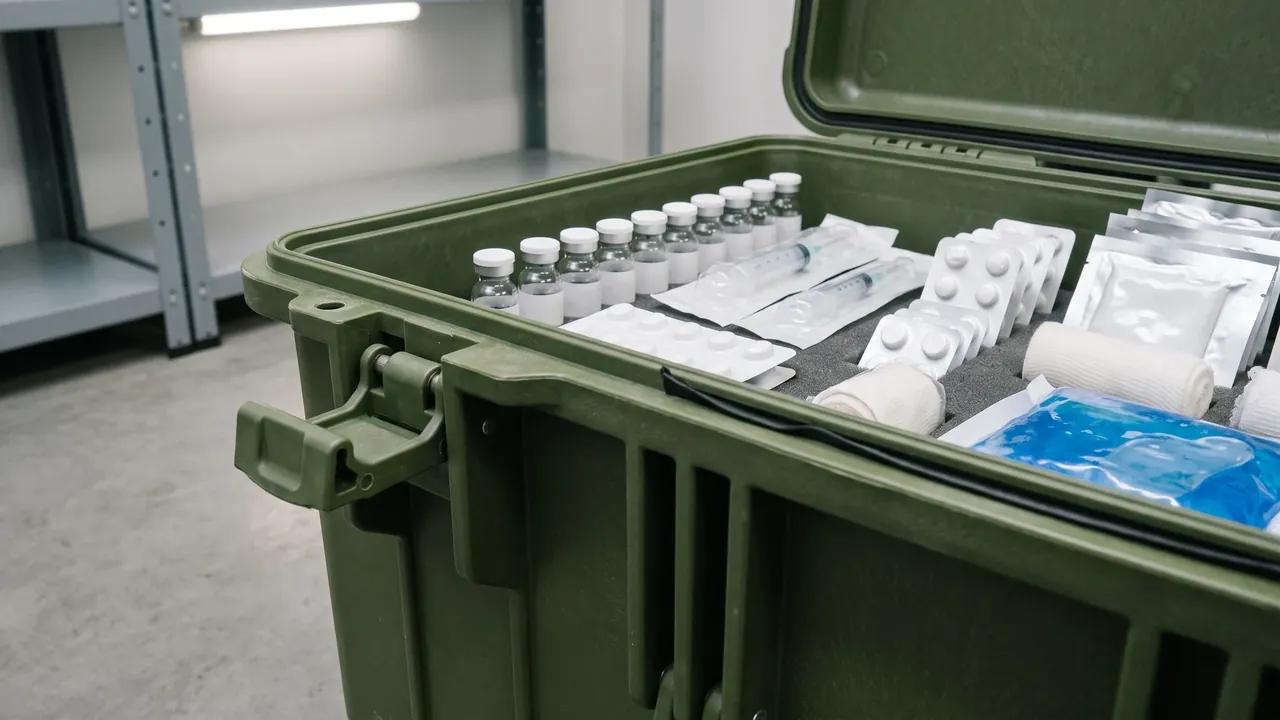
12. Maintenance, Inspection, and Life Management
A case proves its value not only at purchase but across the whole reserve cycle through reliable reuse, so maintenance must be institutionalized. A three-stage check is recommended: inbound inspection verifies labels, gasket integrity, and latch function; quarterly inspection focuses on gasket cracking, shell deformation, and wheel jam; pre-outbound inspection confirms waterproof and latch status again. The gasket, as a wear part, has a typical replacement cycle of several years depending on storage environment, and coastal high-salt-spray sites should shorten it. Clean the case with neutral detergent and a soft cloth, avoiding strong solvents that damage plastic and labels; during long storage keep it slightly open or ventilate periodically to prevent seal adhesion. For life management, keep a ledger per batch recording purchase date, inspection, and repair, and downgrade cases past their expected service life to training or non-critical goods. The protective case cleaning guide gives operable steps, and the protective case maintenance helps judge when a gasket must be replaced before a small issue becomes a big leak during a flood response.
FAQ
Q: What exactly separates an emergency relief supplies case from a household storage box? A: The most fundamental difference lies in design goal and verification standard. A household storage box targets daily tidiness, light weight, and low price; it usually promises no protection grade and passes no drop or vibration validation, so it cracks and floods easily under rain, immersion, or handling drops. An emergency relief supplies case is engineered around "goods survive extremes, stay traceable, and deploy fast." Its shell uses impact-modified engineering plastic with reinforcement ribs, paired with a continuous IP67 gasket defined by IEC 60529 and GB/T 4208 that defeats standing water and high-pressure washing. Inside, modular EVA or XPE liners absorb transit vibration. The geometry is standardized for stacking and pallet transit, and the case reserves space for batch numbers, QR codes, and color tags enabling expiry traceability. For Red Cross and reserve warehouses the case must also pass MIL-STD-810H or ISTA transit validation and support replaceable gaskets with custom liners. In short, a home box answers "fits inside"; a relief case answers "arrives, works, and is accountable." The protective case selection guide expands on matching grades to missions for buyers who need a practical checklist before tendering a contract. A short pre-tender checklist of grade, seal, and test evidence keeps the purchase aligned with the real disaster profile rather than the catalog headline.
Q: Can an IP67-rated case really be submerged without leaking? A: IP67 under IEC 60529 and GB/T 4208 means "fully dust-tight and protected against water ingress during specified immersion, typically one meter for thirty minutes." It guards against brief accidental immersion, not long diving or direct high-pressure jet at the seam. On a disaster site this grade is enough for heavy rain, flooded ground, riverbank mud, and washing, keeping food, blankets, and medicine dry. Ingress risk comes from three sources: an aged or debris-contaminated gasket that fails to close evenly, latches not fully pressed, or a shell deformed by a hard drop that misaligns the sealing face. Therefore buyers should obtain typical values and conditions of the water ingress test, and daily maintenance must inspect the gasket and seat latches correctly. Note that the pressure-equalization valve prevents lid lock but its dust screen can clog in prolonged mud and needs periodic cleaning. IP67 is a reliable floor, not a universal shield; only proper use delivers the promise of dry contents after a flood event, and misuse will void that protection over time. Field crews should be trained to reseat the gasket after any drop and to dry the seal face before closing, because a grain of sand on the lip can let water past an otherwise perfect rating during the next flood crossing.
Q: How do we achieve batch traceability and first-in-first-out with the case? A: Traceability needs both carrier and process. On the carrier side, reserve flat areas on the lid and side walls for batch numbers, contents lists, expiry dates, and destination QR codes; the QR links to the warehouse system so a scan reveals category, quantity, production lot, and rotation status. On the process side, the warehouse scans and registers at inbound, the system flags soon-to-expire cases for priority dispatch to enforce first-in-first-out, and color coding uses red, blue, yellow for food, medicine, tools so crews sort without opening. Monthly inspection reconciles physical goods with system data and fixes drift promptly. The case is only the carrier; accuracy depends on standard operation, and missed inbound registration breaks the chain. Keep a ledger per batch recording purchase, inspection, and repair, and downgrade cases past expected life. The protective case transport marking gives a QR-plus-color deployment plan worth adopting across the depot network for consistent accountability and faster audit cycles. For multi-warehouse networks, mirror the ledger to a shared system so any depot can see the rotation status of a batch even after it moves, which prevents expired goods from hiding in transit between sites.
Q: How should the liner be customized to absorb shock yet stay easy to use? A: Custom liner work starts by measuring the three-dimensional size and per-item weight of goods, then zoning by "heavy at bottom, light on top, fragile in middle." For material, medicine bottles and small instruments suit soft rebound EVA; base cushion uses compression-resistant closed-cell XPE; mixed small batches can use pick-and-pluck foam carved on site; standardized kits get factory pre-cut foam. After zoning, keep a safety gap between goods and wall to avoid hard contact, with moderate liner compression - too loose rattles, too tight hinders retrieval. Fix with plug-in slots, hook-and-loop, or straps; bulky soft goods like blankets are better in nets than carved foam to save room. Liner material should pass UL94 and meet low-emission, low-odor rules, and food-contact grade when touching edibles. JUNZHIJIA cuts EVA and XPE liners to exact goods dimensions and supports OEM/ODM so zones strictly match the list. Customization is not complexity for its own sake; the key is leaving replaceable modules for later tweaks as the relief kit evolves between seasons. Revalidate the liner layout whenever the contents list changes by more than a small margin, since added items without re-zoning are the usual cause of rattling and crushed goods on rough roads.
Q: How many layers can relief cases stack in a warehouse before they crush? A: Stacking height depends on the rated stack load and the weight of contents, never on guesswork. As a rule of thumb, empty cases are light and can stack many layers, while fully loaded cases must be limited to few layers to avoid long-term creep or even cracking in the bottom shell. Professional cases fit thickened stacking corners and anti-slip feet at all eight corners so upper and lower cases align precisely and will not shift - that is the premise of safe stacking. Buyers should obtain the typical stack-load value and suggested layer count for the corresponding weight class and write it into the storage work instruction. On whole-pallet transit, secure cases with stretch film or straps to prevent tipping during hard braking. Note that side or inverted placement sharply weakens stack strength, so mandate uniform upright orientation and mark it on the case face. The stacking corner guide and stackable case standard explain the structural details behind safe piling and documented load limits.
Q: What certification documents should suppliers provide for relief cases? A: To enter government reserve and Red Cross procurement lists, ask for at least four document types. First, IP protection proof per IEC 60529 and GB/T 4208, ideally with third-party or factory typical values of the water ingress test. Second, transit validation such as MIL-STD-810H vibration and drop procedures or ISTA distribution tests, stating sample model, weight, and conditions. Third, material safety files including UL94 flame class and RoHS and REACH hazardous-substance limits to ensure no migration risk to food or humans. Fourth, change-control notes stating that changing material, gasket, or liner requires re-confirmation. Remember that certification approves a specific model and configuration; a change may void the original certificate. At acceptance JUNZHIJIA can issue test documents covering IP, drop, and vibration typical values for archiving. For correct citation, the ISTA test and IP rating help avoid vague claims in tenders that later fail audit. Suppliers should also state the exact model and configuration covered by each certificate so auditors can match the physical case to the paper, and keep a signed copy with the batch record for the full service life of that lot.
Q: How do we control moisture inside the case to protect medicine and food? A: Moisture control needs layered defense. The first layer is the gasket blocking outside vapor, the baseline IP67 ability. The second places desiccant inside with a humidity indicator card that changes color past threshold to prompt replacement. The third gives moisture-fearing goods an independent moisture-resistant bladder or foil-laminate bag as secondary protection. Watch liner water absorption: closed-cell foam barely absorbs while open-cell sponge wets easily and should be avoided. For vaccines needing low temperature, the case itself does not refrigerate and must pair with coolant packs and a temperature-controlled approach or an active temperature-control case. In plum rain and coastal sites, humidity-card checks belong in monthly inspection and desiccant is replaced on a scheduled cycle. Also mind condensation from day-night temperature swings, addressed by the protective case cleaning. Clean with neutral detergent; strong solvents damage plastic and labels, and long storage should stay slightly open for ventilation. Moisture control is systemic, not a single gasket. For large depots, centralize desiccant replacement on a fixed calendar and log each change so humidity control stays provable during later inspections and audits of relief stock.
Q: How many years does a case last, and when should we retire it? A: Service life is shaped by material, environment, and usage frequency, so there is no single number, but there are operable judgments. An engineering-plastic case in a dry temperate storage environment can reach several years of expected life, while coastal high salt spray or constant sun accelerates gasket aging and shell brittleness and should shorten inspection cycles. Core retirement signals include a cracked gasket that lost elasticity, visible shell deformation that prevents tight closing, worn stacking corners that misalign, and jammed wheels that hinder carry. Adopt a three-stage check - inbound, quarterly, outbound - and keep a ledger per batch for purchase, inspection, and repair. Cases past expected life or failing after major repair should be downgraded to training or non-critical goods rather than still carrying medicine or food. The gasket, as a wear part, has a typical replacement cycle of several years by environment. The protective case maintenance helps decide replacement before a small crack becomes a big leak during deployment. Set a clear retirement age per climate zone and trigger it from the calendar, not only from visible damage, because gasket elasticity can fade before a crack appears and silently lower the protection grade.
Q: When multiple disasters strike at once, how do we distribute cases more efficiently? A: Efficient distribution standardizes both the case and the process. On the case side, keep uniform geometry, precise stacking corners, and complete wheels and handles so whole-pallet transit and on-site towing run smoothly; on the identification side, combine batch number, QR code, and color tag so crews scan contents, sort by color, and prioritize by expiry. On the process side, finish the three-layer tag - category, batch, destination - and first-in-first-out order inside the warehouse, placing soon-to-expire cases up front. At site, open and count before handing out, and register seal numbers to form an accountability chain. For fixed kits use custom liners so first-aid kits, flashlights, and radios each have a home and are grabbed at a glance. JUNZHIJIA supports model-matched gaskets and custom liners to keep multi-batch cases consistent and lower mix-up risk. Finally, rehearse the open-and-issue flow with training cases so human motion is standardized too, truly multiplying efficiency in the golden rescue window after a major event. Pair the drill with a short checklist posted on the case lid so new volunteers follow the same sequence without extra briefing, and review the steps after each real deployment to close gaps found under pressure.