

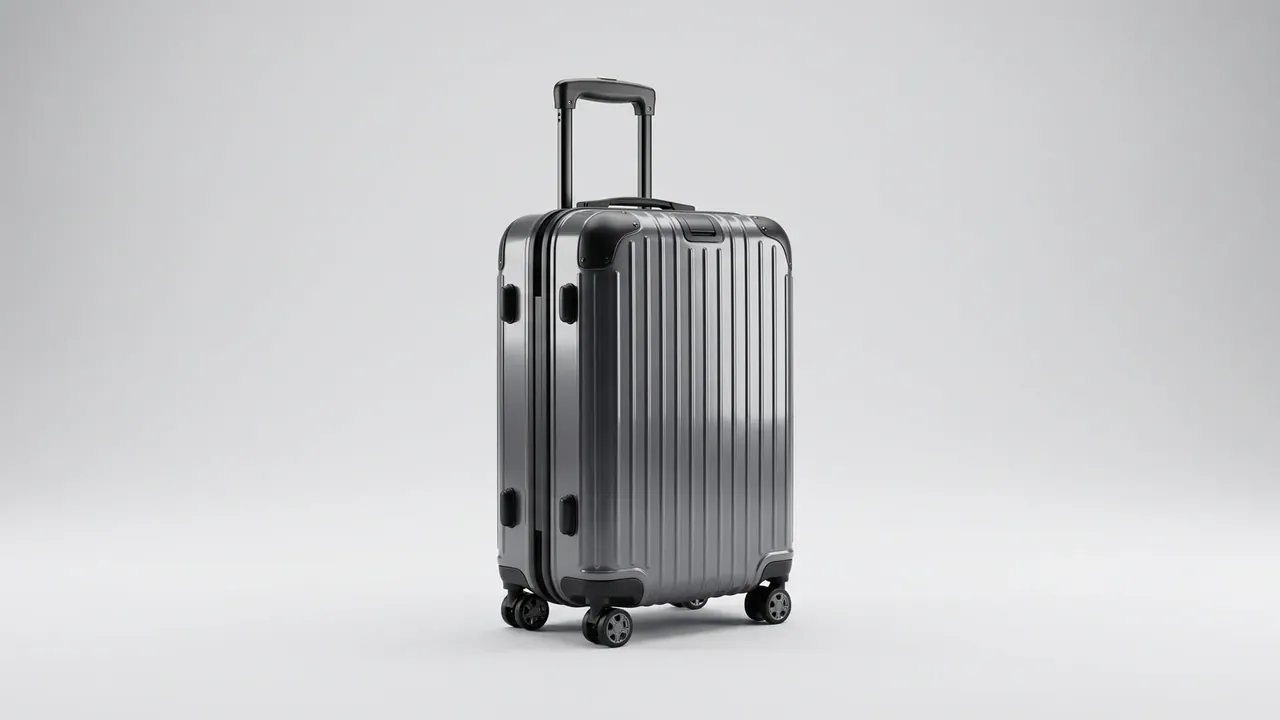
Quick answer: Almost every yuan in a temperature-controlled case is fixed by four numbers, the cavity, the wall, the foam thickness and the latch count, and each one is derived from load and temperature rather than picked from a catalogue. Derive them in order and 240 yuan of extra specification usually removes one rework cycle.
Table of contents
- Set the Load, Then the Cavity
- Draw the Load Path Before Sizing the Cavity
- Every Millimetre of Wall and Foam Has a Price
- Latches, Hinges and the Gasket
- FAQ
1. Set the Load, Then the Cavity
A temperature-controlled case with a 500 x 350 x 300 mm cavity and a 28 kg payload is quoted between 1,450 and 2,200 yuan. The controller is rarely the difference. Four numbers are: cavity, wall thickness, foam thickness and latch count.
Those four are derived, not selected. Reverse the order and the wall gets chosen first, a justification follows, and the result is either overweight or sagging at the base.
| Step and input | Output | Added cost |
|---|---|---|
| Load and stacking, 3 high | Base rib pitch 90 mm | +35 yuan |
| Equipment outline and access | Cavity size and tolerance | 0 to +80 yuan |
| Temperature delta, 40°C | Foam thickness 40 mm | +120 yuan |
| Wall and total weight | Cycle time and material | +150 yuan |
Each output rewrites the next input, so read the table across and never down a single row.
2. Draw the Load Path Before Sizing the Cavity
Load is never spread evenly across the floor.
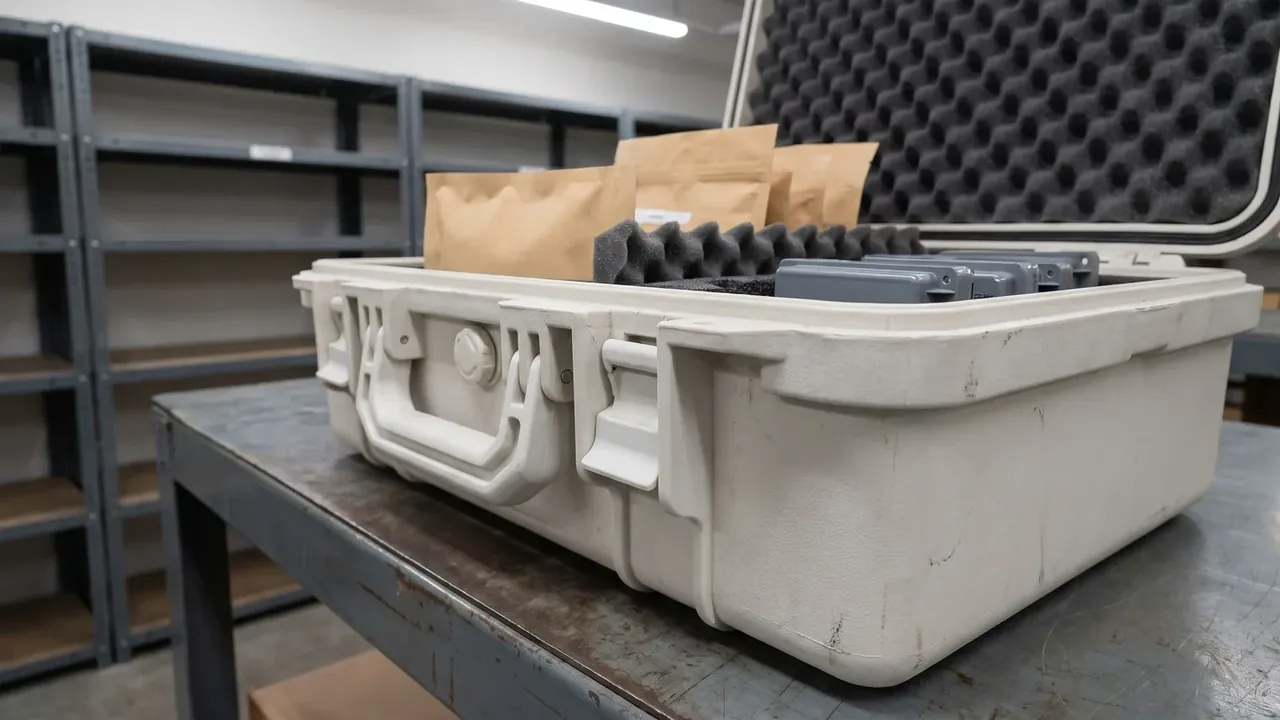
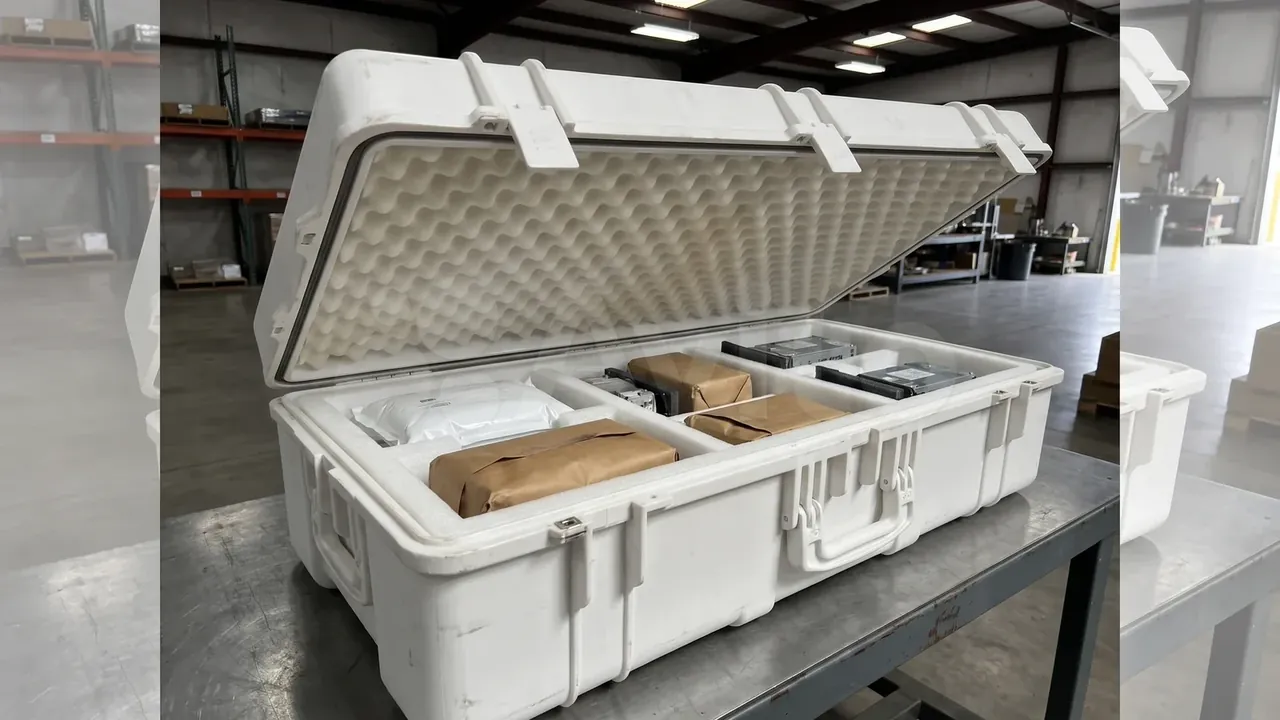
Split 28 kg into four modules of 7 kg and the force lands on six ribs. Replace them with one 28 kg block and the pressure concentrates on roughly 200 x 150 mm in the middle, which calls for denser ribs or a wall grown from 6 mm to 8 mm.
Cavity size carries an allowance set by how the goods go in. Lift-out from the top needs 3 mm a side, while a side drawer needs 12 mm for the runners and a wider cavity. A tolerance of plus or minus 3 mm is normal, widening to 5 mm past a 400 mm long side because rotomoulded shrinkage shows up along the length. Mould wear matters too: after 3,000 shots a cavity typically grows 1 to 2 mm, and long programmes must budget for it. A cavity that shrinks is worse than one that grows, since nothing fits, while a loose one is padded out with foam. Quote the looser tolerance rather than a flattering 1 mm.
Settle the cavity on a temperature-controlled case and the wall finally has something to answer to.
3. Every Millimetre of Wall and Foam Has a Price
Going from 6 mm to 8 mm adds about 1.1 kg of polyethylene, roughly 11 yuan of material, but the rotomoulding cycle stretches from 22 to 30 minutes and adds 26 yuan of machine time per case.
- Foam from 30 mm to 40 mm: 0.9 kg more resin, +18 yuan, heat flow down about a quarter.
- Liner from 2 mm to 3 mm: better puncture resistance, +22 yuan, 1.6 kg heavier.
- A timber or aluminium frame between shells: one grade more crush resistance, +90 yuan, worth it above three-high stacking.
- A twin gasket run instead of one: fewer leak paths, +14 yuan, more load on the hinges.
Add the frame, two extra latches and the thicker pin from the next section and the total lands near 240 yuan, the number in the title. Set that against rework: stripping, re-foaming, replacing parts and a second shipment runs near 210 yuan per unit, so three rounds cost 630.
Foam cannot be stacked indefinitely.
Polyurethane at 40 mm has a conductivity near 0.022 W/(m·K); across a 40°C delta and 1.1 m² of surface the theoretical heat flow is about 24 W. At 60 mm it falls to 16 W, and those 8 W do not repay the extra 18 yuan and the 3 mm of cavity given up.
4. Latches, Hinges and the Gasket
On a temperature-controlled case, hardware works best when the gasket loads first and the latch closes second.
| Part and spec | Failure mode | Share of cost |
|---|---|---|
| 4 latches at 350 N | Lid lifts, seal breaks | 8% |
| 2 hinges, 6 mm pin | Lid sags and misaligns | 5% |
| Gasket, 8 mm, 30% compression | Leak path, condensation | 4% |
| 6 ribs at 90 mm pitch | Base collapse under load | 7% |
Four latches cost 46 yuan more than two, but they lift mid-span compression from 18% to 30% and double gasket life. The hinge pin is 6 mm rather than 5 mm, 12 yuan more per case, because a 40°C swing moves the joint about 0.06 mm and any clearance under 0.05 mm will bind.
Save money on hardware by removing parts, not by shrinking them.
Conclusion
A temperature-controlled case is not specified in one pass but derived in four: load sets the cavity, cavity sets the wall, temperature delta sets the foam, and lid length sets the latches. Every extra yuan along that chain lands in the unit cost and in the rework odds. The 240 yuan buys agreement between four numbers, not a thicker shell. Run the chain once and the quotes start to be comparable.
This article discusses only the container (case body) side of specifications and design intent, and does not cover any handling, loading or use of the contents.
Related Reading
Related Products
- 8 Series — Gun Cases; Military Equipment Cases; Camera Equipment Cases; Drone Cases; Watch Cases; Knife Cases; First Aid Cases; Electronics Equipment Cases
- WL8-2812 PP Gun Case — model WL8-2812
- All protective cases and toolboxes: 7 series, 158 models