

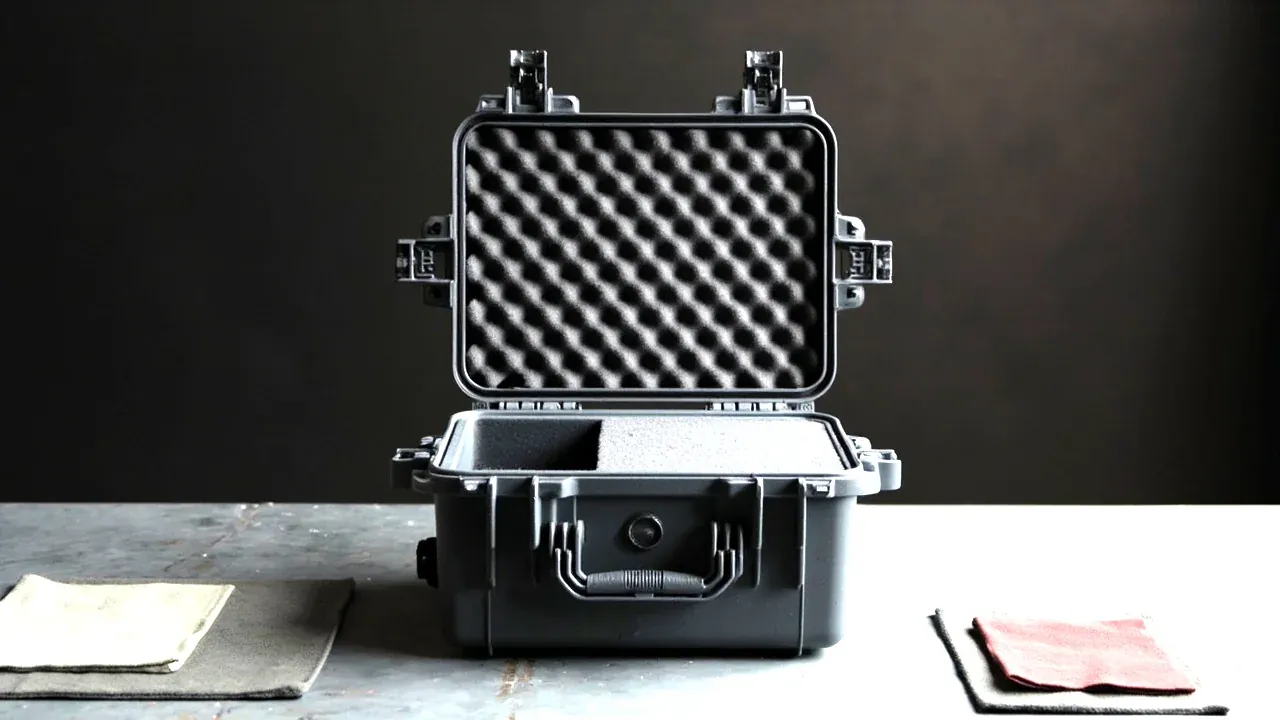
Quick answer: The fabric sets a tool bag's temper. Canvas is thick, wears tougher with scuffs and costs least, but absorbs water. PU coated fabric sheds water and oil and wipes clean, its weak point being coating adhesion. Heavy nylon with webbing tears least and stays soft in the cold, at highest price. Stitching adds a second life variable. Wet and oily work points to coated fabric, heavy loads and freezing air to nylon.
Table of contents
- Canvas: weave, hand and wear reserve
- PU coated fabric: moisture, oil and cleaning
- Nylon webbing: tear strength and cold behaviour
- Stitching and edge binding
- Three materials in one table
- FAQ
1. Canvas: weave, hand and wear reserve
Canvas is the most conservative tool bag fabric: a plain weave that thickens as it scuffs, wearing tougher at the lowest price. Its weakness is absorption — rain soaks the panel, drying is slow.
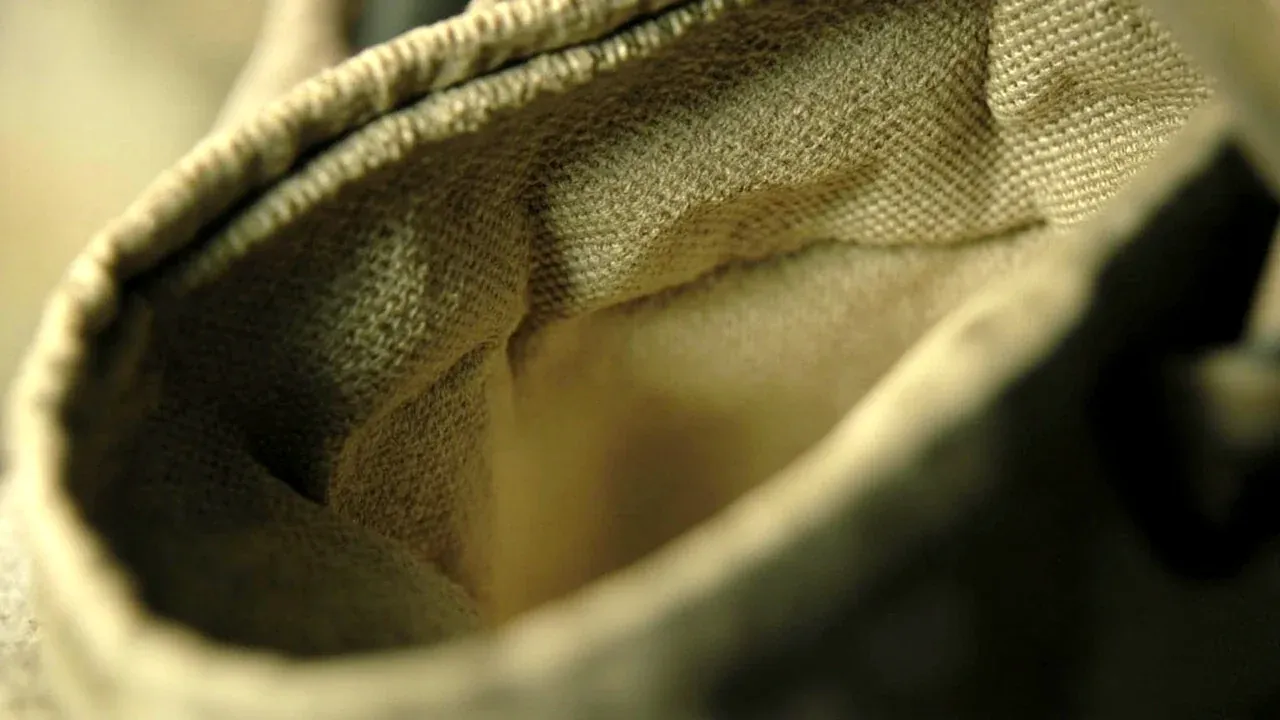
The photo shows weave and edge binding on canvas: thread count sets the wear reserve — a dense weave pills slowly and resists punctures, and binding tucks the cut edge so stitches cannot unravel. Cold is the other soft spot: below freezing canvas stiffens, turns brittle, and bends crack.
2. PU coated fabric: moisture, oil and cleaning
PU coated fabric puts a polyurethane film over base cloth: water beads, oil does not soak, a damp wipe cleans it — first choice for wet, oily work.
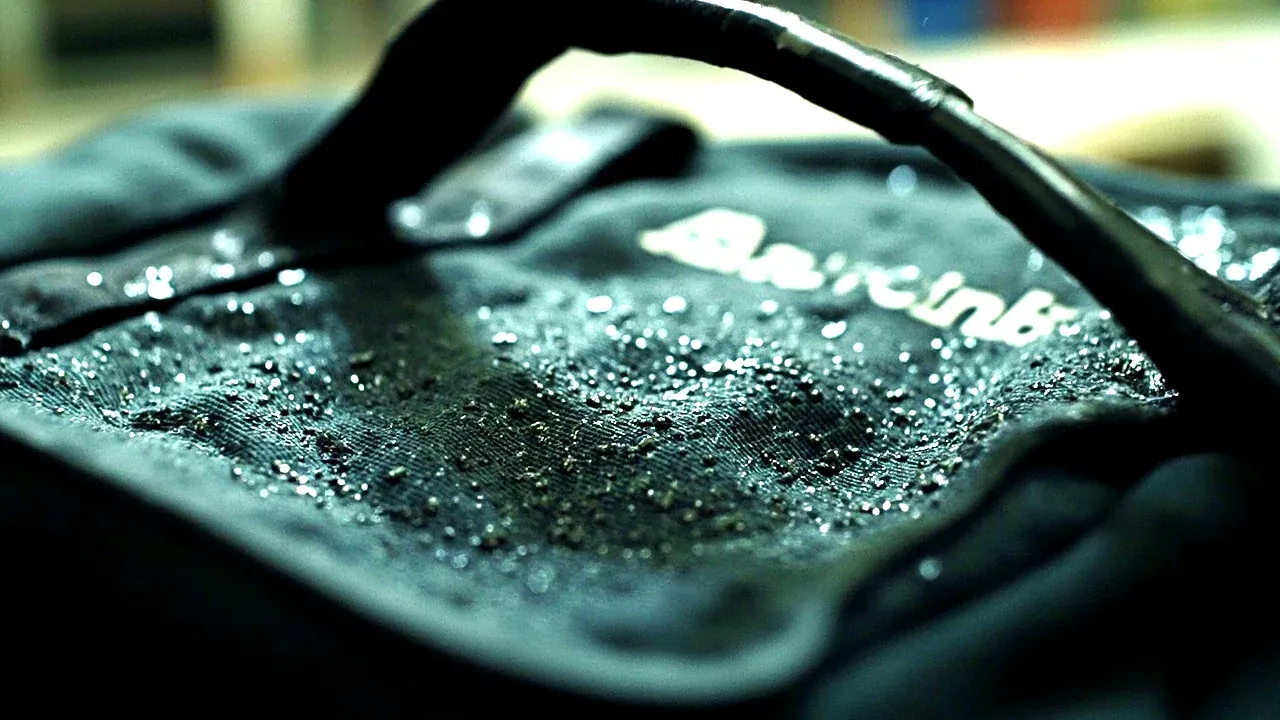
The photo shows water beading on coated fabric: the film keeps water outside and seepage starts only at coating damage; oil resistance comes from the same film — oil beads and wipes off if done early. Its weak point is coating adhesion: after repeated flexing the film cracks, and once the base shows, waterproof and oil resistance fail together.
3. Nylon webbing: tear strength and cold behaviour
Heavy nylon is the strongest of the three: the fibre resists tearing, stays soft in the cold, and bends without cracking below zero; its webbing takes the pull, carrying handles, straps and binding.
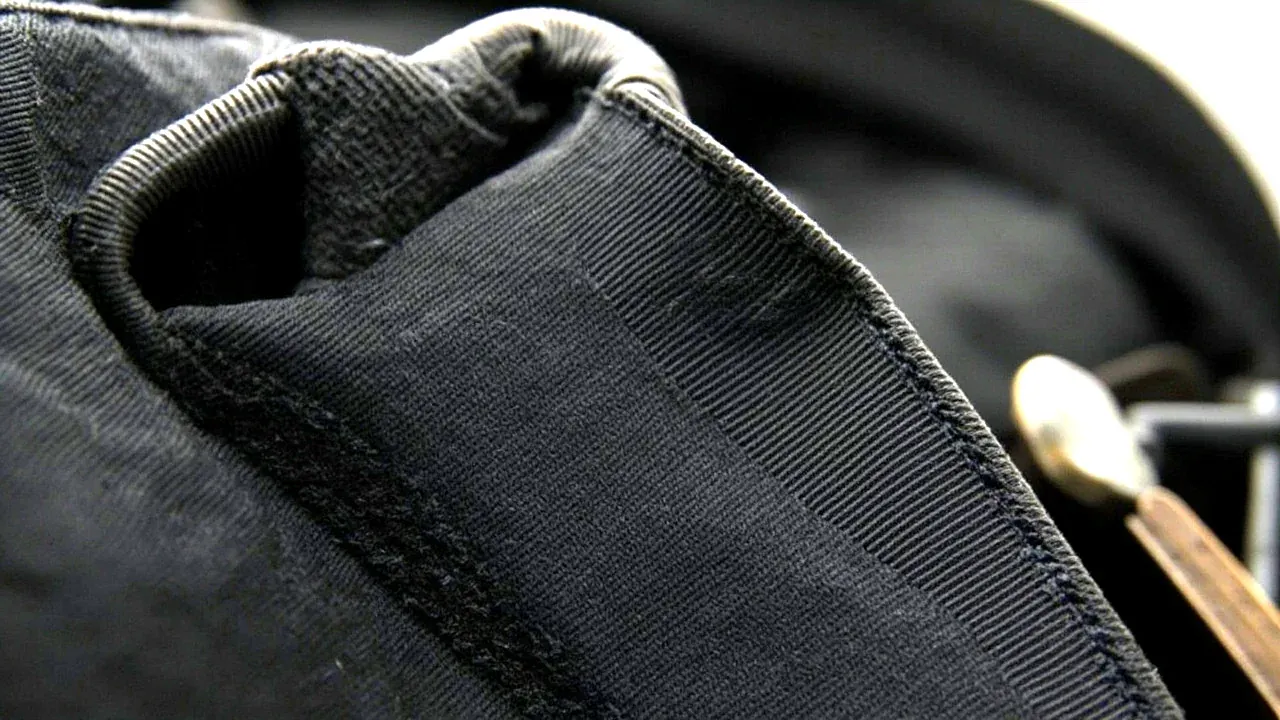
The photo shows webbing handles and bar-tacked stress points: webbing spreads handle pull across the panel, and bar-tacks lock the roots with dense backstitching so load cannot tear out at the stitches. Nylon's trade-offs are price and puncture: at equal thickness it costs more than canvas, and a sharp corner pushed repeatedly can still cut through.
Webbing strength reads in width and layers; sparse stitching rips even strong nylon out with the cloth.
4. Stitching and edge binding
The best fabric still dies at the seam: tool bags fail from thread, not cloth.
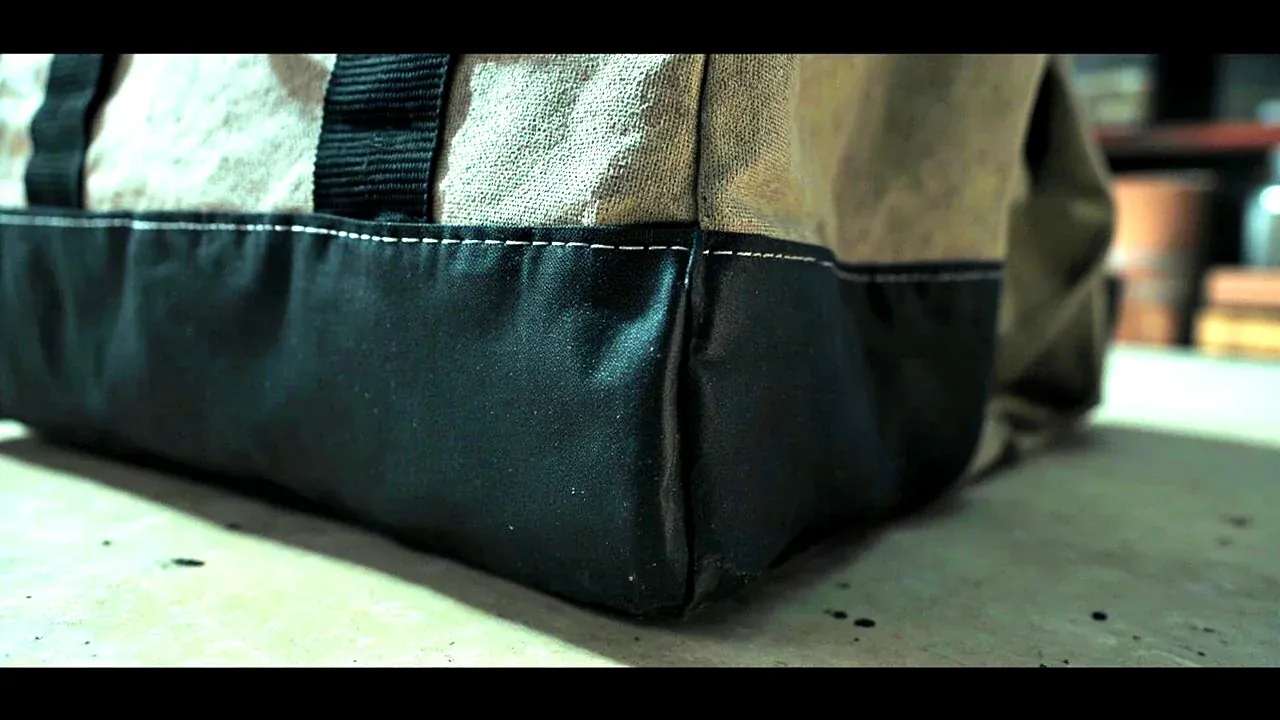
The photo pairs a dark wear-resistant base with reinforced stitching at a base corner: the corner meets drops and drags first, and the stitching locks base to bag; stitch density, thread strength and backstitch passes decide how many drops the joint survives. Binding matches: an unbound cut edge frays after two washes. Turn the base over and read the stitches first.
5. Three materials in one table
| Dimension | Plain canvas | PU coated fabric | Heavy nylon with webbing |
|---|---|---|---|
| Abrasion | Pills denser, tougher | Coating loss exposes base | Webbing high strength, best |
| Tear strength | Sharp corners open first | Medium, base cloth | Highest fibre strength |
| Oil resistance | Absorbs oil, marks | Oil beads, wipes off | Good |
| Cold behaviour | Stiffens, brittle, cracks | Coating cracks in cold | Stays soft, best |
| Cleaning | Machine washable, slow to dry | Damp wipe, instant | Damp wipe, quick dry |
Row weights follow the scene: wet work favours coated fabric, freezing air favours nylon, general days are covered by canvas; stitching and binding are judged separately.
Conclusion
Five rows compress the choice: abrasion favours canvas, moisture and oil favour coated fabric, tear strength and cold favour heavy nylon, cleaning follows the coating, and the last life variable is stitching. Answer three questions — how wet, how oily, how cold — then feel the fabric and read the stitches; once the environment answers, the choice of tool bag material is written.
This article covers container-side specifications and design implications only.
Related Reading
Related Products
- 8 Series — Gun Cases; Military Equipment Cases; Camera Equipment Cases; Drone Cases; Watch Cases; Knife Cases; First Aid Cases; Electronics Equipment Cases
- WL8-2812 PP Gun Case — model WL8-2812
- All protective cases and toolboxes: 7 series, 158 models