

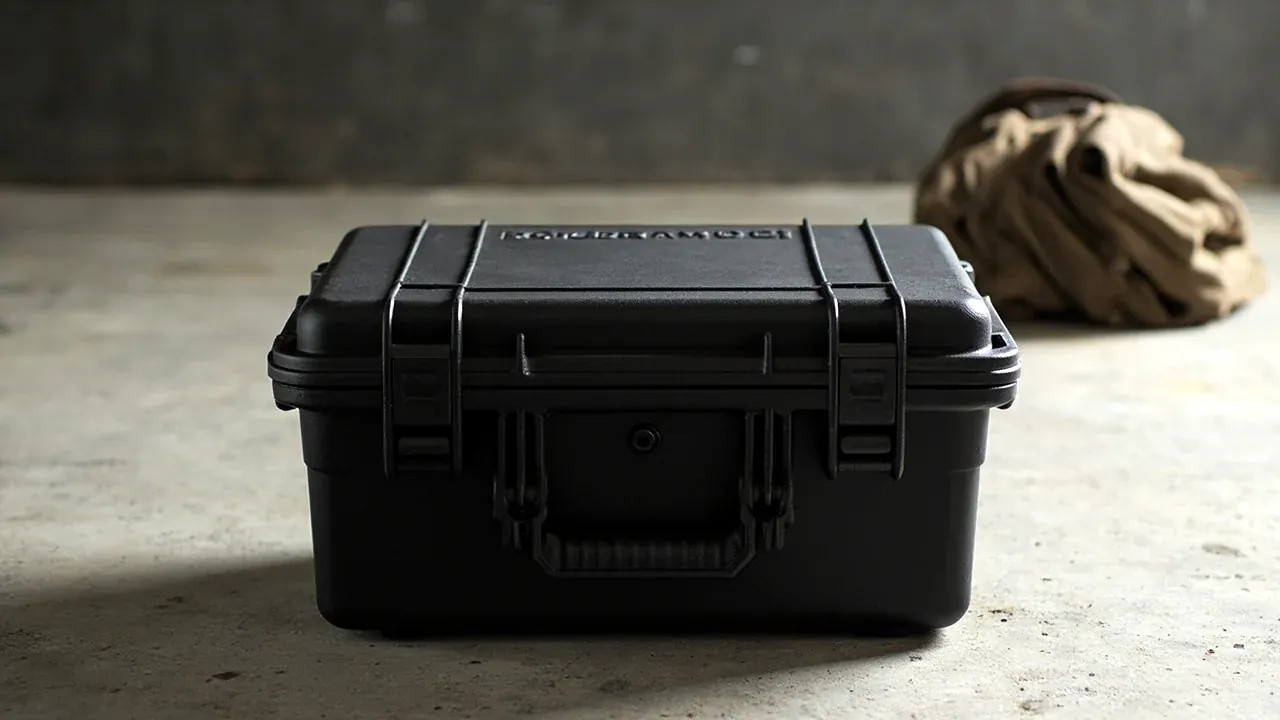
Quick answer: The same tools fit a tool bag or a hard case; the gap is five dimensions: dead weight, drop protection, rain, access order, and life against replacement cost. A tool bag wins on light carry and open access, a hard case on impact and sealing. Daily carry points to the bag; group transport with drops and rain points to the case.
Table of contents
- Access order: a tool bag opens to everything, a hard case opens in layers
- Equal load: weight, drops and strength
- Rain: surface water and seepage paths
- Service life and replacement cost
- Five dimensions in one table
- FAQ
1. Access order: a tool bag opens to everything, a hard case opens in layers
A tool bag opens to the whole cavity at once: everyday pieces on top, a hand in without hunting. A hard case opens to layers, a lid pocket and a liner — one tool costs two lifts.
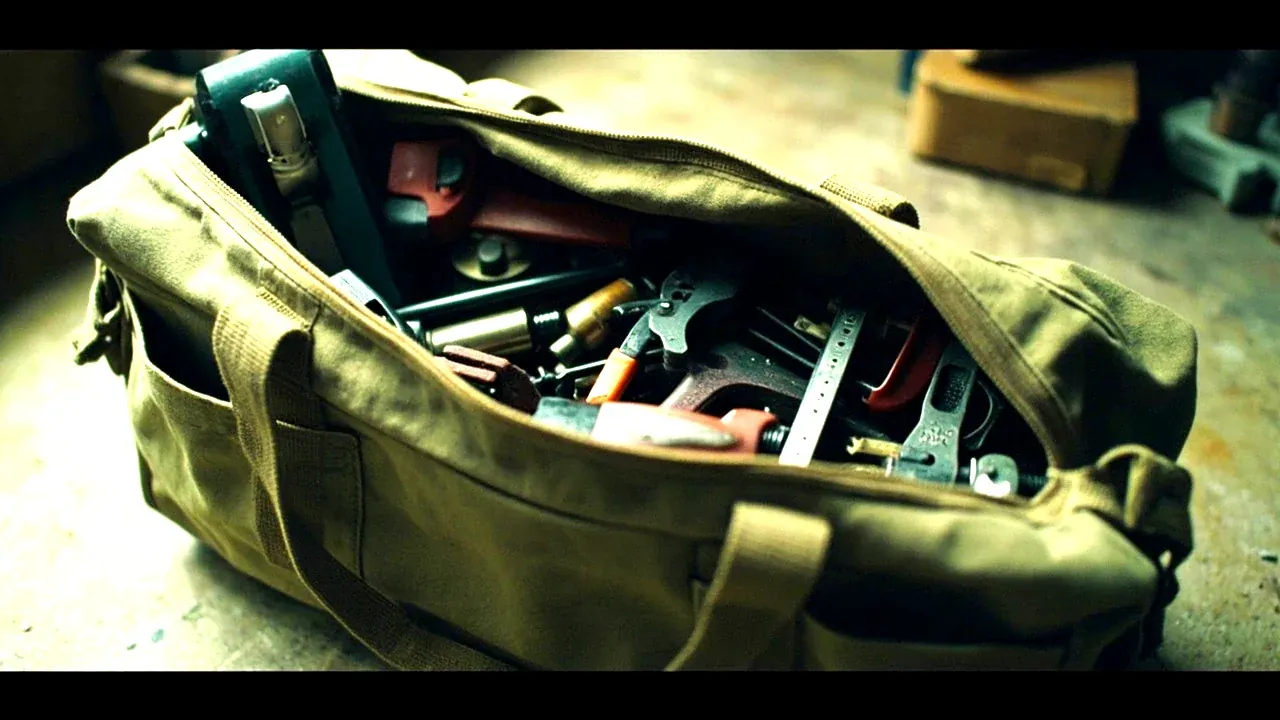
In the photo, tools spill over each other in one compartment — the open cavity is why a tool bag is fast, and the price: no fixed positions, pieces scratch and shadow. A hard case slots each piece: fixed order, item checks pass, one extra step per fetch.
Rule: over ten access cycles a day, saved hunting time adds up monthly; inventory work favours slots.
2. Equal load: weight, drops and strength
At equal load a tool bag weighs one third to one half of a hard case: a case pays for walls, latches and sealing. Two extra kilos, twenty lifts a day, is a monthly bill.
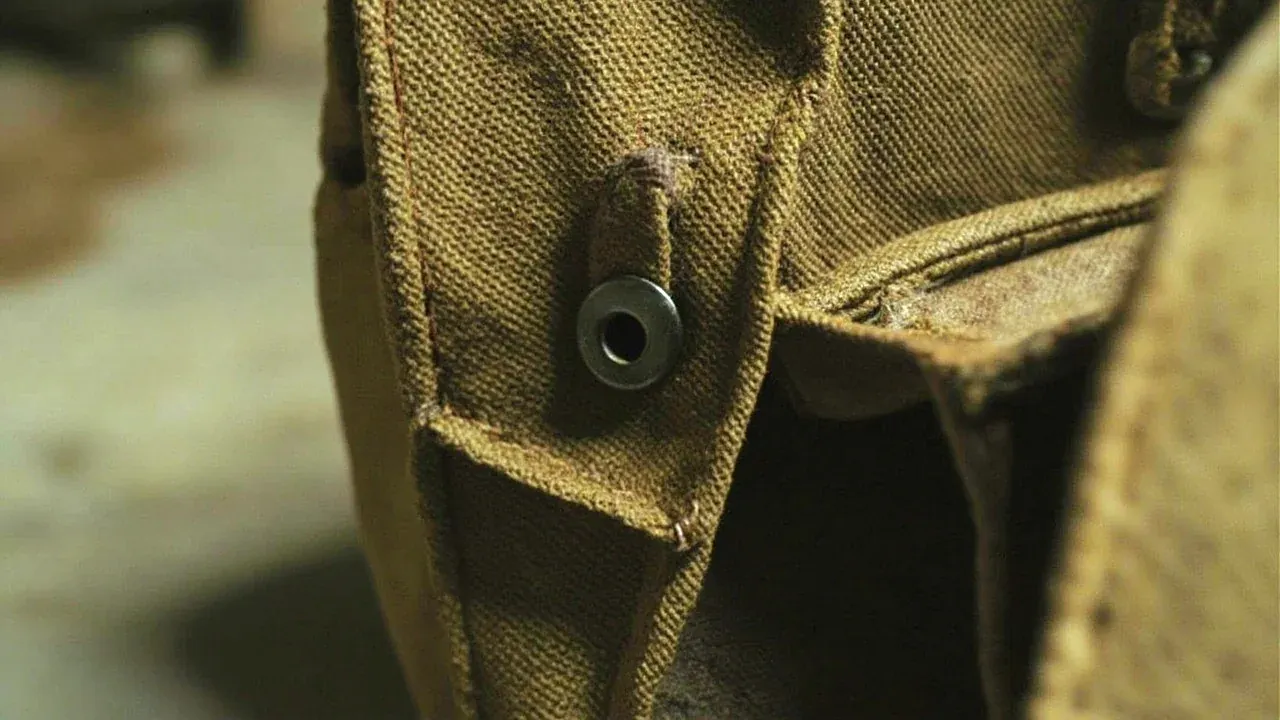
The photo shows reinforced base seams and metal eyelets: a tool bag concentrates strength on a few load lines — multiple seam passes, eyelets spreading handle pull. A case spreads load across walls, hinges and latches; its weight buys rigidity.
Drops are the case's ground: dropped from one metre, contents usually survive; a tool bag's tools take the hit — the bag stops scuffs, not impact.
3. Rain: surface water and seepage paths
Rain tests material and closure together: a tool bag takes water through its surface, a hard case holds it on its face.
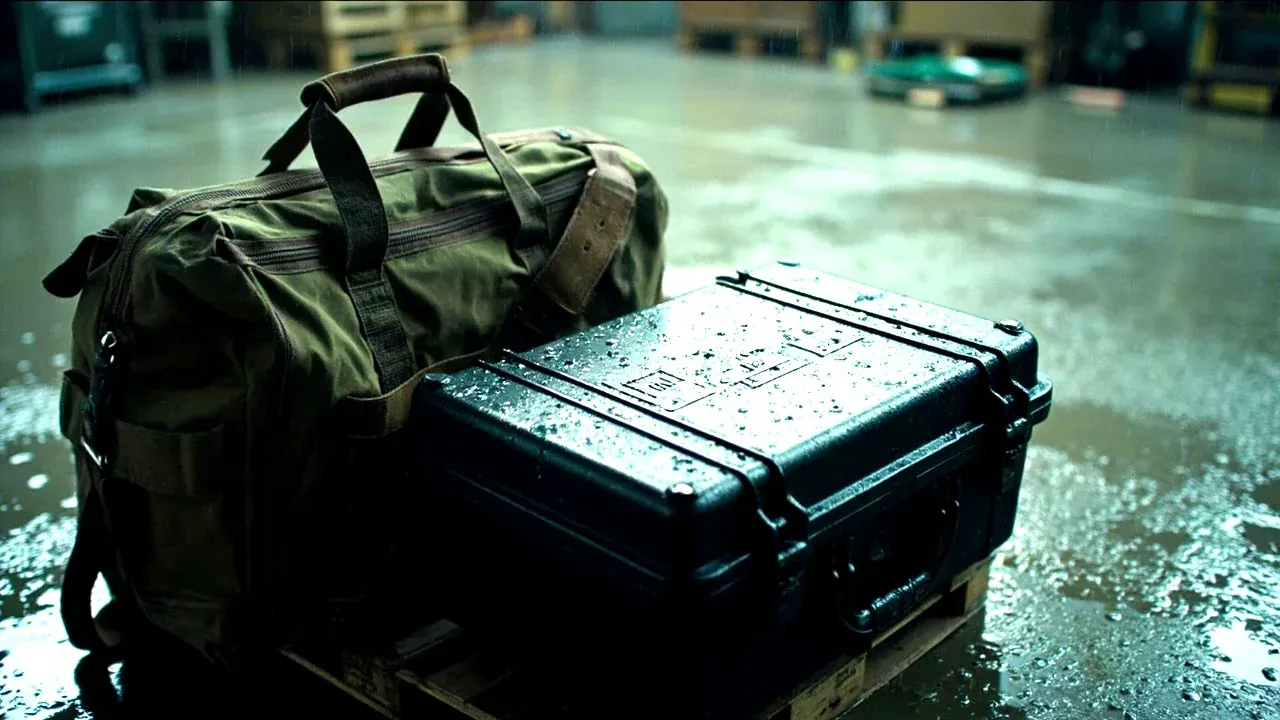
In the photo both sit in rain on a pallet: the hard shell does not absorb. Canvas absorbs, and seepage starts at needle holes and zipper teeth — canvas wets first, dries slowly, tools inside follow. Coated and nylon bags fare better; the hole paths remain.
A gasket gives the case a continuous barrier for short rain, but gaskets age and leak. Short exposure favours the case; long open-air work needs a cover.
4. Service life and replacement cost
A tool bag's life sits in stitching and handles, a hard case's in walls and latches; the failure modes differ completely.
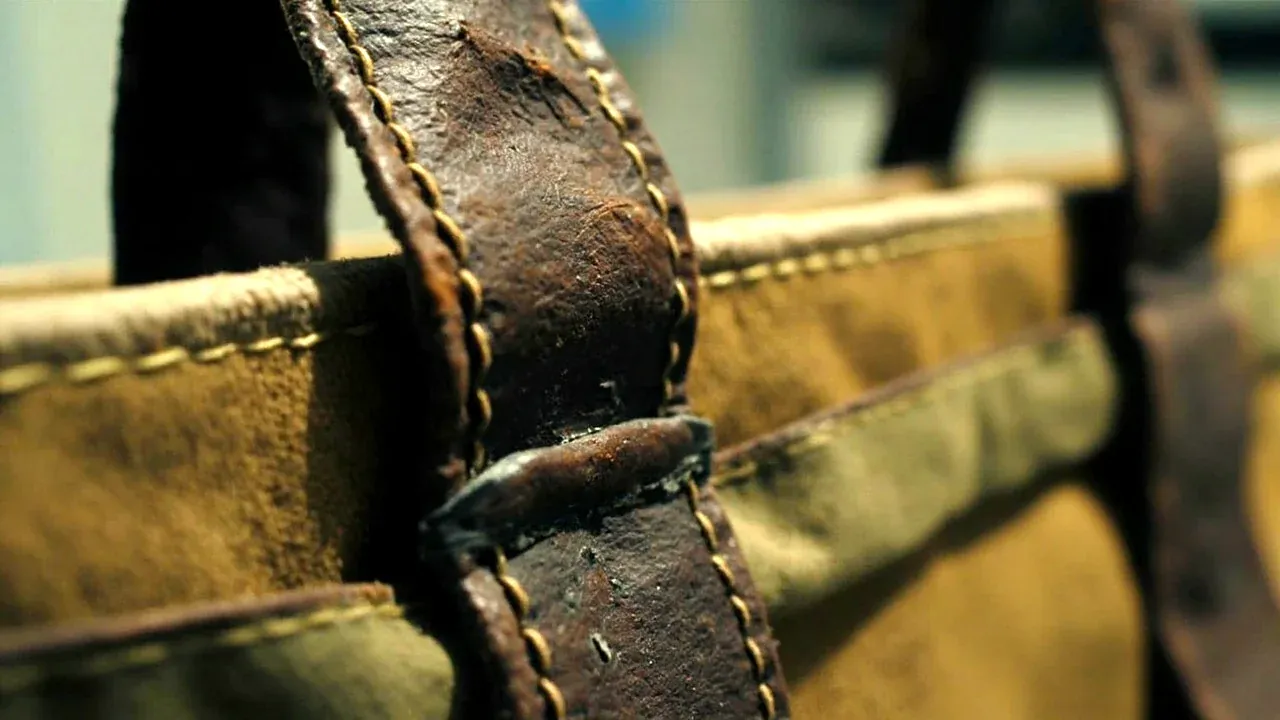
The photo shows stitching wear at a worn handle: root stitches fatigue first, the thread gives out, the handle detaches, the body often sound — swap the handle and the tool bag serves another year or two. A hard case fails through wall cracks and broken latches; hardware replaces individually, but a cracked wall scraps it.
Amortised over three years the tool bag's annual cost is often lower, provided someone stitches; an unmaintained bag dies sooner.
5. Five dimensions in one table
| Dimension | Tool bag | Hard case |
|---|---|---|
| Dead weight at equal load | Light, one third to one half | Heavy, walls and latches add mass |
| Drop protection | No rigid shell, tools take the hit | Walls absorb, contents protected |
| Rain | Seepage via needle holes and zipper teeth | Gasket barrier, rain stays out |
| Access order | Open cavity, fast but unpositioned | Slotted, slow but countable |
| Life and replacement | Stitching and handles replaceable | Wall damage irreversible |
Read the table by scene: daily carry weighs weight and access, transport weighs drops and rain, long holds weigh life.
Conclusion
Five lines compress the trade-off: access by open cavity or slots; weight by canvas and webbing or rigid walls; drops by shell absorption or none; rain by seepage or a gasket; life by replaceable stitching or irreversible walls. Answer three scene questions — access cycles, drop risk, rain — then compare prices; with the scene answered, the choice between a tool bag and a hard case is already written.
This article covers container-side specifications and design implications only.
Related Reading
Related Products
- 8 Series — Gun Cases; Military Equipment Cases; Camera Equipment Cases; Drone Cases; Watch Cases; Knife Cases; First Aid Cases; Electronics Equipment Cases
- WL8-2812 PP Gun Case — model WL8-2812
- All protective cases and toolboxes: 7 series, 158 models