

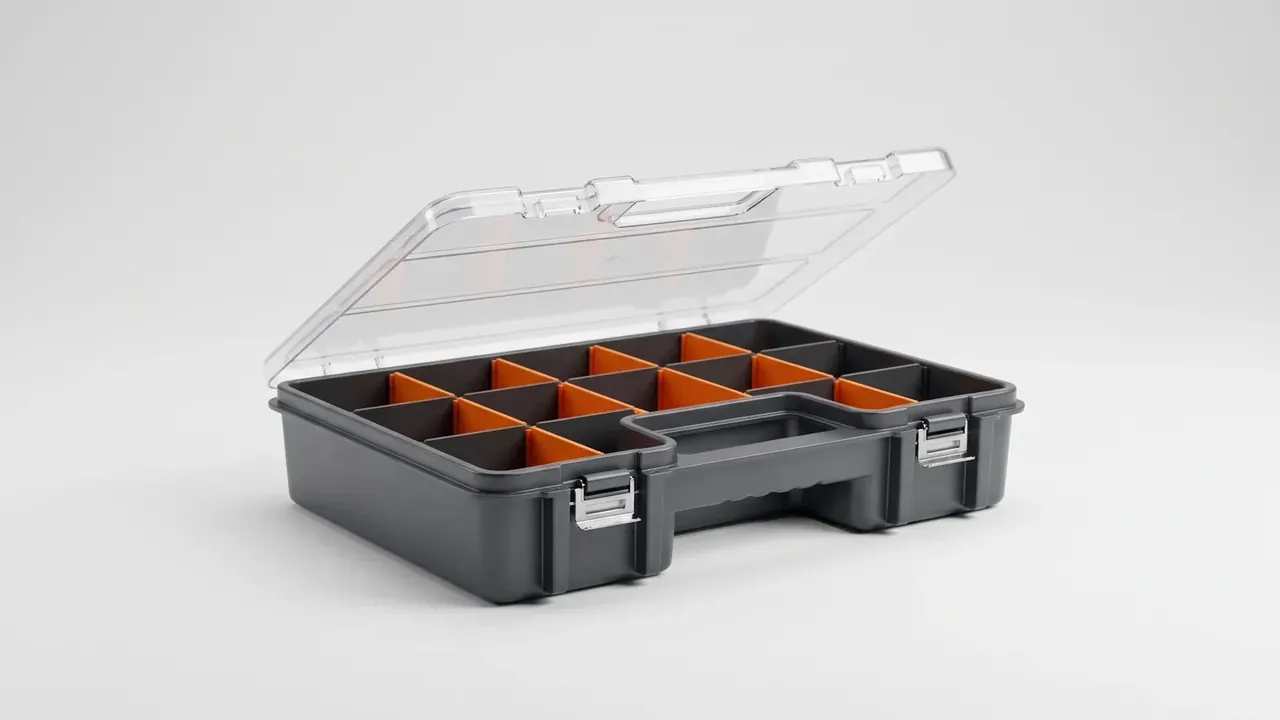
Quick answer: A tool box cover is configured by how the box rests, not by the industry. A stationary box needs a long skirt, a daily-opened box a half cover or front zip, an outdoor box ballast and a slope, a stacked box battens, a line-side box quick clips.
Table of contents
- Five Sites, Five Jobs for a Tool Box Cover
- Fixed Workshop Stations: Skirt and Cord
- Maintenance: Frequency Changes the Form
- Outdoors and Transit: Wind, Rain and Sun
- Warehouse and Line Side
- FAQ
1. Five Sites, Five Jobs for a Tool Box Cover
Sort sites by how the box spends its day: standing still, opening constantly, sitting in the open, racked, or travelling with a line. Those habits pull the design in opposite directions, so no single tool box cover serves all five. On a 600 × 400 × 300 mm box, 12 mm seam allowance per side closes without straining over the corners.
| Site | Resting habit | Priority | Cover life |
|---|---|---|---|
| Workshop station | Opened once a season | Long skirt, drawcord | 24 months |
| Maintenance | Opened daily | Half cover, straps | 12 months |
| Outdoors, transit | In the open | Ballast, slope, pale face | 9 months |
| Warehouse | Racked and stacked | Flat top with battens | 18 months |
| Line side | On the takt | Quick clips, label pocket | 6 months |
2. Fixed Workshop Stations: Skirt and Cord
A box opened once a season can carry a simple cover: the skirt runs 100 mm past the lid edge and an elastic cord pulls it against the wall, so dust must travel down and back up to reach the lid step. In a machining shop one 8-hour shift lays about 0.4 g of dust per square metre; a cover stretches the wiping interval from weekly to monthly. Oil mist then glues that dust into paste, so specify a dense coated cloth.
3. Maintenance: Frequency Changes the Form
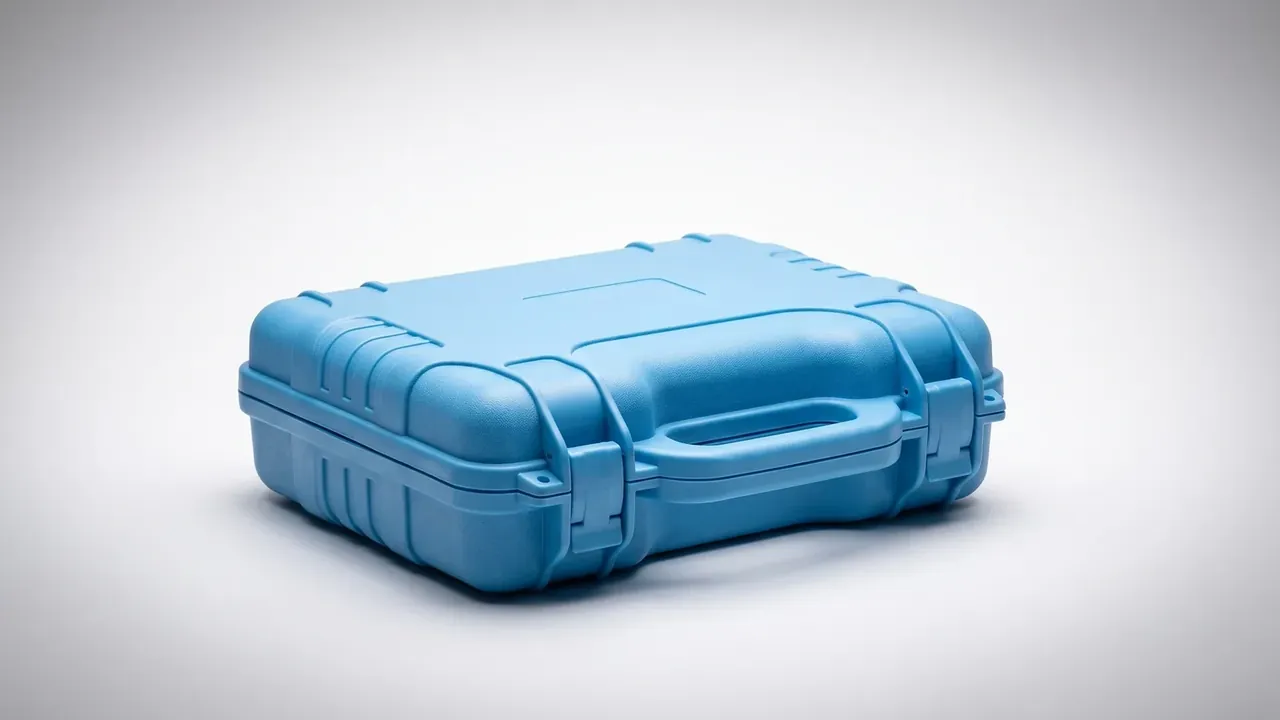
Twenty-two openings a day is normal. A full cover takes five seconds to lift and nine to refit, and the cord channel splits long before the fabric wears out. Above ten openings a day a half cover is the better tool: it wraps three sides and folds back on one release.
| Openings per day | Form | Fastening | Time per opening |
|---|---|---|---|
| Under 3 | Full cover | Hem drawcord | 14 s |
| 4 to 10 | Full cover | Corner straps | 9 s |
| 11 to 30 | Half cover | Diagonal straps | 5 s |
| Over 30 | Front zip | Zip, magnetic edge | 3 s |
4. Outdoors and Transit: Wind, Rain and Sun
Outdoors, wind, rain and sun arrive together. A force 8 wind means 17.2 m/s, enough to flap a loose wall and pump dust into the seams, so ballast with 8 kg sandbags at 1.5 m centres and lap panels by 70 mm. Keep the skirt 60 mm off the ground and give the top a 6° fall. A dark cover runs about 10 ℃ hotter than a pale one under a 65 ℃ lid, so outdoor duty calls for light grey.
5. Warehouse and Line Side
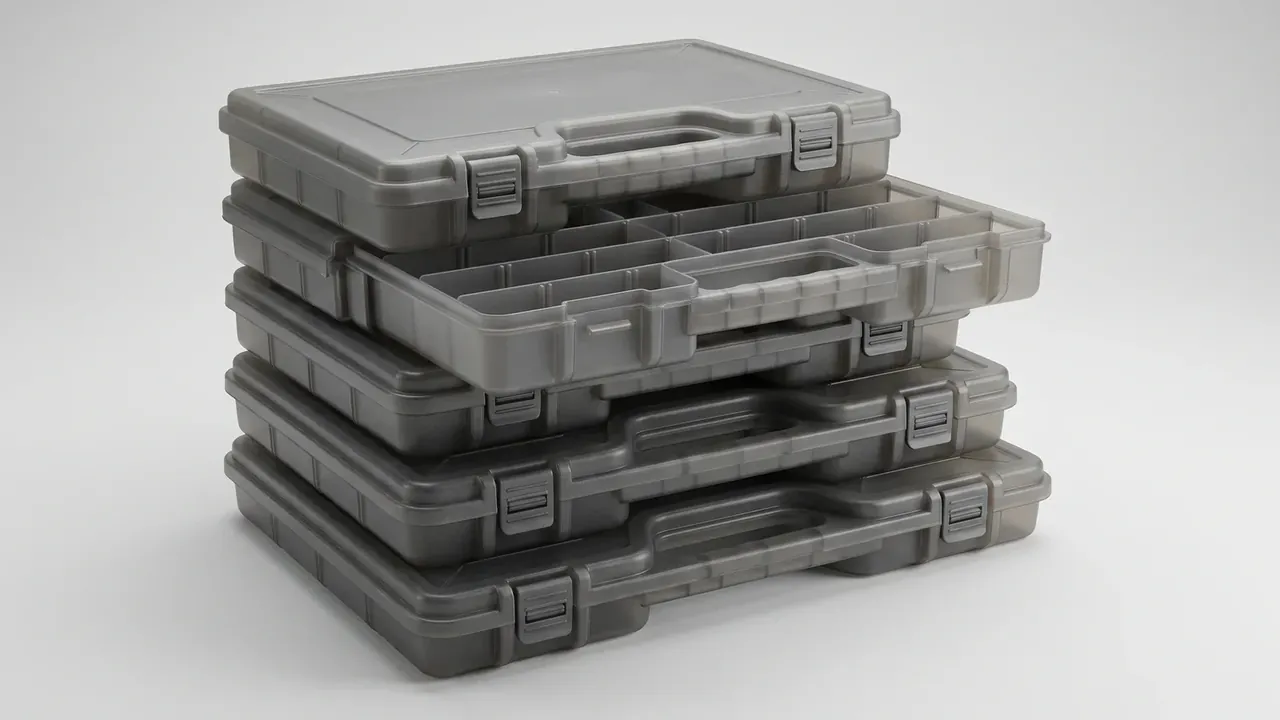
Once a box is racked, the cover carries the imprint of the box above: with four shelf levels and nine boxes on a 1200 × 1000 mm pallet in two tiers, the bottom cover needs two 8 mm glassfibre battens at 300 mm centres, or the top sags onto the lid. On a line, a 75-second takt leaves no room for a drawcord: quick clips bring the change inside 20 seconds, and a 100 × 70 mm pocket holds the work order.
| Feature | Workshop | Maintenance | Outdoor | Warehouse | Line |
|---|---|---|---|---|---|
| Skirt depth | 100 mm | 60 mm | 80 mm | 40 mm | 50 mm |
| Fastening | Drawcord | Diagonal straps | Battens, sandbags | Corner ties | Quick clips |
Conclusion
Read the site in a fixed order: how the box rests, how often it opens, and only then what the fabric is. The resting habit sets skirt and fastening, the opening rate sets the form, the fabric decides how long the cover survives. Start with the fabric and you pay for protection the site never needed, which is why a tool box cover is specified from the floor up.
This article discusses only the container (case body) side of specifications and design intent, and does not cover any handling, loading or use of the contents.
Related Reading
- What a tool box cover does and where its limits are
- Applications and configurations for hardware tool boxes
- How a tool box lid is built and the three lid types
- Material comparison for tool box covers
Related Products
- 8 Series — Gun Cases; Military Equipment Cases; Camera Equipment Cases; Drone Cases; Watch Cases; Knife Cases; First Aid Cases; Electronics Equipment Cases
- WL8-2812 PP Gun Case — model WL8-2812
- All protective cases and toolboxes: 7 series, 158 models