

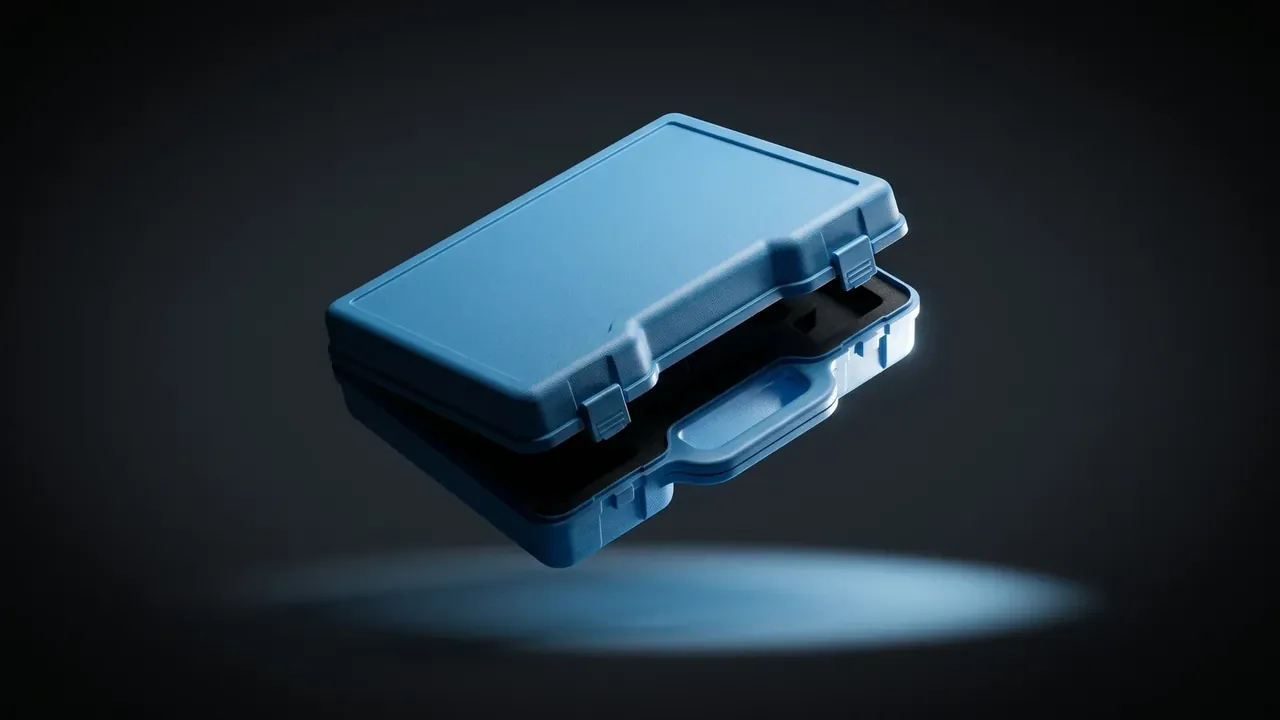
Quick answer: A workable Tool Box Cover acceptance standard converts six checks into numbers: appearance, dimensions, wall thickness, salt spray, drop impact and latch life, each with a gauge, a measuring point and a pass limit.
Table of contents
- The Six Test Items Behind a Tool Box Cover Acceptance Standard
- Measuring Appearance and Dimensions Against the Limit
- Wall Thickness and Salt Spray Sampling
- Drop and Latch Life Testing
- Sampling Plans and Nonconformance Handling
- FAQ
1. The Six Test Items Behind a Tool Box Cover Acceptance Standard
Most Tool Box Cover acceptance disputes share one root: both sides used the same sentence and measured different spots.
Appearance and dimensions decide whether the cover mounts and lifts; thickness and salt spray decide whether it survives three winters; drop and latch life decide whether it fails without warning. The last four are slow or destructive, so they are sampled and written tighter.
| Item | Method | Pass limit | Sampling |
|---|---|---|---|
| Appearance | 700 lux, 500 mm, 45° | Flow marks ≤3 mm, specks ≤2 mm² | 100% |
| Dimensions | Caliper, five points | ±2 mm, gap 3–6 mm | 20 pcs |
| Thickness | Ultrasonic, five points | ≥1.9 mm, mean ≥2.05 mm | 5 pcs |
| Salt spray | 5% NaCl, 35 °C, 96 h | White rust ≤5% | 3 pcs |
| Drop | 1.2 m, ten positions | Shift ≤2 mm | 5 pcs |
| Latch life | 5,000 cycles, 40–70 N | Change ≤20% | 2 pcs |
2. Measuring Appearance and Dimensions Against the Limit
Appearance is judged at 700 lux with the eye 500 mm away: flow marks ≤3 mm and specks ≤2 mm² pass, three of each per 0.1 m²; sink marks, weld lines and flash start cracks under load.
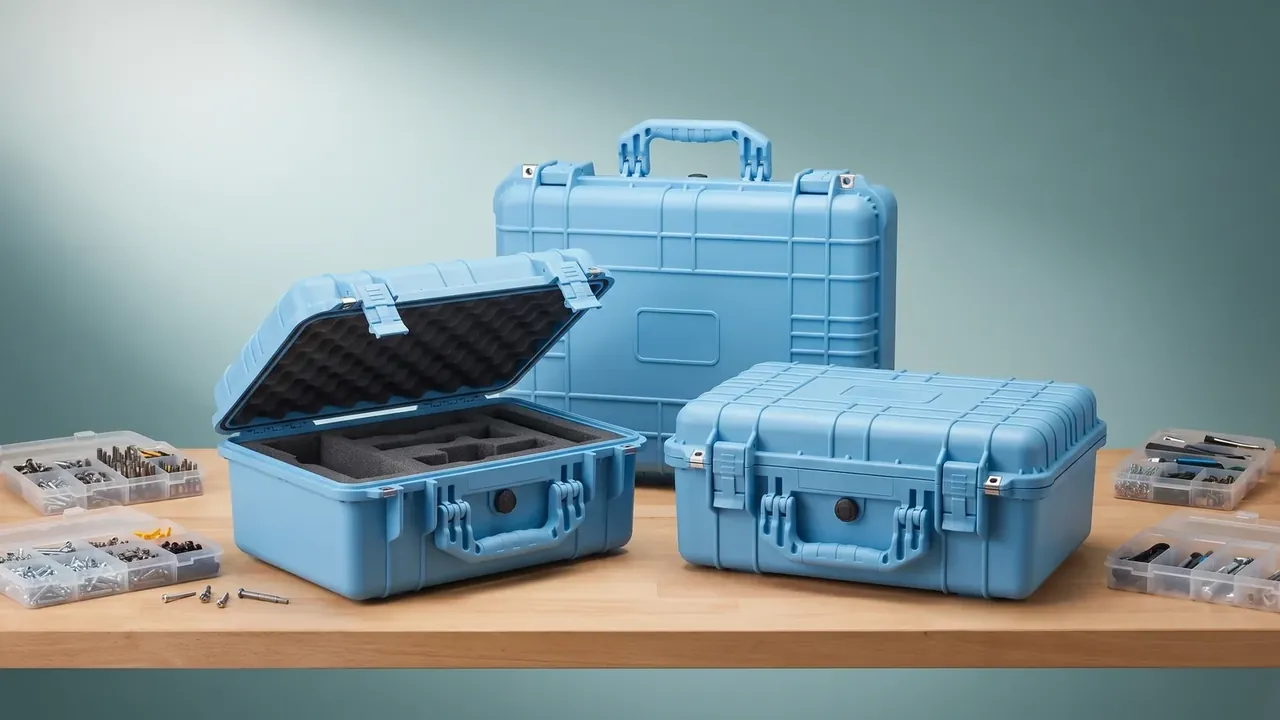
Colour reads ΔE ≤1.5 against the lot sample. Dimensions cover ±2 mm on length and width, a 3 to 6 mm fit gap and an 80 mm skirt below the lid edge, which keeps dust off the seam.
3. Wall Thickness and Salt Spray Sampling
Thickness is read ultrasonically at five points: top centre and four points 20 mm inside the corner radii. On a Tool Box Cover with a 2.2 mm nominal wall the floor is 1.9 mm and the mean must reach 2.05 mm; anything under 1.8 mm rejects the lot.
Salt spray is neutral at 5% sodium chloride, 35 °C, 96 hours: no red rust at latch bosses, white rust within 5%. Coupons travel with a latch attached, since the cover holds no metal.
| Item | Condition | Pass limit |
|---|---|---|
| Thickness | Ultrasonic, five points | Single ≥1.9 mm |
| Salt spray | 5% NaCl, 96 hours | White rust ≤5% |
| Adhesion | Cross-cut 1 mm, 6×6 | Flaking ≤5% |
| Cold storage | −20 °C, 4 hours | No cracking |
Adhesion uses six by six cross-cut lines with tape pulled at 45 degrees. Once coating lifts, salt spray creeps under the edge and a 96-hour result fails at 40.
4. Drop and Latch Life Testing
Ten drops: six faces, three edges, one corner, from 1.2 m onto a 30 mm slab at 80% of rated load. Passing means no crack, no latch release and shift under 2 mm.
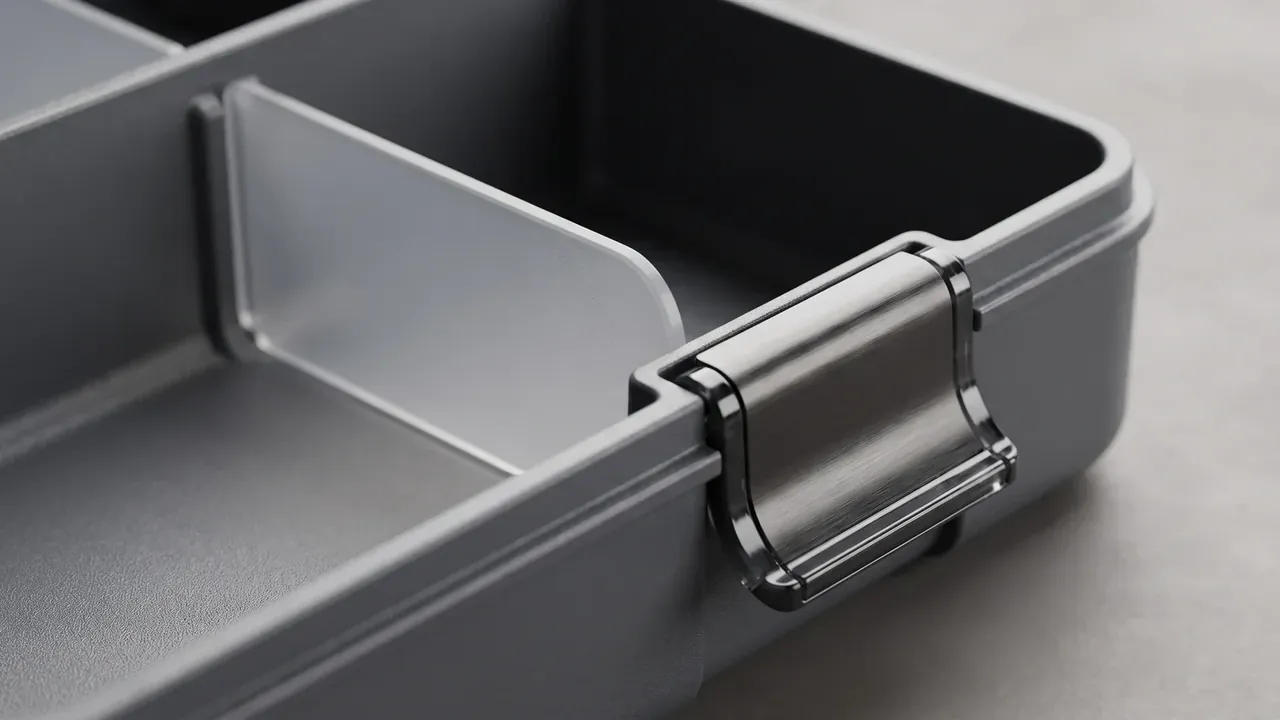
A cold drop at −20 °C for four hours catches the winter failure mode that room testing hides. Latch life runs 5,000 cycles at 40 to 70 N with a 20% change limit, about three and a half years of use.
5. Sampling Plans and Nonconformance Handling
Lots of 501 to 1,200 units are sampled at level II with 80 pieces, major at AQL 2.5, minor at 4.0. Destructive items take five pieces; one failure expands to 20, a second rejects the lot.
| Lot size | Sample | Major A/R | Minor A/R |
|---|---|---|---|
| 1–150 | 20 | 0 / 1 | 1 / 2 |
| 151–500 | 50 | 1 / 2 | 3 / 4 |
| 501–1,200 | 80 | 3 / 4 | 7 / 8 |
Sorting is allowed for appearance and dimensions, never for thickness or salt spray, which reflect process drift. Two consecutive failures suspend deliveries until a corrective action report arrives.
Conclusion
An acceptance standard is not a thicker document but six checks, three tables and one sampling rule. Appearance governs assembly, thickness and salt spray govern life, drop and latch life govern safety; put the numbers into the contract and a Tool Box Cover becomes inspectable.
This article discusses only the container (case body) side of specifications and design intent, and does not cover any handling, loading or use of the contents.
Related Reading
- What a tool box cover is: dust, sunlight and rain
- Tool box cover material comparison: three routes
- Case production SOP standards: writing the route card
- Protective case manufacturer standards: what to audit
Related Products
- 8 Series — Gun Cases; Military Equipment Cases; Camera Equipment Cases; Drone Cases; Watch Cases; Knife Cases; First Aid Cases; Electronics Equipment Cases
- WL8-2812 PP Gun Case — model WL8-2812
- All protective cases and toolboxes: 7 series, 158 models