

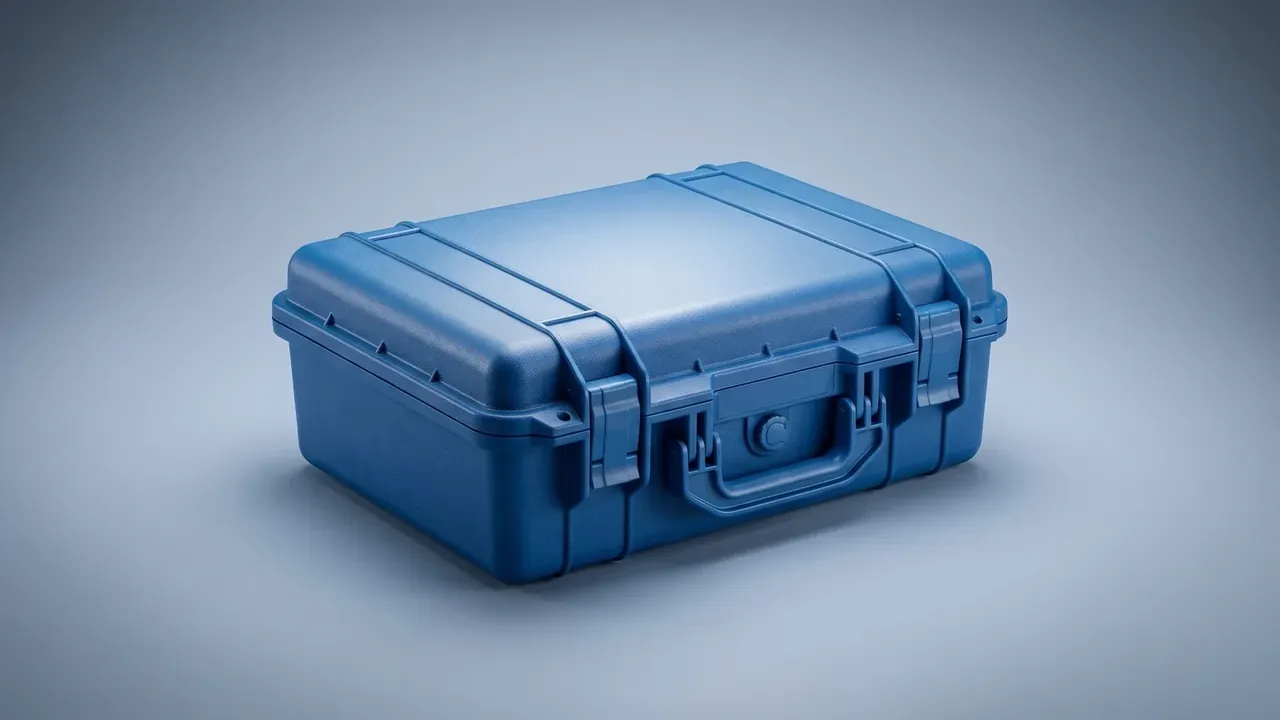
Quick answer: Standards at a protective case manufacturer split into three gates: incoming resin and hardware, in-process temperature and pressure, outgoing sealing and stacking. Each gate must leave a number, a sample and a record, or the buyer is paying for a verbal grade.
Table of contents
- Why a protective case manufacturer splits quality into three gates
- Incoming: resin, hardware and gaskets
- Process: what injection and rotomolding must hold
- Outgoing: sampling, pressure decay and stacking
- Records and traceability: batch, retention, re-check
- FAQ
1. Why a protective case manufacturer splits quality into three gates
Three gates answer three ways of losing control. Incoming failure is a resin switch: colour mottles, latches stop biting. Process failure is drift, wall thickness sliding from 3.4 to 3.0 mm, and the corner radius cracks at the first drop. Outgoing failure is a skipped item, and an inverted gasket ships anyway.
A protective case manufacturer moves criteria upstream because shell defects rarely rework: a thin wall cannot be thickened, a short-shot boss is scrap.
| Gate | What is judged | Evidence |
|---|---|---|
| Incoming | Resin grade, salt spray, hardness | Batch sample |
| Process | Melt and mould temperature, wall | First-off report |
| Outgoing | Decay, immersion, stacking | Sampling sheet |
2. Incoming: resin, hardware and gaskets
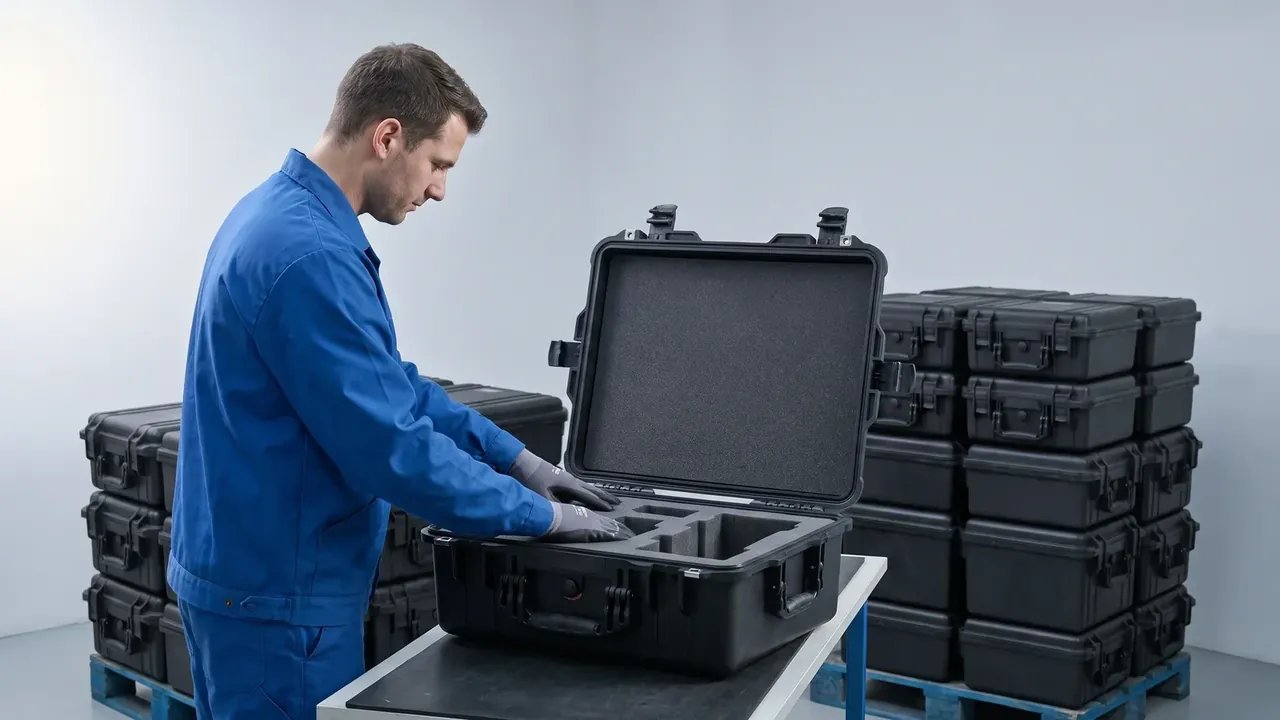
Resin is checked for melt flow, moisture and regrind. A melt index ten percent off nominal makes the same mould temperature short-shoot or flash. Hygroscopic resin above 0.2 percent moisture leaves silver streaks; regrind is capped at twenty percent.
Hardware decides seal life: latch springs and hinge pins must survive forty-eight hours of salt spray without white rust, and gaskets are gauged at 55 ± 5 Shore A.
| Item | Criterion | If it fails |
|---|---|---|
| Resin | Index ±10%, moisture ≤0.2% | Return or downgrade |
| Hardware | 48 h salt spray, no rust | Change supplier lot |
| Gasket | 55 ± 5 Shore A | Full inspection |
3. Process: what injection and rotomolding must hold
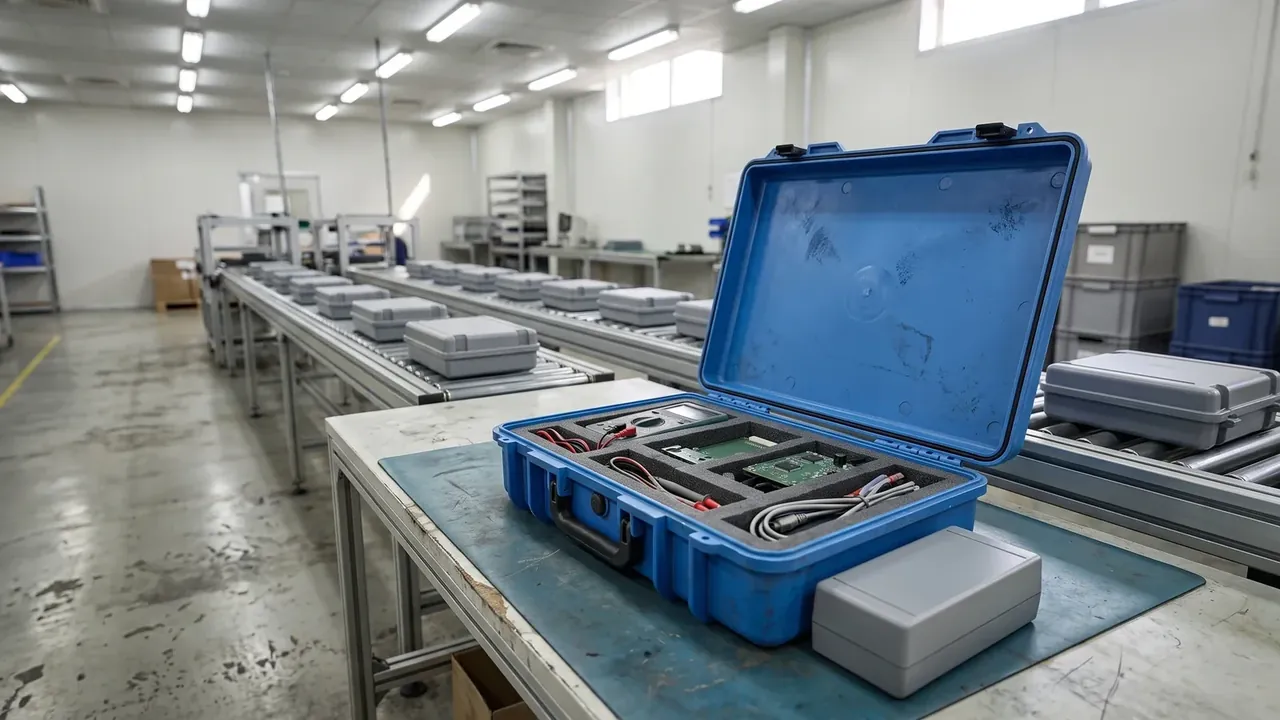
Injection has four numbers: melt and mould temperature, packing, cooling. Melt runs 210 to 230 °C for PP, 280 to 300 °C for PC. Mould temperature governs shrinkage: five degrees colder bows a flat face by 0.2 mm.
Rotomolding trades those for biaxial ratio and peak internal air. PIAT must reach 205 °C so powder fuses and bubbles escape; below 190 °C the inner skin traps powder.
| Process | Key parameters | Failure mode |
|---|---|---|
| Injection | Melt 210–230 °C, mould 40–60 °C | Sink, flash, drift |
| Rotomolding | PIAT 205 °C, 4:1 ratio | Uneven wall, bubbles |
4. Outgoing: sampling, pressure decay and stacking
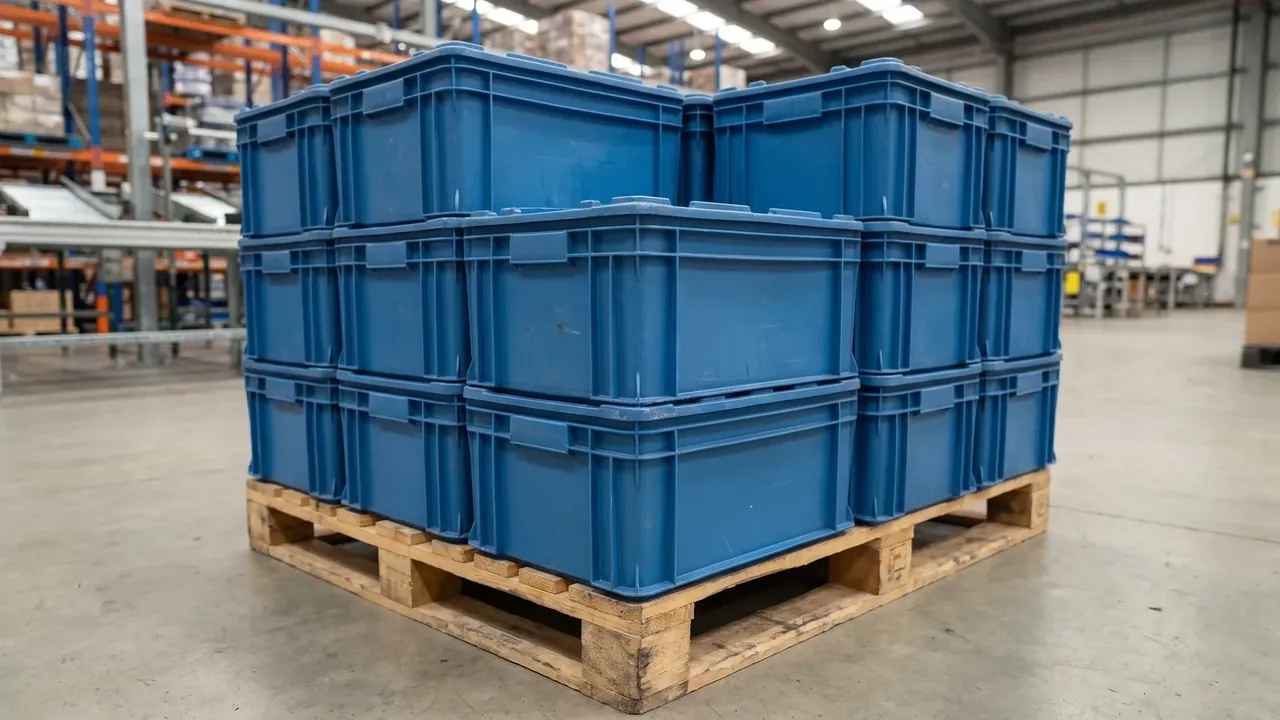
Outgoing samples by lot: appearance at inspection level II, AQL 2.5, tightened to 1.0 for functional items. Pressure decay is mandatory: 20 kPa for sixty seconds, no more than 1 kPa drop. Immersion follows IP67, one metre for thirty minutes. Stacking runs three tiers for twenty-four hours, failing above 2 mm of deflection.
| Item | Sampling | Criterion |
|---|---|---|
| Appearance | AQL 2.5 | No colour shift or flash |
| Pressure decay | 5% per lot | 20 kPa / 60 s, ≤1 kPa |
| Stacking | 3 pcs per lot | 3 tiers, 24 h, ≤2 mm |
| Drop | 3 pcs per lot | 1.2 m, six faces |

5. Records and traceability: batch, retention, re-check
A batch code decodes into date, machine and cavity, so a complaint leads back to one cavity in half an hour. Retain three pieces per batch for twelve months: a sample dropped under the same conditions separates design from use. Re-checks trigger on a resin change, a mould change, a stoppage beyond four hours or a batch complaint; a failure quarantines the lot.
Conclusion
Three gates are worth a number and a sample facing each other at each stage. Incoming samples, process parameters and decay curves let an auditor re-run the judgement. What a protective case manufacturer sells is a set of criteria anyone can reproduce.
This article covers container-side specifications and design implications only, not the handling, loading or use of the contents.
Related Reading
- Running an incoming batch inspection
- AQL acceptance for custom cases
- How to audit a case factory
- Checklist for pre-shipment inspection
Related Products
- 8 Series — Gun Cases; Military Equipment Cases; Camera Equipment Cases; Drone Cases; Watch Cases; Knife Cases; First Aid Cases; Electronics Equipment Cases
- WL8-2812 PP Gun Case — model WL8-2812
- All protective cases and toolboxes: 7 series, 158 models