


Quick answer: Tool box lid maintenance needs numbers, not judgement: latches monthly, hinge quarterly, gasket twice a year. End play past 0.8 mm means a new pin, compression under 25 percent a new seal, latch force under 120 N adjustment or replacement.
Table of contents
- Three Verdict Lines for Tool Box Lid Maintenance
- Hinge: End Play, Pin and Limit Strap
- Gasket: Compression, Ageing and Full-Ring Swap
- Latches: Holding Force, Keeper Wear and Order of Adjustment
- Cleaning and Lubrication in the Right Order
- FAQ
1. Three Verdict Lines for Tool Box Lid Maintenance
Tool box lid maintenance runs on three lines: function, whether it closes and compresses; safety, whether the stop holds in a tip-over; and life, how many months the part has left. One schedule serves all three, each with its own threshold, or every check ends in the word serviceable.
| Item | Interval | Tool | Limit |
|---|---|---|---|
| Hinge pin and strap | quarterly, 250 hours | caliper, feeler | end play 0.8 mm |
| Gasket | twice a year | gauge, durometer | 25 to 30 percent |
| Latches | monthly | force gauge | 120 N or more |
| Rim and rib roots | yearly | torch, loupe | no pale line |
| Vent hole | twice a year | 0.8 mm pin | clear |
One card per box, with date, part number and value, turns three visits into a trend.
2. Hinge: End Play, Pin and Limit Strap
The hinge of a tool box lid fails at the pin first, and it shows as end play. On a five millimetre pin, 0.8 mm of play lets the rim slide sideways as it closes and shears the gasket. Once the bore wears oval by 0.3 mm, a new pin will not recover it.
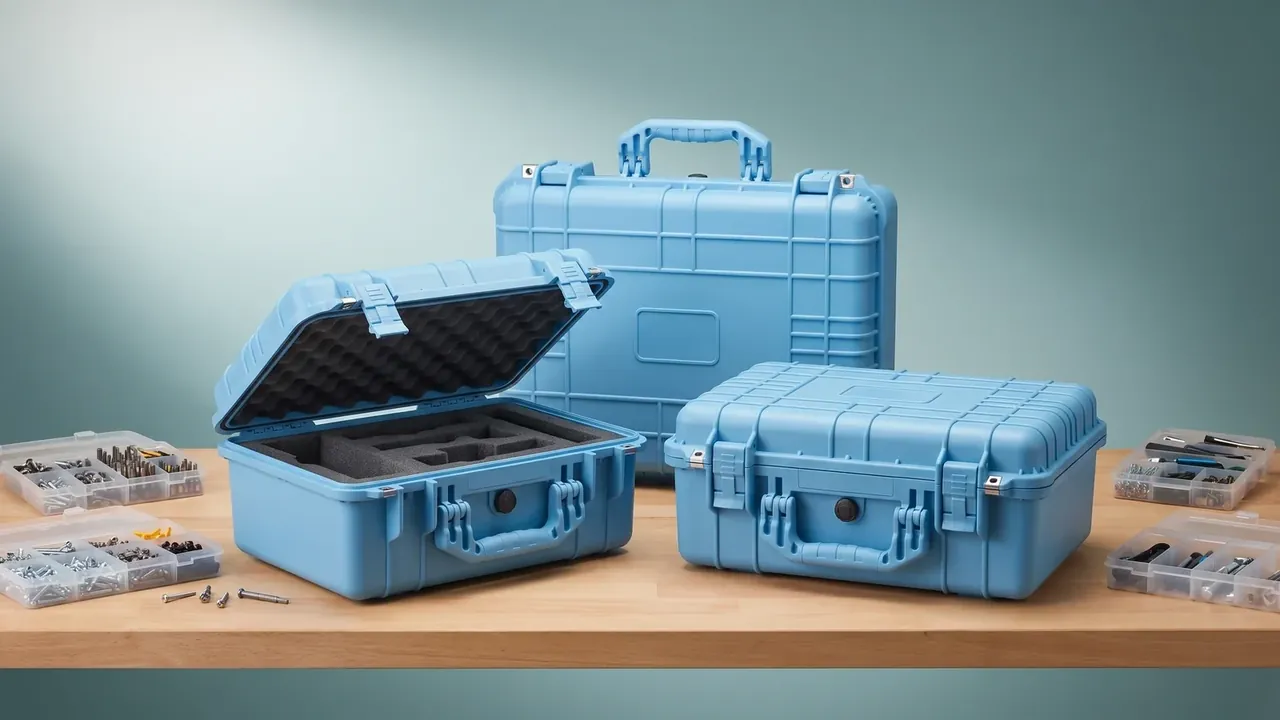
Judge the limit strap by eye: frayed edges are normal, but two broken stitches or a white stress line means replacement. Strap length sets the opening angle, and ten millimetres short puts the lid onto the rim. Use silicone grease, 0.15 g per point; oil collects dust and grinds the pin.
3. Gasket: Compression, Ageing and Full-Ring Swap
A tool box lid seals on compression, and the window is 25 to 30 percent. Below 25 the gasket never touches down; above 35 the closing force climbs, the latch is dragged over centre and the keeper cracks first. Measure four corners and four edges, and replace when two of the eight points fail.
Ageing shows two ways: hardness up five points, or permanent set past 30 percent. Hardening, crazing and thinned corners are stages of one decay, so any of them ends the argument. Swap the full ring; a butt joint leaks even half a millimetre out.
4. Latches: Holding Force, Keeper Wear and Order of Adjustment
Read a tool box lid latch with a force gauge instead of by feel. Under 120 N the gasket is under-compressed; a keeper worn through 0.5 mm lets the lid spring open under vibration, which belongs to the safety line and is replaced, not repaired. Screws go to 1.6 N·m, beyond which the keeper cracks.
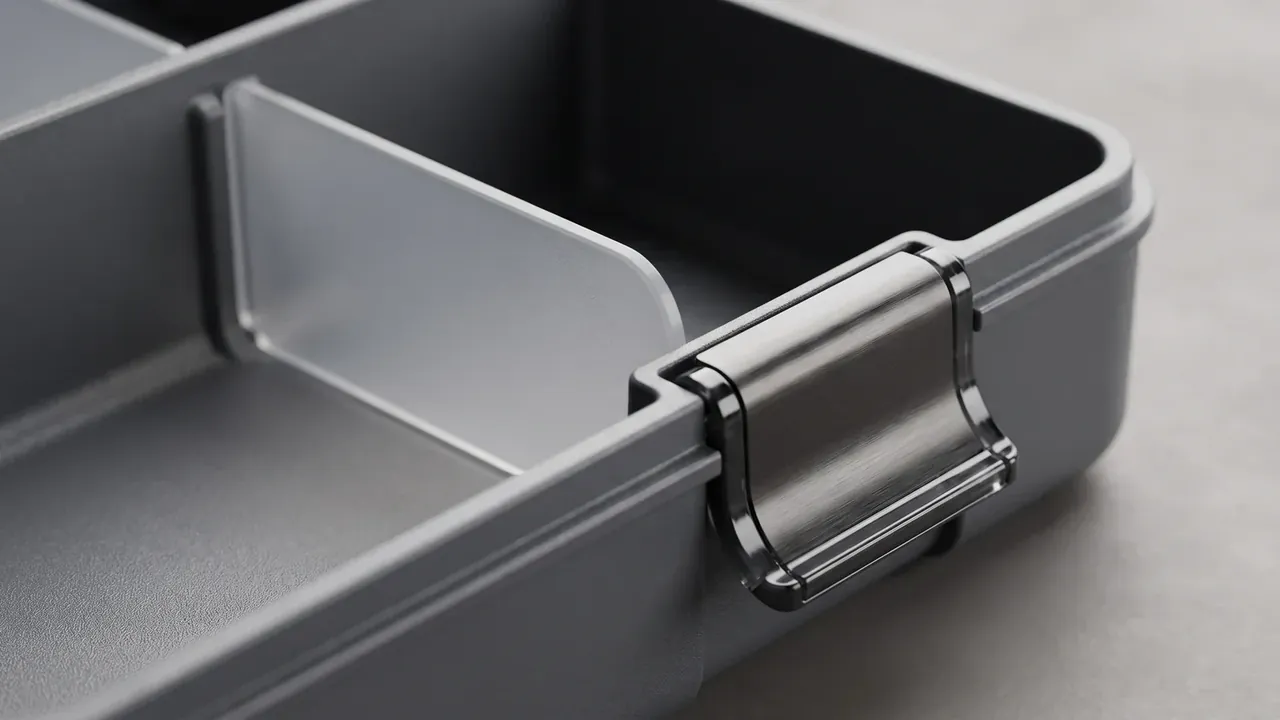
Adjust the keeper first, the nose second: keeper position sets the compression stroke while the nose only locks it. With rim offset past 2 mm, do not force the latch, or one side of the gasket goes solid and the other hangs free.
5. Cleaning and Lubrication in the Right Order
Clean before lubricating, or grit is rubbed into the bore. Use a neutral cleaner at pH 6 to 8 and water under 40 degrees Celsius, keeping a pressure lance 300 mm from the rim, since a square jet lifts the gasket. Acetone blooms the rotomoulded surface.
| Item | Clean | Lubricate | Never |
|---|---|---|---|
| Hinge pin | neutral cleaner | silicone grease, 0.15 g | oil traps dust |
| Gasket | water, cloth | talc, thin film | mineral oil swells rubber |
| Latch pivot | neutral cleaner | dry film lubricant | grease holds grit |
| Rim and grooves | neutral cleaner | none | solvents, degreasers |
Lubricate by cycles: every 500 openings, halved in dusty plants. Wipe off the excess, since a wet surface collects dust and grooves the pin within weeks.
Conclusion
Tool box lid maintenance is not experience but three sheets: a schedule saying when to look, a threshold table saying when a part is finished, a card showing the trend. End play, compression and latch force each carry a number, so most failures are forecast a quarter ahead, which keeps a tool box lid controllable rather than durable.
This article covers container-side specifications and design implications only, not the handling, loading or use of the contents.
Related Reading
- How the three lid types are built
- Diagnosing lid distortion and latch failure
- Service intervals for a rotomoulded case
- Choosing latches, gaskets and accessories
Related Products
- 8 Series — Gun Cases; Military Equipment Cases; Camera Equipment Cases; Drone Cases; Watch Cases; Knife Cases; First Aid Cases; Electronics Equipment Cases
- WL8-2812 PP Gun Case — model WL8-2812
- All protective cases and toolboxes: 7 series, 158 models