


Quick answer: A tool kit chest quote is the sum of shell, insert, hardware and mould amortisation at one quantity, not a case price. Send cavity envelope, wall, insert and annual volume together, and three bands become comparable. MOQ follows colour-change cleaning; lead time is tooling, trials and production added up.
Table of contents
- Six Fields to Send Before a Tool Kit Chest Quote
- What the Quote Is Made Of
- MOQ and Mould Amortisation
- Lead Time in Three Stages
- Acceptance and Payment Terms
- FAQ
1. Six Fields to Send Before a Tool Kit Chest Quote
One outline drawing sent to three suppliers starts most sourcing mistakes. Ten millimetres more cavity depth, half a millimetre less wall, or foam instead of a vacuum tray moves the price by thirty per cent, and none of that gap is margin. A tool kit chest quote is only comparable on the same inputs.
| Field | Write it as | Missing it means |
|---|---|---|
| Cavity | Length, width, depth, datum | Built back from outline |
| Wall and resin | 3.0 mm copolymer PP | Same price, weaker part |
| Latches | Count, material, lock hole | Cheapest hardware later |
| Insert | Compartments, cut to part | Foam and tray differ by double |
| Volume | First batch, quarterly top-up | High band, later rise |
Colour and finish make six; leave one out and each supplier fills the gap with an assumption.
2. What the Quote Is Made Of
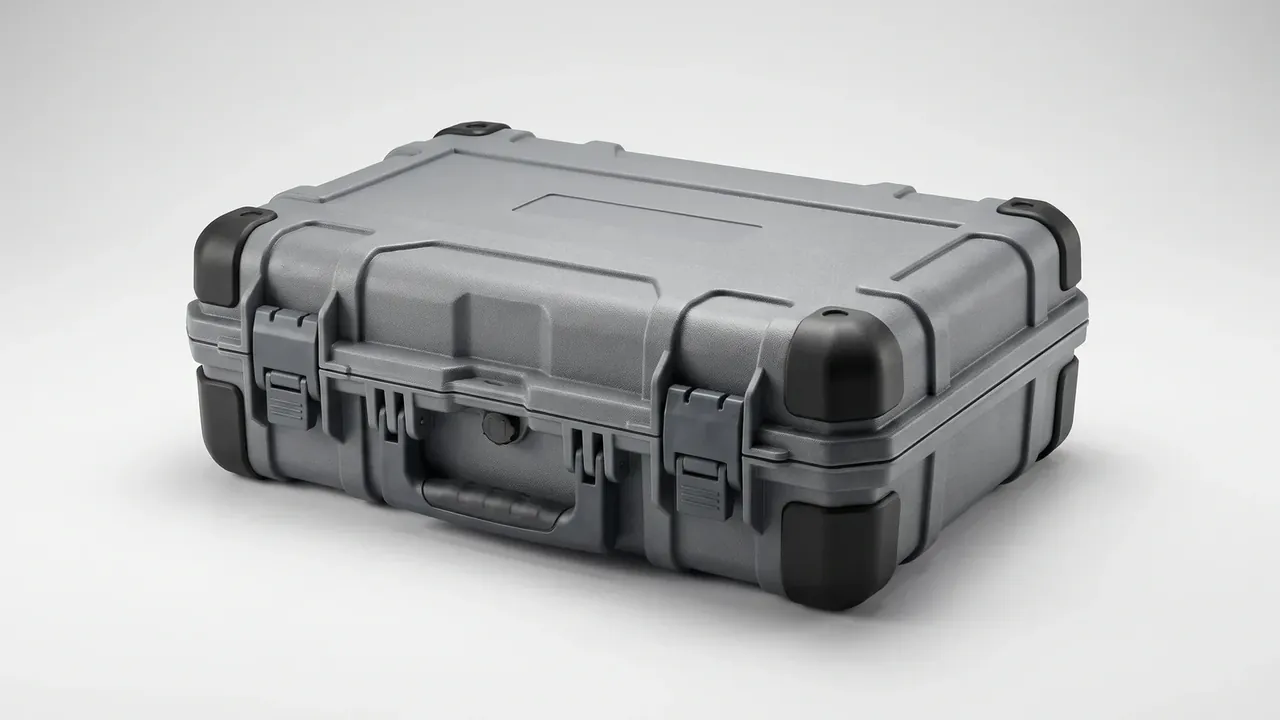
Ask for seven cost lines; one number never shows which is expensive.
| Cost line | Typical share | Driven by |
|---|---|---|
| Resin | 35 to 45 per cent | Weight, grade, masterbatch |
| Moulding | 12 to 18 per cent | Wall, cycle, tonnage |
| Hardware | 8 to 12 per cent | Latches, lock core, hinges |
| Insert | 10 to 20 per cent | Foam or tray, compartments |
| Assembly, packing | 8 to 14 per cent | Fixing, inspection |
Band pricing assumes one mould, one colour, no insert. Five hundred pieces land about ten per cent under two hundred, a thousand drop another five to seven points and the curve flattens. Quoting the shell alone is the trap: cheap until the insert is added back.
3. MOQ and Mould Amortisation
MOQ follows three process floors: a colour change costs about two hours of purged scrap and labour, latches ship five hundred to a carton, and foam dies spread thinner as volume falls. Together they put the minimum near two hundred pieces for one colour and insert, or five hundred per colour when colours mix.
Mould cost is paid one of two ways. Buying the tool puts it on your books and lets you move it at will; amortising spreads it across an agreed quantity, with a no-transfer clause. A rotary mould at 48,000 CNY works out at 48 CNY per case across a thousand pieces and 24 CNY across two thousand. Buy if the drawing may change, amortise if frozen, and name the tool number and transfer terms either way.
4. Lead Time in Three Stages
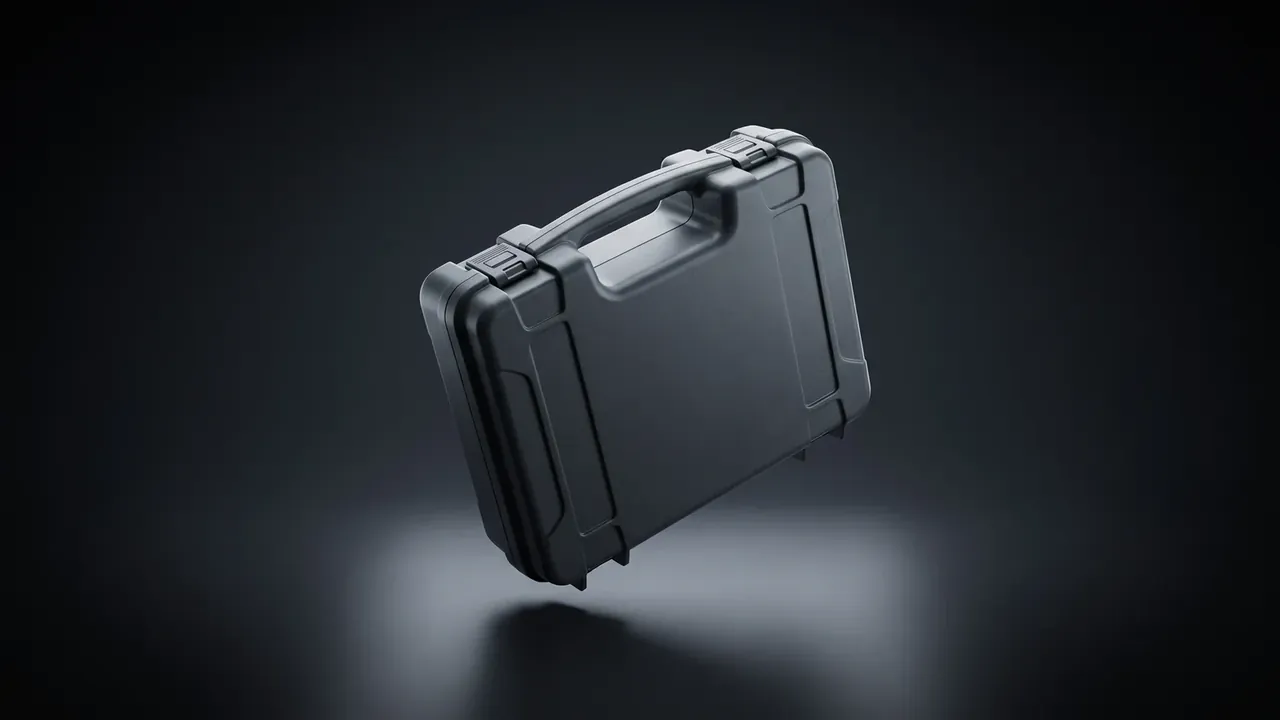
About sixty days pass between sign-off and goods arriving; tooling with production takes three quarters.
| Milestone | Days | Where it slips |
|---|---|---|
| Drawing and kit list | 3 to 5 | Datum revised |
| Tooling | 22 to 28 | Mould shop queue |
| Trial shot | 5 to 7 | Uneven wall, latch off catch |
| Insert samples | 5 to 7 | Runs with tooling |
| Production | 18 to 25 | Machine queue, colour changes |
Tooling plus production is the critical path; insert samples run alongside tooling and save five to seven days, with the clock from drawing approval. Peak season adds ten to fifteen days of queue.
5. Acceptance and Payment Terms
Acceptance has to be testable: measure cavity and wall on five cases, sample appearance to AQL 2.5, and test every latch and handle at 1.5 times packed weight.
Payment locks onto acceptance: thirty per cent on order, sixty after inspection, ten after a six-month warranty. Holding a tenth back gets flash trimmed and hardware shipped, and spares belong in the contract, one set per fifty cases.
Conclusion
Tool kit chest procurement is moving uncertainty forward: complete fields make quotes comparable, a seven-line breakdown shows where the money sits, and clear positions on MOQ and amortisation keep the first order from distorting every reorder. Price the package, not the shell, and the tool kit chest you buy is cheaper over its service life.
This article discusses only the container (case body) side of specifications and design intent, and does not cover any handling, loading or use of the contents.
Related Reading
- How to answer a protective case enquiry
- Where small-batch customisation stops paying
- Scheduling mixed orders on one line
- What a tool kit chest is
Related Products
- 8 Series — Gun Cases; Military Equipment Cases; Camera Equipment Cases; Drone Cases; Watch Cases; Knife Cases; First Aid Cases; Electronics Equipment Cases
- WL8-2812 PP Gun Case — model WL8-2812
- All protective cases and toolboxes: 7 series, 158 models