

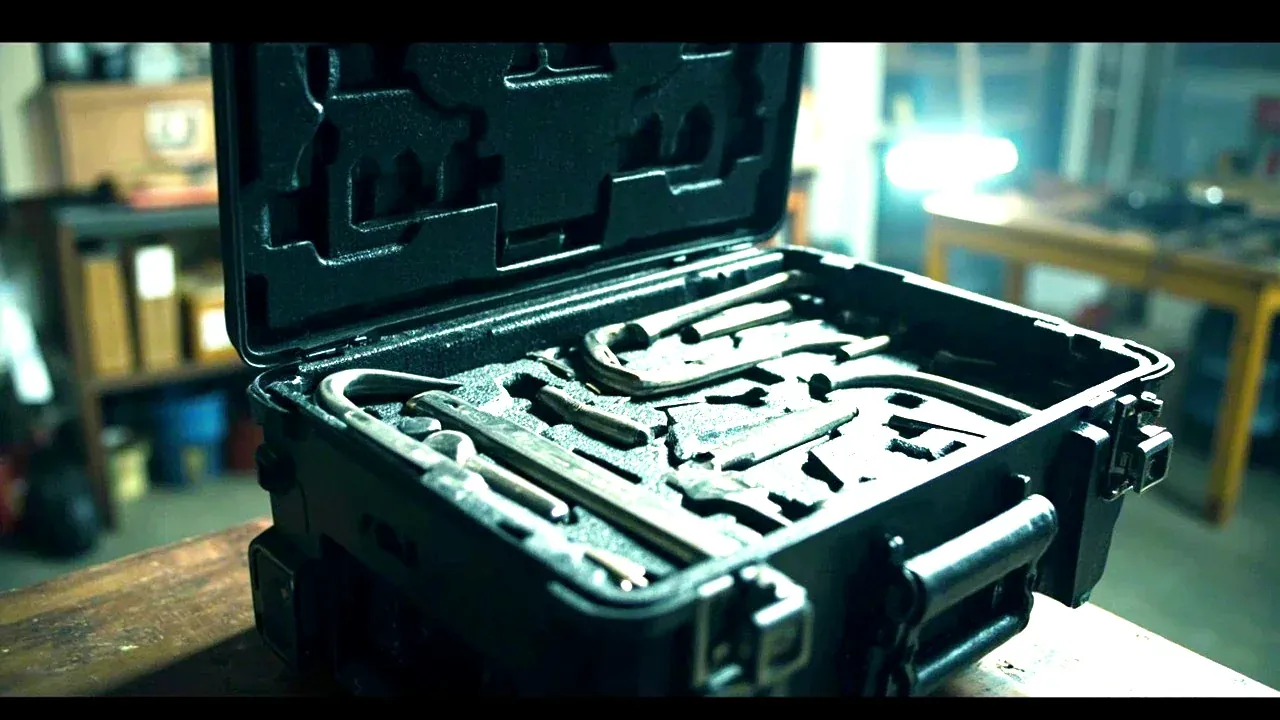
Quick answer: A tool kit chest binds one tool set and one checklist to a single shell — one set per chest, handed over against the list. It differs from an ordinary tool box in three things: contents fixed by the list, foam cut to the list, signed handover.
Table of contents
- What a tool kit chest is: one chest, one list
- Checklist management: handing over by the list
- Foam cut to the list: slots as inventory
- Handover sign-off: chest, list and person
- Where a tool kit chest fits
- FAQ
1. What a tool kit chest is: one chest, one list
A tool kit chest is the delivery unit of a complete tool set: the set fixes which tools, which sizes and how many, and the chest carries that set and nothing else.
The photo shows a printed checklist in rows — number, name, size, quantity. The term marks the boundary against tool box: a tool box says tools are inside, a tool kit chest says a set, a list and a handover.
2. Checklist management: handing over by the list
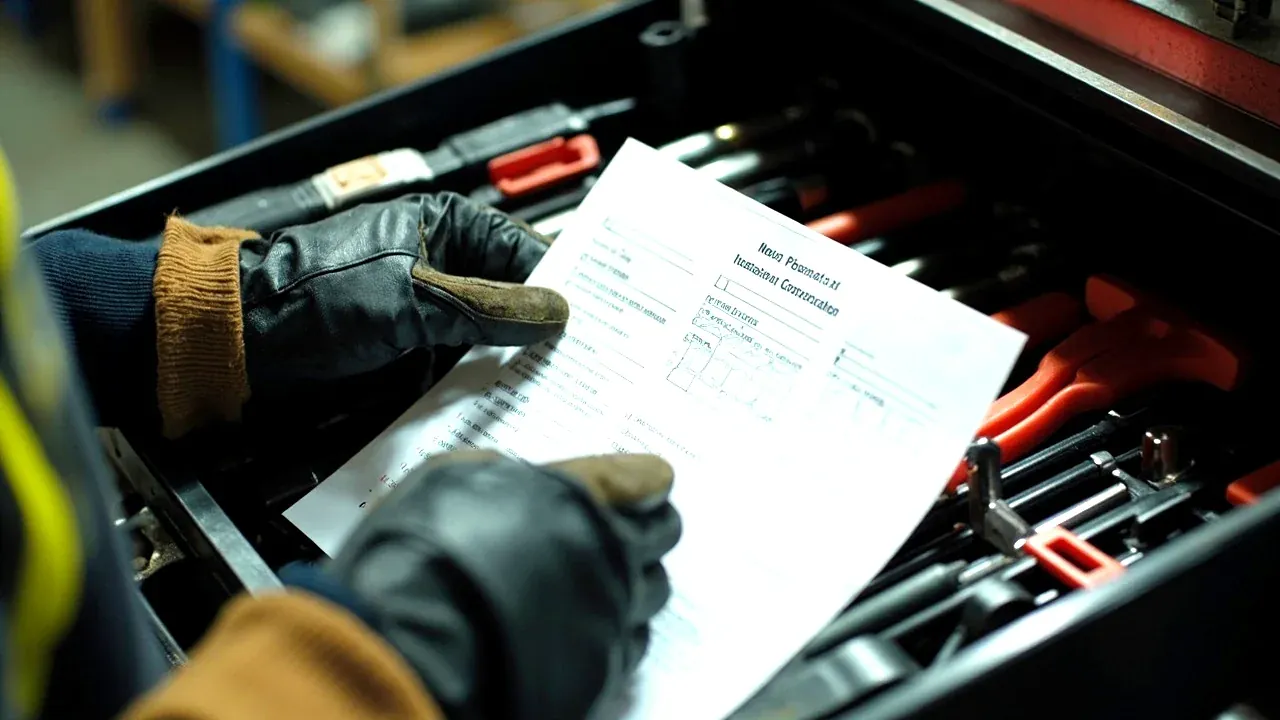
The checklist is the books of a tool kit chest. At kitting, every item goes in against the list; every later handover is checked against the same list, and only a matching count gets signed.
Three things must line up:
- List to chest: one list per chest, numbers match;
- List to person: who drew, holds and returns it;
- List to slot: list rows match the numbered foam slots.
Handover runs by the list, not the heap: a heap hides what is missing, a list shows it.
3. Foam cut to the list: slots as inventory
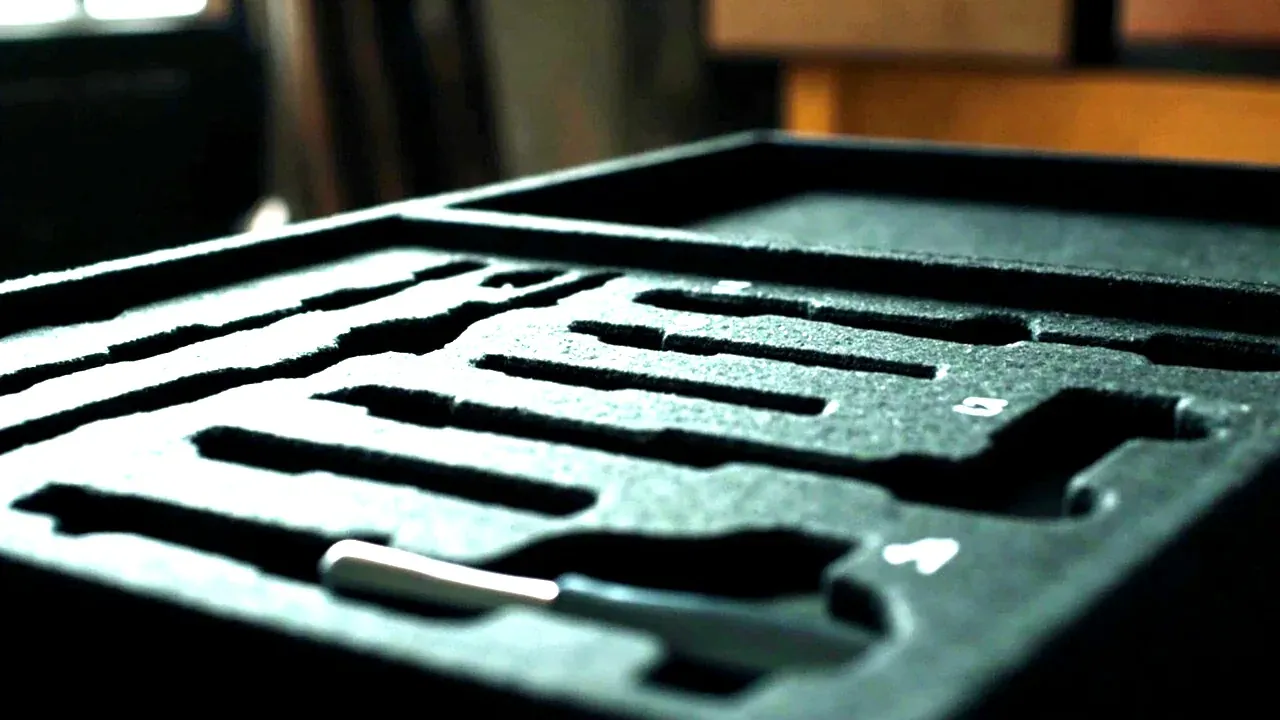
Foam cut to the list divides a tool kit chest from an ordinary tool box: each tool outline is cut into the insert as a numbered slot, slot order following list rows. In the photo most numbered cut-outs are empty — an empty slot is a missing tool.
- Slots fix the item: one slot per tool, it drops home with a click;
- Slots fix the count: two identical tools, two slots, one gap means one missing;
- Slots fix the order: frequent tools on top, numbered by pick order.
Plain foam cannot do this: tools shift and counting still runs item by item; a different outline means re-cutting a section.
4. Handover sign-off: chest, list and person
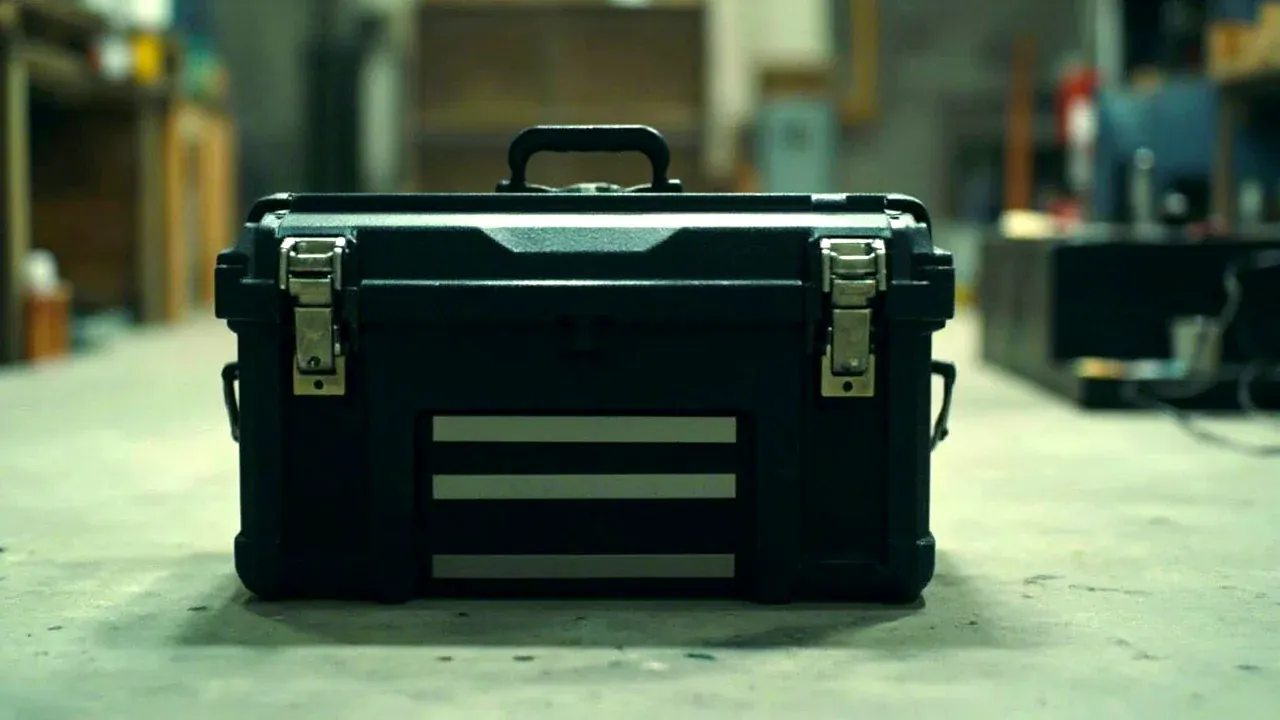
Sign-off pins one-set-per-chest to a person. The photo shows a closed tool kit chest, latches down and handover-ready. Three parties attend — issuer, receiver, witness — the list is checked item by item, and once counts match, chest, list and person are bound by signature.
The sheet records chest and list numbers, the moment, and both signatures. A later shortage draws the line: missing before signature counts against the issuer, after against the receiver.
5. Where a tool kit chest fits
A tool kit chest fits where the set is stable, handovers run by the list and sets are counted whole: machine-supplied tooling, crew kits, gauge groups. Three tests decide:
| Case | Verdict | Reason |
|---|---|---|
| Stable set, handover by list | Fits | Slots and list hold for years |
| Tools swapped freely | Does not fit | Cut-outs rebuilt often |
| Single tool carried loose | Does not fit | A portable box is lighter |
Where the only need is moving tools, an ordinary tool box is cheaper; the value of a tool kit chest sits in counting and handover.
Conclusion
Three sentences settle what a tool kit chest is. It is the one-shot delivery unit of a complete set — one set per chest, one list per set. Foam cut to the list and a travelling checklist turn counting from rummaging into reading numbers; signed handover pins responsibility to a person. Confirm a stable set and handover by the list before choosing; without them, a tool kit chest is just a tool box with holes in the foam.
This article covers container-side specifications and design implications only.
Related Reading
Related Products
- 8 Series — Gun Cases; Military Equipment Cases; Camera Equipment Cases; Drone Cases; Watch Cases; Knife Cases; First Aid Cases; Electronics Equipment Cases
- WL8-2812 PP Gun Case — model WL8-2812
- All protective cases and toolboxes: 7 series, 158 models