

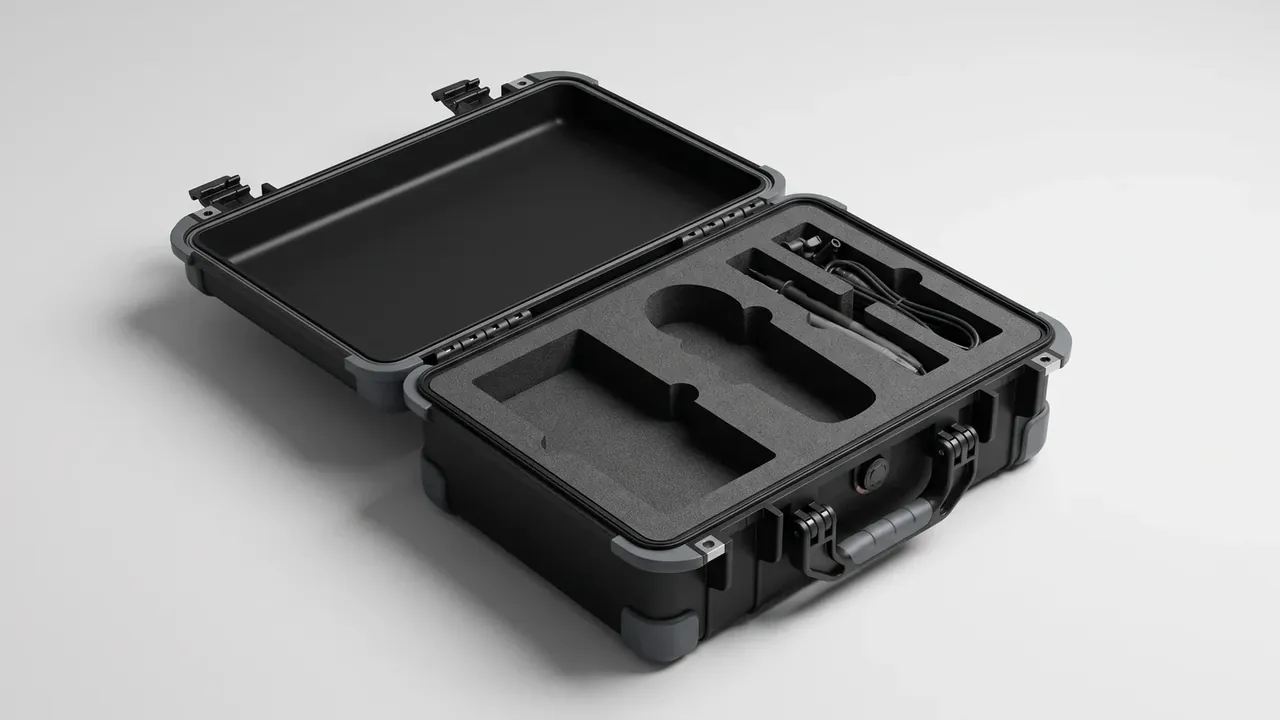
Quick answer: A transport and storage container is not used one way. Warehouse turnover cares about the base and stack height, in-plant work about latch speed and forklift pockets, transfers about sealing and corners, repair about dividers and label pockets, cold and wet areas about gaskets and drainage. The body stays the same; the fittings change.
Table of contents
- Transport and Storage Container Scenarios in Warehouse Turnover
- In-Plant Logistics versus Cross-Region Transfers
- Outsourced Repair Loops and Label Pockets
- Cold Chain and Wet-Area Staging
- Matching Configuration to Scenario
- FAQ
1. Transport and Storage Container Scenarios in Warehouse Turnover
One warehouse holds three storage postures, each loading the base differently. A case on shelving is pulled out whole, so anything taller than the clear height scrapes the beam. A floor stack is lifted as a block, and the load lands on the ribs beneath the floor.
| Posture | Base | Retrieval | Focus |
|---|---|---|---|
| Shelving | Flat floor, four ribs | Pulled by hand | Under 420 mm tall, 400 mm clear height |
| Floor stack | Flat, thick corners | Forklift lifts block | 500 kg static, 4 tiers |
| Trolley | 100 mm pockets | Pushed, parked | Pockets at least 900 mm deep |
Height binds before volume: at a 400 mm clear height, a 430 mm case with the handle must move to the floor.
2. In-Plant Logistics versus Cross-Region Transfers
An in-plant route is short, frequent and predictable; a transfer runs hundreds of kilometres and loads the corners and latches.
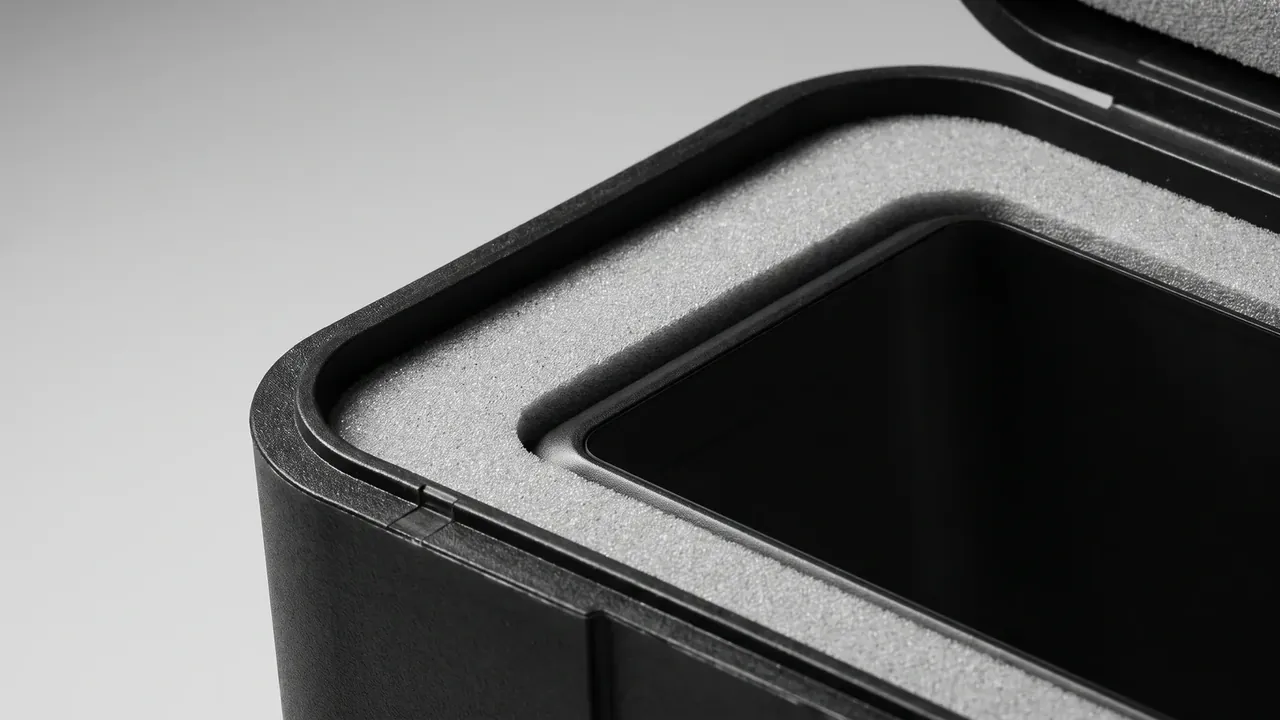
In-plant work rewards opening speed: a standing operator should release the latch one-handed, and the hinge must survive dozens of cycles a day. Foam should not sit too tight, because an over-tight cavity turns every pick into a struggle and wears the edge.
Transfers reward sealing and corners: long vibration with temperature swings lets an under-compressed gasket leak in rain, and an unprotected corner can crack on the first drop. The body is shared; latches, bumpers and label faces are not.
3. Outsourced Repair Loops and Label Pockets
A transport and storage container on a repair loop may stay away for weeks and travel back several times, so it is both transport and holding position. The requirement is traceability: which workshop, which trip, readable without opening the lid.
An A6 pocket at 148 mm by 105 mm on the front face holds the document that travels with the unit, while a weather-resistant label outside carries the asset number. Dividers then split one case into several items, with a 3 mm EVA pad in each cell.
| Stage | Foam | Dividers | Label |
|---|---|---|---|
| Dispatch | One cavity per item | None | Pocket, dispatch note |
| Holding | Original foam | Adjustable grid | Adhesive asset label |
| Return | Shallow tray | Wider cells | Pocket, acceptance sheet |
4. Cold Chain and Wet-Area Staging
An injection-moulded case turns brittle well below zero; a rotationally moulded wall keeps uniform thickness and some give. Between minus 18 and minus 25 degrees Celsius the gasket should move to a low-temperature compound, or it sticks to the groove on opening.
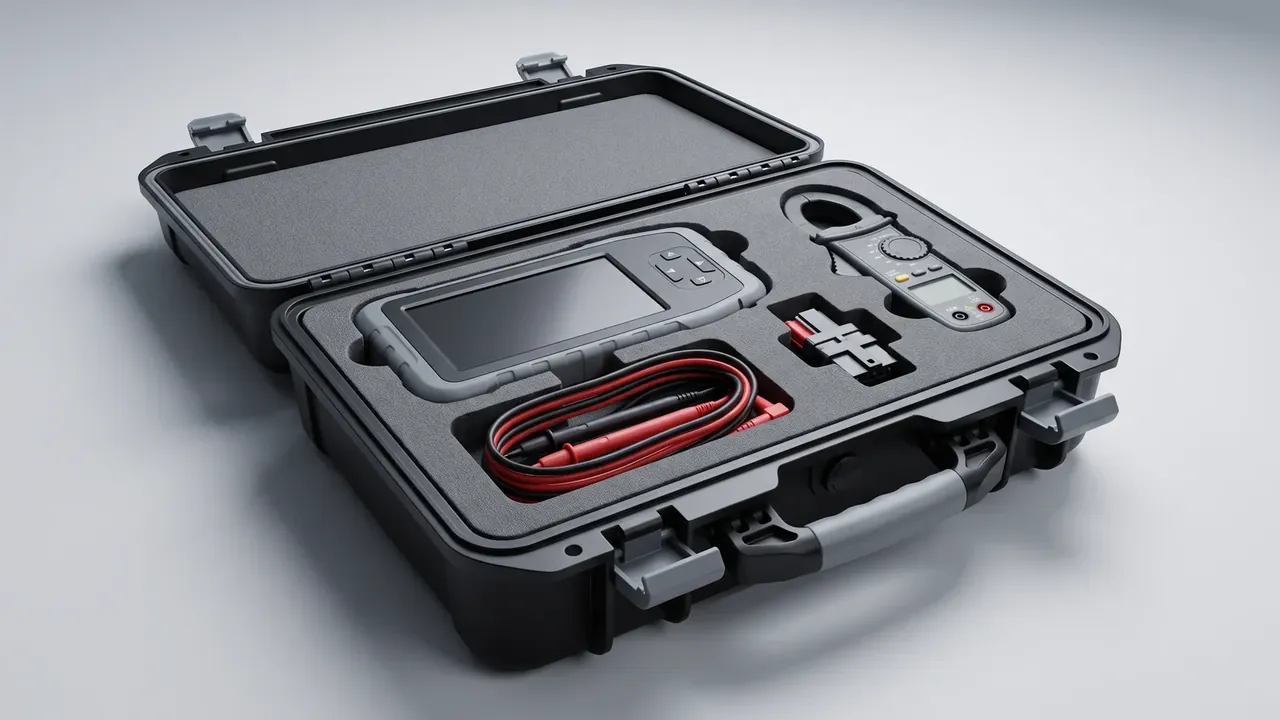
Wet areas fail on water that cannot leave. Cases stacked wet trap a film that works through the parting line. An 8 mm drain hole at the lowest point, with the floor pitched 3 degrees, drains it once the hole clears the ribs.
5. Matching Configuration to Scenario
What separates these uses is the configuration, not the model number.
| Scenario | Foam | Dividers | Labels | Pockets |
|---|---|---|---|---|
| Turnover | Flat tray | None | End face | By posture |
| In-plant | Pick notch | Optional | Large side | Advised |
| Transfer | Full wrap | Grid | Two faces | Required |
| Repair | One cavity | Wide cells | Pocket plus label | Optional |
| Cold, wet | Closed cell | None | Low-temp label | By stacking |
A transport and storage container is configured in this order: posture, which sets base and height; travel distance, which sets latches and bumpers; item shape, which sets foam and dividers; label positions last.
Conclusion
A transport and storage container is specified by scenario, not by volume. Measure the clear height, count the opening cycles, fix the travel distance and settle the label positions before tooling. Written into the purchase order, those answers remove most of the later rework and make a transport and storage container fit its job.
This article discusses only the container (case body) side of specifications and design intent, and does not cover any handling, loading or use of the contents.
Related Reading
- What a transport and storage container is and where its limits sit
- Packing and picking inside warehouse storage
- Logistics support boxes between depot and field
- Matching cases to pallets in export packing
Related Products
- 8 Series — Gun Cases; Military Equipment Cases; Camera Equipment Cases; Drone Cases; Watch Cases; Knife Cases; First Aid Cases; Electronics Equipment Cases
- WL8-2812 PP Gun Case — model WL8-2812
- All protective cases and toolboxes: 7 series, 158 models