

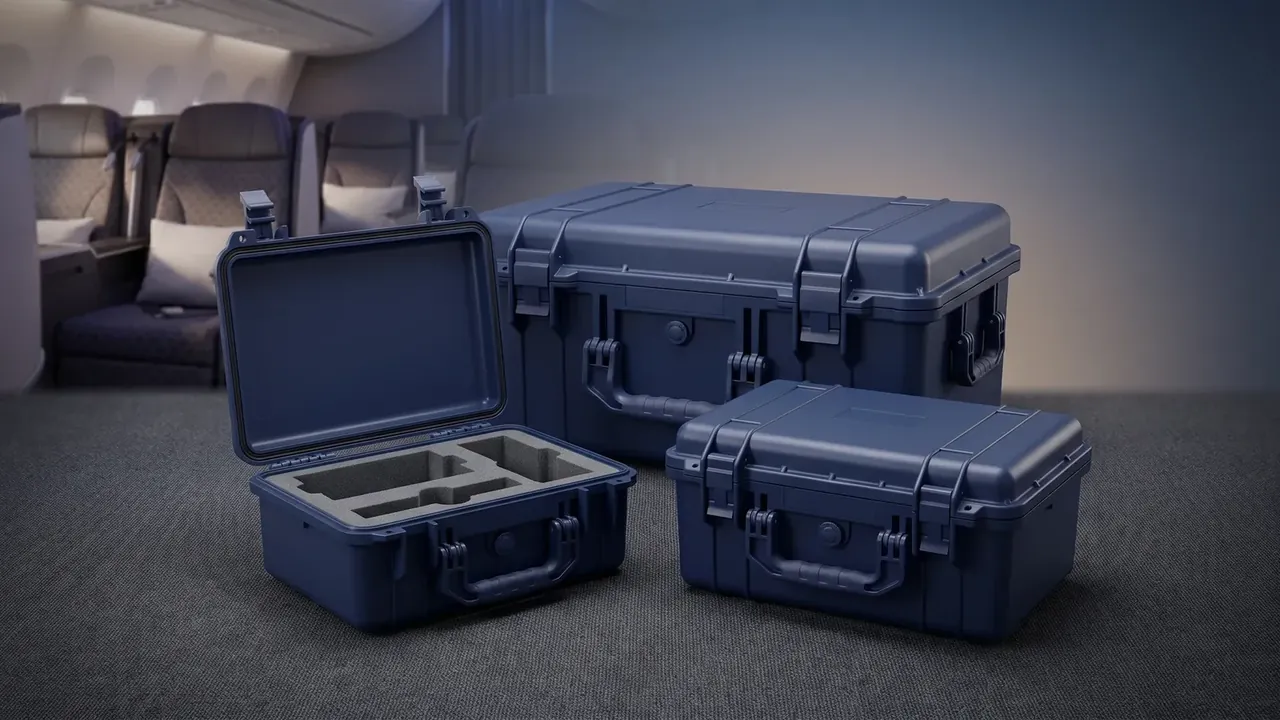
Quick answer: Maintenance for Travel Case Production should not wait for failure. Split inspection into 30-day, 90-day and 12-month tiers, then replace on three measured lines: 1.5 mm of tread left, 3 mm of handle play, 80 N of latch force.
Table of contents
- Inspection rhythm at three intervals
- Wheels and handles wear measurement and replacement
- Shell scuffs and cracks repair or retire
- Latches and gaskets cleaning grease and replacement
- Liners and fabric mildew and collapse
- Spare parts and retirement lines
- FAQ
1. Inspection rhythm at three intervals
A batch sent to a southern coastal depot ran 18 months. The service log reads: 5 wheel sets seized, 3 handles too loose to push, 2 gaskets flattened, 0 shells cracked. In Travel Case Production the weak points sit almost entirely on parts that move, while the shell outlives them all.
Intervals written into a job card get followed. At 30 days, walk the fleet for tread marks and polished latch hooks. At 90 days, load 25 kg and pull 200 m. At 12 months, strip the handle, flush the old grease and repack it.
| Tier | Checked | Time per case | Action line |
|---|---|---|---|
| 30 days | Tread, latch hooks, handle sockets | 3 minutes | Log at 1.5 mm of tread |
| 90 days | Extension feel, loaded pull | 12 minutes | Retire at 3 mm of play |
| 12 months | Handle strip and regrease | 25 minutes | New tube if grease is black |
A wheel pair changed at 1.5 mm costs about 28 yuan. Left until the bearing seizes, the housing cracks too and the repair runs to 160 yuan plus 4 hours of downtime.
2. Wheels and handles wear measurement and replacement
A 50 mm polyurethane wheel loses roughly 0.4 mm of tread per 8 km of concrete, so it reaches the 1.5 mm line inside 12 months. Measure the thinnest point with a caliper against a new wheel.
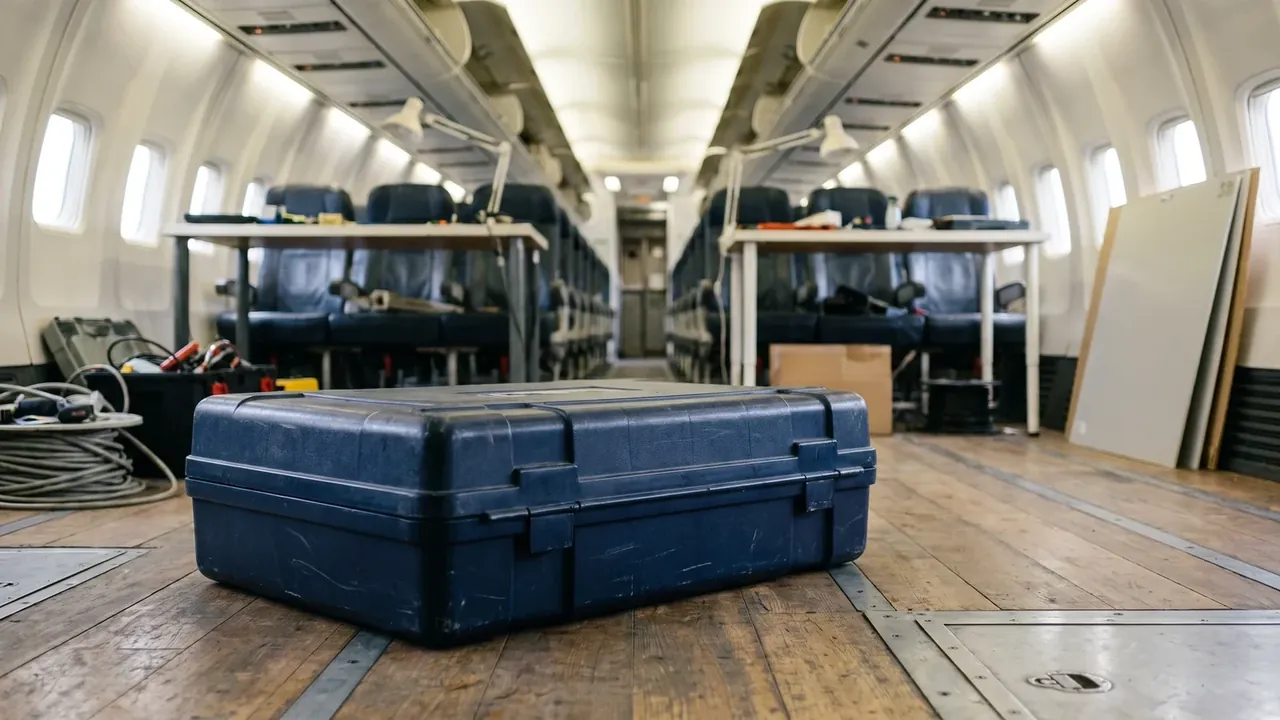
After 5,000 extensions the side play between tube sections grows from 0.8 mm to 3 mm, and a loaded case starts to steer badly. Past 3 mm, replace the assembly rather than the outer tube alone.
Torque the locking screws to 4 N·m; above 6 N·m the wall dents into a stress riser.
| Part | Failure | Tool | Replace at |
|---|---|---|---|
| Wheel set | Tread flat, sand in bearing | Caliper | 1.5 mm of tread |
| Handle | Side wobble, sticking | Feeler gauge | 3 mm of play |
| Housing | Cracked screw boss | Magnifier | 5 mm crack |
Change wheels in pairs; a mixed set tracks to one side.
3. Shell scuffs and cracks repair or retire
Nominal wall is 2.6 mm. A scuff under 0.3 mm deep is cosmetic: sand along the grain with 400 grit and wax it back to colour. A spot sanded repeatedly down to 2.3 mm needs a 1.2 mm reinforcement patch overlapping the scuff by 10 mm, cured for 24 hours before the case takes load.
Read a crack by direction. A 15 mm transverse crack retires the case, because it crosses the lid load path. A short longitudinal crack can be stop-drilled and bonded, with a 3 mm hole 2 mm beyond the tip.
Cure repairs below 60℃ in the shade; heat blisters the adhesive.
| Defect | Class | Action | Recheck |
|---|---|---|---|
| Scuff 0.3 mm or less | Cosmetic | Sand and wax | 90 days |
| Longitudinal crack 10 mm | Repairable | Stop-drill and bond | 30 days |
| Transverse crack 15 mm | Retire | Replace shell | None |
4. Latches and gaskets cleaning grease and replacement
Latch life is counted in closures. A case opened 400 times a year needs 24 months for hook force to fall from 120 N to 80 N. Below 80 N a loaded lid lifts a gap and rain follows it in.
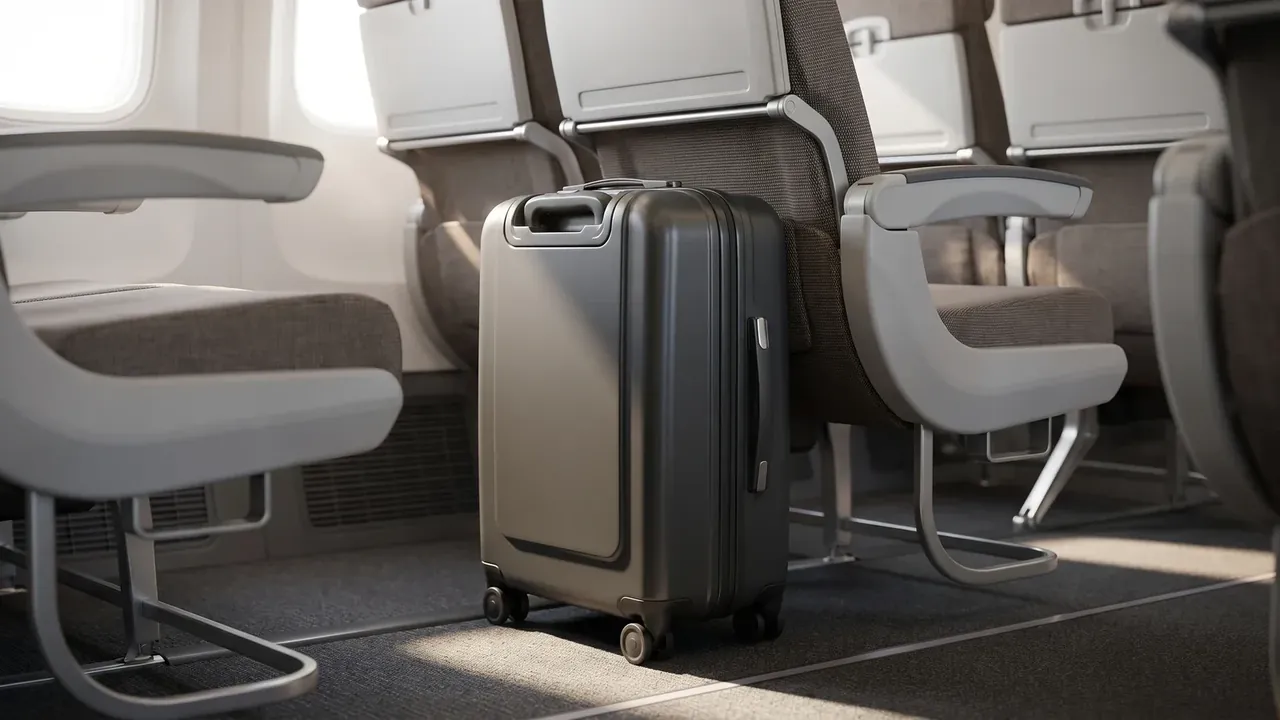
Keep gasket compression between 20% and 30%. Under 20% it stops sealing; over 30% it takes a permanent set within two years. Clean with neutral soap only, since solvent swells the rubber by 2 mm and it never presses back into the groove.
Talc is the cheap trick: a thin film stops sticking and absorbs grit from the channel.
5. Liners and fabric mildew and collapse
Liners are usually moulded EVA. Foam at 35 kg/m³ drifts to about 32 kg/m³ after 12 months and rebounds more slowly. Press with a thumb for 10 seconds; if the dent has not closed in 30 seconds, the cells are fatigued.
Three months in a store at 85% humidity and mildew spots the fabric. Wipe with 75% alcohol and dry the case before closing it, or the moisture stays trapped.
Fabric lifts at the corners first. Once an edge stands up more than 20 mm, replace the panel; spot gluing will not last a wet season.
6. Spare parts and retirement lines
Hold spares at 3% of fleet size. For 100 cases, stock 3 wheel pairs, 3 handle assemblies, 6 m of gasket and 6 latches, enough for a year of replacements.
| Spare | Stock per 100 cases | Replace when | Price |
|---|---|---|---|
| Wheel pair | 3 pairs | 1.5 mm of tread | 28 yuan |
| Handle assembly | 3 units | 3 mm of play | 110 yuan |
| Gasket | 6 m | Compression under 20% | 35 yuan |
| Latch | 6 units | Force under 80 N | 12 yuan |
Count spares monthly. Batches from Travel Case Production differ in housing hole pitch by up to 2 mm, so mixed stock will not fit; label each bin with model and batch.
Retirement needs three hard lines: a 15 mm transverse crack, 3 mm of handle play, 80 N of latch force. Hit one and the case leaves the rotation before the next movement task.
Conclusion
Maintenance in Travel Case Production is a timetable, not a repair skill: look at 30 days, measure play at 90 days, strip the assembly at 12 months, replace at 1.5 mm, 3 mm and 80 N. Pinned to the store wall, that table costs far less than the callouts it prevents, the cheapest line in Travel Case Production.
This article discusses only the container (case body) side of specifications and design intent, and does not cover any handling, loading or use of the contents.
Related Reading
- How the three fatigue tests are sequenced at final inspection
- Moulding, wheel fitting and the order of operations
- Monthly inspection items for storage cases
Related Products
- 8 Series — Gun Cases; Military Equipment Cases; Camera Equipment Cases; Drone Cases; Watch Cases; Knife Cases; First Aid Cases; Electronics Equipment Cases
- WL8-2812 PP Gun Case — model WL8-2812
- All protective cases and toolboxes: 7 series, 158 models