

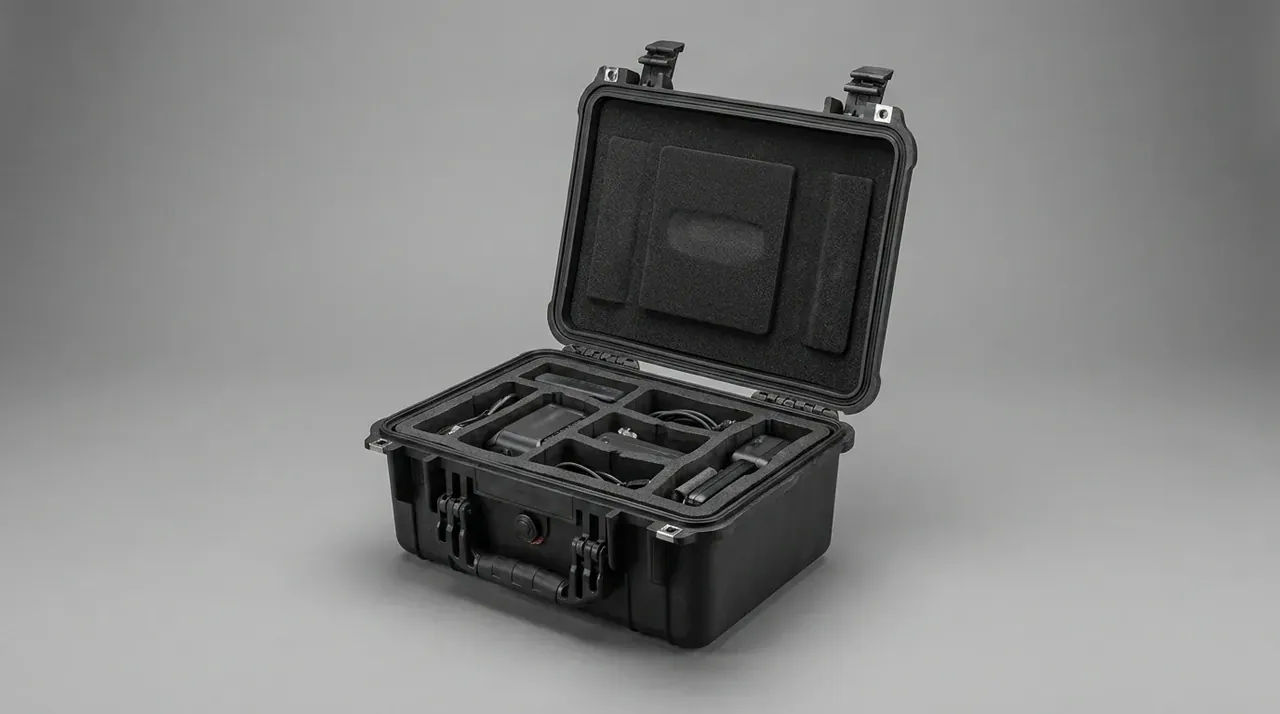
Quick answer: Trial tooling follows batch size and change risk: under 200 units at 30% risk, borrow a base; over 500 with a settled structure, go dedicated.
Table of contents
- Two Numbers Decide Trial Tooling
- A Shared Base With Inserts
- Dedicated Tooling, 25 Days and 42,000 RMB
- The 320 Unit Crossover and the 12% Gap
- FAQ
1. Two Numbers Decide Trial Tooling
The first decision in trial tooling is not on the quotation but on two numbers: how many units this run needs, and whether the structure will move again. Under 200 units with a change probability above 30%, a borrowed base with inserts wins. Over 500 units with a settled structure, open a dedicated mould. In between, work from the 320 unit crossover and take the cheaper option per unit.
Change probability is not a guess. Two of three signals are enough: the insert cavities are still moving, the colour is not fixed, or the forecast spans more than 2 to 1. With all three the odds pass 50%, and a dedicated mould will likely be paid for twice.
| Tooling option | Lead time | One-off cost RMB |
|---|---|---|
| Shared base, inserts | 6 days | 11,000 |
| Shared base, slide inserts | 8 days | 13,500 |
| Dedicated tool | 25 days | 42,000 |
| Dedicated tool, slides | 40 days | 58,000 |
In trial tooling, fix the band first and the details later; the reverse order means rework mid run.
2. A Shared Base With Inserts
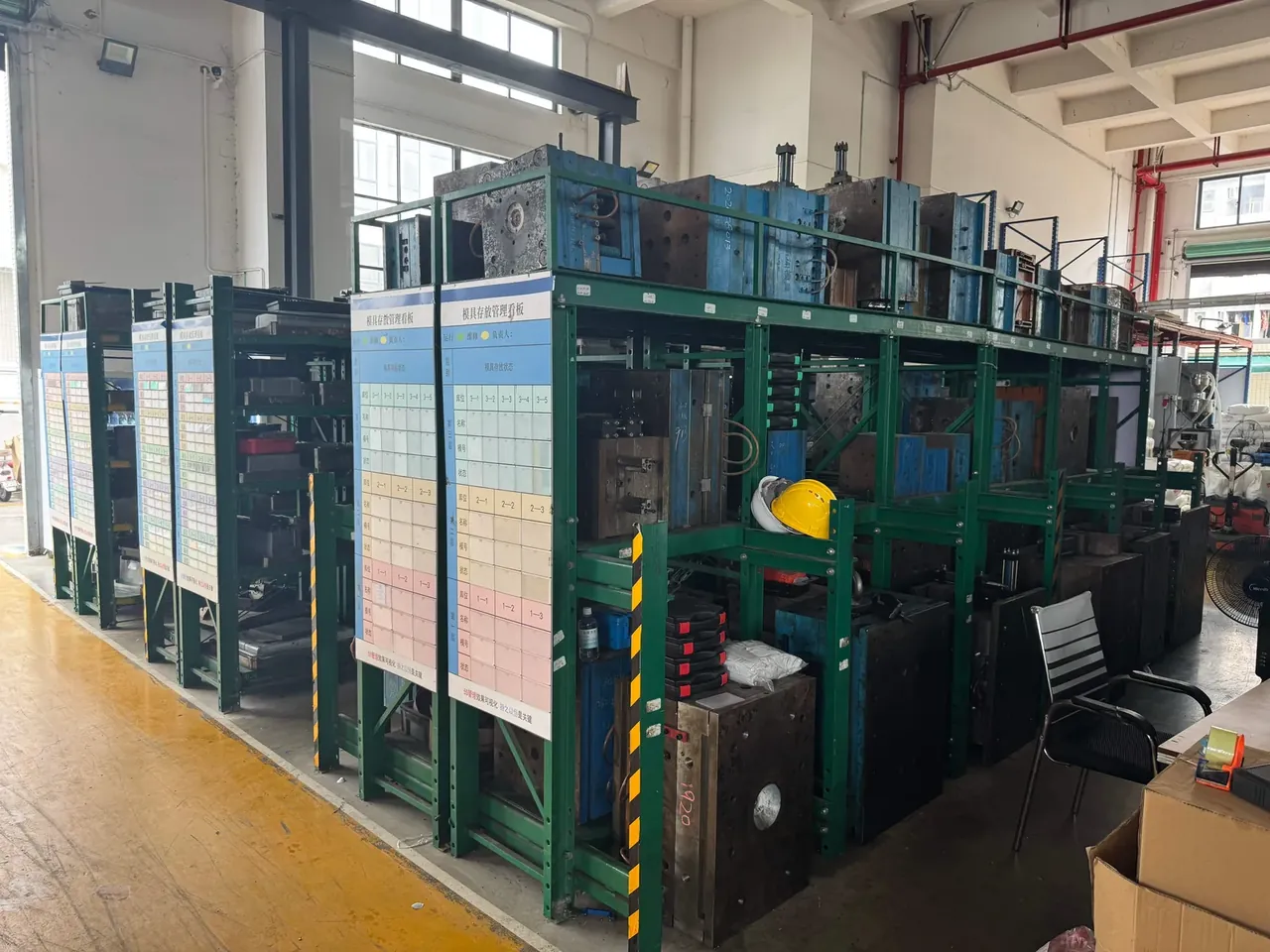
A shared base starts from an existing mould base, swaps the cavity area for inserts shaped to this case, then adjusts ejector pins and slide travel. Machining takes 6 days and 11,000 RMB, including insert material, wire cutting and fitting. Each insert is a separate block, so the next change replaces that block alone.
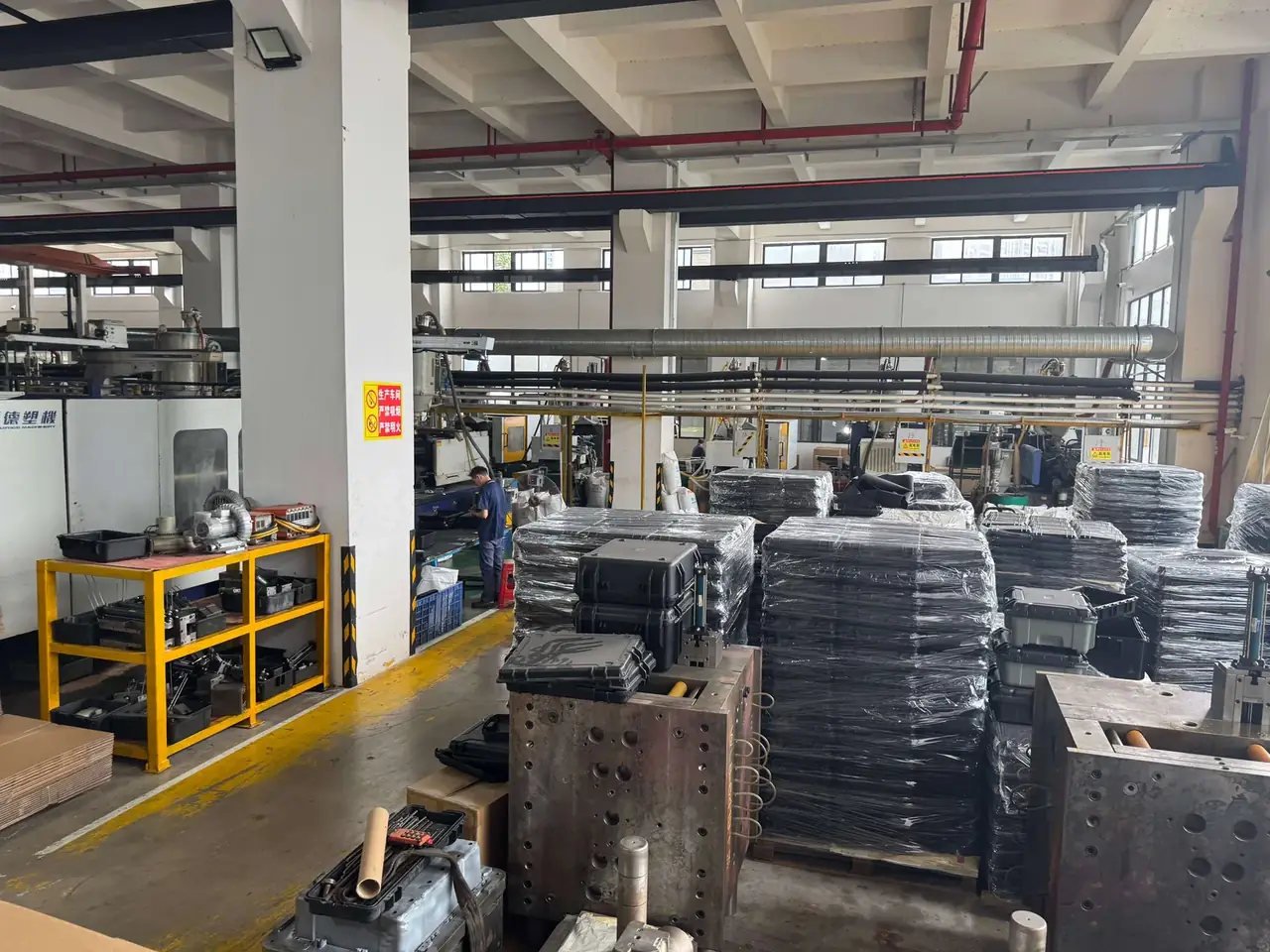
The trial tooling run uses 2 batches of 60 units, the first for dimensions, the second for stability. Yield usually lands near 92%, and ±0.3 mm holds well enough for a trial and a customer sample, though not for long production drift. Insert changes take 4 hours and a colour purge takes 90 minutes, and both belong in the trial schedule rather than in machine time alone.
The price of a shared base sits in the unit cost. On the same case, insert tooling runs 635 RMB per unit against 538 for a dedicated tool, 18% higher. The difference comes from the split structure: one more fitting pass, one more purge, and 4 hours of downtime per change.
3. Dedicated Tooling, 25 Days and 42,000 RMB
A dedicated tool cuts base and cavity in one go: 25 days and 42,000 RMB, or 40 days and 58,000 with slides. Its life is 50,000 shots, which at a 90 s cycle covers two years. A trial never uses that life; trial tooling buys stability later, since ±0.3 mm does not drift across 50,000 shots.
| Trial batch units | Shared base RMB/unit | Dedicated RMB/unit |
|---|---|---|
| 50 | 855 | 1,378 |
| 200 | 690 | 748 |
| 320 | 669 | 669 |
| 500 | 657 | 622 |
| 600 | 653 | 608 |
At 50 units a dedicated tool costs 1,378 RMB per unit, 1.6 times the 855 of a shared base. Of that 523 gap, 620 RMB is amortisation and 97 RMB is given back by cheaper machining. By 200 units the gap is 58 RMB, at 320 it closes, and at 500 the dedicated tool is 35 RMB cheaper.
Amortisation points one way: the larger the one-off, the more a big batch rewards it. The 11,000 of a shared base spreads to 220 RMB a unit at 50, the 42,000 of a dedicated tool to 840.
4. The 320 Unit Crossover and the 12% Gap
The trial tooling crossover is 320 units, where both options land at 669 RMB per unit. Below it a shared base wins on amortisation; above it a dedicated tool wins on machining, which is 97 RMB cheaper per unit. The point is where two straight lines meet.
| Cost per unit RMB | Option | Amortised plus machining |
|---|---|---|
| 855 | Shared base, 50 units | 220 + 635 |
| 690 | Shared base, 200 units | 55 + 635 |
| 669 | Shared base, 320 units | 34 + 635 |
| 669 | Dedicated, 320 units | 131 + 538 |
| 622 | Dedicated, 500 units | 84 + 538 |
| 608 | Dedicated, 600 units | 70 + 538 |
At 500 units a dedicated tool is 622 against 657 for a shared base, 5% lower. Push the volume to 600 and it is 608, which is 12% below the 690 a shared base needs at 200 units, and that 12% is where the over 500 rule comes from. In the other direction, 690 beats 748 under 200 units, so borrowing a base costs nothing there.
Change probability pushes the point sideways. Reworking a dedicated tool means cutting the cavity, from 14,000 RMB, while a shared base swaps an insert for 3,000 RMB and 4 hours, so one change costs 11,000 more. At 30% risk that is worth 3,300 RMB, enough to move the crossover to 354 units.
Conclusion
Trial tooling is decided by batch size times change probability, not by the quotation. Under 200 units with over 30% risk, a borrowed base opens a trial in 6 days for 11,000 RMB; over 500 units with a fixed structure, a dedicated tool at 42,000 only pays once it is spread. The 320 unit crossover separates the two, with 12% in favour of the dedicated tool at 600 units and 8% in favour of the base at 200. Put those numbers beside the change probability and the choice stops being an argument.
Related Reading
- Who pays the tooling charge
- Moulding against die casting for case shells
- First shot and packing pressure in trial moulding
- How T1 and T2 trials are validated
Related Products
- 8 Series — Gun Cases; Military Equipment Cases; Camera Equipment Cases; Drone Cases; Watch Cases; Knife Cases; First Aid Cases; Electronics Equipment Cases
- WL8-2812 PP Gun Case — model WL8-2812
- All protective cases and toolboxes: 7 series, 158 models