

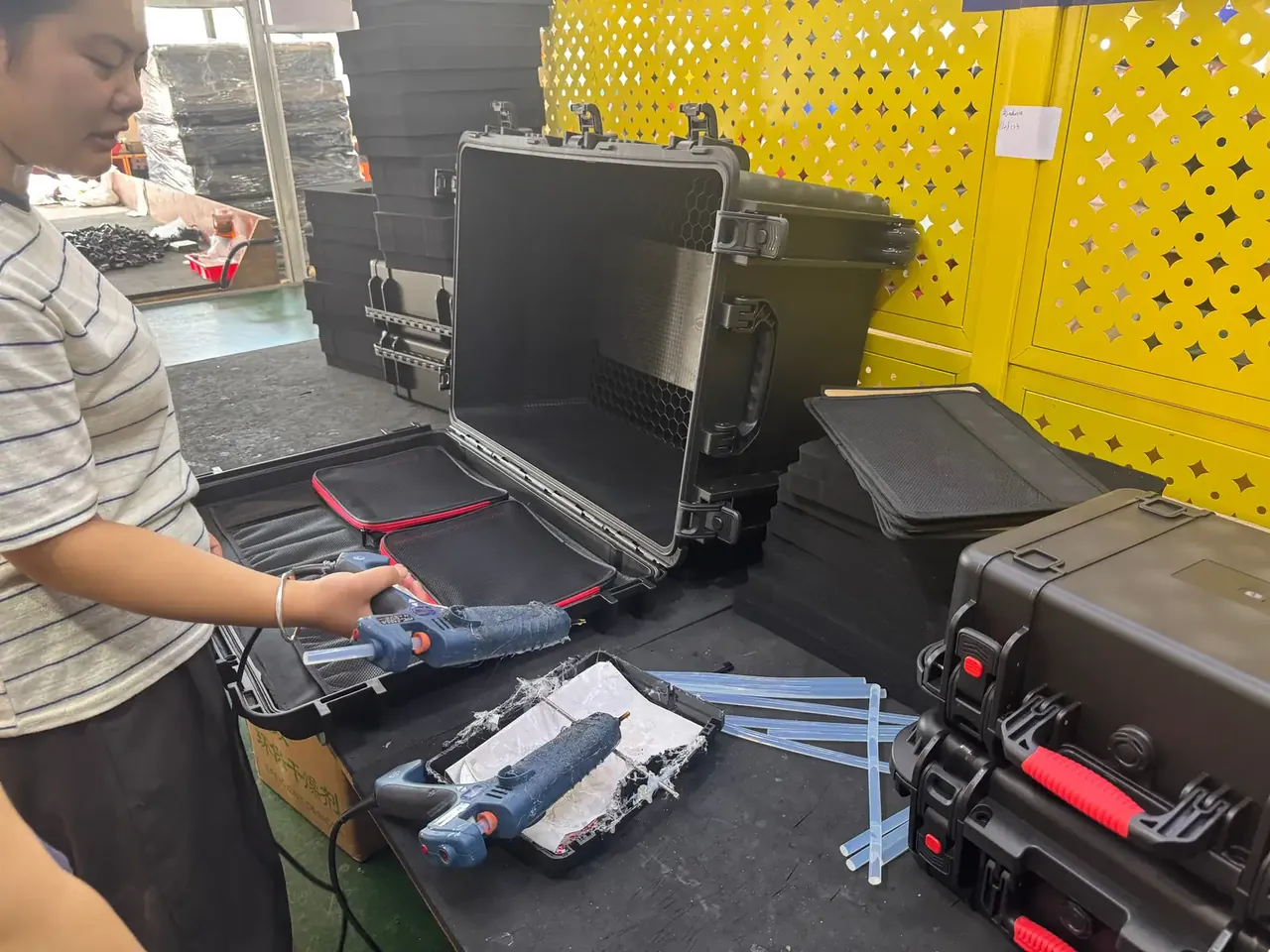
Quick answer: A Case Mould earns its tooling only when one shot holds the seal groove flat enough for IP67 and annual volume absorbs the cost. Under 3,000 pieces a year, cavities longer than 900 mm, or a need for shielding, another route usually wins.
Table of contents
- How the Four Routes Line Up Against the Clauses
- Where Seal Face Tolerance Decides the Rating
- Four Jobs Where Case Mould Loses
- Recovering the Cost After You Switch
- FAQ
1. How the Four Routes Line Up Against the Clauses
Injection is the only route that moulds the seal groove, latch seats and ribs into one part. The others win elsewhere, so the honest comparison lays all four against one set of clauses.
The reference set is IEC 60529 for IP67 plus methods 506.5, 507.5 and 516.8 of MIL-STD-810H. IP67 asks for 30 minutes at 1 m without ingress, which puts groove flatness and gasket compression at the centre. Method 506.5 drives rain at 18 m per second, testing the seal under moving pressure. Method 507.5 cycles 30 °C to 60 °C at high humidity, where polymer absorbs moisture differently from steel. Method 516.8 applies a 40 g shock for 11 ms, a clause where aluminium is simply stiffer. Read together, injection balances sealing against volume, casting owns stiffness, rotomoulding owns very large shells.
| Route | Wall range | Cycle time | Tooling order | Relationship to IP67 |
|---|---|---|---|---|
| Case Mould, injection | 2.2 to 3.2 mm | 45 to 70 s | 80k to 250k CNY | Groove in one shot, flatness 0.05 mm |
| Aluminium die casting | 2.5 to 4.0 mm | 60 to 90 s | 250k to 600k CNY | Seal face needs 0.4 mm of milling |
| Rotomoulding | 3.0 to 6.0 mm | 18 to 30 min | 30k to 80k CNY | Shrinkage drifts groove width 0.6 mm |
| Sheet metal folding | 1.0 to 1.5 mm | 90 to 180 s | No tooling charge | Lid squeezes gasket, 1 to 2 degrees springback |
Column three decides delivery: ten thousand units leave an injection cell in four weeks, a rotomoulding shop in three months.
2. Where Seal Face Tolerance Decides the Rating
Passing IP67 is not about wall thickness but about how the parting line and the groove floor sit against each other. A Case Mould cuts that surface into one plate at 0.05 mm flatness, wrapping a 3.2 mm wide, 2.4 mm deep groove around a 2.5 mm silicone cord at 25 percent compression.
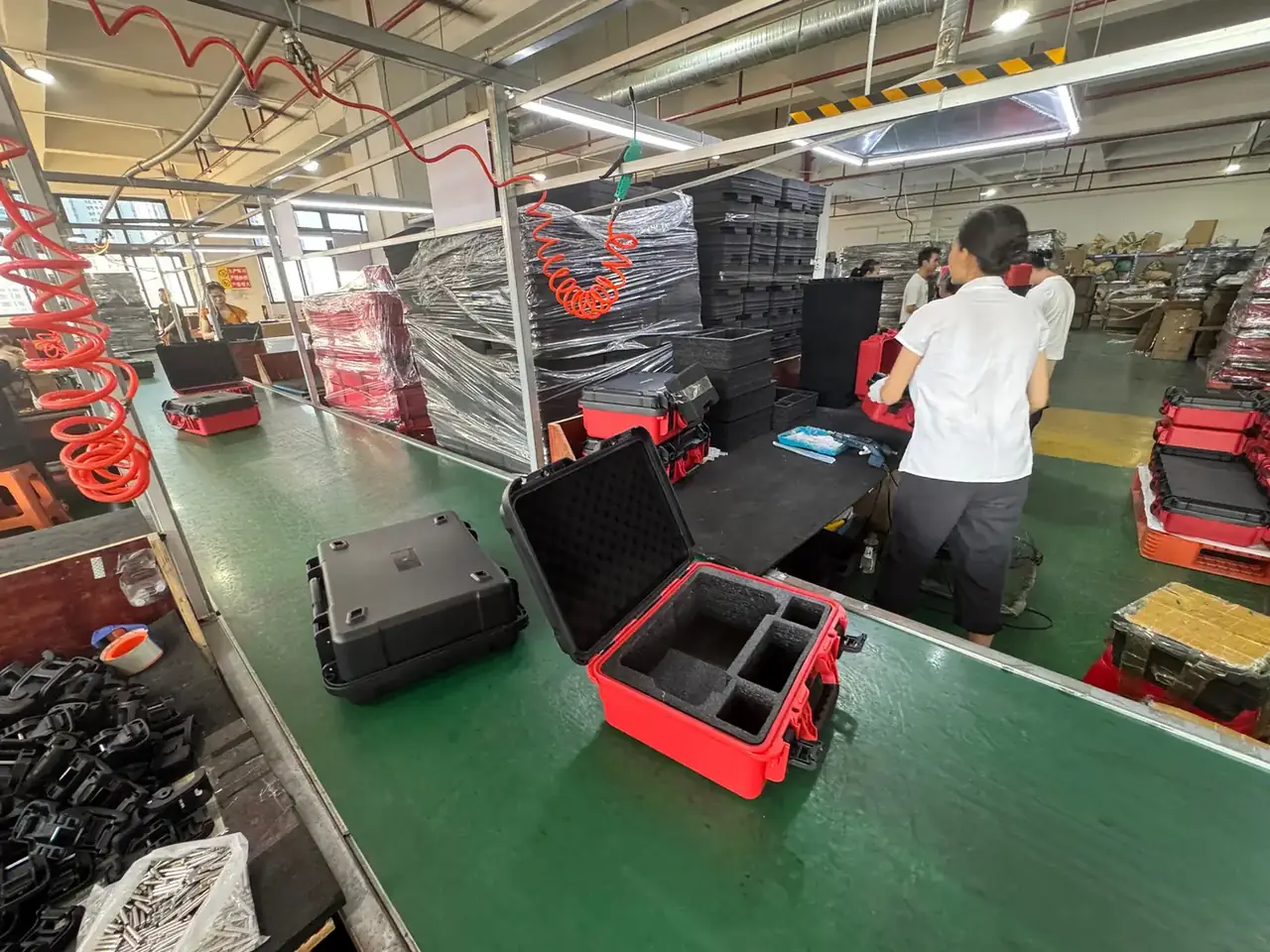
Die casting leaves 0.4 mm on the seal face and mills it back, adding two operations but lifting hardness past HB 80 so openings stop denting the rim. Rotomoulding sits at 2 to 3 percent shrinkage, and one tool drifts 0.6 mm by the twentieth batch, dropping compression to 15 percent.
Sheet metal relies on the lid flattening a gasket, and 1 to 2 degrees of springback leaves corners short.
3. Four Jobs Where Case Mould Loses
Volume, size and function are the three rulers, and five situations argue against injection.
- Under 3,000 pieces a year. An 180,000 CNY tool over that volume adds 60 CNY per part, more than the moulding itself.
- A cavity longer than 900 mm with fewer than 50 pieces needed. That steel weighs over 1.8 t, the press needs 1,300 t, and lead time stretches from 45 to 90 days.
- Need electromagnetic shielding or heat conduction. Polymer cannot do it; a coated aluminium casting can.
- A design still changing. Each latch revision cuts an insert at 8,000 to 15,000 CNY, so a sheet metal prototype is cheaper until the shape settles.
- A cavity with an unsupported step deeper than 200 mm. A long core pin sags 0.1 mm under pressure, while a casting slide supports it from behind.
Hit any one of those and the quote belongs at the bottom of the pile.
4. Recovering the Cost After You Switch
Switching routes saves tooling money and spends it back on piece price, so compare across three years at real volume.
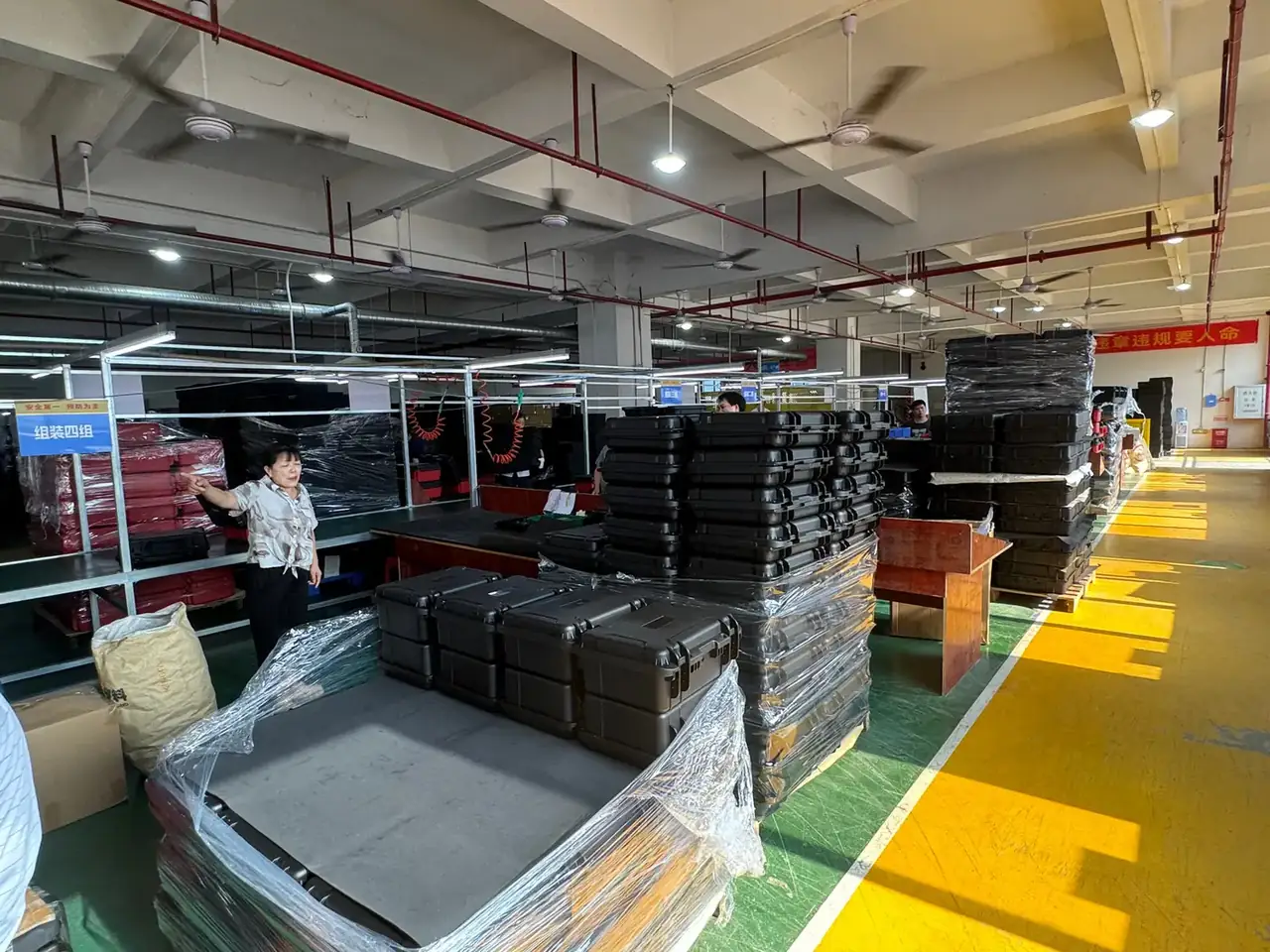
At 5,000 units a year, the four routes separate clearly.
| Route | Tooling | Piece price | Three-year total, 15,000 pcs |
|---|---|---|---|
| Case Mould, injection | 180,000 CNY | 42 CNY | 810,000 CNY |
| Aluminium die casting | 450,000 CNY | 58 CNY | 1,320,000 CNY |
| Rotomoulding | 50,000 CNY | 96 CNY | 1,490,000 CNY |
| Sheet metal folding | 20,000 CNY fixture | 115 CNY | 1,745,000 CNY |
Break-even is tooling difference divided by piece price difference. Injection and rotomoulding sit 130,000 CNY apart on tooling and 54 CNY per part, so the lines cross at 2,400 pieces. Casting costs 270,000 CNY more in tooling and 16 CNY more per part, taking 17,000 pieces to repay.
A second cost follows break-even: change. A casting slide revision means a new tool and 30 days, while a new insert runs again in three days.
Between 3,000 and 17,000 pieces a year it is almost cheapest; past that, the stiffness of a casting repays the tooling.
Conclusion
No route is better in the abstract; the match between clauses and volume decides. Where the groove must be moulded in one shot and volume clears three thousand pieces, a Case Mould gives the cleanest numbers, while casting and rotomoulding take over when stiffness or cavity size dominates. Weigh IP67 flatness against the shock and humidity methods before arguing price, and the Case Mould decision answers itself.
This article discusses only the container (case body) side of specifications and design intent, and does not cover any handling, loading or use of the contents.
Related Reading
- Five plastics compared for cartridge box shells
- Industry requirements compared across five case categories
- How to compare metal ammunition box materials
Related Products
- 8 Series — Gun Cases; Military Equipment Cases; Camera Equipment Cases; Drone Cases; Watch Cases; Knife Cases; First Aid Cases; Electronics Equipment Cases
- WL8-2812 PP Gun Case — model WL8-2812
- All protective cases and toolboxes: 7 series, 158 models