

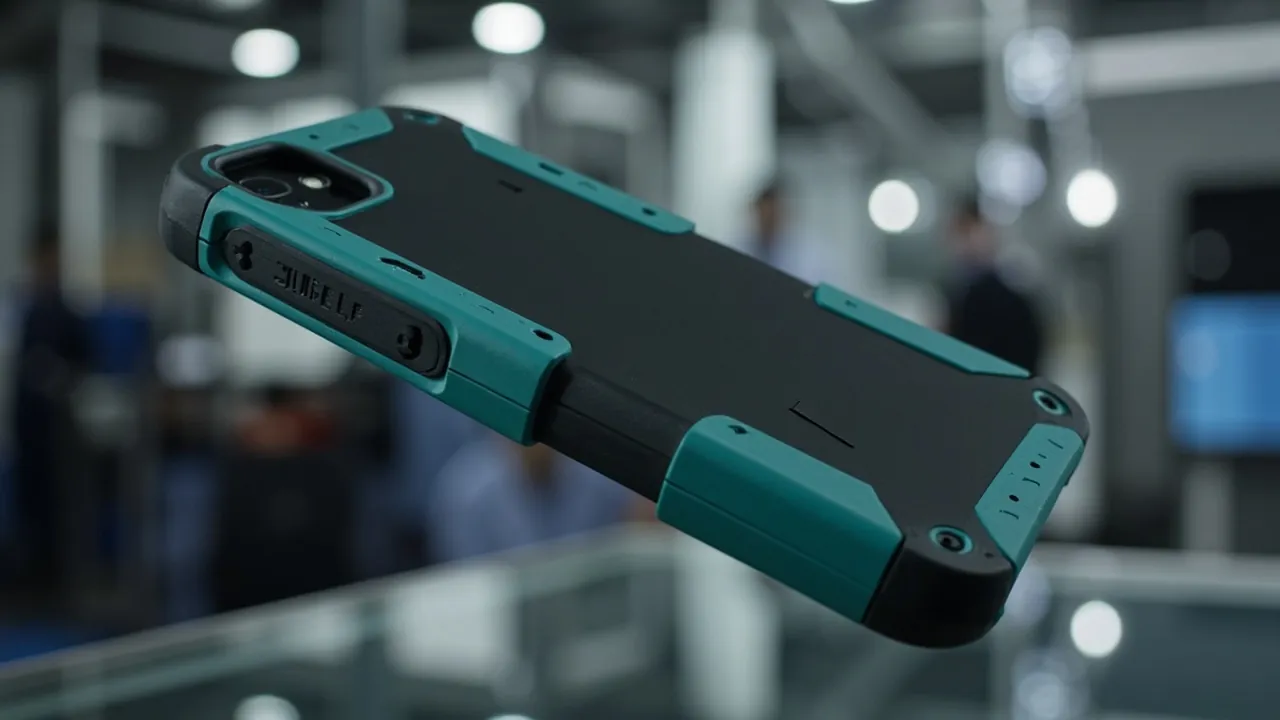
Two-colour moulding and overmoulding put two materials into a single moulded part. On a protective case the second material usually does one of three jobs: it softens a grip, it forms a sealing feature, or it adds a colour accent that will not wear off.
Two Distinct Processes
| Process | What it does | Typical use on cases |
|---|---|---|
| Two-shot / two-colour | Two materials injected into the same tool in sequence, within one cycle | Two-colour panels, rigid body with a soft grip formed in the same operation |
| Overmoulding | A second material moulded over a previously moulded substrate | Soft TPE grips over a rigid shell, integrated gasket-like features |
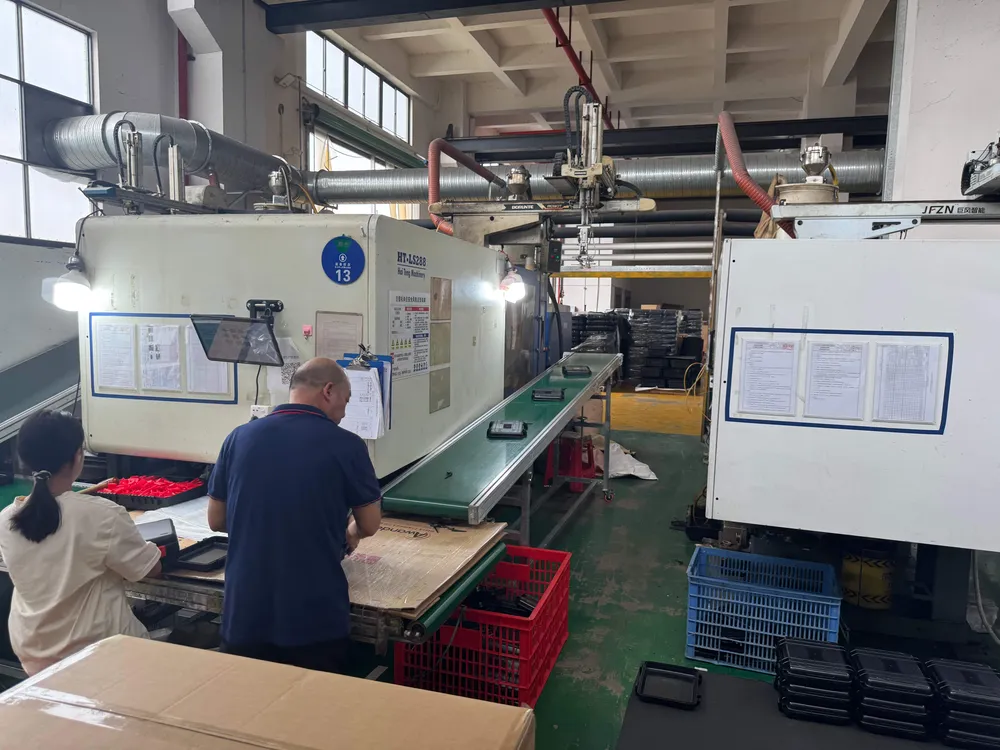
Both remove a secondary operation. A grip that would otherwise be a separate part to purchase, inventory and assemble becomes part of the shot.
What the Second Material Buys
- Grip and handling. A soft thermoplastic elastomer over a rigid handle improves comfort and reduces slipping, which matters on a loaded case carried any distance.
- Sealing integration. Forming a compliant feature in place can reduce the number of separate sealing parts and the assembly variation that comes with them.
- Durable colour. A moulded-in accent cannot peel like a sticker or wear through like surface print on a high-contact area.
- Impact and vibration behaviour. A compliant layer at contact points changes how energy transfers, which can protect both the case and what it lands on.
The Constraints
- Tooling cost. Multi-material tooling is significantly more complex than a single-material tool, so the economics require volume.
- Material compatibility. The two materials must bond during processing. That constrains the choice of resin and elastomer, so aesthetic wishes cannot drive the pairing alone.
- Cycle time. Additional injection steps and, for two-shot, tool movement affect throughput.
- Design rules still apply. Section thickness, transitions and gate placement become more constrained when two materials share a part.
- Repair implications. An integrated feature is not separately replaceable, which can matter for high-wear items.
Deciding
Justify the added tooling when the second material removes a real cost or solves a real problem: an assembly step eliminated, a grip that measurably improves handling, an accent that survives abrasion. If it is purely decorative and volumes are modest, printing or a separate part usually wins. The moulding route is covered in more depth in our comparison of injection and rotational moulding.